
The way to budget credit cards on irregular income is to stop planning around your best month. Build your budget on your lowest reliable income, pay yourself a steady amount from a holding account, and line your card due dates up with the days money actually arrives. Then use the strong months to fill a buffer and cut balances, so a slow month never decides whether a card payment gets made.
This guide walks through that plan step by step. It covers freelancers, gig workers, commission earners, seasonal workers and anyone whose paychecks change with the hours. It is built for people who carry more than one card.
TL;DR
- Base your budget on your baseline income, the lowest consistent monthly amount from the past 6 to 12 months. Do not base it on an average or a best month.
- Send all income to a holding account first. Then pay yourself a fixed "salary" into your spending account.
- Ask each card issuer to move your due date to a day when you reliably have cash, and set autopay for at least the minimum.
- In a lean month, protect housing, car, utilities and insurance first. Call card issuers before you miss a payment.
- Put extra money from strong months into a buffer first, then toward card balances.
Table of Contents
- Why credit cards and irregular income clash
- Step 1: Find your baseline income
- Step 2: Pay yourself a steady salary
- Step 3: Move your card due dates to match your cash
- Step 4: Set money aside for card bills as it arrives
- Step 5: Decide what gets paid first in a lean month
- Step 6: Build a buffer in the good months
- Perspective
- Put your cards on one screen
- Avoiding late fees and interest when income dips
- A monthly routine that takes 20 minutes
- FAQ
- Sources
Why credit cards and irregular income clash
Credit cards run on a calendar. Each card has a statement date, a due date and a minimum payment. None of these care that your biggest client paid late or that your hours dropped this week.
With several cards the problem multiplies. Three cards can mean three due dates scattered through the month, and a fat check can land the day after a bill is due. The result is late fees and interest charges that have nothing to do with how much you earn overall. They come from timing.
The fix has two halves. The first is smoothing your income so you spend the same predictable amount each month. The second is smoothing your card calendar so payments fall when that money is available. Do both and the card side gets much easier to manage.
Step 1: Find your baseline income
Your baseline is the amount you can count on even in a weak month. Nebraska's Department of Banking and Finance advises building the budget around your lowest consistent monthly income over the past 6 to 12 months, not your highest or average month.
To find yours:
- Pull 12 months of bank statements or invoices.
- Write down what actually came in each month.
- If you are self-employed, subtract what you will owe in estimated taxes. Capital One notes that your baseline should be your net monthly earnings after you set aside what you'll owe in estimated taxes.
- Take the lowest figure, or the lowest figure that is not a true outlier, and call it your baseline.
The same Capital One guide says your fixed costs should be coverable by that lowest amount. If rent, utilities, insurance and minimum card payments add up to more than your baseline, you have found the real problem. You can then either trim fixed costs or plan to cover the gap with income from later in the month or the following month.
A worked example
Say your monthly net income over the past year ran like this: $2,400, $3,900, $2,800, $5,100, $3,100, $2,600, $4,400, $3,000, $2,500, $3,700, $4,800 and $2,900.
Your lowest month is $2,400 and your average is about $3,433. If you budget at the average, four months out of twelve fall short. If you budget at $2,400, every month works, and every dollar above that becomes a buffer deposit or a card payment.
That is the whole logic. A budget built at the baseline cannot be broken by a slow month, and good months become progress instead of lifestyle creep.
Step 2: Pay yourself a steady salary
Once you know the baseline, make your money behave as if you had a paycheck. Nebraska's guidance describes two accounts: an Income Holding Account where all income lands first, and an Expenses Account that you fund with a fixed amount once or twice a month, equal to your baseline. Capital One describes a similar setup, with a set amount moved on the first of every month to a bill-paying account and a set amount to a spending account.
In practice:
- Every payment you receive goes into the holding account.
- On set dates, such as the 1st and 15th, you transfer half your baseline to the bills account.
- Card payments, rent and utilities come out of the bills account. Everyday spending comes from the spending account or the card you have designated for it.
- Anything left in the holding account stays there as a buffer.
This is also the best protection against "card creep." When income is lumpy it is tempting to put expenses on a card and sort it out when the next invoice clears. A fixed salary gives you a number to spend against, so card balances stop becoming a second, hidden income source.
If you like practical walkthroughs of general budget building, these efficient budgeting tips for 2026 are a useful companion to the salary approach above.
Step 3: Move your card due dates to match your cash
This is where credit card budgeting on irregular income differs from ordinary budgeting. You can change the calendar itself.
American Express advises changing the payment due date to a day you will definitely have money in the payment account, like the 1st or 15th, if that fits your pay schedule. The Consumer Financial Protection Bureau (CFPB) makes the same point in its cash flow checklist: negotiate new due dates so bills line up with when income arrives, starting with businesses you have dealt with for a long time.
Because your salary transfers happen on fixed dates, those are the dates your cards should be due. Ideally each due date falls a few days after a salary transfer lands in the bills account.
To do it:
- List every card with its current due date and statement date.
- Pick two anchor days, for example the 3rd and the 18th, a couple of days after your salary transfers.
- Call or use each issuer's app to request a new due date. Expect the change to take effect over one or two billing cycles.
- Spread the cards across both anchors so no single date carries all the payments.
We have written step-by-step guides on this: how to move your credit card due date in one or two cycles, how to stagger statement dates across your cards, and a broader credit card due date management guide.
Split big bills where you can
The CFPB checklist also suggests splitting a large payment into two smaller ones. Its example is a $700 rent payment split into $350 on the 1st and $350 on the 15th. The same thinking works for a card: make one payment after a salary transfer and a second later in the cycle, which keeps each payment smaller and your bills account steadier.
Step 4: Set money aside for card bills as it arrives
Waiting until the due date to find the cash is the stressful way. The calmer way is to set the money aside the day you are paid.
The CFPB advises setting up a savings account and automatically depositing the monthly amount of large lump-sum payments so you are prepared when they come due. Card payments fit this well. If your total of minimums plus planned extra payments is $600, that $600 should be sitting in the bills account before the first due date arrives.
A simple routine:
- When a payment arrives, move your tax portion first if you are self-employed.
- Next, top up the bills account until it covers the next set of card payments.
- The rest stays in the holding account.
Autopay helps here too. Consumer Reports recommends setting up autopay at least for the minimum amount and then adding extra payments from your online account, app or by phone when you have the funds. For an irregular earner that is the right structure: the minimum is guaranteed, and extra principal depends on how the month went.
If you want to know what that minimum actually is and how it is calculated, see our explainer on credit card minimum payments.
Step 5: Decide what gets paid first in a lean month
Sometimes the baseline still falls short. When money is tight, you have to rank bills by consequence.
The National Foundation for Credit Counseling (NFCC) suggests a crisis budget with three priority levels:
| Priority | What it covers | Why |
|---|---|---|
| 1 | House and car payments secured by an asset | Losing the home or vehicle is the most severe outcome |
| 2 | Utilities and insurance | Keeps basic services and coverage running |
| 3 | Unsecured debt, including credit cards and loans | Missed payments bring late fees and credit score damage, but are less catastrophic |
Capital One makes a similar point: list your required expenses, including minimum required debt payments, and if your baseline does not cover everything, use extra income from later in the month or the next month to pay the more crucial bills in order of importance.
This ranking does not mean cards can be ignored. The CFPB says that after 60 days of lateness, a credit card company may choose to raise the interest rate on your balances. Treat the third tier as "call early," not "skip."
Call the issuer before the due date
The CFPB advises contacting your card company right away if you cannot pay. When you call, explain why you cannot pay the minimum, how much you can afford, when you could restart normal payments, and what new payment amount you are requesting and for how long. Its booklet adds that if you are in good standing, creditors may be willing to forgive an occasional fee.
NFCC also recommends asking about forbearance or hardship programs. The CFPB's supervisory review of pandemic-era relief found that the most common help was skipping a payment or deferring payments for one to six months, with lowered rates and waived fees also offered at most issuers. That describes what was offered then, so ask your issuer what it offers now.
A warning from the same CFPB page: a debt settlement company is not allowed to collect fees before settling or resolving your debt. Be wary of anyone who guarantees your debt will go away or tells you to stop paying your minimums or stop talking to your card company.
If you have several cards and can only cover one extra payment, our guide on deciding which card to pay first using statement timing shows how to choose in about 15 minutes.

Step 6: Build a buffer in the good months
The buffer is what turns a lean month from an emergency into an inconvenience. Nebraska's guidance says a 3 to 6 month emergency fund is ideal for irregular earners, but to start with one month of bare-bones expenses in the holding account and to direct extra money from high-earning months to the buffer first.
How big should it be? It depends on how your income behaves. Capital One suggests that a web designer with only an occasional low month might be comfortable with $1,000 in savings, while a seasonal worker such as a landscaper might want up to three months of critical expenses. The more predictable your slow periods, the smaller the buffer you need.
AP News reports that one expert recommends two separate funds for self-employed people: one to cushion low-income months and one for true emergencies. That keeps a slow season from eating money you need for a car repair.
What to do with the extra
Once your baseline budget is covered, Nebraska's guidance offers a percentage system for extra income: 40% to the buffer or savings, 30% to debt payoff, 20% to future taxes if you are self-employed, and 10% to discretionary spending. Here is how that looks on a $1,000 bonus month above baseline:
| Use | Share | Amount |
|---|---|---|
| Buffer | 40% | $400 |
| Card debt payoff | 30% | $300 |
| Future taxes (if self-employed) | 20% | $200 |
| Fun | 10% | $100 |
If you carry balances on more than one card, that 30% needs a plan. Interest, statement timing and credit utilization all affect where each dollar helps most. Our piece on when to pay your credit card for fees, interest or score covers the trade-offs.
Perspective
Irregular income is rarely the real problem with credit cards. Timing is. A card does not know you earn $2,400 one month and $5,100 the next, so it charges the same late fee and the same interest either way.
That is why we built Finja around a single idea: the biggest savings for people with several cards come from paying the right card, the right amount, at the right time. Rewards optimization comes second. When income moves around, those decisions get harder, because you are choosing with less certainty about what will arrive next week.
Seeing every card in one place changes that. When balances, due dates and statement dates sit side by side, you can see which card is about to cost you interest and which payment can wait three days for a check to clear. Our approach is a dedicated credit card coach, not a general budgeting tool, designed to guide payment timing and amounts so that lean months hurt less and strong months do more work.
If you do one thing after reading this article, put every due date on one calendar next to the days your money usually arrives. The conflicts will show up immediately.
Grace K.
Put your cards on one screen
The plan above works with a notebook and a spreadsheet. It works better when your cards are tracked in one place and the timing is calculated for you.
Finja is an AI-powered credit card coach for people with multiple cards. It shows all your cards in one view and gives guidance on payment timing and amounts, aimed at reducing interest costs and improving credit health. It also includes credit health tracking, budgeting tools and spending limit controls.
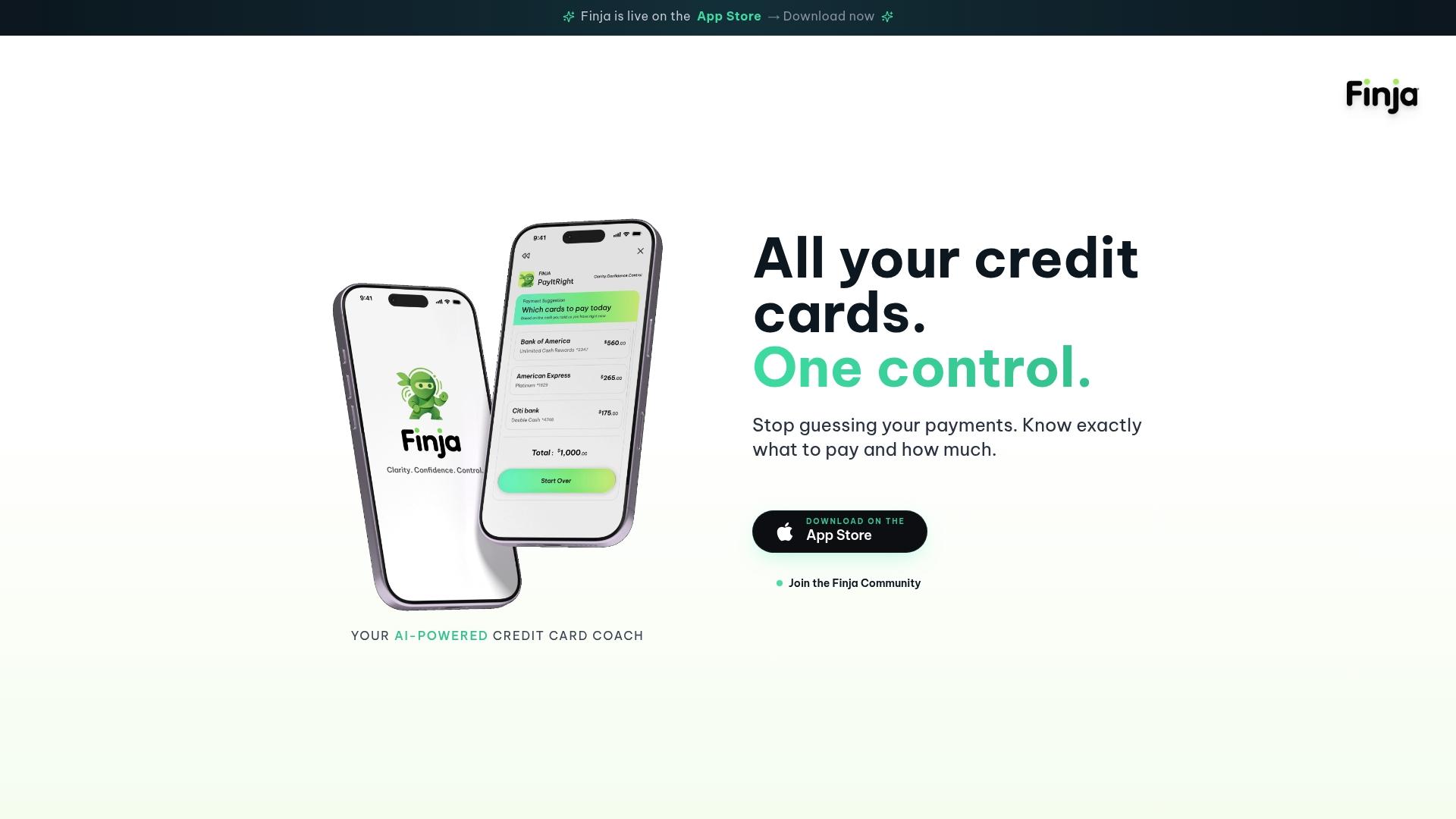
If your income moves and your cards are scattered across different due dates, see how Finja, your AI-powered credit card coach, can help you decide what to pay and when.
Avoiding late fees and interest when income dips
A few specifics are worth knowing, because they shape how close to the line you can safely cut it.
- Late fees. American Express says a missed payment may bring a late fee from the issuer, and your credit score may drop by a few points if the payment is more than 30 days late, according to its credit card payment guide.
- Cutoff time. The CFPB notes that card companies generally cannot treat a payment as late if it arrives by 5 p.m. on the due date, and it recommends paying as early as possible to avoid late fees and interest.
- Credit reports. According to the CFPB booklet, utility and credit card payments received within 30 days of the due date typically do not affect your credit report.
- Forgetting. In a Consumer Reports survey, the most common reason for a late payment was thinking the bill had already been paid (27 percent), and 12 percent said one problem was not knowing when the payment was due, as reported in its late-fee guide. A shared calendar and text or email reminders cover both.
The CFPB also recommends a bill calendar: mark each payment date seven days before the due date for mail and two days before for online payments, and enter your expected income dates so you can compare weekly income to weekly bill totals. For irregular earners, that comparison shows which week is dangerous before it arrives.
Credit limits matter too. If you rely on cards as a bridge, a limit cut can arrive at the worst time. Our 72-hour plan after a credit limit decrease explains how to respond. And to see how your overall card use looks, our guide to credit card financial health indicators lists the numbers to watch.
Budgeting categories help as well. If you run a side business or small shop, our guide to setting category budgets that respect card timing shows how to separate business and personal spending across statement cycles. For the rules behind the timing, see our overview of optimizing card payments with timing and Regulation Z.
A monthly routine that takes 20 minutes
Once the system is set up, keep it going with a short check at the start of each month:
- Update your baseline. If the past 12 months changed, recalculate the lowest month.
- Fund the accounts. Move your salary amount from the holding account to the bills and spending accounts.
- Check the calendar. Confirm each card's due date and that autopay minimums are covered.
- Decide extra payments. If the holding account is above your buffer target, apply the surplus using your percentage split.
- Flag danger weeks. If a due date comes before an expected payment, call the issuer now, not after the date passes.
The habit matters more than the accuracy of any one number.
FAQ
Can I get a credit card if my income is irregular?
Yes, though issuers look at your whole picture. Federal rules require issuers to consider your ability to make the minimum monthly payment, based on your income or assets and current obligations, before opening an account or raising a limit, according to the CFPB examination guide. That guide also says issuers may count income you have a reasonable expectation of accessing, so list all your regular sources.
What should I pay first when I can't cover everything?
Follow the consequence order. Secured payments such as your mortgage, rent or car come first, utilities and insurance second, and credit cards and other unsecured debt third, as the NFCC explains. Contact your card issuers before the due date to ask about hardship options.
Should I budget on my average income or my lowest month?
Use your lowest consistent month for fixed costs and minimum card payments. An average can overstate what you will have in a slow stretch. Some guides use an average to set a monthly salary, so choose the lower, safer figure if your income swings widely.
How much should I keep in a buffer?
Start with one month of bare-bones expenses, then build toward three to six months, as Nebraska's guidance suggests. A steady earner with rare low months may need less, while a seasonal worker may want more.
Is it better to change due dates or just pay early?
Do both when you can. A due date that falls just after your usual deposits makes on-time payment the default, and paying early adds a safety margin. Ask your issuer how long a date change takes, since it usually applies over a billing cycle or two.
Sources
- How to Budget Effectively with an Irregular Income, Nebraska Department of Banking and Finance
- How to Budget When You Have an Irregular Income, Capital One
- Budgeting Tips for Fluctuating Income, Capital One
- Improving cash flow checklist, CFPB
- Behind on bills? Start with one step, CFPB
- What should I do if I can't pay my credit card bills?, CFPB
- Supervisory Highlights, Winter 2021, CFPB
- Credit Card Account Examination Procedures, CFPB
- Steps to Take When Income is Interrupted, NFCC
- Guide to Paying Your Credit Card Bill Online, American Express
- How to Avoid Credit Card Late Fees, Consumer Reports
- Building an emergency fund for unexpected costs, AP News