
A credit card financial control system is a structured method for tracking statement dates, credit limits, utilization rates, and payment due dates across every card you hold. Most people manage credit cards reactively, checking balances only after overspending. A proactive system shifts that entirely. It puts you in charge before purchases happen, not after the damage is done. Finja is built on exactly this principle: AI-powered guidance that helps you optimize payments, reduce interest costs, and build lasting credit health across multiple cards at once.
What key data should you track in a credit card financial control system?
The foundation of any effective credit card management system is knowing which numbers to watch. Without the right data, you are guessing. With it, you are managing.
The five data points that matter most for each card are:
- Statement closing date. This is when your balance gets reported to credit bureaus. Paying down balances before this date directly improves your credit utilization ratio.
- Payment due date. Missing this costs you a late fee and potentially a penalty APR. Map it on a calendar for every card.
- Credit limit. Your ceiling. Knowing it precisely lets you calculate utilization without logging in each time.
- Current balance. Track this weekly, not monthly. Balances shift faster than most people realize.
- Utilization rate per card. Keeping each card below 30% utilization is the standard threshold most credit scoring models reward.
Advanced users track 5+ cards with color-coded utilization thresholds to catch problems before they hit a credit report. That approach turns a chaotic stack of cards into a dashboard you can read at a glance.
Billing cycle intelligence takes this further. Mapping statement dates and grace periods lets you maximize the interest-free float between when a charge posts and when payment is due. That float is free money if you use it deliberately.

Pro Tip: Set calendar alerts three days before each statement closing date. That gives you time to pay down a balance before it gets reported, protecting your utilization score without waiting for the due date.
How to implement budgeting methods to control credit card spending
Tracking data tells you where you stand. Budgeting tells you where you are going. The most effective personal finance management technique for credit card holders is envelope budgeting, adapted for debt.
Here is how to build it in four steps:
-
Create a debt envelope for each card. Assign a dedicated budget category to every credit card balance. When you make a purchase on a card, move the equivalent amount into that card's debt envelope from your checking account. You are pre-funding the payment before the bill arrives.
-
Set a monthly payment target above the minimum. The minimum payment keeps you current but costs you years in interest. Set your envelope target at a fixed dollar amount above the minimum, even if it is only $25 more. Consistency compounds.
-
Apply pre-authorization budgeting before you spend. Pre-authorization budgeting shifts financial control to the point of purchase. The concept, sometimes called "preQubing," requires you to allocate funds to a category before the transaction clears. If the funds are not there, the purchase does not happen. This is the most powerful overspending prevention method available for credit card users.
-
Automate envelope funding on payday. Automation syncing bank accounts updates debt envelope balances automatically when payments are made. Set a recurring transfer from checking to each card's payment fund on the same day your paycheck lands. You never have to remember it.
Pro Tip: Automate a fixed transfer to your highest-interest card's debt envelope on every payday. Even $50 per cycle adds up to $1,300 per year in extra principal reduction without any willpower required.
The shift from post-spend tracking to pre-spend authorization is the single biggest upgrade most people can make to their credit card budgeting system. Reviewing last month's damage is not control. Allocating before you swipe is.
What tools and systems help automate credit card financial control?
Technology removes the manual burden from credit card management. The right tools handle reconciliation, flag anomalies, and keep your data current without requiring you to log in to five different bank portals every week.
The core features to look for in any credit control software include:
- Multi-card billing cycle management. The tool should display all statement dates and due dates in one view, not card by card.
- Automated payment reconciliation. Automated reconciliation reduces manual errors and supports timely payment. A good system matches transactions to your budget categories without you touching them.
- Quick transaction entry. The faster you can log a purchase, the more likely you are to do it. NLP-based entry lets you type a plain sentence and have the system categorize it automatically.
- Anomaly detection. Automation should flag charges that fall outside your normal patterns, catching errors and unauthorized transactions early.
The table below compares manual tracking against automated expense tracking solutions across the dimensions that matter most.
| Feature | Manual tracking | Automated system |
|---|---|---|
| Data entry | User-entered, error-prone | Auto-synced from bank feeds |
| Reconciliation | Monthly, time-intensive | Real-time or daily |
| Anomaly detection | Missed unless noticed | Flagged automatically |
| Multi-card visibility | Spreadsheet-dependent | Single unified dashboard |
| Adherence over time | Declines with friction | Higher with low-friction input |
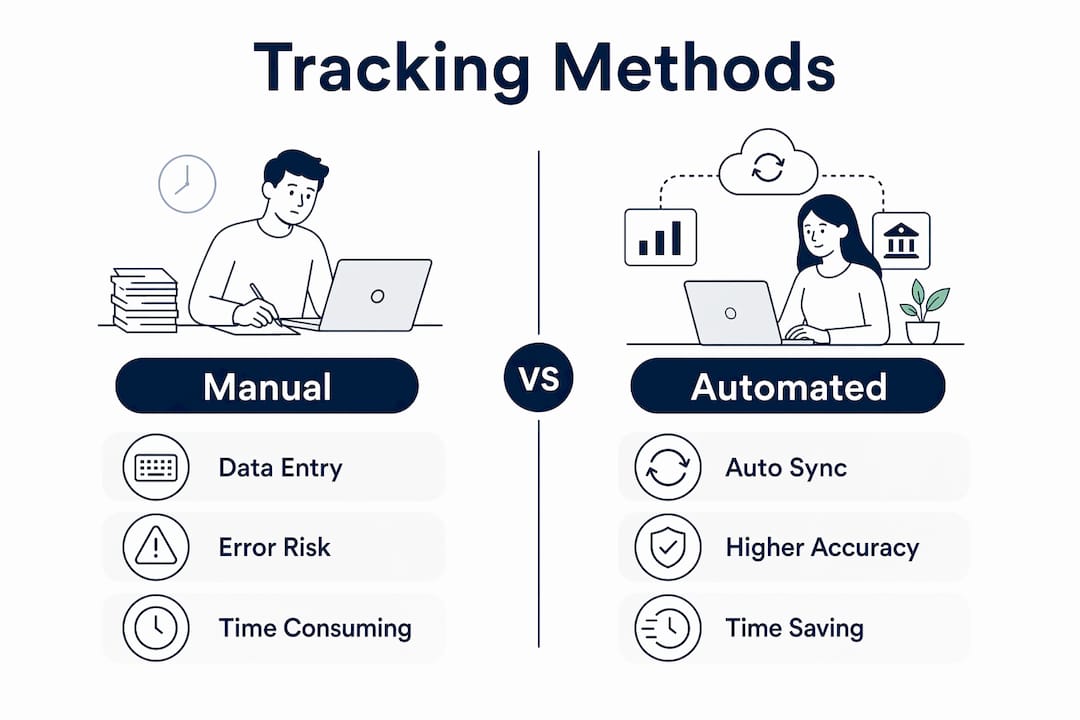
Interface friction is a real barrier. Chat-based and voice note expense capture lower friction and increase long-term adherence to financial control systems. When logging a transaction takes ten seconds instead of two minutes, people actually do it. That consistency is what makes the system work.
Corporate card management principles like automation, reconciliation, and policy enforcement apply directly to personal credit card control. The difference is scale, not method. Individuals managing four cards face the same core problems as a company managing a card program: categorization, timing, and oversight.
What are the best practices to maintain your system long-term?
Setting up a system is the easy part. Maintaining it through busy months, travel, and irregular income is where most people fall short. These steps build a routine that holds.
-
Audit every card's data at setup. Before anything else, pull the statement closing date, due date, credit limit, and current balance for each card. Write them in one place. A financial dashboard for multiple cards is the most efficient format for this.
-
Build your budget categories before the month starts. Assign spending limits to groceries, dining, travel, and any other category you use credit cards for. Do this on the last day of the prior month, not after you have already spent.
-
Automate minimum payments immediately. Set autopay for at least the minimum on every card. This is your safety net. Automating credit card payments eliminates the single most common and costly mistake: the missed due date.
-
Reconcile weekly, not monthly. Spend ten minutes each week matching transactions to your budget categories. Weekly reconciliation catches errors while your memory is fresh and prevents small discrepancies from becoming large ones.
-
Run a monthly review. At the end of each month, check utilization on every card, confirm all payments posted, and adjust next month's budget based on what actually happened.
Treating your personal credit cards with corporate-style controls, including categorization, automated audits, and reconciliation, transforms chaotic spending into a manageable and repeatable strategy. The discipline is the same. The scale is just smaller.
The most common mistake is skipping the weekly reconciliation step when life gets busy. That is exactly when errors accumulate. A missed charge, a duplicate transaction, or a fee you did not authorize can sit unnoticed for weeks if you only check monthly.
A debt-free credit card strategy also requires you to avoid one specific trap: using available credit as a signal that you can spend. Your credit limit is not your budget. Your envelope balance is.
Key Takeaways
A credit card financial control system works when you combine proactive data tracking, pre-spend budgeting, and automated payments into one consistent routine.
| Point | Details |
|---|---|
| Track five data points per card | Monitor statement date, due date, limit, balance, and utilization for every card you hold. |
| Use envelope budgeting for debt | Allocate funds to each card's debt envelope at the moment of purchase, not at month-end. |
| Automate before you rely on memory | Set autopay for minimums and recurring transfers to debt envelopes on every payday. |
| Reconcile weekly | Ten minutes per week catches errors and keeps your budget categories accurate. |
| Adopt pre-spend authorization | Budget money before the transaction happens to prevent overspending at the source. |
Why reactive tracking is the wrong starting point
Most people I talk to start their credit card management the same way: they download three months of statements, feel bad about what they see, and build a spreadsheet. That spreadsheet lasts about six weeks. Then life happens, and the system collapses.
The problem is not discipline. The problem is that post-spend tracking is structurally backward. You are analyzing decisions you already made. That information is useful for patterns, but it does not stop the next bad purchase.
What actually works is moving the control point upstream. When you allocate money to a category before you spend, you are making a decision once instead of hundreds of times. Pre-authorization budgeting does that. Envelope budgeting does that. The technology tools that support these methods do that.
I have also seen people over-engineer the tracking side and under-invest in the automation side. They build beautiful spreadsheets with conditional formatting and then manually enter every transaction. That works until it does not. Automation is not laziness. It is the only way to maintain a system through the months when you are traveling, sick, or just exhausted.
The other mistake I see constantly is treating all cards equally. Your highest-interest card deserves the most aggressive payment target. Your lowest-utilization card might need only a minimum payment and a monthly check. Differentiate your approach by card, not by a single blanket rule.
Finja's approach to managing multiple credit cards reflects exactly this logic: AI-guided prioritization that tells you which card to pay first, how much, and when. That is the kind of specificity a spreadsheet cannot give you.
The payoff for getting this right is not just lower interest costs. It is the mental clarity that comes from knowing exactly where you stand on every card, every week, without anxiety.
— Grace K.
Finja makes credit card financial control easier
Managing four or five credit cards across different billing cycles, interest rates, and spending categories is genuinely complex. Finja is an AI-powered credit card coach built to handle exactly that complexity.
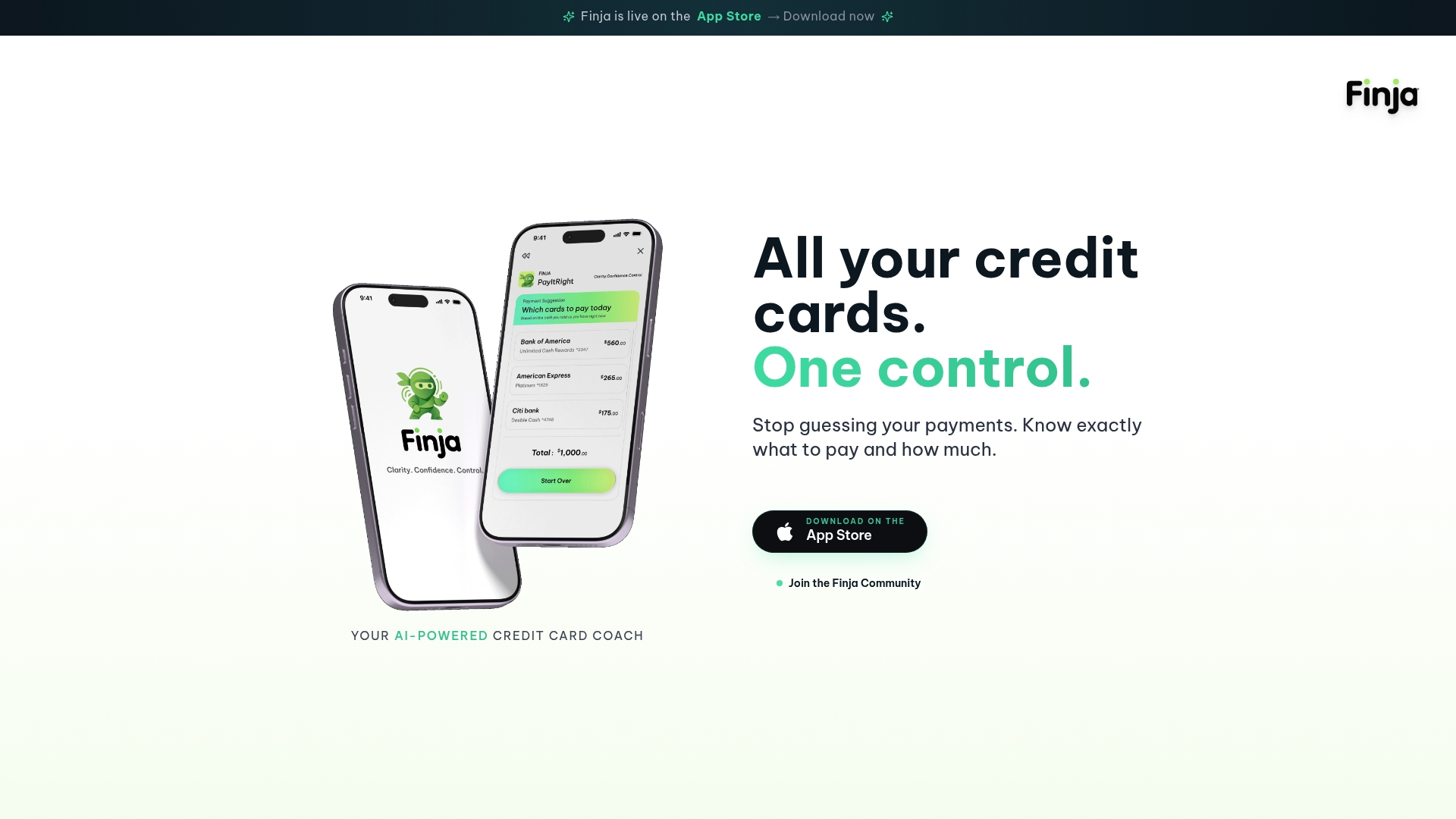
Finja analyzes your cards, identifies the highest-cost balances, and tells you precisely where to direct each payment for maximum interest savings. It tracks utilization, monitors due dates, and flags when a card is approaching a threshold that could affect your credit score. You get the structure of a full credit card financial control system without building it manually from scratch. Visit myfinja.com to see how Finja can put your credit card management on autopilot.
FAQ
What is a credit card financial control system?
A credit card financial control system is a structured method for tracking statement dates, credit limits, utilization rates, and payment due dates across multiple cards. It combines budgeting techniques and automation to reduce interest costs and prevent missed payments.
How many credit cards can I realistically manage with a system?
Advanced users track 5+ cards effectively using color-coded dashboards and automated alerts. The number is less important than having a consistent tracking and payment routine for each card.
What is the best budgeting method for credit card debt?
Envelope budgeting adapted for debt is the most effective method. You allocate funds to a dedicated debt envelope for each card at the time of purchase, so the payment is already funded before the bill arrives.
How does pre-authorization budgeting prevent overspending?
Pre-authorization budgeting requires you to assign funds to a spending category before a transaction clears. If the funds are not available in that category, the purchase does not happen, stopping overspending at the source.
How often should I reconcile my credit card accounts?
Weekly reconciliation is the standard for effective credit card management. Ten minutes per week catches errors while your memory is fresh and prevents small discrepancies from compounding into larger problems by month-end.