
Managing multiple credit cards means tracking due dates, balances, rewards, and spending limits across every account you hold. Payment history accounts for 35% of your FICO Score, which makes timely payments the single most important habit in any multi-card setup. Keeping credit utilization below 30% on each card individually protects your score even when your overall balance looks manageable. The most effective multiple credit card management tips share one principle: assign every card a clear role, then build systems around that role.
1. Multiple credit card management tips: start with a master list
The first step to managing multiple credit cards is knowing exactly what you have. Write down every card, its credit limit, current balance, APR, annual fee, and payment due date. A simple spreadsheet works well. So does a note app on your phone. The goal is one place where all the numbers live.

Once you have the list, you can spot gaps and overlaps immediately. If two cards charge annual fees but cover the same spending category, one of them is redundant. A master list turns a scattered set of accounts into a system you can actually manage.
2. Align all due dates to the same day
Many card issuers allow you to change your payment due date with a single phone call or a few clicks in your account settings. Moving all due dates to the same day of the month removes the mental load of tracking separate deadlines. One payment window means one calendar reminder.
This works especially well if you get paid on a consistent schedule. Set your due dates a few days after your paycheck clears. That way, funds are always available when payments are due.
Pro Tip: If you cannot align all due dates, group them into two windows per month, one right after each paycheck. Two windows beat seven scattered deadlines every time.
3. Set up automatic payments and spending alerts
Automatic payments connected to your bank account eliminate late fees and protect your payment history. Set autopay to cover at least the minimum on every card. Then pay the rest manually based on your monthly budget.
Spending alerts add a second layer of control. Most issuers let you set notifications for purchases above a certain amount, for balance thresholds, or for any transaction at all. These alerts catch unauthorized charges fast and keep you aware of where each card stands throughout the month.
4. Carry only the cards you use daily
Carrying every card in your wallet multiplies your fraud exposure. Limit the physical cards you carry to the ones you use regularly, and leave the rest at home in a secure location. If a card is lost or stolen, fewer cards in your wallet means fewer accounts to freeze.
For cards you rarely use in person, add them to a digital wallet like Apple Pay or Google Pay instead. Digital wallets tokenize your card number, so merchants never see your actual account details. This approach gives you access to the card without the physical risk.
Pro Tip: Most issuers offer a card-lock feature in their app. Freeze any card you are not actively using. You can unfreeze it in seconds if you need it.
5. Prioritize payments with the avalanche or snowball method
Paying the minimum on every card protects your credit score. After that, any extra money should go toward one card at a time using a clear method.
The two most proven approaches are:
- Avalanche method: Direct extra payments to the card with the highest APR first. Once that balance reaches zero, move to the next highest rate. The avalanche method saves the most money in interest over time and is mathematically the fastest path to being debt-free.
- Snowball method: Pay off the card with the smallest balance first, regardless of interest rate. Each paid-off card gives you a psychological win that keeps momentum going. The snowball method works best for people who need motivation to stay on track.
Neither method is wrong. The right one is whichever you will actually stick with. If high-interest debt is costing you hundreds per month, the avalanche method cuts that cost faster. If you have five cards and feel paralyzed, the snowball method gets you moving.
Pro Tip: If you are struggling to keep up with payments, call your card issuer directly. Many offer temporary APR reductions or hardship programs that are not advertised publicly.
6. Keep credit utilization below 30% on every card
Credit utilization is the ratio of your balance to your credit limit. Lenders evaluate utilization on each card separately, not just as a combined total. A card maxed at 90% hurts your score even if your overall utilization across all cards looks fine.
The 30% threshold is the widely accepted ceiling. Below 10% is even better for your score. If a card has a $5,000 limit, keep the balance under $1,500. If you regularly spend more than that on one card, ask for a credit limit increase or spread purchases across cards to stay within the threshold.
Checking your utilization before your statement closes gives you time to make an extra payment and lower the reported balance. Card issuers typically report balances to credit bureaus on or near the statement closing date, not the due date.
7. Assign each card a specific spending role
Assigning a clear purpose to each card ensures you use its rewards structure to your advantage. A card that earns 3% on groceries should go in your wallet every time you shop for food. A travel card with airport lounge access should come out when you fly.
Here is how a simple card role system looks in practice:
| Card role | Typical reward focus | Best used for |
|---|---|---|
| Everyday spending | Flat-rate cash back | Gas, groceries, general purchases |
| Travel card | Miles or points per dollar | Flights, hotels, car rentals |
| Dining card | Bonus points at restaurants | Restaurants, food delivery |
| Balance transfer card | Low or 0% intro APR | Paying down existing debt |
| Store card | Retailer-specific discounts | One specific retailer only |
Review this assignment once a year. Reward structures change, and a card that made sense two years ago may no longer earn its annual fee.
8. Evaluate annual fees against actual benefits
Annual fees only make sense when the perks you use outweigh the cost. Many cardholders pay annual fees without using the benefits that justify them. A $95 annual fee on a travel card is worth it if you use the $100 travel credit and the lounge access. It is not worth it if the card sits in a drawer.
Do this math once a year for every card that charges a fee. Add up the dollar value of every perk you actually used in the past 12 months. If the total falls below the annual fee, call the issuer and ask for a retention offer or downgrade to a no-fee version of the same card.
9. Track reward expiration dates and redemption rules
Rewards points and miles expire. Redemption rules vary widely between programs. Some programs devalue points with little notice. Treating rewards like a savings account you never check is how you lose hundreds of dollars in earned value.
Keep a note of each card's reward expiration policy next to your master list. Set a calendar reminder every six months to check balances and redeem anything close to expiring. Redeeming for statement credits or direct deposits is almost always the simplest option and rarely requires minimum thresholds.
10. Avoid closing old credit cards
Closing multiple credit cards reduces your total available credit and shortens your credit history length. Both factors hurt your credit score. A card you opened ten years ago contributes positively to your average account age even if you never use it.
If a card charges no annual fee, keep it open and use it occasionally for a small recurring charge. That keeps the account active without adding complexity. If a card charges an annual fee you cannot justify, downgrade it to a no-fee version rather than closing it outright.
11. Review statements monthly for unauthorized charges
Fraud on one card is easy to miss when you have several accounts. Set aside time each month to review every statement line by line. Unauthorized charges are far easier to dispute within 30 days than after several billing cycles have passed.
Most issuers let you dispute a charge directly in their app. File the dispute as soon as you spot something unfamiliar. While the dispute is open, the issuer typically removes the charge from your minimum payment calculation.
Key takeaways
Effective multi-card management requires three things working together: organized tracking, disciplined payment habits, and a clear role for every card in your wallet.
| Point | Details |
|---|---|
| Payment history is paramount | Pay at least the minimum on every card every month to protect your FICO Score. |
| Per-card utilization matters | Keep each card's balance below 30% of its limit, not just your combined total. |
| Assign card roles | Give each card one spending purpose so rewards and fees stay aligned. |
| Use avalanche or snowball | Pick one payoff method and apply extra payments consistently to reduce interest costs. |
| Keep old cards open | Closing accounts shortens credit history and raises utilization, both of which lower your score. |
Why I think most people overcomplicate managing multiple cards
Most advice on this topic treats multi-card management like a spreadsheet problem. Build the right tracker, set the right alerts, and everything falls into place. That is partly true. But the real challenge is psychological, not logistical.
The cardholders I have seen struggle most are not the ones who lack a system. They are the ones who have too many cards for their actual spending habits. A portfolio of six cards sounds impressive until you realize three of them earn rewards in categories you rarely use. Complexity without purpose is just noise.
My honest recommendation: audit your card portfolio once a year like you would a subscription service. Ask whether each card earned its keep in the past 12 months. If the answer is no, downgrade or close it. A tight portfolio of two or three well-chosen cards beats a sprawling collection of six mediocre ones.
Automation handles the mechanical side well. Autopay prevents late fees. Alerts catch fraud early. But no app replaces the annual review where you sit down and ask whether your cards still match your life. That review is the single highest-value habit in this entire list.
— Grace K.
How Finja helps you manage multiple cards with less effort
Keeping track of payment dates, utilization ratios, and reward deadlines across several cards is a real time commitment. Finja is an AI-powered credit card management platform built specifically for this situation.
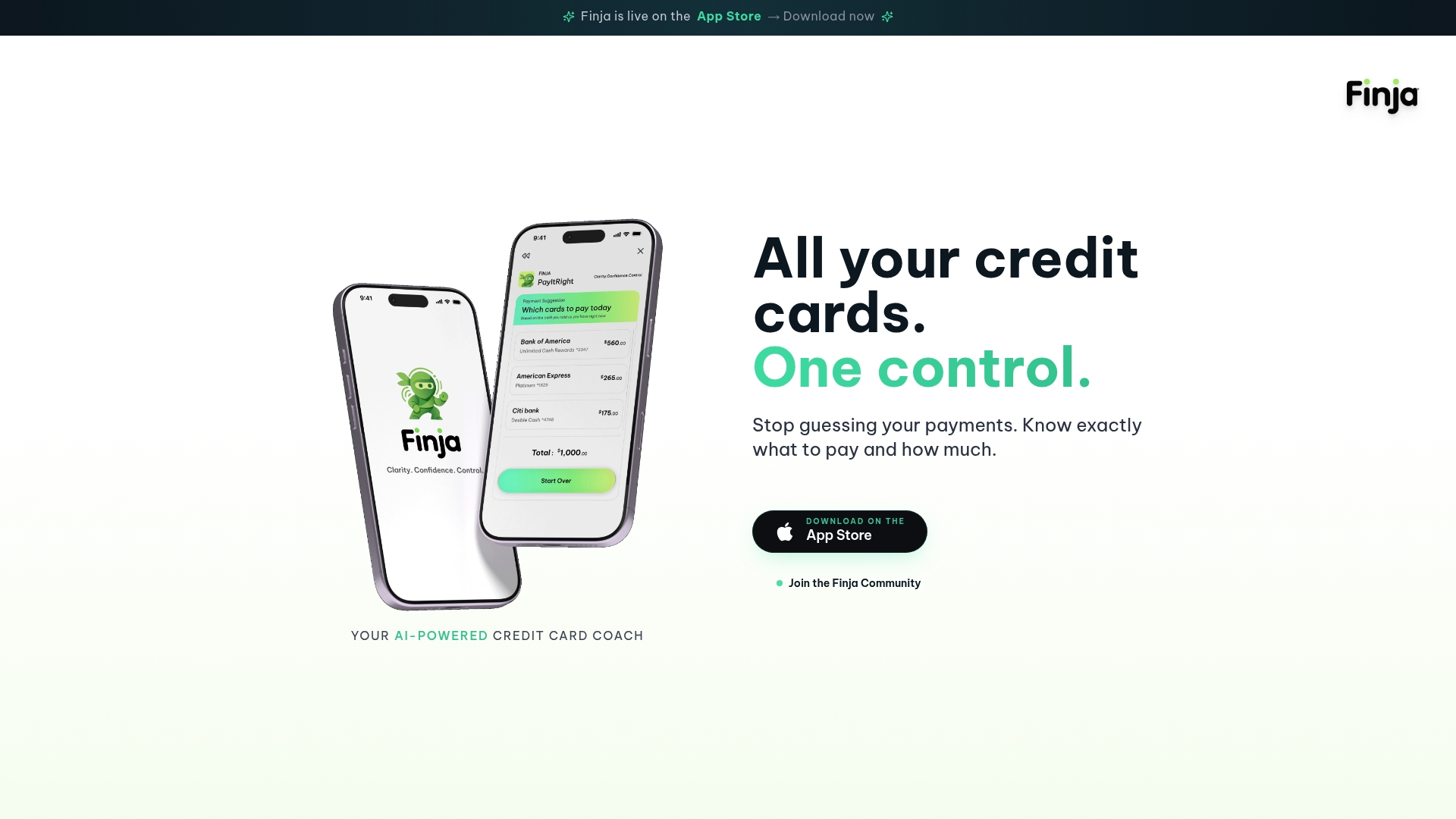
Finja monitors your cards, flags payment priorities, tracks reward opportunities, and gives you a clear picture of your credit health in one place. Instead of juggling spreadsheets and calendar reminders, you get a single view of what to pay, when to pay it, and which card to use for each purchase. Visit Finja's credit card coach to see how it works and get started with your card portfolio today.
FAQ
How many credit cards is too many to manage?
There is no universal limit, but most people manage two to four cards well without losing track of payments or rewards. Beyond that, complexity tends to outpace the benefits unless you have strong organizational habits.
What is the fastest way to pay off multiple credit cards?
The avalanche method, which directs extra payments to the highest-APR card first, saves the most money in interest and pays off debt fastest from a mathematical standpoint.
Does closing a credit card hurt your credit score?
Yes. Closing a card reduces your available credit and can shorten your credit history, both of which lower your FICO Score. Downgrading to a no-fee version is usually a better option.
How do I keep credit utilization low across multiple cards?
Keep each card's balance below 30% of its individual credit limit. Pay balances before the statement closing date so the lower balance is what gets reported to credit bureaus.
What is the best way to track multiple credit card due dates?
Align all due dates to the same day by calling each issuer, then set autopay for at least the minimum on every card. One date is far easier to track than several scattered throughout the month.