
A debt-free credit card strategy is the methodical practice of prioritizing payments, controlling spending, and managing credit wisely to eliminate balances and avoid accumulating new debt. This approach goes beyond willpower. It combines proven repayment frameworks, realistic budgeting, and behavioral discipline into a system that works long term. The stakes are real: 41% of credit card debt stems from emergencies, and 61% of those cardholders carry balances for more than a year. Understanding what a debt-free credit card strategy actually involves is the first step toward getting out from under that cycle.
What is a debt-free credit card strategy and how does it work?
A debt-free credit card strategy is a structured plan that combines a chosen payoff method, a realistic budget, and consistent behavioral habits to reduce and eliminate credit card balances. The industry term for this broader practice is "credit card debt management," and the two most recognized payoff frameworks within it are the debt avalanche and the debt snowball. Both are well-established in personal finance, and choosing between them depends on your psychology as much as your math.
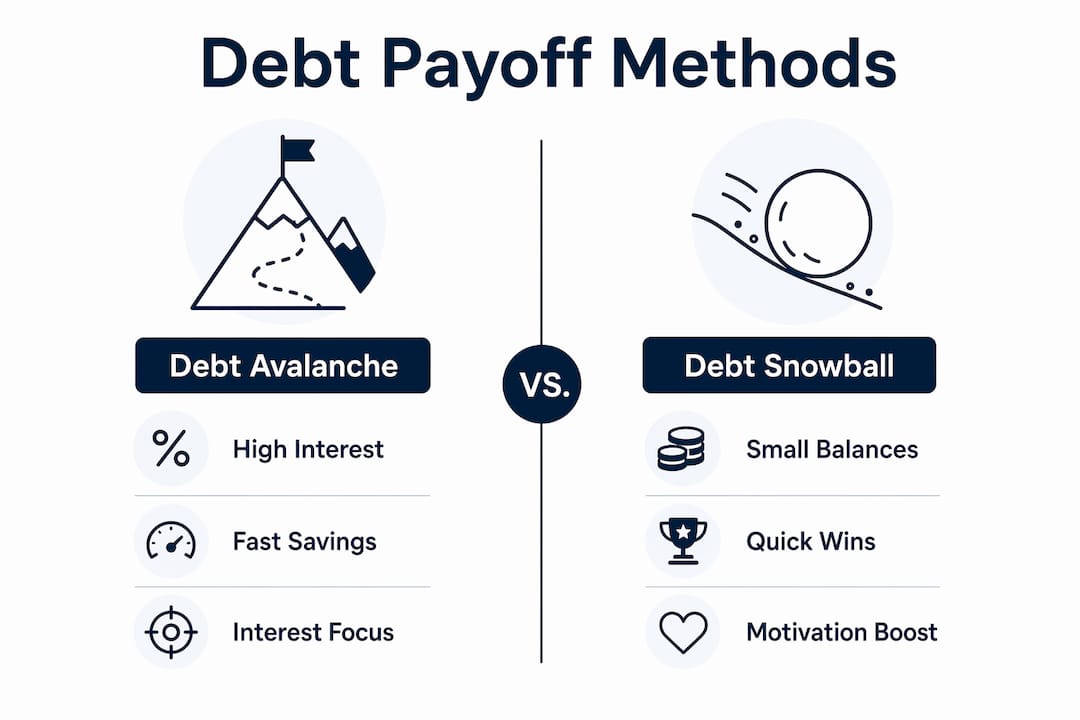
The debt avalanche method directs your extra payments toward the card with the highest interest rate first. Once that balance is gone, you roll that payment amount to the next highest rate card. Avalanche minimizes interest cost over the life of your debt, making it the mathematically superior choice. If you carry balances on three cards at 24%, 19%, and 15% APR, you attack the 24% card first regardless of its balance size.

The debt snowball method works in reverse order. You pay off the smallest balance first, regardless of interest rate. This produces faster early wins, which builds the motivation to keep going. For people who have struggled to stay consistent, the psychological reward of closing out a card account can matter more than the interest savings.
Pro Tip: Write your card balances and rates on a single sheet of paper before choosing a method. Seeing the full picture in one place often makes the right choice obvious.
Comparing the two methods
| Factor | Debt avalanche | Debt snowball |
|---|---|---|
| Payoff order | Highest interest rate first | Lowest balance first |
| Total interest paid | Lower | Higher |
| Motivation style | Analytical, long-term | Quick wins, emotional |
| Best for | Disciplined, numbers-focused people | Those who need early momentum |
A third option worth knowing: balance transfers to 0% APR cards can pause interest entirely for a promotional period, typically 12–21 months. This works well when combined with either method above, but only if you pay off the transferred balance before the promotional rate expires.
How can budgeting and credit utilization support your payoff plan?
Budgeting is the foundation that keeps a debt payoff plan from collapsing. Without a clear picture of where your money goes each month, extra payments never materialize. Realistic budgeting means accounting for occasional and emergency expenses rather than building a plan so tight it breaks the first time your car needs a repair.
Start by categorizing your spending into fixed costs (rent, utilities, subscriptions) and variable costs (groceries, dining, entertainment). Then identify where you can redirect money toward debt without cutting so deep that the plan feels punishing. Budgets that allow reasonable occasional spending prevent frustration and failure better than restrictive ones. A plan you can follow for 18 months beats a perfect plan you abandon in 6 weeks.
Credit utilization is the percentage of your available credit limit you are currently using. Industry standards recommend keeping utilization below 30% to protect your credit score. If you have a $10,000 combined credit limit, that means carrying no more than $3,000 in balances at any given time. Staying below this threshold signals to lenders that you are not over-reliant on credit.
Here are the most effective ways to keep utilization low while paying down debt:
- Pay your bill twice per month instead of once. Multiple smaller payments per billing cycle lower your average reported utilization and improve your credit score over time.
- Request a credit limit increase on cards you are not actively using. A higher limit with the same balance lowers your utilization ratio automatically.
- Avoid closing paid-off cards immediately. Closing a card reduces your total available credit, which raises utilization on remaining cards.
- Use a credit card financial model to project how different payment amounts affect your payoff timeline and utilization.
Pro Tip: Set a calendar reminder to check your credit utilization on the 15th of each month, before your statement closes. Paying down a balance before the statement date is what actually gets reported to credit bureaus.
What practical steps prevent emergencies from creating new debt?
Emergency expenses are the single largest driver of credit card debt. The most effective buffer is a dedicated emergency fund. Building an emergency fund of $500–$1,000 is a foundational step that most people overlook, yet it prevents the cycle of paying down a card only to charge it back up when something unexpected hits.
Follow these steps to build and protect that buffer:
- Open a separate savings account. Keeping emergency money in your checking account makes it too easy to spend. A separate account creates friction that protects the fund.
- Automate a small weekly transfer. Even $25 per week builds $1,300 in a year without requiring active decisions. Automation removes the temptation to skip.
- Define what counts as an emergency. Car repairs, medical copays, and urgent home fixes qualify. A sale at your favorite store does not. Write the definition down.
- Replenish immediately after use. The moment you pull from the fund, restart contributions to rebuild it. Treat replenishment as a fixed expense.
- Explore credit union membership. Credit unions often offer lower-rate emergency loans than traditional banks, giving you a backup option that does not involve high-interest credit card charges.
Prevention is the most underrated part of debt-free living tips. Paying down debt while simultaneously building a small cash cushion takes longer, but it produces a system that does not collapse the next time life gets expensive.
How to maintain good credit and avoid common pitfalls during payoff
Paying off credit card debt is one challenge. Staying out of debt once you get there is another. Consistent discipline post-payoff is the hardest part of the process, and it requires both behavioral and structural habits.
The structural habits are straightforward:
- Pay your full statement balance every month when possible. Carrying any balance means paying interest, which erodes every dollar of progress.
- Set up automatic minimum payments on every card. This eliminates late fees and protects your credit score even in months when you forget to log in.
- Avoid opening multiple new cards within a short period. Each application triggers a hard inquiry, and too many in a short window signals risk to lenders.
- Use multiple credit card management tips to track which cards carry balances and which should stay at zero.
The behavioral pitfalls are harder to address because they are invisible until they have already done damage. Lifestyle creep is the most common one. Redirecting salary increases automatically to debt repayment or savings prevents the gradual spending expansion that derails most payoff plans. When you get a raise, increase your debt payment by the same amount before you adjust your lifestyle to match the new income.
Accountability also matters more than most financial guides admit. Debt-free strategies are not only financial but behavioral. An accountability partner, whether a friend, a financial coach, or a platform like Finja, keeps you honest when motivation fades. Progress rewards work too. Set a milestone, say paying off your first card, and attach a small, pre-planned reward to it. The reward reinforces the behavior without undoing the financial progress.
Pro Tip: Treat your debt payoff like a subscription you cannot cancel. Automate the payment, set it, and do not touch it. The less you have to decide each month, the more consistent you will be.
Key takeaways
A debt-free credit card strategy works when you combine a structured payoff method, a realistic budget, a small emergency fund, and consistent behavioral habits into one system.
| Point | Details |
|---|---|
| Choose a payoff method | Use the debt avalanche to minimize interest or the debt snowball to build momentum. |
| Keep utilization below 30% | Pay twice per month and avoid closing paid-off cards to protect your credit score. |
| Build an emergency fund | Save $500–$1,000 in a separate account to stop emergencies from creating new debt. |
| Prevent lifestyle creep | Redirect raises and windfalls to debt repayment before adjusting your spending. |
| Automate everything possible | Set automatic payments and transfers to remove monthly decision fatigue. |
The part nobody talks about: mindset over math
Grace K. here. I have spent years watching people with solid payoff plans fail, and the reason is almost never the math. The debt avalanche is objectively better on paper. But I have seen people abandon it after six months because they had not closed a single account yet, and the lack of visible progress killed their motivation. The snowball method, for all its mathematical inefficiency, keeps people in the game.
The real insight I keep coming back to is this: being debt-free immediately is a misperception that sets people up to quit. Gradual, consistent reduction produces nearly the same financial freedom as eliminating debt overnight, and it is far more sustainable for most people. The goal is not perfection. The goal is a system you will still be running 18 months from now.
What I tell anyone starting this process: stop trying to build the optimal plan and start building the plan you will actually follow. A budget that feels slightly too easy is better than one that feels like punishment. Progress that feels slow is still progress. The behavioral side of credit card management is where most people need the most help, and it is the part that almost no spreadsheet can fix.
— Grace K.
How Finja helps you put this into practice
Knowing the strategy is one thing. Executing it across multiple cards, billing cycles, and life events is where most people need support.
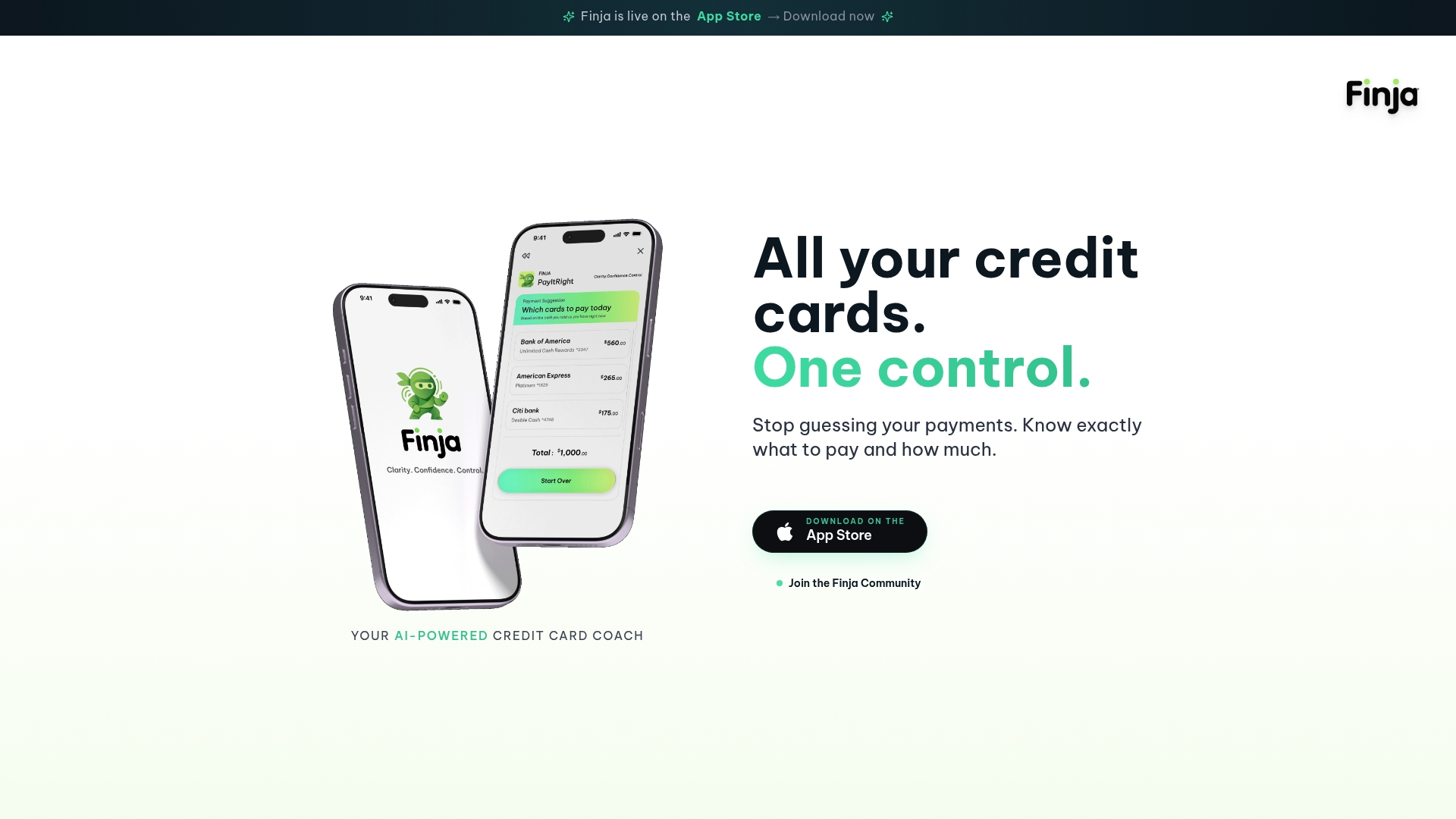
Finja is an AI-powered credit card management platform built for exactly this situation. It analyzes your cards, balances, and interest rates, then recommends which payments to prioritize and when to make them. Finja tracks your credit utilization in real time, sends payment reminders before statement dates, and shows your progress toward payoff in plain terms. For anyone managing two or more cards, having a single place that connects the full picture makes the difference between a plan that works and one that stalls.
FAQ
What is the fastest way to pay off credit card debt?
The debt avalanche method pays off debt fastest in terms of total interest saved by targeting the highest-rate card first. Combining it with a balance transfer to a 0% APR card can accelerate payoff further if you clear the balance before the promotional period ends.
How does credit utilization affect my credit score?
Credit utilization accounts for a significant portion of your credit score. Keeping it below 30% is the industry standard, and making multiple payments per month lowers your average reported utilization between statement dates.
How much should I save in an emergency fund before paying off debt?
A starter emergency fund of $500–$1,000 is the recommended baseline. This amount covers most common unexpected expenses and prevents you from charging new debt while actively paying down existing balances.
Does paying off a credit card hurt my credit score?
Paying off a card does not hurt your score. Closing the account after payoff can raise your utilization ratio by reducing total available credit, so keeping the account open with a zero balance is generally the better move.
How do I avoid falling back into credit card debt after paying it off?
Automate minimum payments on all cards, redirect any income increases directly to savings before adjusting your spending, and maintain your emergency fund. Consistent discipline post-payoff is the hardest part of staying debt-free long term.