
Financial stress from credit card debt is defined as the persistent anxiety caused by high balances, rising interest charges, and the feeling of losing control over your money. The good news: you can reduce financial stress from credit cards by applying proven repayment strategies, monitoring your credit health, and using the right tools. This guide covers the debt avalanche method, balance transfers, credit monitoring through AnnualCreditReport.com, and budgeting habits that lower financial anxiety for good.
What are the most effective credit card repayment strategies to reduce financial stress?
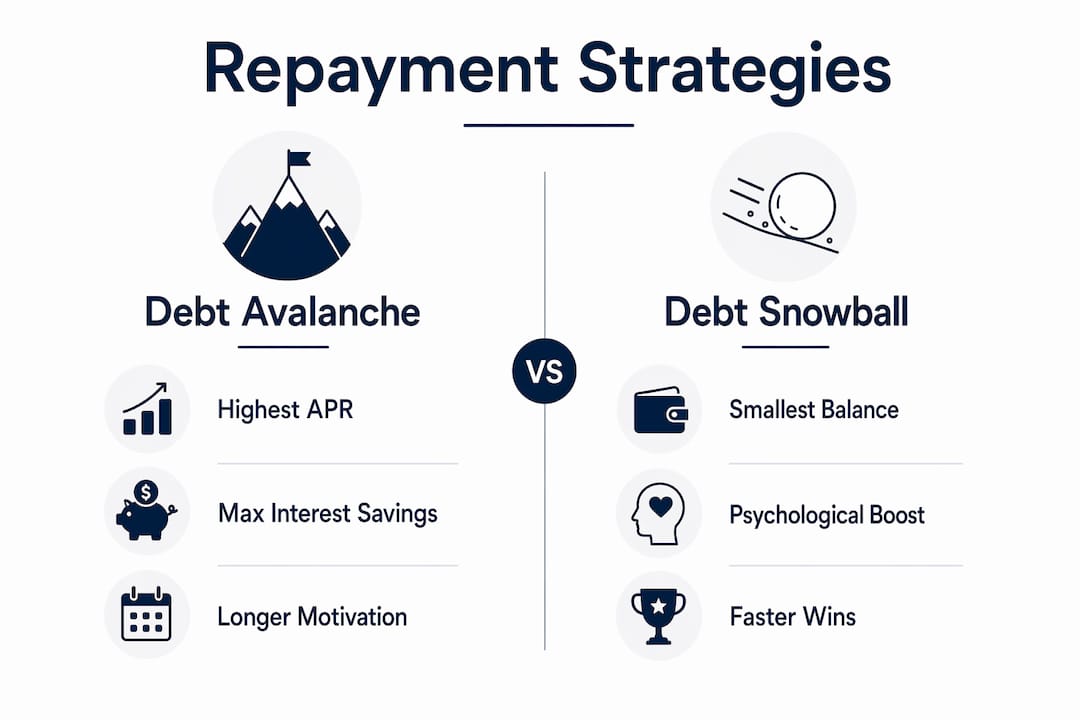
The two most widely recommended credit card repayment strategies are the debt avalanche and the debt snowball. Each works differently, and choosing the right one depends on your personality as much as your math.
Debt avalanche: pay the highest APR first
The debt avalanche method targets your card with the highest interest rate first while paying minimums on all others. Once that balance hits zero, you roll that payment toward the next highest rate. This approach saves the most money in total interest over time, according to experts cited by ABC News and Federal Reserve Bank of St. Louis research.

Debt snowball: pay the smallest balance first
The debt snowball flips the logic. You pay off your smallest balance first, regardless of interest rate, then move to the next smallest. The psychological win of eliminating a card entirely keeps motivation high. For people who have struggled to stick with a plan, that momentum matters more than the math.
Why minimum payments are a trap you must avoid
Paying only minimums is the single most damaging habit in credit card debt management. A $5,000 balance at 22.3% APR paid only at the minimum can take over 16 years to clear and cost $7,184 in interest. That means you pay more in interest than the original balance. Paying even $50 extra per month cuts years off that timeline.
One more move most people skip: call your card issuer and ask for a lower rate. Over 80% of cardholders who ask succeed, often achieving reductions of 5–7 percentage points. That one phone call can save hundreds of dollars a year.
| Method | Focus | Best for | Main risk |
|---|---|---|---|
| Debt avalanche | Highest APR first | Saving maximum interest | Slow early wins can hurt motivation |
| Debt snowball | Smallest balance first | Building momentum | Pays more interest overall |
| Debt management plan | Consolidated payment | Severe debt, need structure | Fees of $25–$50 per month |
Pro Tip: Pick the method you will actually stick with. Consistency beats theoretical superiority every time.
How can balance transfers and debt consolidation help reduce credit card financial stress?
Balance transfers and consolidation loans are two tools that can dramatically cut the interest you pay while you work to manage credit card debt. Both require discipline, but used correctly, they give you breathing room.
How 0% APR balance transfer cards work
A 0% APR balance transfer card lets you move existing high-interest balances to a new card with no interest for a set period. These promotional periods typically run 12–21 months. The catch: most cards charge a transfer fee of 3–5% upfront, and the rate reverts to 19%–29% APR if any balance remains when the promo ends.
The math still works in your favor if you pay off the balance before the deadline. A $6,000 balance transferred with a 3% fee costs $180 upfront. Avoiding 20% APR for 18 months saves far more than that. The risk is behavioral, not financial.
Debt consolidation loans as an alternative
A debt consolidation loan replaces multiple card balances with a single personal loan, usually at a lower fixed interest rate. This simplifies repayment to one monthly payment and removes the deadline pressure of a promo period. Qualification depends on your credit score, income, and debt-to-income ratio. Borrowers with good credit typically access the most favorable rates.
| Factor | Balance transfer card | Consolidation loan |
|---|---|---|
| Interest rate | 0% promo, then 19%–29% | Fixed, typically lower than cards |
| Transfer/origination fee | 3%–5% of balance | 1%–8% origination fee |
| Promo deadline risk | High | None |
| Credit score impact | Hard inquiry, new account | Hard inquiry, new account |
| Best for | Payoff within 12–21 months | Longer repayment timelines |
Pro Tip: Schedule autopay immediately after opening a balance transfer card. Missing a single payment can void the promotional rate retroactively.
Nonprofit credit counseling agencies also offer debt management plans that consolidate payments, negotiate lower rates with creditors, and typically run 3–5 years. Monthly fees range from $25–$50, but the structure and negotiated APR reductions can make them worth it for people carrying heavy balances across multiple cards.
What steps can you take to improve your credit health while managing credit card debt?
Improving your credit health during repayment is not something to save for later. Monitoring your credit score and reports while you pay down debt gives you early warnings and faster results.
AnnualCreditReport.com is the only federally authorized site for free credit reports from all three major bureaus: Equifax, Experian, and TransUnion. A special program now provides weekly free access to all three. That means you can check for errors, track utilization changes, and catch fraud without paying anything.
Errors on credit reports are more common than most people expect. A wrong balance, a duplicate account, or a payment marked late in error can suppress your score by dozens of points. Disputing errors early in your repayment process means your score improves faster as you pay down balances.
The two behaviors that move your credit score most during repayment are on-time payments and lower credit utilization. Utilization is the percentage of your available credit you are using. Keeping it below 30% across all cards signals responsible use to lenders. Paying down a $3,000 balance on a card with a $5,000 limit drops your utilization from 60% to 40%, which can lift your score noticeably within one or two billing cycles.
Free and low-cost tools for credit monitoring:
- AnnualCreditReport.com: Free weekly reports from all three bureaus
- Credit Karma: Free score tracking with TransUnion and Equifax data
- Experian free tier: Free monthly FICO score and Experian report
- Your card issuer: Many issuers like Chase, Discover, and Capital One provide free FICO scores in their apps
- Consumer Financial Protection Bureau (CFPB): Free guides on disputing errors and understanding reports
Pro Tip: Check your credit report at the start of your repayment plan, not just at the end. Early error detection can accelerate your score recovery.
What budgeting and psychological habits lower financial anxiety during repayment?
Financial anxiety during credit card repayment is real, and ignoring it makes the debt worse. Avoidance leads to missed payments, which leads to fees and higher rates. Breaking that cycle starts with confronting the numbers directly.
AARP recommends a monthly income and expense review that separates needs from wants. Needs are rent, groceries, and utilities. Wants are subscriptions, dining out, and impulse purchases. Seeing the gap between what you earn and what you spend removes the vague dread and replaces it with a specific number you can act on.
Here are seven daily and weekly habits that reduce financial anxiety during repayment:
- Name your debt out loud. Write down every balance, rate, and minimum payment. Vague fear shrinks when you face specific numbers.
- Automate minimum payments. Set every card to autopay the minimum so you never miss a due date, then pay extra manually.
- Review your budget weekly, not monthly. Weekly check-ins catch overspending before it compounds.
- Build a $500 mini emergency fund first. A small buffer prevents one unexpected expense from derailing your repayment plan.
- Celebrate balance milestones. Paying off $1,000 deserves acknowledgment. Small wins sustain long-term effort.
- Freeze spending on cards you are paying down. Use cash or a debit card for daily expenses while balances drop.
- Practice self-compassion. Debt is a financial problem, not a character flaw. Shame increases avoidance. Clarity increases action.
Automating payments is the single most underused tool in debt repayment. It removes the decision fatigue of remembering due dates and eliminates late fees, which average $30–$40 per occurrence. That money goes toward your balance instead.
Key Takeaways
The most effective way to reduce financial stress from credit cards is to combine a consistent repayment strategy with active credit monitoring and honest budgeting habits.
| Point | Details |
|---|---|
| Choose one repayment method | Pick debt avalanche or snowball and commit; consistency matters more than which method you choose. |
| Avoid minimum-only payments | A $5,000 balance at 22.3% APR paid at minimums costs $7,184 in interest over 16 years. |
| Use balance transfers carefully | 0% APR promos last 12–21 months; automate payments and treat the deadline as fixed. |
| Monitor credit weekly | AnnualCreditReport.com provides free weekly reports; dispute errors early to speed up score recovery. |
| Budget and automate | Separate needs from wants monthly and automate minimum payments to eliminate late fees. |
What I have learned from watching people fight credit card debt
Most people I have seen struggle with credit card debt share one habit: they look away. They pay the minimum, avoid opening statements, and tell themselves they will deal with it later. Later becomes years, and years become the $7,184 interest trap.
The uncomfortable truth is that no repayment method works if you do not track your interest rates and adjust your payments accordingly. I have watched people transfer balances to 0% APR cards and then charge new purchases on the same card, wiping out the advantage within three months. The math was never the problem. The behavior was.
My honest recommendation: pick the method that matches your personality. If you need early wins to stay motivated, start with the snowball. If you are disciplined and want to save the most money, go avalanche. Either way, automate your payments, check your credit report monthly, and call your issuer to negotiate your rate. That last step alone can save you hundreds of dollars with a single five-minute phone call.
Seek help from a nonprofit credit counselor if the debt feels unmanageable. The National Foundation for Credit Counseling (NFCC) connects people with certified counselors who negotiate on your behalf. Accountability to another person changes behavior in ways that spreadsheets alone cannot.
— Thiri
How Myfinja helps you manage credit card debt and reduce stress
Carrying multiple credit cards with different rates, due dates, and balances is genuinely hard to track manually. Myfinja is an AI-powered credit card coach that organizes all of your cards in one place, identifies which balances to pay first, and sends reminders before due dates.
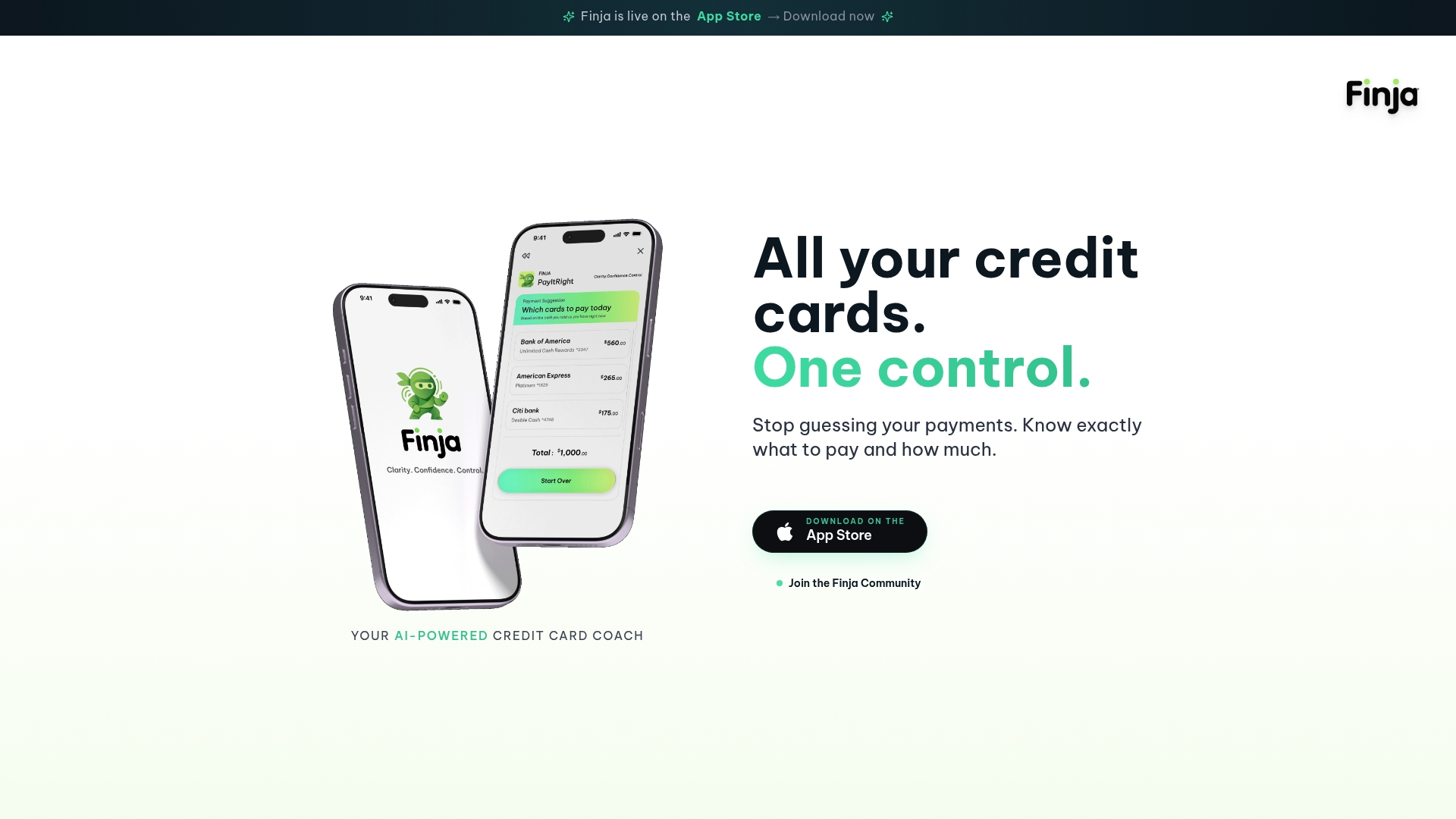
Myfinja analyzes your APRs, balances, and payment history to suggest a repayment path tailored to your situation. It tracks your credit utilization in real time and flags when a balance transfer could save you money. For anyone managing two or more cards, that kind of clarity is worth a lot. Visit Myfinja to see how an AI credit card coach can replace the guesswork with a clear, personalized plan.
FAQ
What is the fastest way to pay off credit card debt?
The debt avalanche method pays off debt fastest in total interest saved by targeting the highest APR card first. Paying more than the minimum each month and negotiating a lower rate with your issuer accelerates the timeline further.
How does a balance transfer reduce financial stress?
A 0% APR balance transfer pauses interest for 12–21 months, giving you time to pay down principal without new interest charges. The key is paying off the full balance before the promotional period ends.
How often should I check my credit report?
AnnualCreditReport.com now offers free weekly access to reports from all three bureaus. Checking monthly during active debt repayment helps you catch errors early and track utilization improvements.
Does paying off credit cards improve my credit score?
Yes. Paying down balances lowers your credit utilization ratio, which is one of the largest factors in your credit score. Dropping utilization from 60% to below 30% can produce a noticeable score increase within one to two billing cycles.
What is a debt management plan?
A debt management plan is a structured repayment program offered by nonprofit credit counseling agencies. They consolidate your payments, negotiate lower interest rates with creditors, and typically run 3–5 years with monthly fees of $25–$50.