
The fastest way to optimize credit card payments is to pay your full statement balance by the due date whenever you can, since that preserves your grace period and blocks interest entirely. When you can't pay in full, automate your minimums, and send every extra dollar to the card with the highest APR. Combine that with paying before your statement closing date and you control both interest costs and reported utilization at once.
TL;DR:
- Paying your full statement balance on time preserves your grace period and avoids interest, but cash advances and some balance transfers do not have this benefit.
- Automating payments at least one business day before your statement closing date ensures reported balances are low, which can boost your credit score.
- Using the avalanche method by paying extra towards the highest-APR card first generally minimizes total interest paid, aligned with Regulation Z rules.
- Running the numbers for balance transfers is crucial, as high fees or deferred interest terms can eliminate potential savings.
- An AI-powered credit card coach can help automate payment timing and allocation across multiple cards to optimize interest savings without manual tracking.
Table of Contents
- Your 48-hour action checklist
- When paying in full beats carrying a balance
- Choosing between avalanche, snowball, or a hybrid payoff plan
- Statement close dates, reporting, and processing cutoffs
- Autopay settings and which payment method to use
- Weighing 0% APR transfers against a consolidation loan
- Asking your issuer to lower rates or waive fees
- Monthly habits that keep your payments optimized
- How an AI payment coach handles this automatically
- Timing payments around rewards and cashback
- Where to focus first if you're starting from scratch
- Automate the whole process with a credit card coach
- Sources
- FAQ
Your 48-hour action checklist
Start with the moves that cost nothing and take minutes to set up.
- Set autopay to cover the full statement balance on every card, or at minimum, minimums plus one extra payment.
- Note each card's statement closing date and payment processing cutoff, then schedule payments at least one business day early.
- If you're carrying debt, run the math on a balance transfer before moving anything: only shift funds if the fee is smaller than the interest you'd save.
- Skip cash advances and avoid opening new balance-transfer cards back to back, since repeated hard inquiries and short promotional windows can undo the savings.
When paying in full beats carrying a balance
Paying your statement balance in full by the due date keeps your grace period intact, which means purchases carry no interest at all. This is the best default move for nearly every cardholder, according to the Consumer Financial Protection Bureau, which explains that the grace period only holds when you pay the full statement balance, not just the minimum.
Two exceptions matter:
- Cash advances typically start accruing interest immediately, with no grace period at all.
- Some balance-transfer offers work the same way, so read the terms before assuming a grace period applies.
If you can't pay in full, pay as early and as much above the minimum as you can manage. A late payment can trigger a fee typically ranging from $25 up to $35 and may lead to a penalty APR around 28.99% or higher, as indicated by CFPB data on credit card contract terms. Avoiding that penalty rate alone often justifies scraping together extra principal before the due date.
Choosing between avalanche, snowball, or a hybrid payoff plan
Two repayment methods dominate: the avalanche method targets the card with the highest APR first, minimizing total interest paid. The snowball method targets the smallest balance first, which builds momentum through quick wins but usually costs more in interest over time.
There's a regulatory reason avalanche tends to work well by default. Under Regulation Z's payment allocation rule, when you pay more than the required minimum, issuers must apply that extra amount to the balance carrying the highest APR first. Your extra payments are already structured to attack the costliest debt.
Pick avalanche if minimizing interest matters more than psychological wins. Pick snowball if you've struggled to stay motivated with debt payoff in the past. A hybrid, paying minimums everywhere and directing extra cash to whichever method keeps you consistent, works for many people.
- List every card by balance and APR.
- Pay minimums on all but one card.
- Send every extra dollar to your target card based on your chosen method.
| Method | Priority target | Typical interest cost | Best for |
|---|---|---|---|
| Avalanche | Highest APR balance | Lowest total interest | Minimizing cost |
| Snowball | Smallest balance | Higher total interest | Building momentum |
For a deeper look at how allocation plays out across several cards, see this breakdown of high-interest card prioritization.
Statement close dates, reporting, and processing cutoffs
Issuers generally report the balance from your statement closing date to the credit bureaus, not your current balance. That means paying down your balance before the statement closes, rather than just before the due date, is what actually lowers your reported utilization.
- Your due date and your statement closing date are different events, often separated by three weeks or more.
- Processing cutoffs matter: many issuers stop crediting same-day payments after a set time, often around 5 p.m. ET, so a payment made late at night may post the next business day.
- Build a one- to two-business-day buffer before both your statement close and your due date to avoid surprises.
If you're preparing for a mortgage or auto loan application, pay down balances two to three business days before the statement closes so the lower balance is what gets reported. For a full explanation of how statement and current balances differ, this guide on statement balance versus current balance walks through the mechanics.
Pro Tip: Check your card's actual reporting date for a couple of cycles before a big application. Some issuers report a few days after the statement closes, not on the close date itself.
Autopay settings and which payment method to use
Set autopay to the full statement balance as your default. It eliminates missed payments and preserves your grace period without any manual effort.
- Fixed-dollar autopay helps only if you're intentionally paying above the statement balance every cycle to knock down a target debt.
- Paying twice a month, once mid-cycle and once near the due date, lowers your average daily balance and can help reported utilization if your issuer factors that in.
- Issuer portals and bank bill pay generally credit payments fastest; mailed checks can take several business days to post, which raises the risk of a late payment.
For step-by-step setup instructions, see this guide to managing your due dates and autopay.
Weighing 0% APR transfers against a consolidation loan
A balance transfer or personal loan only helps if the math works after fees. Run these numbers before moving any balance:
- Calculate the transfer fee, typically 3% to 5% of the balance moved, and compare it against the interest you'd pay if you left the balance alone.
- Confirm whether the offer uses deferred interest, which can retroactively charge interest on the full original balance if you don't pay it off in time.
- Factor in the credit-score dip from a new hard inquiry, and check when the promotional rate expires.
- Consider a fixed-rate personal loan instead when you're juggling several cards, since it consolidates multiple due dates and interest rates into one predictable payment.
Pro Tip: Only transfer as much as you can realistically pay off before the promotional rate ends. A leftover balance at the regular APR erases most of the savings.
For worked examples of how allocation and transfers interact, this piece on smart balance allocation shows the calculations in practice.
Asking your issuer to lower rates or waive fees
Before calling, gather your account tenure, your recent on-time payment history, and any competing offers you've received. Issuers are more willing to negotiate with customers who have a clean recent record.
- Ask directly for a lower APR, citing your payment history and any lower offers from competitors.
- Request a one-time courtesy waiver for a late fee if you've otherwise paid on time.
- Consider nonprofit credit counseling if your balances feel unmanageable across several cards, since counselors can sometimes negotiate reduced rates on your behalf.
Monthly habits that keep your payments optimized
A short monthly routine prevents the small slips that undo your progress.
- Check each card's statement close date and confirm autopay is still set correctly.
- Keep utilization under 30% as a general guideline, though Federal Reserve research on automated credit decisions notes that bank-initiated credit limit increases are common and can raise revolving balances within months if you're not careful.
- Decide in advance whether to accept or decline automatic limit increases, since a higher limit without a plan can quietly raise your balance.
- Review upcoming large charges before they hit, so you're not caught off guard by a spike in your statement balance.
Pro Tip: If a limit increase would tempt you to spend more, decline it. A lower limit that you consistently stay under helps more than a higher one you don't control.
For more on how limit changes interact with your credit mix over time, see this guide on credit mix optimization.
How an AI payment coach handles this automatically
Executing every tactic above, on time, across several cards, every month, is exactly where manual tracking breaks down. An AI-driven coach can watch statement close dates, calculate the extra amount that should go to your highest-APR balance, and schedule it before processing cutoffs, without you checking five different issuer apps.
- Automated timing catches the gap between statement close and due date so you're not guessing which balance gets reported.
- Automated allocation applies the same logic behind Regulation Z's payment rules, directing extra payments to the costliest balance first.
- Consistent execution matters more than any single tactic, since missed timing undoes the benefit of a good plan.
Grace K. covers credit card mechanics and repayment strategy for this publication, with a focus on the regulatory and billing details that determine what a payment actually costs.
Timing payments around rewards and cashback
Optimizing for interest and optimizing for rewards sometimes pull in different directions, so it helps to know when they align. If your card offers cashback on categories with spending caps, timing a large purchase early in your billing cycle gives you the full cycle to hit the cap without rushing.
Paying off a large purchase immediately after it posts, rather than waiting for the statement to close, keeps your reported utilization low while you still earn the reward for the transaction itself. This matters most for anyone using rewards cards for larger purchases like appliances or travel, where the balance could otherwise spike your utilization for a full reporting cycle.
Some cardholders time bill payments (utilities, insurance) to land right after a new statement opens, so the charge has a full cycle before it's due, maximizing the float on rewards categories tied to those bills. This only makes sense if you're paying in full every cycle. Carrying a balance to extend float erases any cashback earned many times over since interest charges dwarf typical cashback rates.
If you're juggling multiple rewards cards, match each purchase to the card with the best category bonus, but keep every card's payment on the same autopay discipline as the rest of your accounts. Rewards optimization only pays off when it doesn't cost you the interest savings you've already built into your payment routine.

Where to focus first if you're starting from scratch
Automate the statement balance payment first. It's the single move that removes the most risk with the least ongoing effort, and it protects your grace period without you thinking about it again.
Once that's running, add the timing tweak: pay before your statement closes if you're watching your score closely. If juggling several cards start to feel like more than you can track by hand, that's the moment to bring in a tool built for it.
— Grace K.
Automate the whole process with a credit card coach
Everything in this guide, tracking statement dates, prioritizing the right balance, timing payments before cutoffs, gets harder the more cards you carry. There are AI-powered credit card coaches that show every card in one place and give guidance on when and how much to pay to cut interest, rather than trying to maximize rewards.
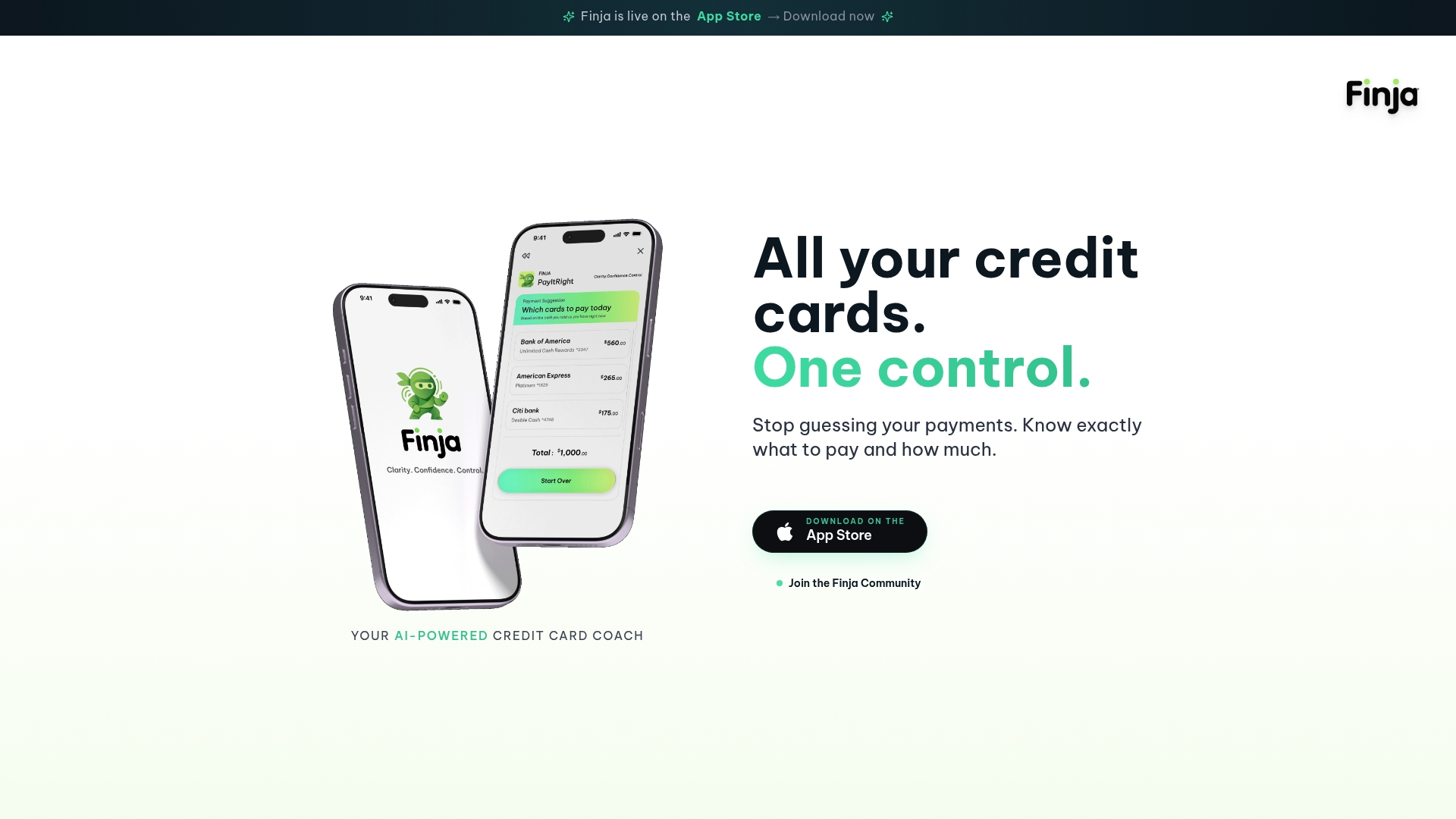
- This type of service focuses on payment timing and allocation across multiple cards, not on chasing rewards.
- It is designed for people juggling several cards who want a clearer view of where their money should go each cycle.
- Visit the Finja landing page to see how the coach works for your own cards.
This article is general information, not a substitute for advice from a qualified financial advisor. Consult a qualified financial professional about your own circumstances before acting on anything here.
Sources
- Federal Reserve — Section 1026.53 Allocation of payments (Regulation Z)
- CFPB — What is a grace period for a credit card?
FAQ
How to pay off $10,000 in credit card debt in 6 months?
Focus extra payments on your highest-APR balance first while paying minimums on everything else, a method backed by Regulation Z's payment allocation rule. Whether six months is realistic depends on your rate and monthly budget, so run your own numbers against your specific APRs before committing to a timeline.
Does paying twice a month lower utilization?
Paying twice a month can lower your average daily balance and may reduce the balance reported to credit bureaus if it falls before your statement closes. The CFPB notes that issuers typically report the statement closing balance, so timing a payment before that date matters more than the number of payments itself.
What is the smartest way to pay off multiple credit cards?
The avalanche method, directing extra payments to your highest-APR balance while paying minimums elsewhere, typically minimizes total interest paid, and it's also how issuers are required to allocate extra payments under Regulation Z. The snowball method, paying off the smallest balance first, can work better if you need momentum to stay motivated.
How to pay off $30,000 in debt in 1 year?
Large balances usually need a combination of aggressive extra payments toward the highest-APR card and a hard look at whether a 0% balance transfer or fixed-rate consolidation loan lowers your total cost after fees. Paying off a large balance within a short timeframe requires a substantial monthly payment, so calculate your break-even on any transfer fees before assuming it's the faster path.
What happens if I only pay the minimum every month?
Paying only the minimum extends your payoff timeline significantly and maximizes the interest you pay over the life of the balance. Federal Reserve consumer guidance recommends paying more than the minimum whenever possible to reduce the total cost of carrying a balance.