
To avoid interest, pay your credit card's statement balance in full by the due date. The statement balance is the total you owed the moment your last billing cycle closed. The current balance is whatever you owe right now, including anything you've charged since that cycle ended.
TL;DR:
- Paying the statement balance in full by the due date preserves your grace period and avoids interest charges, regardless of the current balance.
- The statement balance is fixed on the closing date, including all posted transactions before then, and generally gets reported to credit bureaus for your credit score.
- The current balance updates instantly with new transactions, but does not influence your credit report or interest calculation unless paid before the statement closing date.
- Managing multiple credit cards involves tracking each cycle's closing and due dates and setting autopayments to prevent missed payments or loss of the grace period.
- Focusing primarily on paying the statement balance on time offers the most benefit, while obsessing over the current balance or minimum payments can lead to unnecessary debt and credit score impacts.
Table of Contents
- Statement Balance vs Current Balance at a Glance
- What Is the Statement Balance? Calculation and Closing Date
- What Is the Current Balance? Real-Time Spending Power
- The Billing Cycle Timeline: Closing Date, Due Date, and Your Grace Period
- Statement Balance vs Current Balance vs Minimum: Which Should You Pay?
- How Your Balance Affects Credit Utilization and Your Score
- Keeping Track Across Multiple Cards
- What Actually Matters Here
- Let Finja Handle the Balance Math for You
- Sources
Statement Balance vs Current Balance at a Glance
Your statement balance locks in everything that posted before your billing cycle's closing date: purchases, fees, interest, and payments. It only updates once a month, when a new statement generates. Your current balance moves constantly, picking up every new purchase, refund, or payment the moment it posts.
- Statement balance: fixed snapshot, printed on your paper or PDF statement, unchanged until the next cycle closes.
- Current balance: live figure, visible anytime in your issuer's app or online account, changes daily.
- Credit reporting: issuers typically send your statement balance to the credit bureaus, not your current balance.
That last point trips up a lot of people. You can pay down your current balance to zero the day before your statement closes, and the number that still hits your credit report is whatever was owed at closing, not the zero you're staring at in the app.
What Is the Statement Balance? Calculation and Closing Date
Your statement balance is a photograph taken on one specific day: your billing cycle's closing date. Everything that posted before that date, every swipe, every payment, every fee, gets added up and printed on your statement. Anything that posts after the closing date waits for the next cycle.
Here's how the number gets built and used:
- The snapshot forms. At the closing date, your issuer totals all posted transactions into one statement balance.
- Your minimum payment gets set. Issuers usually calculate this as a small percentage of the statement balance, plus interest and fees.
- Your due date arrives. You typically get at least 21 days between the statement generating and the payment due date, though most cycles run 28 to 31 days total.
- You find it two ways. Check the summary box at the top of your paper or PDF statement, or log into your issuer's website or app under "statement balance" or "amount due."
Confusing this figure with your current balance is the single most common reason people overpay or underpay by accident.
What Is the Current Balance? Real-Time Spending Power
Your current balance is the running total your issuer shows you the instant you log in. It reflects every transaction that has posted since your account opened, not just since your last statement closed.
This is where pending transactions get misunderstood. A hotel hold or a gas station preauthorization might show up as "pending" and temporarily reduce your available credit, but it usually has not posted yet and isn't part of your current balance until it clears.
A few practical things to know about how it behaves:
- Every new purchase raises your current balance immediately, before any statement reflects it.
- Your available credit is your limit minus your current balance, not your statement balance, so a big purchase today shrinks your buying power today.
- You check it in your issuer's mobile app or website, usually labeled "current balance" or "balance today," separate from the statement summary.
If you're deciding whether you can afford another charge this week, the current balance is the number that matters, not last month's statement.
The Billing Cycle Timeline: Closing Date, Due Date, and Your Grace Period
Four dates control everything about how your card charges interest, and most people only pay attention to one of them.
- Billing cycle opens. A new cycle starts the day after your previous one closed. Every purchase from here forward counts toward next month's statement.
- Billing cycle closes. Your issuer freezes the total. This is the closing date, and it's the number that becomes your statement balance.
- Statement generates. Within a day or two of closing, your issuer produces the statement and posts it to your account.
- Due date arrives. You get roughly three weeks or more to pay. Miss it, and you lose your grace period.
The grace period only protects you if you pay the full statement balance by the due date. Carry any part of it forward, and interest starts accruing immediately on new purchases, not just on the unpaid portion. There's no buffer once the grace period breaks.
Pro Tip: Payments don't always post instantly, especially bank transfers scheduled for a weekend or holiday. Pay two or three business days before your due date, not on it, so a processing delay doesn't accidentally cost you the grace period.
If your bill arrives later than usual and the due date hasn't moved with it, the CFPB outlines what options you have to request more time.

Statement Balance vs Current Balance vs Minimum: Which Should You Pay?
Three numbers, three very different outcomes. Here's what each one actually buys you.
- Pay the statement balance in full. This is the move that keeps your grace period intact and avoids interest entirely on purchases. It's the baseline everyone should aim for.
- Pay the current balance. This zeroes your account today, which feels satisfying but isn't required to preserve your grace period. Useful if you want a clean slate before a big purchase or you're trying to lower reported utilization before your next closing date.
- Pay only the minimum. This keeps your account in good standing but leaves the rest of the balance accruing interest, often at rates that hover near the national average APR of over 20%.
The math gets ugly fast. Our breakdown of the credit card minimum payment trap walks through exactly how that compounding works against you.
If cash flow is tight, paying the statement balance in full always beats paying the current balance or the minimum, because it costs you nothing extra and protects the grace period you'd otherwise lose.
How Your Balance Affects Credit Utilization and Your Score
Your statement balance is usually the figure that ends up on your credit report, since issuers report it to the bureaus shortly after each cycle closes. That reported number, divided by your credit limit, becomes your utilization ratio, one of the bigger factors in your credit score.
You have more control over this than most people realize:
- Make a payment before your closing date to shrink the balance that actually gets reported, even if your due date is still weeks away.
- Spread large purchases across multiple cards instead of maxing out one, since utilization is calculated per card and in aggregate.
- Ask your issuer for a credit limit increase to lower your utilization ratio without changing your spending.
- If timing matters for an upcoming loan or mortgage application, ask your issuer exactly when they report so you can plan a pre-close payment.
Keeping Track Across Multiple Cards
Managing one card's cycle is simple. Managing five is where people lose the thread, miss a due date, and accidentally forfeit a grace period they didn't even realize was at risk.
Start by mapping every card's closing date and due date onto one calendar. Set autopay for the statement balance wherever your issuer allows it, so you're never relying on memory alone. For cards where autopay isn't practical, a recurring reminder two or three days before each due date gives you a buffer for processing delays.
A tool that consolidates all your accounts into one view removes the guesswork of tracking five separate cycles in five separate apps. It flags upcoming due dates and helps you decide which balance to pay on which card before a grace period slips away. For a deeper routine, our guide to managing multiple credit cards covers the full workflow.
What Actually Matters Here
Most advice on this topic buries the useful part under a pile of definitions. Readers don't need a lecture on what a billing cycle is. They need to know which number to pay and when, and everything else is supporting detail.

Here's the opinion this research actually supports: the current balance gets too much attention and the statement balance gets too little. People fixate on zeroing out their current balance because it feels responsible, when the number that actually determines interest charges and credit reporting is the one sitting on last month's statement. Chasing the current balance to zero every week is often wasted effort if you're already paying your statement balance in full.
The real priority, in order: pay the statement balance by the due date, every cycle, without exception. Then, if utilization before an application matters, make a targeted payment before the closing date. Everything past that, tracking the current balance daily, obsessing over minimums, is optional maintenance, not the thing protecting your interest rate or your score.
— Grace K.
Let Finja Handle the Balance Math for You
Juggling statement dates, current balances, and minimum payments across several cards is exactly the kind of tracking that eats up a Sunday afternoon and still leaves room for a missed grace period. Finja consolidates every card into one view, so you can see each statement balance, current balance, and due date without opening five different apps.
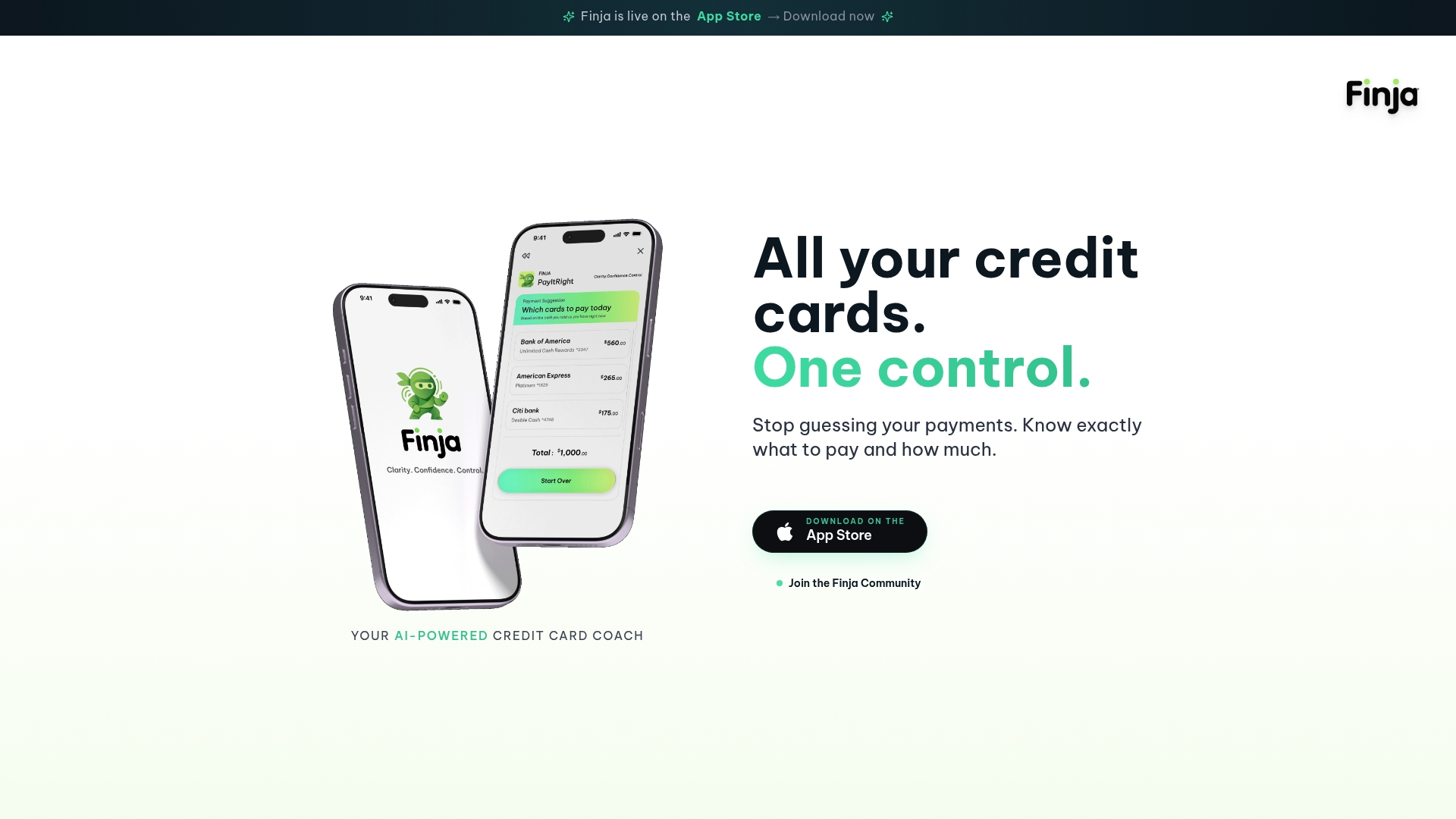
Its AI recommendations tell you which balance to pay and when, based on your actual due dates and interest rates, not a generic rule of thumb. If you're deciding whether to clear your current balance before a big purchase or just hit the statement balance by the deadline, Finja lays out the trade-off in plain terms instead of leaving you to do the math yourself. Head to Finja's landing page to see how it maps your cycles and start protecting your grace periods automatically.
This article is general information, not a substitute for advice from a qualified financial advisor. Consult a qualified financial professional about your own circumstances before acting on anything here.
Sources
- What Is the Statement Balance on a Credit Card? | Experian
- What’s the difference between a statement balance and a current balance? | Discover
- Consumerfinance
- Statement balance vs current balance: What's the difference? | NerdWallet