
Pay at least the minimum by your payment due date, every time, without exception. If you want to dodge interest entirely, pay the full statement balance by that same date. Beyond that, paying earlier in your billing cycle can help in two specific ways: it lowers the balance reported to credit bureaus, and if you're carrying debt, it shrinks the interest you owe.
TL;DR:
- Paying the full statement balance by the due date is essential to avoid interest and late fees, but early payments can reduce credit utilization.
- Your credit card issuer typically reports your balance to bureaus around the statement closing date, not the due date, affecting your credit score's utilization metric.
- Making a payment before the statement closes, especially a partial one, can significantly lower the reported utilization and boost your credit score.
- Setting autopay for at least the minimum and scheduling manual payments a few days before closing balances the need for safety and strategic utilization management.
- Use of AI-powered platforms can automate payment timing and maximize credit score benefits by managing multiple cards' due and closing dates efficiently.
Table of Contents
- When to Pay Your Credit Card: Due Dates, Grace Periods, and Reporting
- How Your Statement Closing Date Affects Your Credit Score
- Should You Pay Early, Split Payments, or Just Pay Once a Month?
- How to Set Up Autopay and Time Multiple Payments
- What Happens if You Pay Late or Get the Timing Wrong
- A Simple Monthly Checklist for Multi-Card Households
- Why Consistency Beats Clever Timing Tricks
- Let Finja Handle the Timing Math for You
- Where This Guidance Comes From
- Sources
- FAQ
When to Pay Your Credit Card: Due Dates, Grace Periods, and Reporting
Your due date is fixed, and it's the one deadline that actually matters for avoiding late fees. Everything else in this article is optimization. The due date is not.
A few terms get mixed up constantly, so here's the breakdown:
- Billing cycle: the roughly 28 to 31-day window during which your purchases accumulate.
- Statement closing date: the last day of that cycle, when your issuer tallies everything into a statement balance.
- Payment due date: usually 21 to 25 days after the statement closes, per CFPB guidance on grace periods. This window is your grace period. Paying the full statement balance within the grace period generally helps avoid interest on that cycle's purchases.
Payments are considered on time if the issuer receives them by the posted cutoff time on the due date, often in the late afternoon. If that date lands on a weekend or federal holiday, issuers are expected to accept your payment the next business day without penalty. Electronic payments post almost instantly. Mailed checks don't, so if you're still paying by mail, Citi's guidance on due dates versus closing dates is worth a read before you assume a postmark is good enough.
How Your Statement Closing Date Affects Your Credit Score
Here's the part most people never think about: your issuer usually reports your balance to the credit bureaus right around your statement closing date, not your due date. That reported number is what shows up as your utilization, the second-biggest factor in most credit scoring models.
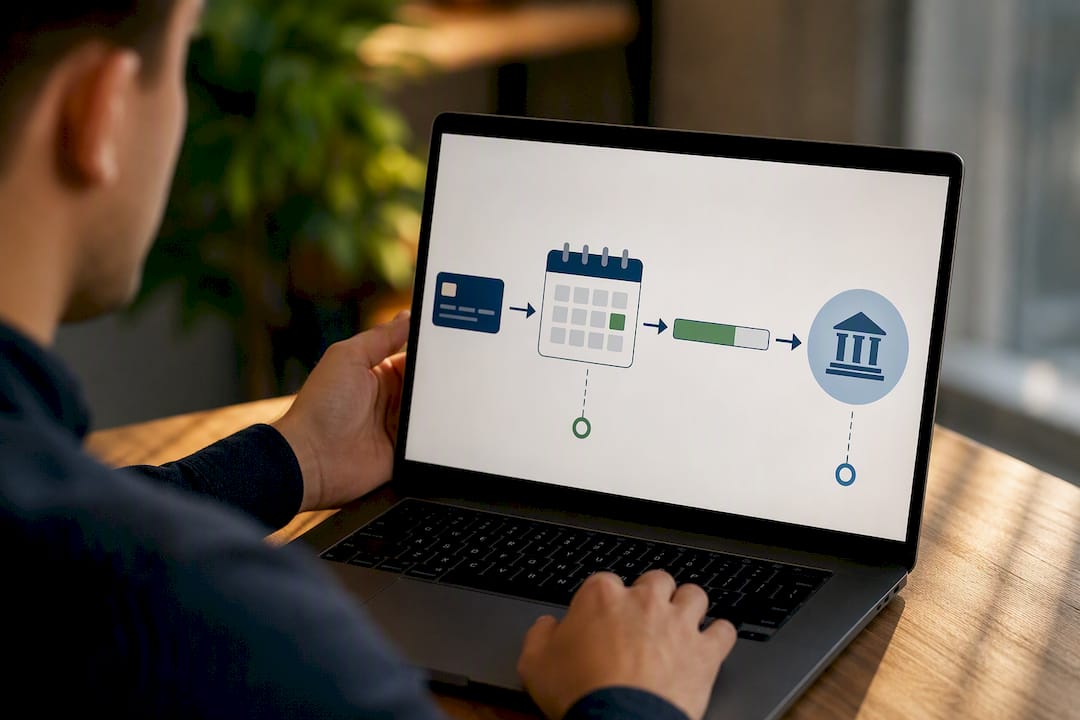
Say your statement closes on the 10th with a $2,000 balance on a $5,000 limit. That's 40% utilization, reported to the bureaus, regardless of whether you pay it off in full three weeks later. If you'd paid $1,500 down before the 10th, the bureaus would have seen 10% instead. Experian's guidance on payment timing confirms that this reported figure is what utilization scoring actually reflects.
Finding your closing date takes two minutes:
- Check your most recent statement. It's listed at the top, usually labeled "statement closing date" or "billing cycle end."
- Log into your issuer's app or website. Most show your current cycle's progress and the next closing date.
- Call the number on the back of your card if neither works.
Should You Pay Early, Split Payments, or Just Pay Once a Month?
The right timing depends entirely on what you're trying to accomplish. Trying to do all three below at once is overkill for most people, but knowing which one applies to your situation changes how you schedule payments.
- Avoiding late fees and penalty APRs. Pay at least the minimum by the due date, full stop. This is the non-negotiable one. Miss it, and you're looking at fees and a possible hit to your score.
- Reducing interest on a carried balance. If you're not paying in full, make a payment earlier in the cycle instead of waiting for the due date. Interest accrues daily on your outstanding balance, so paying down debt mid-cycle shrinks the average daily balance interest gets calculated on.
- Improving your credit score through utilization. Make a payment before your statement closing date, even a partial one, so the balance reported to the bureaus is lower. Splitting one monthly payment into two, one mid-cycle and one before closing, tends to work better than a single lump sum after the statement cuts.
The tradeoff is liquidity. Paying early means that cash isn't sitting in your checking account earning you flexibility. For someone living close to paycheck to paycheck, prioritizing the due date over early payments is often the more realistic move, even if it means slightly higher reported utilization for now.
Pro Tip: If you only have bandwidth to do one extra thing this month, make a single payment two to three days before your statement closing date. It's the highest leverage move for your credit score with the least effort.
How to Set Up Autopay and Time Multiple Payments
Autopay should cover at least the minimum, always. That's your safety net against a missed deadline. If your cash flow allows it, set autopay to the full statement balance instead. That way you never think about it, and you never pay interest.
For anything more strategic than autopay, here's what actually works:
- Schedule one manual payment a few days before your closing date if you want lower reported utilization.
- Split large balances into two or three payments across the cycle rather than one at the end, especially if you're carrying debt.
- If your due date falls on a weekend or holiday, your payment is still on time as long as it posts by the next business day's cutoff, according to the CFPB's rules on due date timing. Don't assume this. Verify it with your specific issuer.
- Most issuers let you request a different due date to better match your payday. A quick call or an online form usually does it.
Pro Tip: Moving your due date to a few days after payday removes the mental math of "do I have enough right now" almost entirely.
What Happens if You Pay Late or Get the Timing Wrong
A late payment usually triggers a fee immediately, and if you're 60 days past due, many issuers can apply a penalty APR that sticks around for six months or longer even after you catch up. Reporting to the bureaus typically kicks in once a payment is 30 days late, which is where the real credit score damage happens.
There's a subtler cost too: carrying a balance usually kills your grace period entirely. Once that happens, new purchases can start accruing interest immediately, with no interest free window at all, until you pay the full statement balance for one or two consecutive cycles to earn it back, per the CFPB's explanation of grace periods.
If you've already missed a payment:
- Call your issuer before the due date passes, if possible. Many will work with you.
- Ask for a goodwill adjustment if this is a first offense and your account is otherwise in good standing.
- If the issuer won't budge and you believe the reporting is inaccurate, escalating through the CFPB's complaint process is a legitimate next step.
A Simple Monthly Checklist for Multi-Card Households
Managing timing across two or three cards gets complicated fast, so keep it simple:
- Confirm each card's statement closing date and due date at the start of the month.
- Set autopay for at least the minimum on every card, no exceptions.
- Schedule one manual pre-closing payment on any card where you want to lower reported utilization.
- Review statements monthly to catch fees, rate changes, or reporting errors early.
Two examples show how this plays out differently depending on your situation. Someone carrying a balance on a $400 purchase might pay $200 mid-cycle to cut the average daily balance, then pay the rest by the due date to stay current. Someone aiming for sub 10% utilization on a $10,000 limit might instead make one payment a few days before the statement closes, bringing the reported balance down before it ever hits the bureaus. A detailed guide on managing multiple credit cards walks through both cadences in more detail if you're juggling several accounts at once.
Why Consistency Beats Clever Timing Tricks
The 15/3 rule and other timing hacks get a lot of attention, but they only work if you already know your issuer's reporting date, and they solve a problem that consistent habits solve better. A calendar reminder for each due date, a monthly five-minute statement review, and due dates aligned to your payday will outperform any clever trick you try to remember once a quarter.
Automate the minimum, then layer in a manual pre-closing payment only when utilization matters for something specific, like an upcoming mortgage application. That combination beats obsessing over reporting dates every single month.
— Grace K.
Let Finja Handle the Timing Math for You
Juggling closing dates, due dates, and utilization targets across three or four cards by memory is exactly the kind of task that eats an hour every month and still goes wrong occasionally. An AI-powered platform gives you a consolidated view of every card's due date and closing date in one place, then recommends when to pay and how much based on what you're actually trying to accomplish, whether that's cutting interest or dropping your utilization before a big purchase.
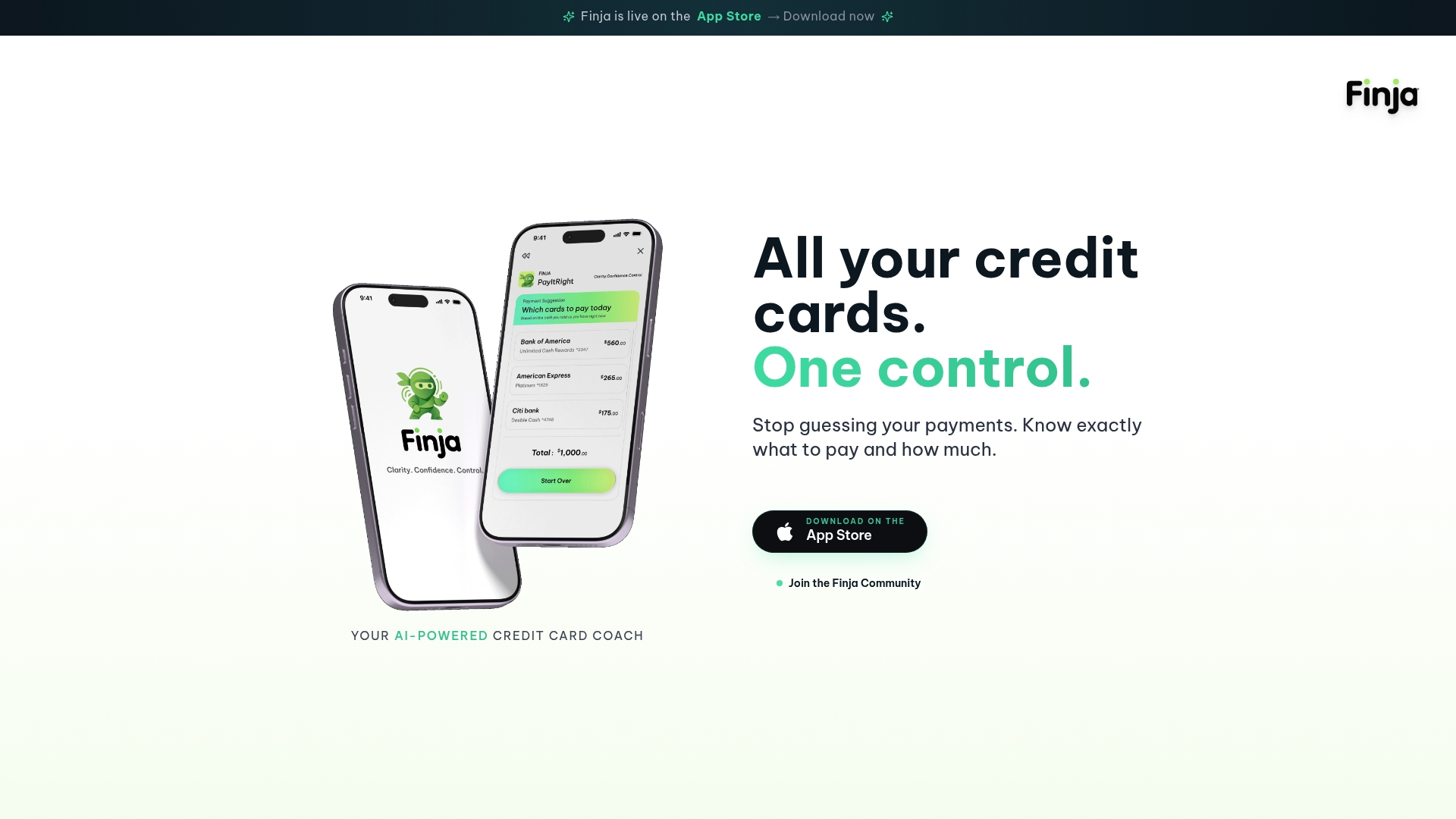
Instead of manually tracking five different cutoff times and mentally splitting payments across cycles, An intelligent payment optimization feature flags the highest-impact moment to pay each card automatically. If you want to put the checklist above on autopilot instead of running it by hand every month, start with Finja and let it map out your next payment cycle for you.
Where This Guidance Comes From
The grace period rules and weekend/holiday payment protections cited here come from the CFPB, the federal agency that regulates consumer credit practices. Utilization and reporting mechanics are drawn from Experian and Forbes Advisor. For deeper implementation steps, Finja's guide on statement balance versus current balance and its guide to changing your due date both expand on the mechanics covered here.
Sources
- What is a grace period for a credit card? | CFPB
- When Is the Best Time to Pay My Credit Card Bill? | Forbes Advisor
- Credit Card Due Date vs. Closing Date: What's the Difference? | Citi
FAQ
Is it better to pay before or after the due date?
Before, always. Paying by the due date avoids late fees entirely, and paying before your statement closing date can also lower the balance reported to credit bureaus, which helps your utilization.
What is the biggest killer of credit scores?
Late payments and high credit utilization are the two biggest factors, with payment history alone making up roughly 35% of a typical FICO-style score, according to Experian's credit education materials.
What is the 15/3 rule for paying credit cards?
It's a strategy where you pay part of your balance 15 days before your due date and the rest 3 days before, aiming to lower your balance right around your issuer's reporting date. Its effectiveness depends entirely on knowing your specific issuer's statement closing date, so it isn't a universal fix.
Do I have until midnight to pay my credit card bill?
No. Most issuers set a cutoff time, often 5 p.m. in your card's time zone, on the due date itself, so a payment made late that evening can still count as late.