
Biweekly credit card payments can lower your interest costs and shrink your reported utilization, but only under specific conditions: you carry a balance month to month, your issuer applies partial payments the day they arrive instead of holding them, and you're disciplined enough to automate the schedule. If those conditions are met, splitting your monthly payment in half and paying every two weeks can be beneficial. If you already pay in full each month, skip it and confirm your issuer's payment-posting policy before you set anything up.
TL;DR:
- Biweekly payments reduce interest and reported utilization mainly if your issuer applies partial payments immediately and you automate consistently.
- The extra payment occurs because paying every two weeks results in 26 payments annually, with 13 full monthly amounts targeting principal.
- Benefits are highest for high-APR balances and when your statement close date is near, especially if utilization exceeds 30 percent.
- Risks include delayed application of partial payments and potential late payments if you do not verify your issuer's policies or keep to the schedule.
- Using automated tools or scheduling payments before statement close dates maximizes the impact and reduces organizational overhead.
Table of Contents
- How Biweekly Credit Card Payments Actually Work
- The Math: How Much Interest Biweekly Payments Actually Save
- Does Paying Biweekly Actually Help Your Credit Score?
- Biweekly Payments: Weighing the Real Benefits Against the Catches
- How to Set Up Biweekly Credit Card Payments Correctly
- Biweekly Payments Are a Tactic, Not a Debt Strategy
- Quick Payment Rules Worth Trying: 15/3, 2-2-2, and Payday Timing
- What Biweekly Payments Do to Your Credit Beyond Utilization
- Biweekly Payments vs. Just Paying More Once a Month
- Minimum Payments, Missed Payments, and Other Risks
- Which Cards Should Get Your Biweekly Payments First
- Why Payment Frequency Deserves More Attention Than It Gets
- Let Finja Handle the Timing for You
- Sources
How Biweekly Credit Card Payments Actually Work
The math behind biweekly payments comes from a calendar quirk. A year has 52 weeks, so paying every two weeks produces 26 payments annually instead of the 12 you'd make on a monthly schedule. Split your usual monthly payment in half, pay that half every two weeks, and you've made the equivalent of 13 full monthly payments by year's end instead of 12. That extra payment goes straight at your principal, provided your issuer applies it right away.
The interest savings come from how card issuers calculate your bill in the first place. Interest on credit cards is typically calculated using an average daily balance and a daily periodic rate, meaning your issuer adds up your balance for every day in the billing cycle and multiplies by that day's rate. Paying twice a month instead of once lowers that average daily balance faster, which lowers the interest that accrues against it.
Two dates matter here, and they're easy to confuse:
- Statement close date: the day your balance snapshot gets sent to the credit bureaus. This is the number that shows up on your credit report as your utilization.
- Payment due date: the deadline for avoiding late fees and interest, typically three weeks after the statement closes.
A payment made right before your statement closes lowers what gets reported to the bureaus. A payment made right before your due date protects you from late fees but doesn't touch your reported utilization until the next cycle.
One warning that undercuts a lot of biweekly payment plans: some issuers hold your first partial payment as a pending credit and don't apply it to your balance until the second half arrives and completes a full minimum payment. If that's how your issuer operates, you lose the daily-balance benefit entirely, even though you technically paid on time and in full.
The Math: How Much Interest Biweekly Payments Actually Save
Numbers make this concrete. Say you're carrying a balance at an interest rate common for revolving credit card debt.
Switching from a standard monthly payment to biweekly payments can reduce your payoff time and interest paid, as the extra annual payment against principal lowers the average daily balance more quickly. The 13th-payment effect is what drives the gap: you're not paying more money overall each month, you're just delivering it to the issuer in a pattern that shrinks the balance interest gets charged against, faster.

The savings scale with your APR and your balance. A $10,000 balance at 24% APR sees a bigger dollar swing from switching to biweekly than a $2,000 balance at 15% APR, because both the base owed and the rate multiplying it are higher. Carrying debt at a high APR is exactly where frequency-based tactics do the most work.
To run your own numbers: take your current balance, your APR, and your usual monthly payment. Halve the payment, apply it every 14 days, and recalculate the average daily balance for each 14-day block instead of each 30-day month. A tool like tracking your interest paid monthly makes this easier to verify without redoing the math by hand every cycle. The gap between $1,460 and $1,290 might look modest on one card, but multiply it across two or three revolving balances and it adds up to real money over a year.
Does Paying Biweekly Actually Help Your Credit Score?
Credit utilization, the ratio between what you owe and your total available credit, gets calculated per card and again across all your cards combined. Both numbers show up on your credit report, and both matter to your score.
The commonly cited thresholds: keep each card under 30% utilization, and under 10% if you're optimizing for the best possible score. Making multiple payments before your statement closes can push your reported balance below either line, because the number that reaches the credit bureaus is whatever your balance happens to be on the statement close date, not what you owe by the due date.
Here's where biweekly payments help and where they don't:
- They help when you're carrying a balance that pushes utilization above 30%, because an extra payment before close date directly lowers the reported number.
- They help when your spending is heavy early in the billing cycle and light later, since a mid-cycle payment corrects a temporarily inflated balance before it gets reported.
- They don't help if you already pay your statement in full every month, since your reported utilization is already whatever you charged that cycle, regardless of when you paid it off.
- They don't help if your utilization is already under 10%, since there's no meaningful room left to compress.
Experian's guidance on payment timing backs this up directly: it's the timing relative to your statement close, not the frequency itself, that moves the utilization needle.
Biweekly Payments: Weighing the Real Benefits Against the Catches
Before you commit to a biweekly schedule, run through what you gain against what it costs you in effort and risk.
The benefits:
- You make one extra full payment per year without feeling it in your monthly cash flow.
- Your average daily balance drops faster, which lowers the interest charged against it every single day of the cycle.
- Payments aligned to biweekly paychecks are easier to budget around than one large monthly lump sum.
The drawbacks:
- Some issuers hold the first half-payment as pending rather than applying it immediately, which erases the benefit without you realizing it.
- Running a second payment schedule alongside your other bills adds a layer of organizational overhead most people underestimate.
- A misaligned biweekly schedule can accidentally land after your due date if a payday shifts around a holiday, risking a late payment.
The fixes are straightforward: call your issuer and ask directly how partial payments post, use autopay with a one or two day buffer before your actual due date, and reconcile your statement every month to confirm the payments landed where you expected. None of this is hard. It's just a step people skip because they assume the biweekly plan runs itself.
How to Set Up Biweekly Credit Card Payments Correctly
Getting this right takes about twenty minutes of setup and one full billing cycle to verify.
- Calculate your biweekly amount. Take your usual monthly payment and divide it by two. If you'd rather not touch your monthly budget at all, you can instead keep your regular monthly autopay running and simply add one extra half payment sometime mid cycle, which achieves the same 13th payment effect with less schedule rebuilding.
- Choose your payment method. Most banks let you schedule recurring transfers through their bill pay feature, and most card issuers offer autopay that accepts a custom recurring amount rather than only "minimum" or "full balance." Set the transfer date to match your payday if you're paid every two weeks.
- Call or check your issuer's payment policy. Ask specifically whether partial payments get applied to your balance the day they're received, or whether they sit as a pending credit until a full minimum payment amount accumulates. This single question determines whether the whole strategy works for your card.
- Verify the first cycle. After your first two biweekly payments post, pull up your account activity and confirm both showed as separate, immediately applied transactions rather than one held balance. Then check your next statement to see whether the reported balance reflects the lower amount.
Pro Tip: Schedule one of your two biweekly payments to land three to five days before your statement close date, not just before your due date. That timing is what actually lowers the number reported to the credit bureaus, since the due date only affects late fees.
Biweekly Payments Are a Tactic, Not a Debt Strategy
Frequency changes how fast you pay down what you owe. It doesn't decide which balance you should be attacking first. Financial advisors are consistent on this point: payment frequency supports debt-payoff methods like Avalanche and Snowball, it doesn't replace them.
Here's how the two structures fit together depending on which payoff method you're running:
- Debt Avalanche users should direct their extra biweekly half payment at the card with the highest APR, since that's where each additional dollar of principal reduction saves the most in interest.
- Debt Snowball users should apply the extra payment to their smallest balance first, since clearing that card fastest is what generates the psychological momentum the method depends on.
- Balance-transfer situations benefit from frequency differently. If you're inside a 0% introductory window, biweekly payments accelerate how much principal you clear before the promotional rate expires and standard APR kicks back in.
Frequency is the engine. Strategy is the map. Reading more on the avalanche payoff method will help you decide where your extra payment dollars should actually go.
Quick Payment Rules Worth Trying: 15/3, 2-2-2, and Payday Timing
A few low-effort rules give you most of the benefit of a full biweekly rebuild without redoing your entire payment schedule.
- The 15/3 rule: pay roughly half your bill 15 days before the due date, then the remaining balance about 3 days before it. This keeps your reported balance lower through more of the cycle, though SoFi's own analysis notes it offers limited extra benefit if you already pay your statement in full every month.
- The 2-2-2 rule: pay a chunk every other business day near the end of your cycle rather than in one lump sum, spreading the balance reduction across the final stretch before your statement closes.
- Payday-aligned payments: setting your transfer date to land the same day your paycheck hits reduces the temptation to spend that money elsewhere first, a pattern The Penny Hoarder has flagged as one of the biggest reasons biweekly plans quietly fail.
None of these require a spreadsheet. They require one recurring calendar reminder and a little consistency.
What Biweekly Payments Do to Your Credit Beyond Utilization
Utilization gets most of the attention, but it's roughly 30% of your FICO score, not the whole picture. Payment history carries more weight than utilization, and biweekly payments interact with that category in a way people often miss.
Splitting a payment into two halves doesn't create two separate "on time payment" marks on your credit report. Your credit history only records whether you met the minimum payment by the due date each cycle, not how many transactions it took to get there. So the payment-history benefit of biweekly payments is indirect: it comes from making it less likely you'll ever miss a payment entirely, since smaller, more frequent amounts are easier to cover than one large monthly sum if your cash flow is tight.

There's a secondary effect worth naming. Faster principal paydown lowers your total revolving debt sooner, which can shift your credit mix and your overall debt-to-income profile in ways lenders notice on new applications, even outside the utilization calculation itself. If you're carrying balances on several cards, tracking the combined effect across accounts matters more than watching any single card in isolation, since multi-card utilization is calculated in aggregate as well as per card.
What biweekly payments won't do is create new positive history faster than the calendar allows. On-time payments still need to age. There's no shortcut around that part of the score model, no matter how frequently you pay.
Biweekly Payments vs. Just Paying More Once a Month
You can get most of the interest savings without splitting anything, simply by paying more than the minimum in a single monthly payment. The question is whether the biweekly structure adds anything beyond that.
It does, in two specific ways. First, biweekly payments create forced discipline: the money leaves your account before you can decide not to send it, whereas an "extra" monthly payment requires you to actively choose a bigger number every single time you pay. Second, if your issuer applies partial payments immediately, the average daily balance drops earlier in the cycle under a biweekly schedule than it would waiting for one lump monthly payment near the due date.
The interest math itself is close to identical if the total dollar amount paid per month is the same either way. A $200 extra monthly payment and a $100 biweekly payment applied twice a month produce similar average daily balance reductions, assuming both post promptly. The real difference is behavioral, not mathematical: biweekly payments are easier to stick to because they're smaller and match how most paychecks arrive, while lump extra payments require repeated willpower.
If your bank account already sees consistent surplus cash and you're comfortable manually paying more each month, a single larger payment works just as well and skips the issuer-verification step entirely. If you tend to spend leftover cash before you get around to an extra payment, biweekly's automation removes that temptation.
Minimum Payments, Missed Payments, and Other Risks
Biweekly payments don't change what your issuer considers a "minimum payment." That figure is set independently by your card agreement, usually as a percentage of your balance or a flat floor amount, whichever is higher. Splitting it doesn't lower it.
This creates a real risk if you're not careful: if you only ever send half the minimum on each biweekly date and something disrupts the second payment, a paycheck delay, a forgotten transfer, a bank error, you can end up technically delinquent on a card you believed you were current on. A missed or late payment reported to the bureaus does far more damage to your score than any utilization tactic can offset.
One detail from card-payment researchers is worth internalizing directly: splitting the minimum payment into two halves that merely add up to the minimum doesn't accelerate your payoff at all. The strategy only works if your combined biweekly payments exceed the minimum required, applying real extra dollars to principal rather than just meeting the floor in two installments.
The fix is the same one from the setup section: use autopay with a buffer day or two before your actual due date, and reconcile your account every cycle rather than assuming the automation is working silently in the background.
Which Cards Should Get Your Biweekly Payments First
If you're managing more than one card, and most people using biweekly payments are, spreading your extra payments evenly across every balance is rarely the best use of that money.
Prioritize the card with the highest APR carrying a balance. Every dollar of extra principal reduction there saves more in interest than the same dollar applied to a lower-rate card, which is the same logic behind the Debt Avalanche method. If two cards carry similar rates, prioritize whichever one is closest to its statement close date, since that's where an extra payment has the most immediate effect on reported utilization.
Skip cards you're already paying in full every month. There's no interest to save and no meaningful utilization gain, since your reported balance already reflects whatever you charged that cycle. Applying biweekly discipline there just adds administrative work for no return.
If your utilization is uneven across cards, say one card sits at 60% while another sits at 5%, direct extra payments at the high-utilization card even if its APR isn't the highest of the group. A score-damaging utilization spike on one account can outweigh the interest math in the short term, particularly if you're planning a mortgage or auto loan application soon. Coordinating this across several cards is exactly where consolidated tracking earns its keep instead of guessing from memory which balance needs attention this cycle.
Why Payment Frequency Deserves More Attention Than It Gets
Most advice about credit card debt focuses on the size of your payment, not its timing. That's a mistake. The people who benefit most from biweekly schedules aren't necessarily the ones with the biggest balances. They're the ones juggling several cards at once, where keeping track of which statement closes when becomes its own kind of mental overhead.
What surprises people is how much of the benefit comes from removing decisions, not from the math itself; understanding how identity theft affects your credit score can also influence how you manage your payments and monitor your credit. A payment that happens automatically every two weeks doesn't require willpower. A payment you have to decide to make bigger every month does, and that's exactly where good intentions quietly fail. Finja's own view on this is straightforward: frequency works best when it's paired with visibility across every card you hold, not applied blindly to one account while three others drift toward their own statement closes unnoticed.
The gap between knowing this tactic exists and actually running it correctly for six consecutive months is where most people lose the benefit. That gap is worth taking seriously before assuming biweekly payments alone will fix a multi-card balance problem.
— Grace K.
Let Finja Handle the Timing for You
Running a biweekly schedule across two or three cards by hand means tracking separate statement close dates, separate issuer policies on partial payments, and separate due dates that never quite line up with each other. A platform can consolidate every card into one view and flag the optimal moment to pay each balance, so you're not manually reverse-engineering statement close dates every month to figure out whether your timing is actually working.
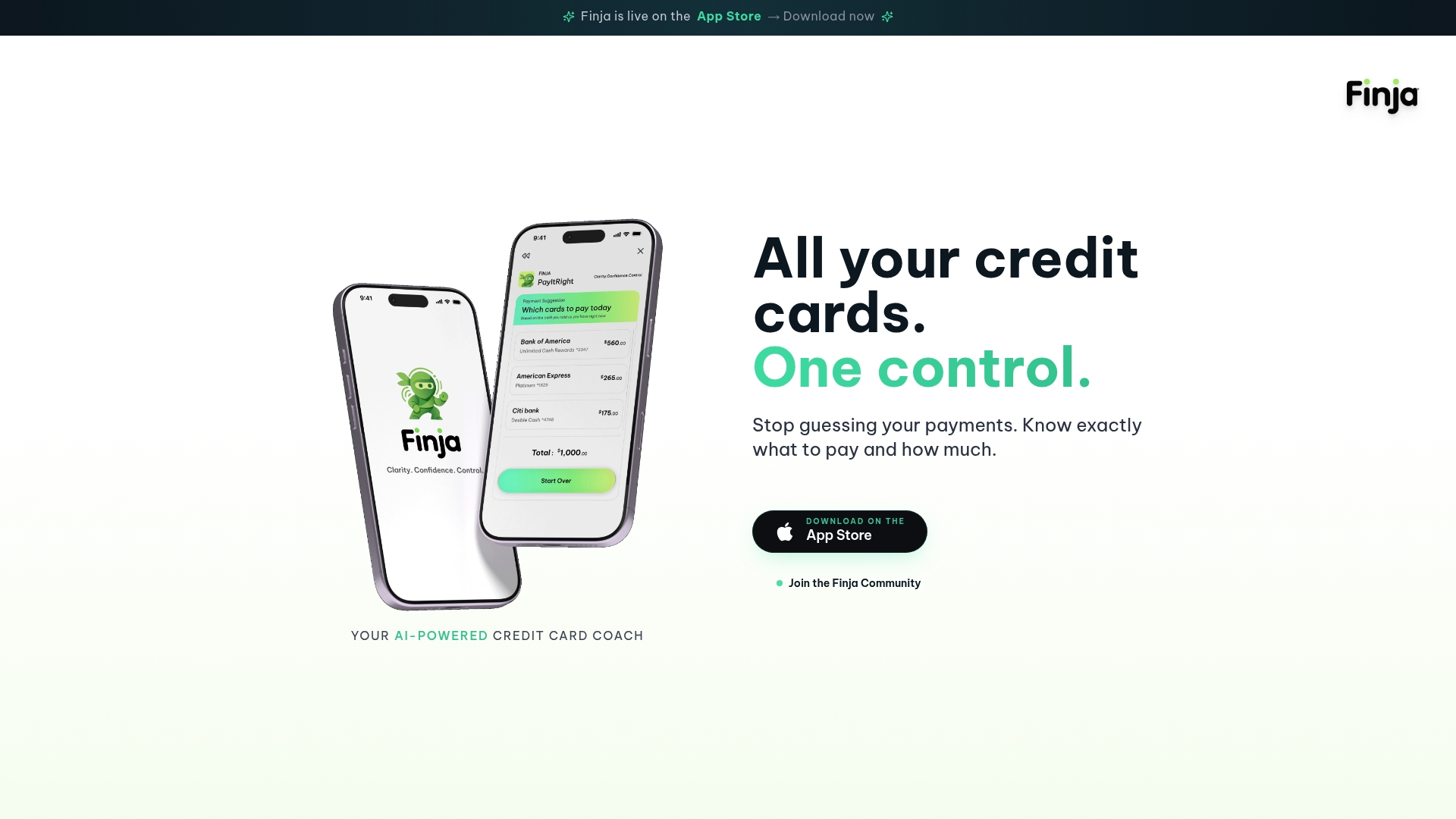
Instead of guessing whether your issuer applies partial payments immediately, Such a payment optimization can surface that timing for you and track the utilization impact across every account you hold, not just the one you happen to be watching. If you're managing multiple cards and want to stop reconciling statements by hand, start with Finja and see how automated timing compares to the manual biweekly setup you'd otherwise be running yourself.
This article is general information, not a substitute for advice from a qualified financial advisor. Consult a qualified financial professional about your own circumstances before acting on anything here.
Sources
- How does my credit card company calculate the amount of interest I owe? | CFPB
- When should I pay my credit card bill? | Experian
- Making multiple credit card payments | Chase