
Credit card financial health indicators are measurable metrics that show how well you manage credit card debt and maintain overall financial stability. Tracking these metrics gives you a clear picture of your debt burden, repayment discipline, and creditworthiness. The key indicators include credit utilization ratio, payment timeliness, debt-to-income ratio (DTI), total interest cost, and credit score factors. Together, they reveal whether your credit habits are building financial resilience or quietly eroding it. Finja's AI-powered platform helps consumers monitor all of these signals in one place, making it easier to act before small problems become serious ones.
1. What is credit utilization and why does it matter most?
Credit utilization ratio is the percentage of your available credit limit that you are currently using. It is the second most important factor in your credit score, right after payment history. The standard recommendation is to keep utilization below 30%, with the best outcomes coming from staying under 10%.

The median credit utilization among active U.S. credit card accounts was 8.84% at the end of 2025. That figure shows what financially disciplined cardholders actually look like in practice. By early 2026, average utilization had risen to 29.68%, still within the acceptable range but close to the ceiling.
A common misconception is that carrying a small balance helps your score. It does not. Paying your balance in full each month keeps utilization low and costs you nothing in interest.
- Track utilization on each individual card, not just across all cards combined.
- A single maxed-out card hurts your score even if your overall utilization looks fine.
- Request a credit limit increase to lower your ratio without changing your spending.
- Make a mid-cycle payment before your statement closing date to reduce the balance your lender reports.
Pro Tip: Your card issuer reports your balance to credit bureaus on your statement closing date, not your due date. Paying down your balance before that date lowers the utilization figure that actually appears on your credit report.
2. How timely payments signal financial discipline
Paying at least the minimum amount on time every month is the single most powerful credit card management habit you can build. Payment history accounts for the largest share of your credit score calculation. One missed payment can drop your score significantly and stay on your report for seven years.
The progression of delinquency tells a clear story. A 30-day late payment is a warning sign but still manageable. Moving to 60-day or 90-day late status signals a structural repayment problem, not just a one-time oversight. The 30-day delinquency rate on U.S. credit cards fell to 2.92% in Q1 2026, the lowest level since Q2 2023. That improvement reflects consumers actively prioritizing on-time payments.
A single late payment is a stumble. A pattern of late payments is a fall. The real financial danger is not the first missed due date but the migration from 30-day late to 60-day and 90-day late status, which signals that debt has outgrown your ability to repay it on schedule.
Practical steps to protect your payment record:
- Set up autopay for at least the minimum payment on every card.
- Schedule a calendar reminder five days before each due date to review your balance.
- If you cannot pay in full, pay as much above the minimum as possible to reduce interest.
- Contact your issuer immediately if you anticipate missing a payment. Many offer hardship programs that protect your credit standing.
3. Why monitoring your debt-to-income ratio is critical
Debt-to-income ratio (DTI) measures your total monthly debt payments as a percentage of your gross monthly income. It is the primary metric lenders use to assess whether you can handle additional credit. A high DTI signals financial strain even when your credit score looks healthy.
Financial health guidelines recommend keeping your total DTI below 36% of gross income. Consumer debt, including credit cards, should ideally stay below roughly 20% of your net income. High debt levels crowd out your ability to save or invest, limiting long-term financial flexibility.
| DTI Range | Financial Status | Lender View |
|---|---|---|
| Below 20% | Strong | Excellent credit access |
| 20%–35% | Manageable | Good, with room to borrow |
| 36%–49% | Elevated | Restricted credit options |
| 50% and above | High risk | Loan approval unlikely |
To improve your DTI, focus on two levers: reducing total debt balances and increasing income. Paying off one card completely removes that monthly payment from your ratio. Avoiding new debt while paying down existing balances moves the needle faster than most people expect.
4. Understanding credit card interest cost and payoff timelines
Credit card APR typically ranges from 18%–25%, making credit card debt among the most expensive consumer debt available. At those rates, the difference between paying your balance in full and making only minimum payments is enormous.
Paying only the minimum each month can extend your payoff timeline to 17–30+ years with interest payments that nearly double or triple the original principal. That is not a hypothetical. A $5,000 balance at 22% APR with minimum payments can cost you more than $10,000 in total before it is cleared.
Two proven payoff strategies exist:
- Debt avalanche method. Pay the minimum on all cards, then direct every extra dollar toward the card with the highest APR. This method minimizes total interest paid over time.
- Debt snowball method. Pay the minimum on all cards, then direct extra payments toward the card with the smallest balance. This method delivers faster psychological wins and keeps motivation high.
The avalanche method saves more money mathematically. The snowball method works better for people who need early momentum to stay consistent. Choose the one you will actually follow through on. You can learn more about reducing credit card bills to find strategies that fit your situation.
Pro Tip: Use a free online payoff calculator to enter your exact balance, APR, and monthly payment. Seeing your actual payoff date and total interest cost is far more motivating than looking at a balance alone.
5. Tracking credit score factors related to credit cards
A credit score above 670 is the standard benchmark for "good" credit, according to financial health guidelines. Scores in this range open access to better interest rates, higher credit limits, and more favorable loan terms. Your credit card behavior directly shapes several of the key factors that determine your score.
The major credit score factors tied to credit card usage include:
- Payment history. The largest factor. Every on-time payment strengthens it. Every late payment damages it.
- Credit utilization. The second largest factor. Lower is better, with under 10% producing the best results.
- Length of credit history. Older accounts raise your average account age. Closing old cards shortens it and can hurt your score.
- Credit mix. Having both revolving credit (cards) and installment loans (auto, mortgage) shows lenders you can manage different debt types.
- New credit inquiries. Each hard inquiry from a new card application temporarily lowers your score by a small amount.
Monitoring your credit score monthly, not just annually, lets you catch drops early and identify which factor caused them. Many card issuers now provide free monthly score updates directly in their apps. Understanding why credit score matters for your cards gives you a clearer picture of how each decision affects your borrowing power.
6. Recognizing early warning signs in your credit card metrics
Financial health is better viewed as an ongoing direction marked by improving indicators, not a fixed destination. Certain patterns in your credit card usage metrics signal trouble before a crisis hits.
Watch for these warning signs:
- Your utilization has crept above 30% on one or more cards.
- You are regularly making only minimum payments rather than paying balances in full.
- Your DTI has crossed 36% and you have no clear plan to reduce it.
- You have missed a payment in the last 12 months, even once.
- Your total interest paid each month is growing, not shrinking.
Each of these signals is manageable when caught early. The real risk is ignoring them until they compound. Declining credit card balances and stable delinquency rates in 2026 show that cautious consumers who actively monitor their metrics do improve their financial standing over time. A debt-free credit card strategy gives you a structured path to move from warning signs back to stability.
Key Takeaways
Monitoring credit card financial health indicators monthly gives you the clearest and earliest signal of whether your debt management is working or quietly getting worse.
| Point | Details |
|---|---|
| Credit utilization target | Keep utilization below 30%, ideally under 10%, and pay before your statement closing date. |
| On-time payments are non-negotiable | Payment history is the largest credit score factor; one missed payment can cost you for seven years. |
| DTI below 36% protects flexibility | Keeping total debt payments under 36% of gross income preserves your ability to save and borrow. |
| Minimum payments are costly | Paying only minimums at 18%–25% APR can extend payoff to 30+ years and double your total cost. |
| Monitor monthly, not annually | Early detection of rising utilization or delinquency migration prevents small problems from becoming structural ones. |
Why I think most people monitor credit health the wrong way
Most people check their credit score once a year, usually when they are about to apply for something. That is the financial equivalent of only checking your blood pressure at the doctor's office. By the time you look, the damage is already done.
What I have found actually works is treating credit card metrics like a monthly dashboard review. Utilization, minimum payment amounts, total interest paid, and DTI should all be visible at a glance. The nuance most people miss is the difference between their statement balance and their actual balance on any given day. Your score is shaped by what gets reported, not what you owe right now.
The other thing I have seen trip people up is choosing the "mathematically optimal" debt payoff strategy and then abandoning it after two months because it felt abstract. The avalanche method saves the most money. But if the snowball method keeps you engaged and paying consistently, it wins in practice. The best strategy is the one you actually stick with.
Financial health is not a score. It is a set of habits that show up in your numbers month after month. The indicators covered here are not just metrics. They are feedback on whether your habits are working.
— Grace K.
Finja makes credit card health monitoring straightforward
Managing multiple credit card metrics at once is genuinely difficult without the right tools. Finja is an AI-powered credit card coach that tracks your utilization, payment timing, interest costs, and credit score factors in one place.
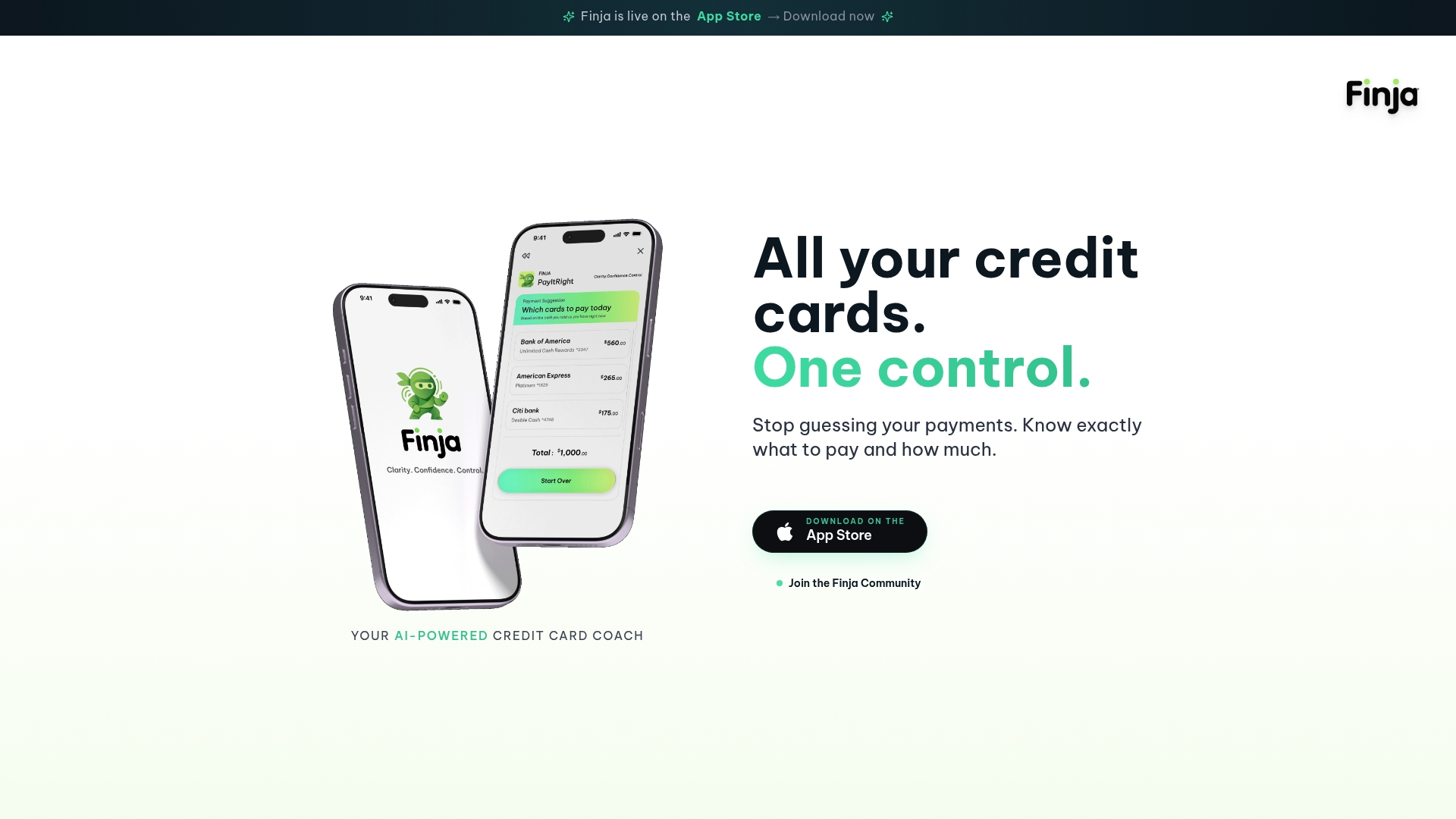
Finja gives you personalized recommendations based on your actual card balances and APRs, not generic advice. It flags when your utilization is climbing toward the 30% threshold, shows you exactly how much interest you are paying each month, and helps you build a payment plan that fits your income. If you are ready to move from monitoring your metrics to actively improving them, Finja's AI coaching gives you the structure to do it.
FAQ
What is a healthy credit utilization rate?
A healthy credit utilization rate is below 30%, with the best credit score outcomes coming from staying under 10%. The median utilization among active U.S. accounts was 8.84% at the end of 2025.
How does debt-to-income ratio affect credit card access?
A DTI above 36% signals elevated financial strain to lenders and typically restricts access to new credit or better terms. Keeping total debt payments below 36% of gross income protects your borrowing flexibility.
What happens if I only make minimum payments?
Paying only the minimum on a credit card with an APR of 18%–25% can extend your payoff timeline to 17–30+ years and result in total interest that nearly doubles or triples your original balance.
How often should I check my credit card financial health metrics?
Monthly reviews are the standard for effective credit health monitoring. Checking annually misses early warning signs like rising utilization or the start of delinquency migration from 30-day to 60-day late status.
What credit score is considered good for credit card management?
A credit score above 670 is the standard benchmark for "good" credit. Scores in this range qualify you for better interest rates, higher credit limits, and more favorable terms on new credit applications.