
Reducing your credit card bills is achievable through specific, proven strategies that lower interest costs and speed up debt repayment. The most effective ways to reduce credit card bills combine payment discipline, rate negotiation, and spending control. Card issuers are required to show payoff timeline comparisons on your statement based on different payment amounts. That disclosure exists because minimum payments prolong debt for years, costing you far more in interest than necessary. The strategies in this article are ranked by impact and backed by financial research.
How can paying more than the minimum reduce your credit card bill faster?
Paying only the minimum is the single most expensive habit in credit card management. Minimum payments are designed as lender safety nets, not repayment targets. They cover mostly interest, leaving your principal balance nearly untouched each month.
When you pay above the minimum, more of each dollar attacks the principal directly. A smaller principal means less interest charged next month. That cycle compounds in your favor instead of the lender's. Tracking interest paid monthly is one of the most motivating things you can do because the numbers make the cost of slow repayment impossible to ignore.

| Scenario | Monthly payment | Payoff time | Total interest paid |
|---|---|---|---|
| Minimum only | ~$25 | 10+ years | Very high |
| Double the minimum | ~$50 | 3–4 years | Moderate |
| Fixed $100/month | $100 | Under 2 years | Low |
The table above uses a $1,000 balance at a typical high APR for illustration. Your actual numbers will vary, but the pattern holds universally.
Pro Tip: Make your payment early in the billing cycle, not just before the due date. Interest on most cards accrues daily, so an earlier payment reduces the average daily balance and lowers the interest charge for that month.
What repayment strategies best fit different personal motivations?
Two methods dominate personal finance advice on credit card debt repayment: the avalanche method and the snowball method. Choosing the right one depends on your personality, not just the math.
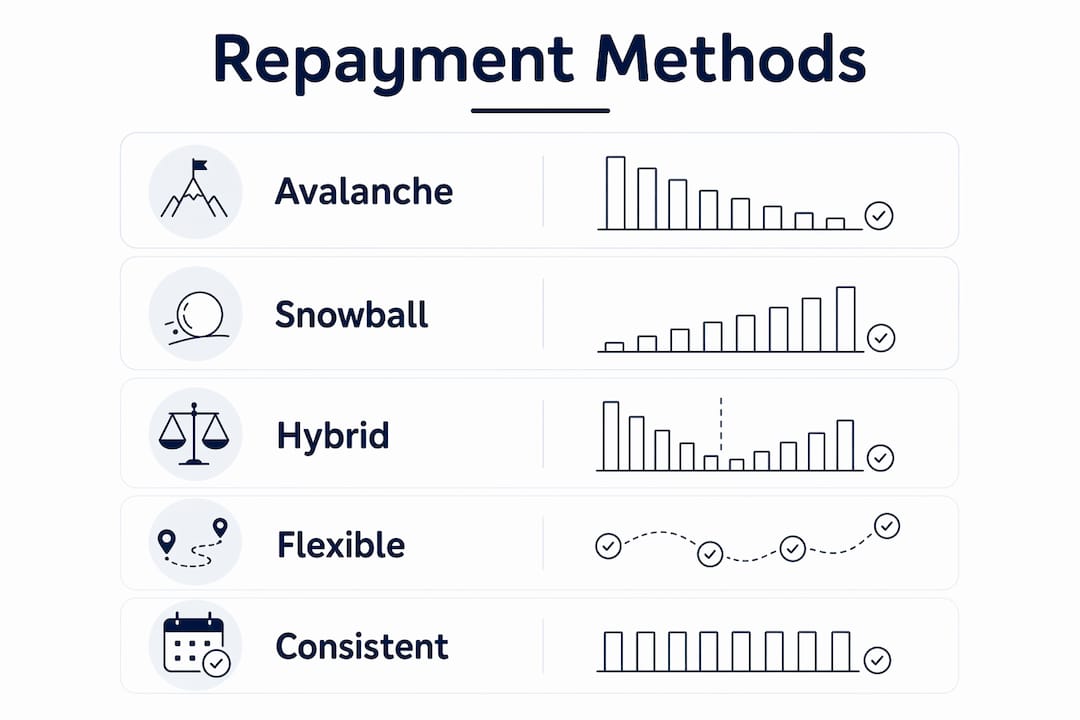
The avalanche method directs every extra dollar to the card with the highest interest rate first, while paying minimums on all others. Once that balance is gone, you roll that payment to the next highest rate. This approach saves the most money over time.
The snowball method targets the smallest balance first, regardless of interest rate. Paying off a full card quickly creates a psychological win. Research from Experian shows that motivation directly impacts repayment success. The snowball method often leads to better adherence because small wins build momentum.
Here is a direct comparison:
- Avalanche pros: Saves the most in total interest. Best for disciplined, math-focused people.
- Avalanche cons: Progress feels slow at first if the highest-rate card also has a large balance.
- Snowball pros: Fast early wins keep motivation high. Reduces the number of open balances quickly.
- Snowball cons: You may pay more interest overall compared to the avalanche approach.
The best repayment strategy is the one you will actually stick with. A perfect plan you abandon beats nothing, but a good plan you follow consistently wins every time.
Pro Tip: You do not have to pick one method and never deviate. Start with snowball to build momentum, then switch to avalanche once you have eliminated two or three small balances. Flexibility improves long-term results.
How to lower your interest rate through negotiation and balance transfers
Reducing the interest rate on your existing debt is one of the fastest ways to cut credit card expenses without spending more money. Two primary tools exist: calling your issuer directly and using a balance transfer card.
Negotiating your APR with your issuer
Most cardholders never ask for a lower rate. Consumers with strong payment history and long account tenure have a higher success rate than they expect when requesting a rate reduction. Call the number on the back of your card, state that you have been a reliable customer, and ask directly for a lower APR. Prepare by knowing your current rate, your payment history, and any competing offers you have received.
Using balance transfer cards
Balance transfer cards offer 0% introductory APR for 12–21 months. That window gives you time to pay down principal without interest charges eating into every payment. Balance transfers typically charge a fee of 3%–5% of the transferred amount upfront. On a $5,000 balance, that fee runs $150–$250. That cost is still far less than months of high-APR interest, provided you pay off the balance before the promotional period ends.
The risk is real: APRs revert to standard rates after the introductory period, often jumping to 20%–29%. If you carry a remaining balance at that point, you are back to square one.
| Option | Best for | Key cost | Main risk |
|---|---|---|---|
| APR negotiation | Existing cardholders with good history | Free | Issuer may decline |
| Balance transfer card | Cardholders with good credit score | 3%–5% transfer fee | High APR after intro period |
| Debt consolidation loan | Large balances across multiple cards | Origination fee | Fixed monthly obligation |
Pro Tip: Before committing to a balance transfer, calculate the transfer fee plus the monthly payment needed to clear the balance within the intro period. If the math does not work, the transfer may not help.
For a deeper look at how balance transfers affect your credit profile, the credit card portfolio rebalancing guide covers 0% APR mechanics and credit score impact in detail.
What lifestyle and budgeting changes help cut credit card expenses?
Paying down debt faster requires freeing up more cash each month. That means reducing what you charge and redirecting savings toward your balance.
The first step is stopping new charges on cards you are actively paying down. Switch to cash or a debit card for daily purchases. This prevents the balance from growing while you work to shrink it. Managing multiple cards during repayment requires a clear system so you do not accidentally overspend on a card you intended to freeze.
Review your last three months of statements and categorize every expense. Most people find at least one or two categories where spending is higher than expected. Common discretionary expenses worth evaluating:
- Streaming subscriptions you rarely use
- Dining out more than twice per week
- Gym memberships with low attendance
- Retail impulse purchases charged to cards
- Recurring app subscriptions billed automatically
Negotiating recurring bills, such as internet, insurance, and phone plans, can free up $50–$100 per month without changing your lifestyle. That money goes directly to your balance. Financial experts note that consumers using credit cards to cover basic needs may face an income gap, not just a spending problem. Cutting subscriptions helps, but it will not solve a structural shortfall.
Pro Tip: Redirect any windfall directly to your highest-priority card balance. Tax refunds, bonuses, and cash gifts applied to debt create a one-time principal reduction that compounds forward in your favor.
What are the risks and benefits of debt management programs and settlements?
When standard repayment methods are not enough, structured programs offer additional options. Each comes with real trade-offs.
-
Debt management plans (DMPs): A nonprofit credit counseling agency negotiates reduced interest rates with your creditors and sets up a single monthly payment. Plans typically last 3–5 years and require you to close enrolled accounts and avoid new credit during the program. The benefit is a clear, structured path. The drawback is restricted credit access for the duration.
-
Debt settlement programs: These programs negotiate with creditors to accept less than the full balance owed. They are generally available for debts over $7,500. Clients who complete settlement programs save roughly 20% of the total debt after fees. Fees run 15%–25% of the enrolled debt amount. The process takes 12–48 months.
-
Debt consolidation loans: A personal loan pays off multiple card balances, leaving one fixed monthly payment at a lower interest rate. This works best for borrowers with good credit who qualify for a rate below their current card APRs.
The critical warning on debt settlement: some companies instruct you to stop paying creditors directly while funds accumulate in a settlement account. This damages your credit score and may trigger collection actions. Use only nonprofit credit counseling agencies or verify any for-profit company's credentials through the Consumer Financial Protection Bureau (CFPB) before enrolling.
Key takeaways
The most effective way to reduce credit card bills is to combine above-minimum payments with a structured repayment method, lower your interest rate where possible, and stop adding new charges while you pay down existing debt.
| Point | Details |
|---|---|
| Pay above the minimum | Minimum payments cover mostly interest; extra payments reduce principal and shorten payoff time. |
| Choose a repayment method | Use avalanche to save the most interest or snowball to build motivation through quick wins. |
| Negotiate or transfer your rate | Call your issuer for a lower APR or use a 0% balance transfer card to cut interest costs. |
| Cut and redirect spending | Freeze new charges, reduce discretionary expenses, and send windfalls directly to your balance. |
| Know your program options | Debt management plans and settlement programs offer structured relief but carry fees and credit impacts. |
The uncomfortable truth about credit card debt I've learned over time
Most articles on this topic treat credit card debt as a math problem. Pay this amount, follow this method, done. The math matters, but it is not the whole story.
The hardest part of paying down debt is sustaining the effort when progress feels invisible. I have seen people follow the avalanche method perfectly for two months, then abandon it because a large balance barely moved. The snowball method exists precisely because human motivation is not rational. A $200 balance you eliminate feels like a win even if a $6,000 balance at 24% APR is costing you far more.
My honest view: pick the method you will not quit. Adjust it as your situation changes. If you have been paying minimums for years, any increase in your payment is a meaningful step forward.
One thing most articles skip: proactive communication with creditors works. Issuers would rather negotiate a lower rate than lose you to a balance transfer or a debt management plan. A five-minute phone call costs nothing and occasionally saves hundreds of dollars in interest.
Finally, if you are using credit cards to cover groceries or utilities every month, a repayment strategy alone will not fix the problem. Address the income side of the equation alongside the debt side. That might mean a side income, a budget restructure, or a conversation with a nonprofit credit counselor. The financial stress guide for credit cards covers that territory honestly and without judgment.
— Grace K.
How Finja helps you reduce credit card bills with AI coaching
Knowing the right strategies is one thing. Applying them consistently across multiple cards, billing cycles, and interest rates is where most people struggle.
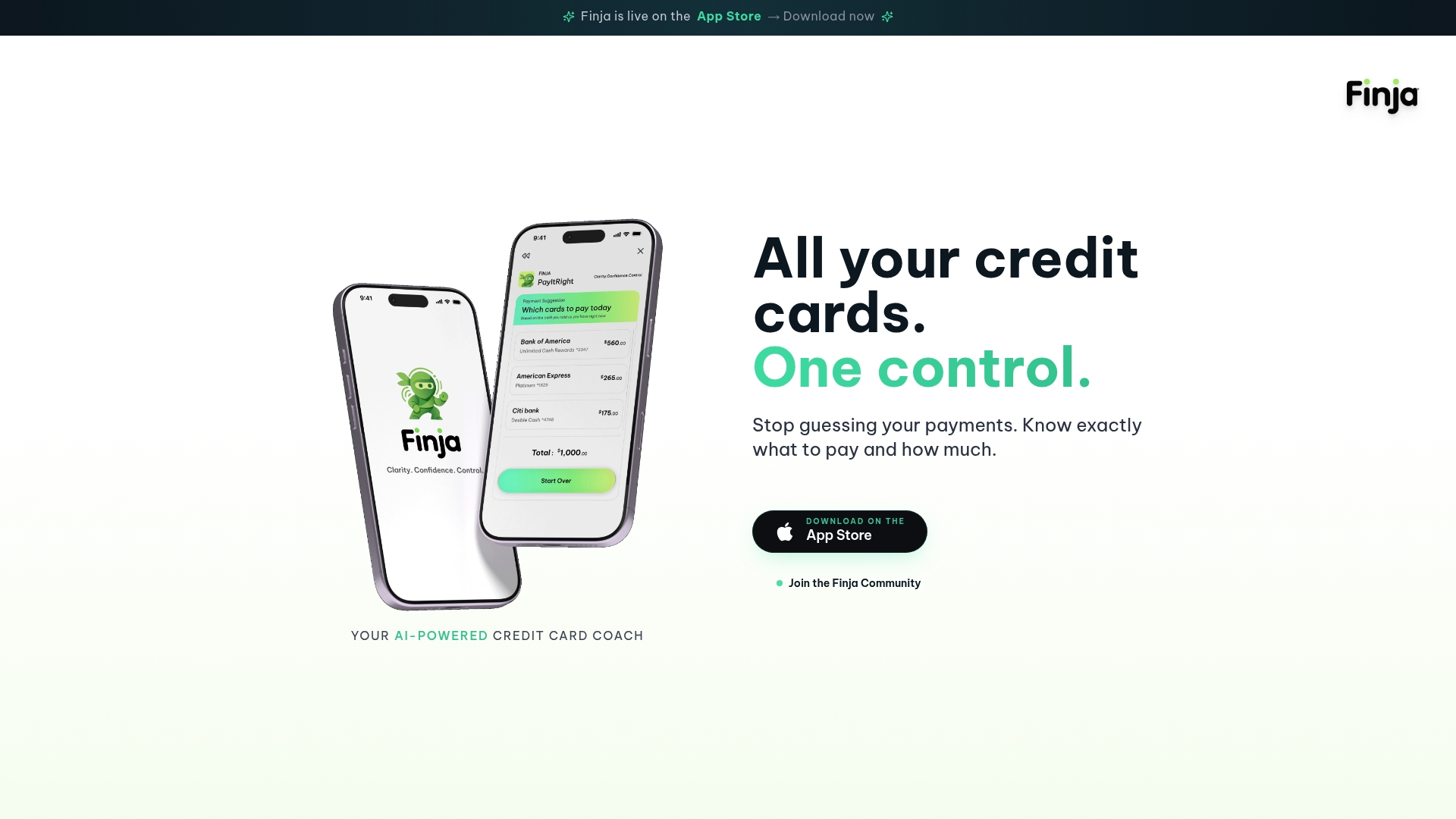
Finja is an AI-powered credit card management platform built for exactly this situation. It analyzes your cards, tracks interest paid monthly, and tells you which balance to prioritize based on your actual numbers. Finja also helps you model the impact of different payment amounts before you commit, so you can see the payoff timeline shift in real time. If you carry balances on more than one card, Finja's AI credit card coach gives you a clear, personalized plan instead of a generic checklist.
FAQ
What is the fastest way to reduce a credit card bill?
Stop adding new charges and pay as much above the minimum as your budget allows each month. Paying early in the billing cycle also reduces daily interest accrual.
Is the avalanche or snowball method better for paying off credit card debt?
The avalanche method saves more money in total interest. The snowball method works better for people who need motivational wins to stay consistent. The best choice is the one you will follow through on.
How does a balance transfer help lower credit card payments?
A balance transfer moves your debt to a card with a 0% introductory APR, typically lasting 12–21 months. You pay a 3%–5% transfer fee upfront, but you eliminate interest charges during the promotional period if you pay off the balance in time.
Can I negotiate a lower interest rate with my credit card issuer?
Yes. Cardholders with a strong payment history and long account tenure have a good chance of success when they call and ask directly. Prepare your account history and any competing offers before the call.
What is a debt management plan and who should use it?
A debt management plan is a structured repayment program run by a nonprofit credit counseling agency. It lasts 3–5 years and works best for people with steady income who need lower interest rates and a single monthly payment but want to avoid debt settlement's credit damage.