
Your credit mix is the combination of revolving and installment credit accounts on your credit report, and it accounts for about 10% of your FICO score. That slice of your score won't make or break a mortgage application on its own, but for anyone trying to push from "good" to "excellent," it's often the gap worth closing.
The most effective credit mix optimization strategies focus on letting your credit portfolio grow naturally alongside real financial needs rather than forcing artificial diversity. Here's what that looks like in practice:
- Assess your current mix. Pull your credit reports from AnnualCreditReport.com and identify whether you have both revolving and installment accounts active.
- Add credit types through real life events. Buying a car or financing a home adds installment credit without manufactured risk.
- Use a credit-builder loan if you lack installment credit and don't have an immediate need for a major purchase.
- Become an authorized user on a trusted person's credit card to add revolving credit history without a hard inquiry.
- Keep existing accounts open. Closing an account removes that credit type from your mix entirely.
- Pay every account on time. Payment history drives 35% of your FICO score, so no mix improvement is worth a late payment.
- Monitor your credit reports regularly to track changes and catch errors before they cost you points.
How credit mix optimization strategies affect your score
Credit mix measures how diverse your borrowing experience is across account types. FICO and VantageScore, the two dominant scoring models used by American lenders, both factor it in. FICO weights it at 10% of your score; VantageScore 3.0 folds it into "depth of credit," which carries a heavier combined weight.
Stat to know: Payment history counts for 35% and amounts owed for 30% of your FICO score. Credit mix sits at 10%. If your score is already above 750, the practical lift from improving your mix is minimal. The 610–680 FICO range is where a stronger mix tends to produce the most noticeable movement.
A balanced mix signals to lenders that you can handle different types of financial obligations at the same time. Someone who has managed a credit card responsibly for years and also made consistent auto loan payments looks more experienced to a lender than someone with five credit cards and nothing else. That said, you don't need an elaborate portfolio. Having at least one revolving account and one installment account is enough to avoid any mix penalty in your score. Stacking three more auto loans on top of that won't move the needle further.
What types of credit accounts actually count?
Two categories make up your credit mix, and understanding the difference helps you spot gaps in your own profile.

Revolving credit has a credit limit and a variable balance you can carry month to month. Your utilization ratio on these accounts, meaning how much of your available credit you're using, is reported at your statement closing date, not your payment due date. Paying before that closing date keeps reported balances low.
Installment credit involves a fixed loan amount repaid in equal monthly payments over a set term. The balance decreases with each payment, and there's no revolving component.
Common examples of each:
- Revolving: Standard credit cards, secured credit cards, personal lines of credit, home equity lines of credit (HELOCs)
- Installment: Mortgages, auto loans, student loans (federal loans through studentaid.gov are the most common), personal loans, credit-builder loans
A few accounts worth noting separately: Buy Now Pay Later plans vary widely. Some providers report to credit bureaus; many report only missed payments, not on-time ones. Treat them as a credit-building tool only if you've confirmed the provider reports full payment history.
Secured credit cards count as revolving credit in scoring models exactly the same way unsecured cards do. If you're rebuilding credit, a secured card is one of the lowest-risk ways to establish revolving history. After six to twelve months of responsible use, many issuers offer a path to an unsecured card while preserving your account history.
Pro Tip: The optimal credit utilization ratio for peak FICO scores sits between 1% and 9%, not the commonly cited 30%. Pay your credit card balance before the statement closing date, not just before the due date, to control what gets reported.
Strategies to build a responsible credit mix over time
Start with an honest audit
Before opening anything new, look at what you already have. Log into AnnualCreditReport.com and pull reports from all three bureaus: Equifax, Experian, and TransUnion. If you have only credit cards, you're missing installment credit. If you have only a student loan, you need a revolving account. Knowing your gap before acting prevents unnecessary applications.

A useful resource for structuring this audit is Finja's credit score improvement checklist, which walks through the full range of factors affecting your FICO score, not just mix.
Let life events do the work
The cleanest credit mix improvements happen when they align with purchases you were already planning. Financing a car adds an installment account. Opening a rewards credit card for a category you already spend on adds revolving credit. Opening accounts just to boost your mix is rarely worth it because the small scoring gain rarely outweighs the hard inquiry and the reduction in your average account age.
A 2–3 card portfolio matched to your actual spending categories is generally the right ceiling for revolving accounts. One flat-rate card for general spending, one category card for your biggest expense area, and possibly a third for travel if that's a real part of your budget. Beyond that, the complexity grows faster than the benefit. For a deeper look at managing multiple cards without letting them manage you, Finja's guide on multiple card management covers the practical side.
Use credit-builder loans strategically
If you lack installment credit and don't have an immediate need for a car or home loan, a credit-builder loan is the lowest-risk path. You make fixed monthly payments, the lender reports them to the credit bureaus, and at the end of the term you receive the accumulated funds. You're essentially paying yourself into a savings account while building a payment history on an installment account.
Credit unions and community banks are the most common sources for these products. Terms typically run 12–24 months, and the amounts are small, often $500–$1,500, which keeps the financial commitment manageable.
Become an authorized user carefully
Being added to someone else's credit card account can add revolving credit history to your report without requiring you to apply for a new card. The account's age, limit, and payment history all transfer to your profile. The risk is real, though: their payment habits transfer too. One missed payment by the primary cardholder shows up on your report. Only pursue this with someone whose financial habits you trust completely.
Some scoring models weigh authorized user accounts slightly less than accounts you own outright, but they still contribute to credit mix diversity.
Time new applications to minimize damage
When you do need to apply for new credit, spacing applications matters. Multiple hard inquiries in a short window lower your average account age and can signal financial stress to lenders. For rate shopping on mortgages or auto loans, credit scoring models typically treat multiple inquiries within a 14–45 day window as a single inquiry, so bunching those makes sense. For credit cards, space applications by at least a few months.
New accounts appear on your credit report within 30–60 days. The positive scoring effects from credit mix generally take 3–12 months of consistent on-time payments to fully materialize. Expect a small initial dip from the hard inquiry and reduced average account age before the benefits show up.
Pro Tip: Never close an old credit card just because you rarely use it. Closing it removes that account from your mix and shortens your average account age. If the annual fee is the problem, ask the issuer to downgrade it to a no-fee version of the same card, which preserves the account history.
Common mistakes that undo your progress
- Opening several new accounts in a short period to "fix" your mix quickly
- Carrying a credit card balance to "show activity." Scoring models reward low utilization on accounts paid in full, not revolving balances
- Closing old accounts when simplifying your wallet
- Ignoring payment history while chasing mix improvements. A single 30-day late payment does far more damage than a perfect mix provides benefit
- Assuming more installment loans improve your score further. One active account in each category is enough to avoid a mix penalty
For a broader look at how credit decisions ripple through your financial health, the Rate Grove guide on credit score impact covers how new applications affect your profile across multiple dimensions.
Key Takeaways
A balanced credit mix, with at least one revolving and one installment account, accounts for about 10% of your FICO score and is best built through genuine financial decisions rather than forced diversification.
| Point | Details |
|---|---|
| Credit mix weight | Credit mix represents about 10% of your FICO score; payment history counts for 35% and amounts owed 30%. |
| Minimum viable mix | One active revolving account plus one installment account prevents any mix penalty; holding multiple installment loans does not further improve your score. |
| Best score range for impact | Consumers in the 610–680 FICO range see the most meaningful lift from improving credit mix; those above 750 see minimal change. |
| Timing of improvements | New accounts appear on reports within 30–60 days; positive credit mix effects usually build over 3–12 months with consistent payments. |
| Biggest mistake to avoid | Opening several new accounts quickly to boost mix often backfires due to hard inquiries and reduced average account age. |
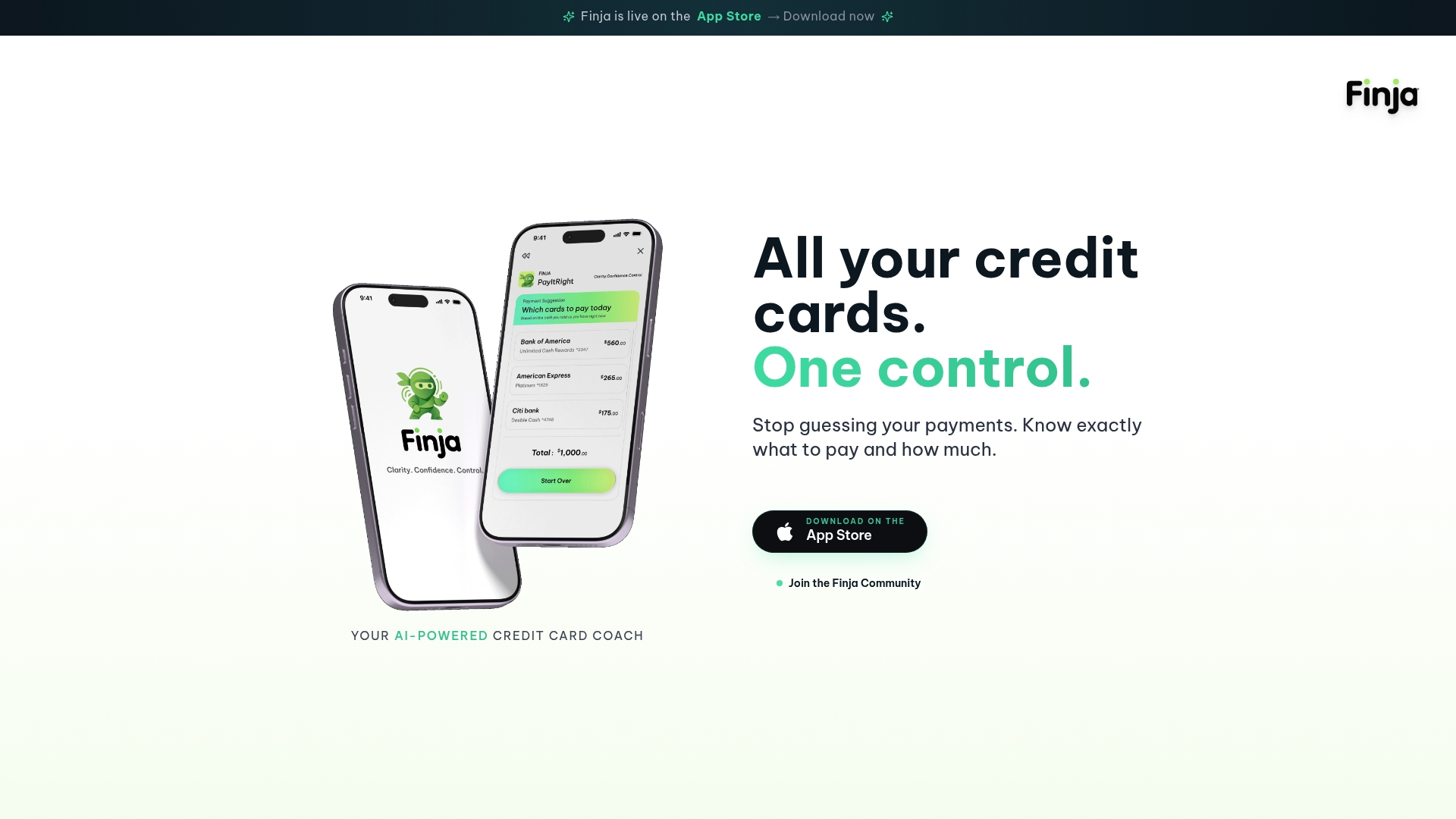
Managing your credit mix is one piece of a larger puzzle. Finja's AI-powered platform helps you track your credit card accounts, time payments to minimize reported balances, and make smarter decisions across your entire credit profile. See how Finja works and take control of your credit health today.