
A credit score improvement checklist is a prioritized set of steps that targets the factors with the greatest impact on your FICO score first. Payment history carries 35% of your score weight, and credit utilization carries 30%. Together, these two factors control nearly two-thirds of your score. Every other action on this guide builds on those two pillars. Follow this checklist in order, and you will see measurable results within weeks, not years.
1. What are the highest-impact actions to improve your credit score quickly?
The fastest gains come from fixing the two biggest score factors: payment history and credit utilization. Everything else is secondary until these are under control.
- Pay every bill on time. Missing a payment can drop your score by 100+ points. That single event can undo months of progress. Set up autopay for at least the minimum amount on every account so a forgotten due date never costs you.
- Reduce your credit utilization below 10%. Utilization under 10% produces the fastest score gains, often within a single billing cycle. Most people target 30%, but 10% is where the real acceleration happens.
- Dispute errors on your credit report. Errors appear more often than most people expect. File disputes directly with each of the three major bureaus: Equifax, Experian, and TransUnion. A fix at one bureau does not automatically update the others, so you must dispute separately with each one.
- Set up payment reminders. Autopay handles the minimum, but a calendar reminder three days before each due date lets you pay more when cash allows.
Pro Tip: Pay down your balances a few days before your statement closing date, not just the due date. Card issuers report balances to bureaus monthly, and the balance on your statement closing date is the number that gets reported. Paying early means a lower utilization figure shows up on your credit file.
2. How to strategically manage credit accounts to boost your credit score
Account management is where most people leave points on the table. The decisions you make about which accounts to keep, open, or close have a lasting effect on your score.
- Keep old accounts open. The length of your credit history accounts for 15% of your FICO score. Closing a card you no longer use shortens your average account age and raises your overall utilization ratio. Both outcomes hurt your score.
- Diversify your credit mix. Credit mix contributes 10% of your score. Lenders want to see that you can handle both revolving credit (credit cards) and installment credit (auto loans, personal loans). Adding one type you currently lack can lift your score without taking on unnecessary debt.
- Limit new credit applications. Each hard inquiry can lower your score by 5–10 points, and the effect lasts up to two years on your credit file. Apply for new credit only when you have a clear reason.
- Become an authorized user. Authorized user status on a seasoned account adds positive history immediately. Ask a family member or trusted friend with a long, clean credit history to add you to one of their cards. You do not need to use the card for the history to appear on your report.
- Spread balances across multiple cards. Concentrating debt on one card pushes that card's utilization to a high level even if your total debt is modest. Distributing balances keeps each individual card's ratio low, which is what the scoring model actually measures.
Good credit card portfolio management requires knowing which accounts to protect and which to pay down first. That decision directly affects both your utilization ratio and your credit history length.
3. What tools and products can support your credit improvement plan?
The right tools reduce the mental load of following a checklist and catch problems you might miss on your own.
- Secured credit cards. A secured card requires a cash deposit that becomes your credit limit. Because the issuer carries almost no risk, approval is straightforward even with a low score. Use it for one small recurring purchase each month, pay it in full, and the positive payment history builds steadily.
- Credit-builder loans. These loans hold the borrowed amount in a savings account while you make monthly payments. At the end of the term, you receive the funds and a record of on-time installment payments. They are one of the most direct ways to add installment credit to a thin file.
- Credit monitoring tools. Free and paid monitoring services alert you when new accounts open in your name, when balances change, or when a derogatory mark appears. Catching a problem early limits the damage.
- Dispute tracking records. Keep written records of every dispute you file, including confirmation numbers and dates. Bureaus have 30–45 days to respond, and documentation protects you if a dispute stalls.
Pro Tip: Interactive credit score planners that analyze your specific credit file give you a personalized roadmap rather than generic advice. Personalized score planners show which actions will move your score the most given your current profile, so you work on the right things first.
Finja functions as an AI credit card coach, analyzing your accounts and flagging which payment and utilization decisions will produce the biggest score gains. It removes the guesswork from prioritizing your checklist.

4. How long does it take to see credit score improvements?
Timelines vary by action. Knowing what to expect keeps you from abandoning the process too early.
- Utilization changes: about 30 days. Pay down a balance before your statement closing date, and the lower utilization appears on your report within one billing cycle. This is the fastest lever available.
- Dispute resolution: 30–45 days. The Fair Credit Reporting Act requires bureaus to investigate disputes within 30 days. Complex cases can extend to 45 days. File disputes as early as possible so corrections appear before you apply for new credit.
- Authorized user impact: 30–60 days. Once the primary cardholder's issuer reports to the bureaus, the account history appears on your file. The timeline depends on when the issuer reports, which is typically monthly.
- Payment history consistency: 3–6 months. Significant score improvements follow 3–6 months of consistent positive behavior. A single on-time payment helps, but lenders want to see a pattern.
- Long-term credit building: 12+ months. Recovering from a serious derogatory mark, such as a collection account or a charge-off, takes sustained effort over a year or more. The negative item remains on your report for seven years, but its impact fades as positive history accumulates.
Track your score monthly through a free monitoring service or your card issuer's dashboard. Monthly tracking reveals which actions are working and which need adjustment. Moving from fair to good credit can save thousands on major loans, which makes the patience worthwhile.
5. Common pitfalls to avoid while following a credit score improvement guide
Good habits build your score. Bad habits erase progress faster than most people realize.
- Missing payments. A single 30-day late payment can drop your score by 60–100 points. That is months of progress gone in one billing cycle. Autopay is the single most effective defense against this.
- Closing old accounts. Closing a card reduces your total available credit and shortens your credit history. Both changes raise your utilization ratio and lower your average account age. Keep old accounts open, even if you rarely use them.
- Opening multiple new accounts at once. Each application triggers a hard inquiry. Multiple inquiries in a short period signal financial stress to lenders and compound the point deductions. Space applications at least six months apart.
- Carrying balances above 30% utilization. Utilization above 30% signals risk to scoring models. Above 50%, the damage accelerates. Pay down high-balance cards before opening new ones.
- Reviewing only one bureau's report. Credit reports often differ between bureaus. An error on your Experian report will not appear on your TransUnion report, and vice versa. Pull all three reports and review each one separately.
Practical steps to reduce credit card bills directly lower your utilization ratio, which is one of the fastest ways to avoid the high-balance pitfall.
Key takeaways
The most effective credit score improvement checklist prioritizes payment history and utilization control first, because these two factors determine nearly 65% of your FICO score.
| Point | Details |
|---|---|
| Payment history is the top priority | A single missed payment drops your score by 60–100 points; autopay prevents this. |
| Utilization below 10% accelerates gains | Paying balances before the statement closing date reports a lower number to bureaus. |
| Dispute errors at all three bureaus | A fix at one bureau does not carry over; file separately with Equifax, Experian, and TransUnion. |
| Significant improvement takes 3–6 months | Consistent positive behavior over several months produces the most reliable score gains. |
| Avoid closing old accounts | Keeping old cards open protects your credit history length and your overall utilization ratio. |
What I have learned from following a credit score improvement checklist
The most common mistake I see is treating a credit score improvement checklist as a one-time project rather than a monthly practice. People make a few changes, check their score once, and then drift back to old habits when the improvement is slower than expected.
The checklist works because of compounding. One on-time payment does almost nothing. Twelve consecutive on-time payments, combined with utilization under 10% and one disputed error removed, can shift your score by 80 to 100 points. None of those actions is dramatic on its own. Together, they are.
The second lesson is that utilization is the most controllable variable in the short term. Payment history takes months to build. Utilization responds within a single billing cycle. If you need a score boost before a major loan application, paying down balances is the fastest legal path available.
The third lesson is harder: patience is a strategy. I have watched people abandon their checklist in month two because the gains felt small. The people who stayed consistent through month six saw the results that motivated them to start. Set a monthly tracking date, record your score, and compare it to the previous month. The trend line is more motivating than any single number.
— Grace K.
Finja makes your credit improvement checklist easier to follow
Managing payment timing, utilization ratios, and account priorities across multiple credit cards is genuinely difficult to do manually. Finja is an AI-powered credit card coach that tracks your balances, flags high-utilization cards, and tells you exactly which payment to make first for the biggest score impact.
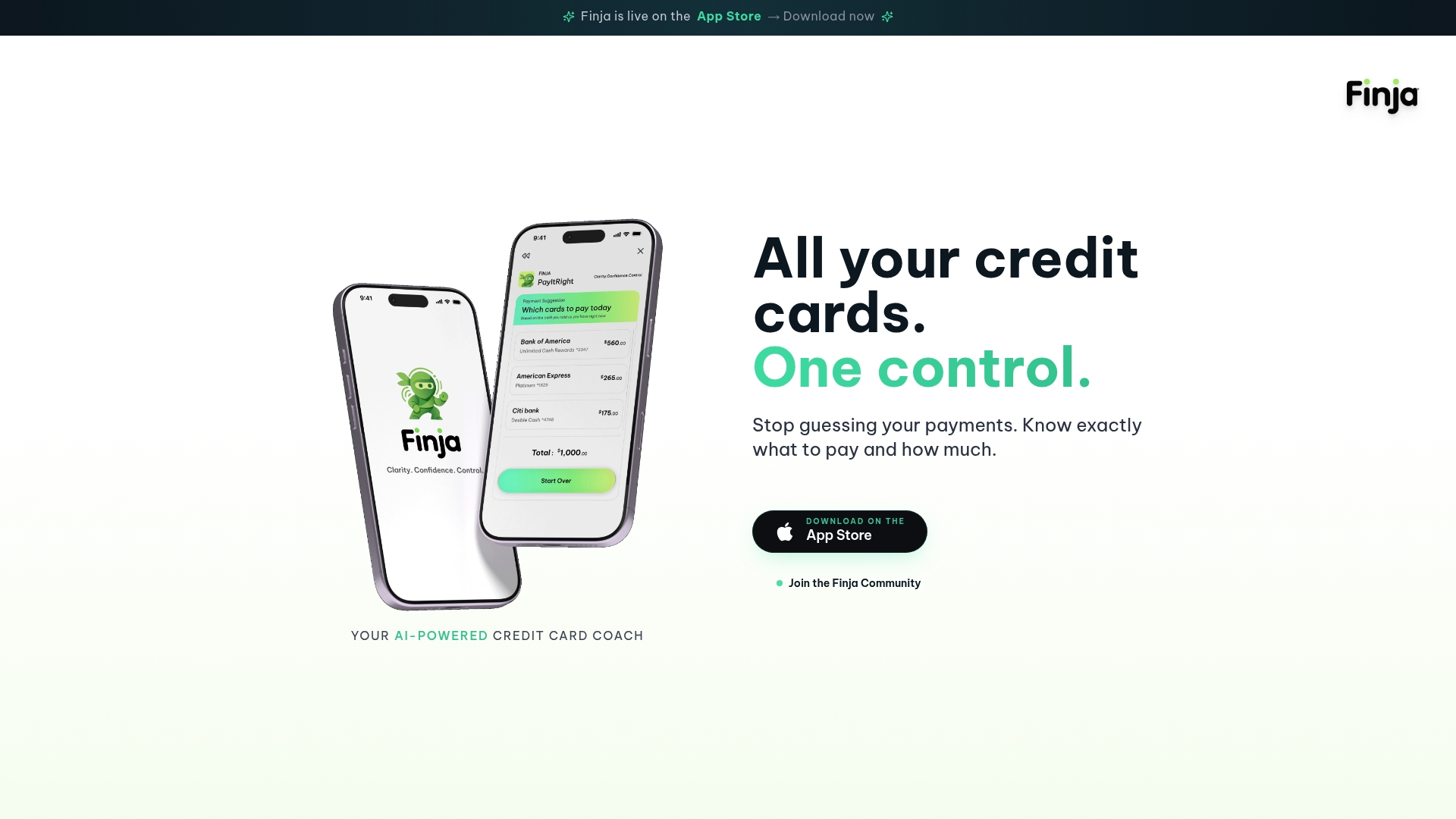
Finja connects your credit card accounts and surfaces the decisions that matter most, whether that is paying a specific card before its statement closes or identifying which balance to attack next. Visit Finja's AI credit coach to see how it applies your checklist automatically, so you spend less time calculating and more time making progress.
FAQ
What is a credit score improvement checklist?
A credit score improvement checklist is a prioritized list of steps targeting the highest-impact FICO factors first, including on-time payments, utilization reduction, and error disputes.
How fast can I improve my credit score?
Utilization changes appear within one billing cycle, roughly 30 days. Consistent payment history produces significant gains after 3–6 months of positive behavior.
What is the single most important step to improve my credit score?
Paying every bill on time is the most important step. Payment history accounts for 35% of your FICO score, and a single missed payment can drop your score by 100 or more points.
Should I close credit cards I no longer use?
No. Closing old accounts shortens your credit history and raises your overall utilization ratio. Keep them open, even with a zero balance, to protect both factors.
How do I dispute errors on my credit report?
File a dispute directly with each bureau where the error appears: Equifax, Experian, and TransUnion. Keep written records of every dispute, including confirmation numbers, because bureaus have 30–45 days to respond.