
The fastest way to cut credit card interest is to send every dollar above the minimum to your highest-APR balance, time at least one payment before your statement closes, and let automation enforce both rules every month. That single move, paying more than the minimum and targeting the priciest debt first, works because federal payment allocation rules already force issuers to apply your overpayment that way on any single card. The gap is that this protection stops at the card level. Across multiple cards, you have to make that call yourself.
Here's the starter move for this billing cycle:
- Pay your total minimums across all cards, then add extra and send it to your highest-APR card.
- If you have a promo balance nearing its deferred-interest deadline, that gets priority instead.
- Set a reminder or an automated rule (Finja can do this) so it happens again next month without you thinking about it.
Key Takeaways
Smart balance allocation means directing every dollar above the minimum to your highest-APR card while timing at least one payment before your statement closes.
| Point | Details |
|---|---|
| Target highest APR first | Federal rule already forces this on a single card; you must extend it across your full card list yourself. |
| Time payments around statement close | A payment 2 to 3 days before closing lowers what gets reported, often improving utilization within one cycle. |
| Watch deferred-interest deadlines | Promo balances need full payoff before the last two billing cycles or issuers can apply retroactive interest. |
| Match method to behavior | Avalanche saves the most interest; snowball keeps you motivated; hybrid blends both for most people. |
| Automate with Finja | Finja schedules split payments, pre-close nudges, and promo alerts so these examples run every month without manual tracking. |
Table of Contents
- Examples Of Smart Balance Allocation In Action
- How Does Payment Allocation Actually Work?
- When Should You Pay Before The Statement Closes?
- Avalanche Or Snowball: Which Fits You?
- How Can AI Automate Balance Allocation?
- What Should You Do In The Next Billing Cycle?
- What Grace K. Wants You To Know About This
- Let Finja Run These Allocation Examples For You
- Frequently Asked Questions
- Sources
Examples Of Smart Balance Allocation In Action
1. Debt avalanche across cards. Say you carry $3,000 at 24% APR, $2,000 at 18%, and $1,500 at 15%, and you have $150 extra to add to a combined minimum payment. Send it all to the 24% card. Worked examples from Experian show this pattern consistently produces lower total interest than spreading payments evenly, because every dollar removed from the highest rate stops compounding at the steepest curve.
2. Debt snowball for early wins. The same $150 aimed at the smallest balance ($1,500) instead of the highest rate closes an account faster, often within a few months. You pay somewhat more in total interest, but you free up an entire minimum payment sooner, which some people redirect immediately into the next target.
3. Rotate-and-target. Instead of committing all extra cash to one card indefinitely, rotate it: three months on the highest-rate card, then reassess and shift to whichever balance now carries the worst rate-to-balance ratio. This keeps utilization moving down on multiple cards at once rather than leaving two accounts flat while one drops.
4. Pre-statement payments. If your statement closes on the 20th and you normally pay on the due date near the 15th of the following month, making a second payment on the 18th lowers the balance your issuer reports to the bureaus. Bankrate's utilization research confirms this timing shift can register as a lower reported balance within a single reporting cycle, often nudging scores upward without paying down actual debt levels.
5. Deferred-interest targeting. A promo balance ($1,200 at 0% for 12 months, say) needs full payoff before the last two billing cycles of the promo window. Miss that, and issuers can apply retroactive interest to the entire original amount, not just what's left.
6. AI-scheduled splitting. An automated system checks balances, APRs, minimums, and promo end-dates daily, then splits your payment automatically: enough to cover minimums everywhere, the remainder to the priority target, and a pre-close nudge if utilization is climbing.

How Does Payment Allocation Actually Work?
Every card you carry has its own legal protection, and it's narrower than most people assume. Regulation Z, the rule created under the Credit CARD Act of 2009, requires that any amount you pay above your minimum on a single card gets applied to the balance with the highest APR on that card first. If your card has a purchase rate and a higher cash-advance rate, your extra payment attacks the cash-advance balance automatically.
Minimum payments don't get that treatment. Issuers have discretion over how minimums get allocated within a card, and that discretion rarely favors you.
Within a single APR tier, many issuers clear older charges before newer ones. A partial payment can stop interest on last month's purchase while this month's charge keeps accruing, even though both sit at the same rate.
That FIFO ordering, explained in detail by Rate Grove's statement timing guide, matters most for deferred-interest promotions. During the last two billing cycles of a 0% offer, issuers must direct payments to the promotional balance first. Miss that window and the protection disappears.
- Above-minimum payments target the highest APR automatically, but only within one card.
- Minimum payments are allocated at the issuer's discretion.
- Deferred-interest promos have special, time-limited allocation rules.
When Should You Pay Before The Statement Closes?
Your due date and your statement closing date are two different things, and only one of them affects what gets reported to the bureaus. If your statement closes on the 22nd, a payment made on the 20th reduces the balance that shows up on your credit report, even if your actual due date isn't until the 15th of next month.
- Pay a chunk 2 to 3 days before the closing date if utilization is your priority.
- Split large purchases into two payments across a billing cycle instead of one lump sum at the due date.
- Check your reported balance after the statement cuts to confirm it dropped.
Experian's guidance puts the general utilization ceiling at 30%, with the strongest scores typically tied to utilization closer to 10%. That threshold applies per card and across your total available credit, so a maxed-out card can drag your score even if your overall utilization looks fine.
Avalanche Or Snowball: Which Fits You?
Avalanche wins on math. Fidelity's comparison and the underlying academic research back it as the cheaper path in nearly every scenario because it targets compounding at its most expensive point first. Snowball wins on follow-through. Closing an account, even a small one, delivers a psychological payoff that keeps people sticking to the plan for months instead of quitting in week six.
- If you're disciplined about auto-pay and don't need visible wins, run avalanche and read more on the math behind it.
- If you've abandoned debt plans before, run a hybrid: avalanche on your two highest-rate cards, but let one small balance get a snowball payoff first for momentum.
- If you're not sure which describes you, default to hybrid. It rarely costs much more in interest and it's far more likely to actually finish.
Pro Tip: Keep the snowball target under $500. Anything larger delays your avalanche savings without adding much motivational payoff.
How Can AI Automate Balance Allocation?
An automated allocation tool needs four inputs to work: current balances, APRs, statement closing dates, and any promo end-dates. From there it can schedule split payments, push a pre-close payment automatically when utilization crosses a threshold, and flag a deferred-interest deadline before the two-cycle window closes.
Finja's payment allocation explainer walks through this mechanic in more detail, including how it calculates which card gets the next dollar. The value isn't the math itself. It's that a system checks it every day, something a manual spreadsheet rarely survives past month two.
- Inputs: balances, APRs, minimums, statement dates, promo deadlines.
- Outputs: scheduled payments, pre-close alerts, promo-expiry warnings, utilization tracking.
- You control permissions and can adjust or override any scheduled action before it executes.
Pro Tip: Set your promo-deadline alert for 45 days out, not the week before. Deferred-interest balances take longer to clear than most people expect.
What Should You Do In The Next Billing Cycle?
- List every balance, APR, minimum, and statement closing date on one page.
- Pick avalanche, snowball, or hybrid using the decision rule above.
- Send one above-minimum payment to your target balance this week.
- If timing helps your utilization, schedule a second payment 2 to 3 days before your next statement closes.
- Set a recurring reminder or automate the rule so it repeats without manual tracking.
Full checklist and scheduling tactics live in Finja's multi-card management guide.
What Grace K. Wants You To Know About This
Small, repeated allocation choices compound faster than most people expect. One correctly targeted payment a month, kept up for a year, often outperforms a single dramatic payoff attempt that fizzles by March. Finja's internal guides track this pattern closely.
Let Finja Run These Allocation Examples For You
Every example above works better when it runs on autopilot instead of your memory. Finja pulls in your balances, APRs, and statement dates, then handles the routing: extra payments to your highest-rate card, pre-close nudges when utilization creeps up, and alerts before a deferred-interest promo turns expensive.
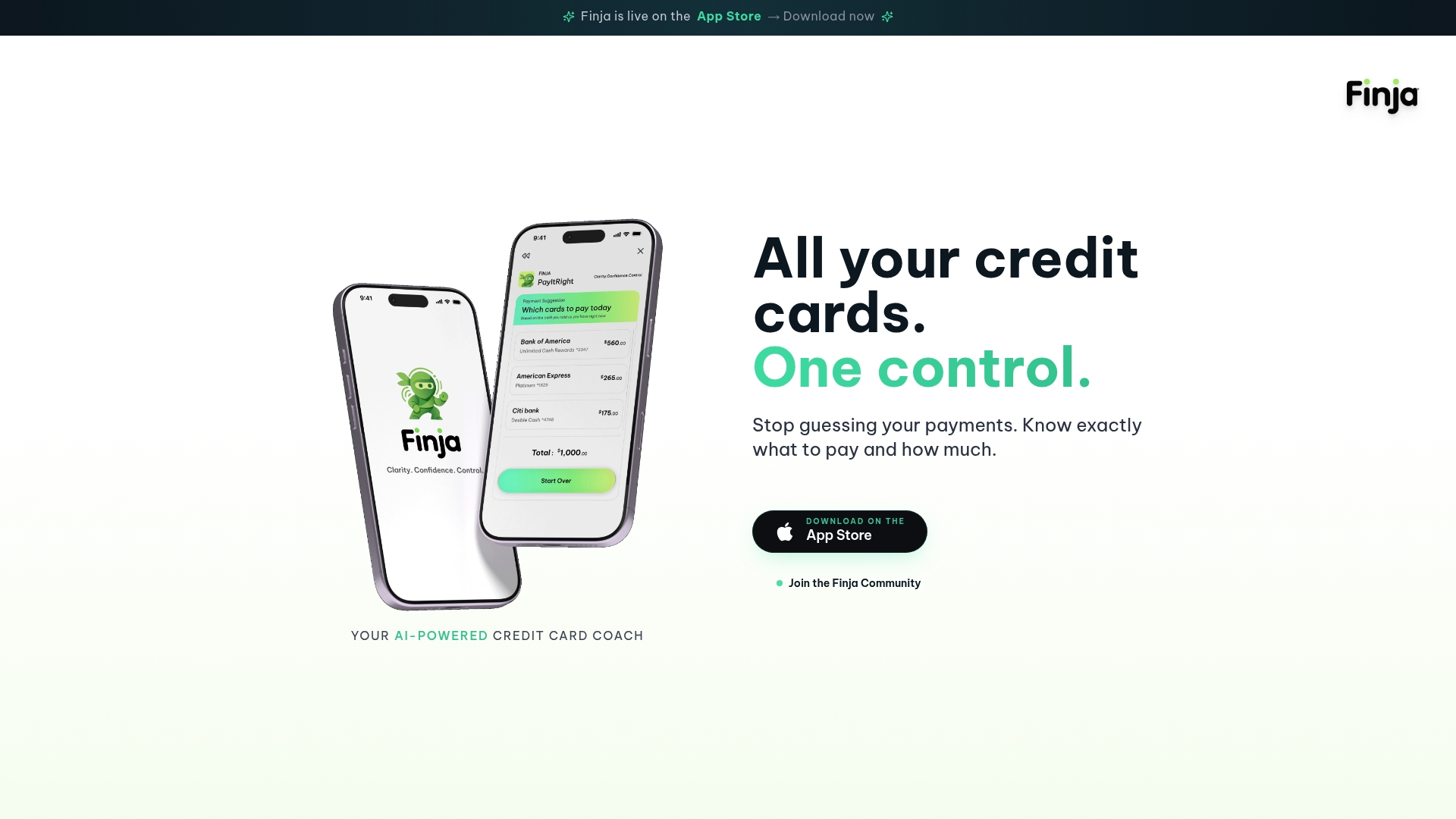
Sign up and Finja maps your current cards against the avalanche, snowball, and hybrid models covered here, then shows you which one saves the most before you commit to anything. For a wider payoff roadmap alongside the allocation piece, Finja's debt-free strategy guide covers the rest. Start at Myfinja and connect your first card in a few minutes.
Frequently Asked Questions
What is the fastest way to lower credit card interest across multiple cards? Send every dollar above your combined minimum payments to the single card with the highest APR. This mirrors the federal allocation rule that already applies within one card, extended manually or through automation across your full portfolio.
Does paying early always help my credit score? Only if you pay before the statement closing date, not just before the due date. A payment made after your statement cuts won't lower the balance reported for that cycle, even though it still counts toward your due amount.
Is the snowball method ever better than avalanche? For total interest saved, no. For actually finishing a payoff plan, sometimes. If you've quit a debt plan before, a hybrid approach that includes one small snowball win tends to outperform pure avalanche in practice, according to Fidelity's behavioral research.
How does a deferred-interest promotion change my allocation strategy? During the final two billing cycles of the promo, issuers must apply payments to that balance first. Falling short before it expires can trigger retroactive interest on the full original amount, not just the remaining balance.

Can automation actually replace manual allocation decisions? Automation removes the timing errors that manual tracking tends to create, like missing a pre-close window or forgetting a promo deadline. You still set the priorities. The system just enforces them consistently.
Sources
- How Your Credit Card Payments Are Applied to Your Balances | myFICO
- Credit utilization ratio — Bankrate
- Avalanche vs snowball explainer — Fidelity