
A credit card grace period is the interest-free window between your statement closing date and your payment due date. Pay your full statement balance by that due date and you owe zero interest on those purchases. Miss it, pay only part of it, and you typically lose that protection, with interest starting to accrue on both the leftover balance and any new charges.
TL;DR:
- Most credit cards offer a grace period of 21 to 25 days from statement delivery, and missing full payment within this window triggers interest on existing and new balances.
- Paying only part of your statement balance or late even by a few days causes you to lose the interest-free period and start accruing interest retroactively.
- Ensuring full payment before the due date, ideally a few days early, helps avoid interest, late fees, and potential penalty APRs, especially if managing multiple cards.
- Tracking statement balances rather than current balances is crucial, as the former determines interest-free status and impacts credit utilization reporting.
- Using automated tools to consolidate multiple card due dates and balances significantly reduces the risk of unintentional interest charges and missed payments.
Table of Contents
- How Does a Credit Card Grace Period Work?
- How Long Does a Grace Period Usually Last?
- What Makes You Lose Your Grace Period?
- How Do You Avoid Interest and Protect the Grace Period?
- Why Automated Tools Cut Down Grace Period Mistakes
- Does the Grace Period Affect Your Credit Score?
- How Do Grace Periods Differ Between Issuers?
- What Happens If You Pay After the Due Date?
- Do Promotional APR Offers Still Include a Grace Period?
- Why Paying in Full Beats Every Other Grace-Period Trick
- A Simpler Way to Stay Ahead of Every Due Date
- Sources
- FAQ
How Does a Credit Card Grace Period Work?
Every card runs on a billing cycle, usually around one month, that ends on your statement closing date. That's the moment your issuer freezes the numbers, tallies everything you charged, and generates your statement. Everything from that cycle becomes your statement balance, the figure that actually matters for keeping your grace period alive.
Your current balance is a different animal. It's whatever you owe right now, mid-cycle, including purchases you made yesterday that haven't even hit a statement yet. Pay off your current balance thinking it protects you, and you might still miss part of the statement balance if a return credit or fee posted at an odd time. Statement balance is the number that determines whether you pay interest. Current balance is just a snapshot.
Here's how the timeline typically plays out:
- You make a purchase midcycle.
- Your statement closes and locks in that period's charges.
- Your issuer sends the statement (paper or digital).
- A minimum of 21 days must pass before your payment is due, under federal rules.
- You pay the full statement balance by the due date.
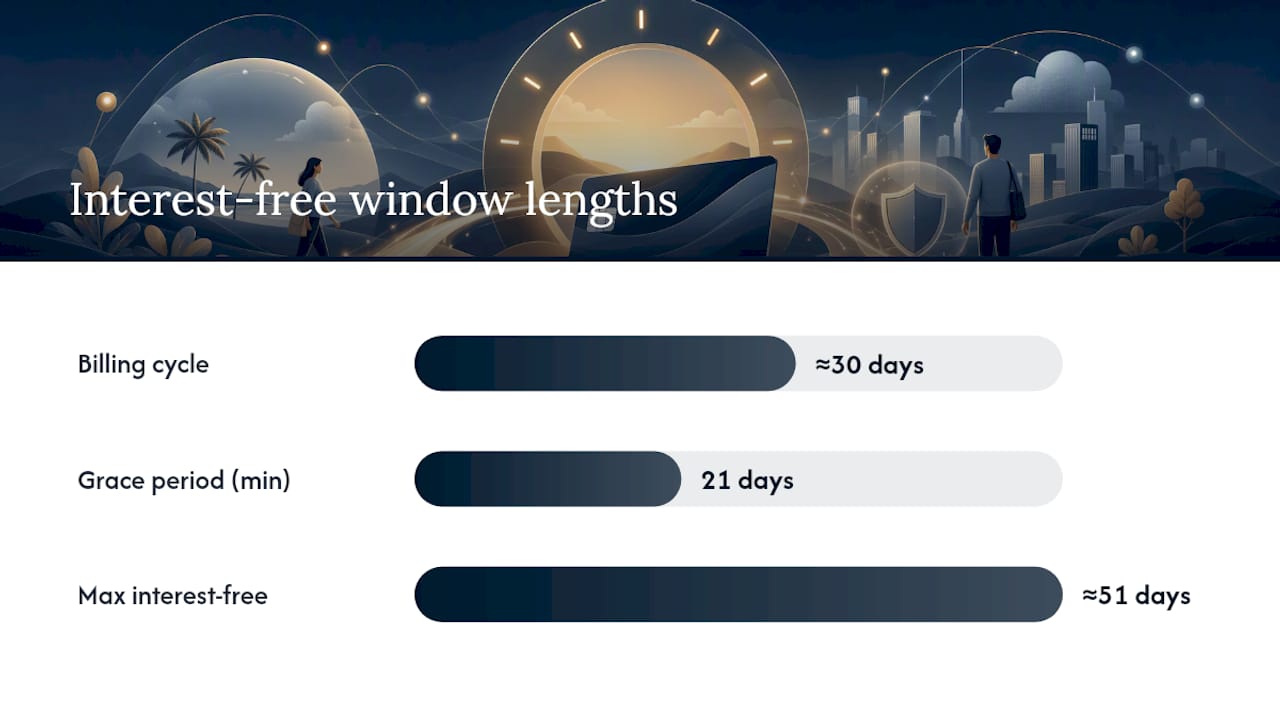
Quick math: if your issuer builds in the full 21 days most cards offer, a purchase made right after closing could sit interest-free for close to two months before payment is due.
To find your own numbers, log into your issuer's app or check your last paper statement. Look for "statement closing date," "payment due date," and "statement balance," usually printed near the top. The distinction between statement and current balance trips up more cardholders than almost anything else on a monthly statement.
How Long Does a Grace Period Usually Last?
Most issuers give you between 21 and 25 days from the statement closing date to the due date. That's not a courtesy; it's close to a legal floor.
Federal rules require any card that offers a grace period to give you at least 21 days between when the statement is sent and when payment is due. This came out of the Credit CARD Act, and it applies across nearly every major issuer in the U.S.
A few things worth knowing about that window:
- 21 days is the floor, not the ceiling. Plenty of cards give 25.
- The clock starts from when the statement is delivered, not from the purchase date.
- Cards technically don't have to offer a grace period at all, though almost all major consumer cards do.
- Your exact number lives in your cardholder agreement or on your digital statement, not in generic advice articles.
The number that matters: somewhere between 21 and 25 days is standard, but your card's actual figure is the only one that counts for your payment planning. Check it once and you won't have to guess again.
What Makes You Lose Your Grace Period?
The trigger is simple: not paying your full statement balance by the due date. That single event flips a switch, and interest starts accruing again, sometimes retroactively.
Once that happens, a few things hit at once:
- Interest kicks in on your unpaid balance, calculated back to the transaction dates in many cases.
- New purchases start earning interest immediately instead of enjoying a fresh grace period.
- Late fees apply if you missed the due date entirely, not just underpaid.
- Some cards trigger a penalty APR after repeated late payments, which can run well above your normal rate.
There's also a sneaky cost called trailing interest or residual interest. Say you carry a balance one month, then pay it off in full the next. You might still see a small interest charge on your following statement. That's interest that accrued between your last closing date and the day your payment actually posted, before the grace period restarted. It's not a billing error. It's the math catching up.
Grace periods also don't apply universally. Cash advances and convenience checks usually start accruing interest the moment you use them, with no interest-free window at all. Some promotional terms carve out exceptions too, which is worth confirming before you use one.
Pro Tip: If you carry a balance one month and pay in full the next, don't be surprised by a small trailing interest charge on your next bill. It's leftover interest from the gap between your closing date and when your payment posted, not a mistake.
How Do You Avoid Interest and Protect the Grace Period?
The fix is almost boringly simple, but the execution trips people up constantly.
- Pay the full statement balance, every cycle, by the due date. This is the one habit that actually works. Partial payments or "current balance" payments don't count.
- Pay 3 to 5 days early. Processing delays are real, and a payment that posts a day late because of a bank holiday or an ACH lag can cost you the whole grace period for that cycle.
- Schedule big purchases right after your closing date. A large charge made the day after closing rides the maximum runway before it even appears on a bill, extending your effective interest-free window.
- If you can't pay in full, pay at least the minimum on time. That avoids late fees even though interest will still apply. Treat a 0% intro APR offer as a bridge, not a free pass, and read the terms on when deferred interest kicks in.
- With multiple cards, track statement balances, not current balances, for each one. Staggered closing dates make this messy fast.
- Set payment reminders around statement closing dates, not just due dates.
- Consider automating payments for the full statement balance rather than a fixed dollar amount.
- Recheck your terms whenever you open a new card. Grace period length isn't standardized card to card.
Pro Tip: If you carry more than two cards, the biggest risk isn't forgetting a due date. It's confusing which balance belongs to which billing cycle.
Why Automated Tools Cut Down Grace Period Mistakes
Manual tracking falls apart fast once you're juggling several cards with different closing dates, different due dates, and different processing windows. One missed distinction between statement and current balance, and you've paid interest you didn't need to.
Tools built for multi-card management close that gap by pulling everything into one view instead of five different apps or paper statements.
- Consolidated dashboards show every card's statement balance and due date side by side.
- Recommended payment timing flags when to pay early enough to beat processing delays.
- Automated reminders track closing dates as well as due dates, not just the latter.
- Scheduled payments reduce the odds of a late payment caused by simple forgetfulness.
Finja's own due-date management guide walks through how this looks in practice across multiple cards.
Does the Grace Period Affect Your Credit Score?
Not directly, but the behavior around it does. Paying your full statement balance every cycle keeps your reported utilization low, since most issuers report the statement balance to credit bureaus, not whatever you owe mid-cycle.
Here's the connection people miss: even if you never pay a dime of interest, a high statement balance on your reporting date can still drag down your score temporarily, because utilization is calculated off what's reported, not off what you eventually pay. You could pay in full every single month and still see a utilization spike if you happen to run up charges right before your closing date.
Losing your grace period doesn't ding your score by itself either. What hurts your score is what usually accompanies losing it: a missed or late payment. Payment history is the single largest factor in most scoring models, and a payment reported 30 days or more past due can knock a score down meaningfully and stay on your credit report for years.
The practical takeaway: protecting your grace period and protecting your credit score run on parallel tracks. Pay in full and on time, and you're covering both at once. Slip on either, even briefly, and you risk compounding costs, interest on one side and utilization or payment-history damage on the other.
How Do Grace Periods Differ Between Issuers?
Grace periods aren't one-size-fits-all, even though most land in that 21 to 25 day range. The differences show up in the details, not the headline number.
Some issuers count the grace period from the statement closing date. Others technically define it from the date the statement is made available online, which can shift things by a day or two if you get paper statements slower than digital ones. Store cards and certain subprime cards sometimes offer shorter windows or none at all, since a grace period isn't legally required, only the 21-day minimum for cards that choose to offer one.
Where issuers really diverge is in the fine print: how they define "full payment" for restoring the grace period after you've lost it, how many consecutive on-time payments it takes to reset, and whether promotional balances get folded into the same grace-period rules as regular purchases. A card's cutoff time for same-day payment posting also varies. One issuer might count a payment made at 11:00 PM as on time; another might cut off at 5:00 PM Eastern.
None of this shows up on the marketing page. It's in the cardholder agreement, which is the only document that overrides any generalization in this article. If you're comparing cards, that agreement is worth a five minute read before you assume every card behaves the same way.
What Happens If You Pay After the Due Date?
Paying late, even by a few days, changes the math immediately—understanding the consequences of not filing your taxes in Canada offers helpful insights into how financial deadlines impact overall credit health. The grace period disappears for that billing cycle, and interest starts accruing on your statement balance, sometimes calculated back to the original transaction dates rather than just from the due date forward.
A payment that's a few days late usually triggers a late fee and interest, but it typically won't hit your credit report as a "late payment" in the eyes of credit bureaus until it's 30 days past due. That's a real distinction: a 2 or 3 day late payment can cost you money without touching your score, while a 30 day late payment does both.
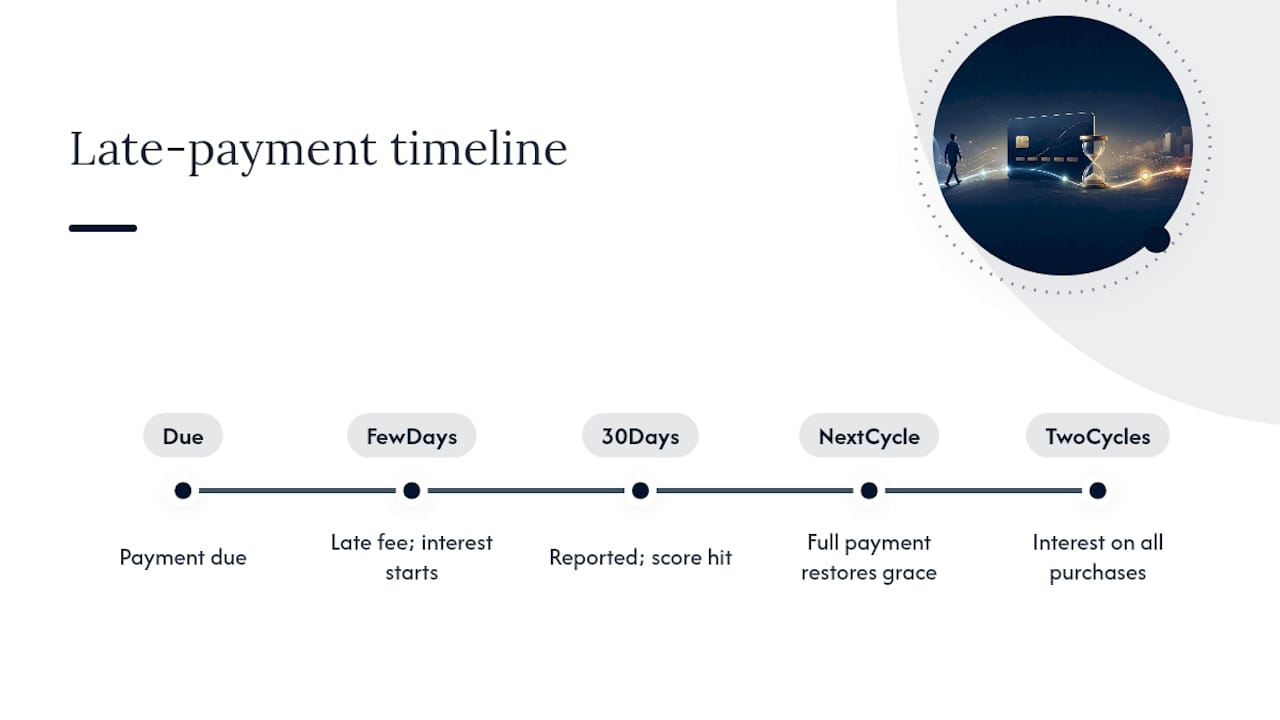
Recovering your grace period isn't instant either. Most issuers require a full billing cycle where you pay the complete statement balance on time before the grace period kicks back in. Miss two cycles in a row, and you could be paying interest on everything, old balances and new purchases alike, for months. The path back to a clean grace period usually runs through one clean, full, on-time payment cycle.
Do Promotional APR Offers Still Include a Grace Period?
Introductory 0% APR offers interact with grace periods in a way that surprises a lot of cardholders. During the promotional window, you're not paying interest regardless of your balance, so the grace period question feels irrelevant. But it isn't.
Two things matter here. First, some promotional balance transfers or intro-APR purchases are structured as deferred interest, common with store cards, meaning if you don't pay off the entire promotional balance before the promo ends, you can get hit with interest calculated back to the original purchase date, not just from the day the promo expired. That's a much bigger bill than most people expect.
Second, once your intro APR period ends, your grace period rules typically snap back to normal. If you've gotten used to carrying a balance during the 0% window, without a grace period penalty because there was no interest to avoid, that habit can catch you off guard the month regular APR kicks back in. The safest approach: treat a promotional APR offer as a deadline, not a discount, and keep paying your statement balance in full whenever possible even during the promo.
Why Paying in Full Beats Every Other Grace-Period Trick
The single mistake I see most: treating the due date like a deadline you can flirt with, rather than a hard line. It's not a lateness buffer. It's the edge of a cliff.
Automate the payment or set a calendar alert three days early. Either works. Just don't rely on memory.
— Grace K.
A Simpler Way to Stay Ahead of Every Due Date
If you're managing more than one card, the risk isn't laziness, it's coordination. Different closing dates, different due dates, and different statement balances across three or four cards make it easy to pay the wrong number on the wrong day, even when you're trying hard to do it right.
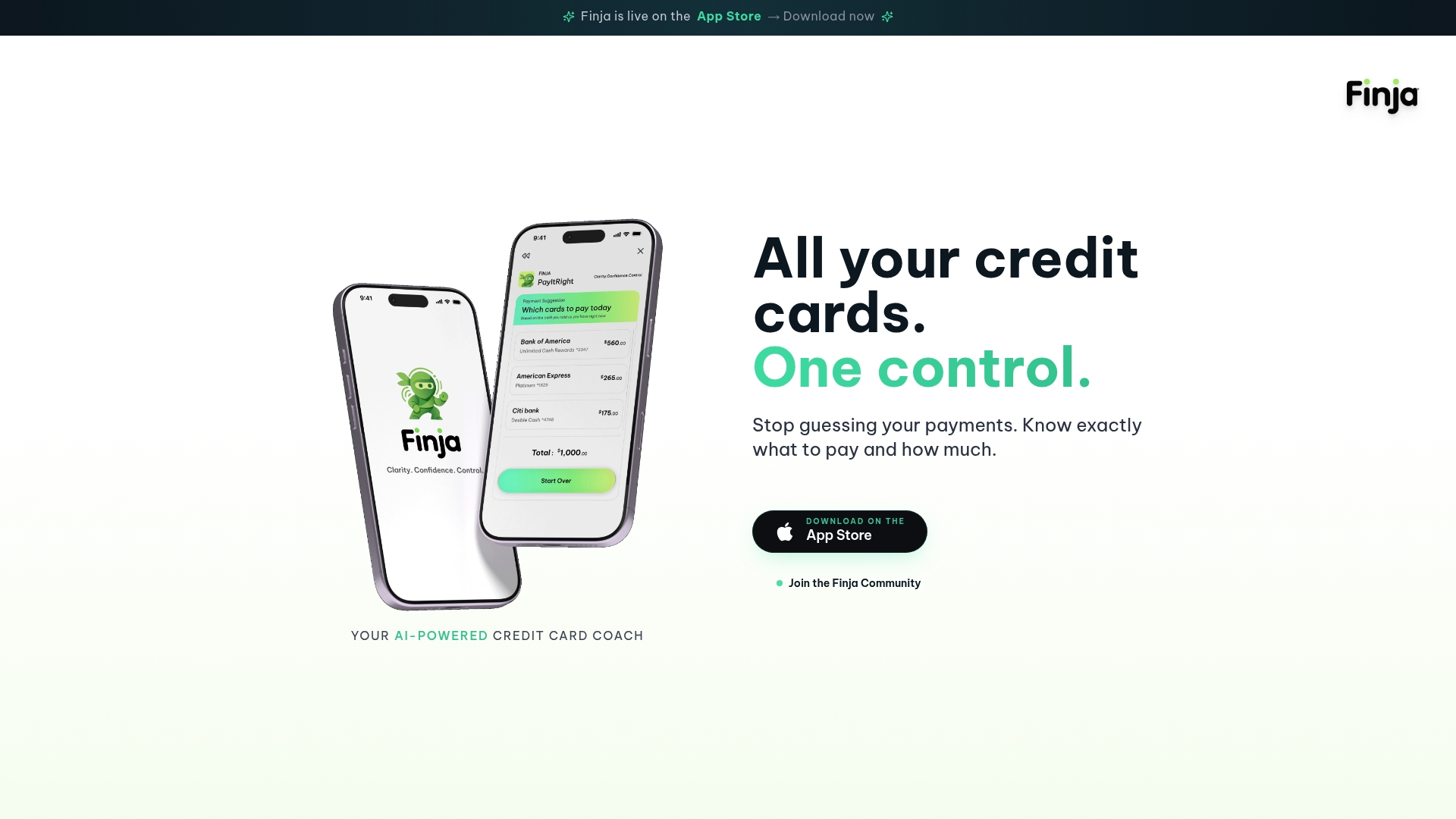
Some apps pull every card into one consolidated view, show each statement balance clearly, and recommend payment timing that accounts for processing delays before they cost you a grace period. It doesn't replace the fundamental rule of paying your full statement balance on time. It just makes that rule much harder to slip on. If you want to see how it handles your specific mix of cards, check out Finja and connect your accounts to get a clear view of what's actually due, and when.
Sources
- What is a grace period for a credit card? | Consumer Financial Protection Bureau
- How Credit Card Grace Periods Work | NerdWallet
- How to use the grace period to avoid paying interest | Bankrate
This article is general information, not a substitute for advice from a qualified financial advisor. Consult a qualified financial professional about your own circumstances before acting on anything here.
FAQ
What happens if I'm 3 days late on my credit card payment?
You'll typically lose your grace period for that cycle and start owing interest on your balance and new purchases, plus a possible late fee. A payment that's only a few days late usually won't hit your credit score, since bureaus generally aren't notified until a payment is 30 days past due.
Do credit cards have a 10-day grace period?
No. Federal rules require issuers offering a grace period to give at least 21 days between statement delivery and the due date, and most cards fall in the 21 to 25 day range.
What happens if I pay my credit card bill 3 days late?
Interest starts accruing on your statement balance and any new purchases, and you'll likely see a late fee. Your grace period usually won't return until you complete a full cycle with an on-time payment of the full statement balance.
Will a 2-day late payment hurt my credit score?
Usually not. Credit bureaus generally treat a payment as "late" for reporting purposes only after it's 30 days past due, so a 2-day delay typically costs you interest and fees, not credit score points.
How can I make sure I never lose my grace period?
Pay your full statement balance, not just the current balance, by the due date every cycle, and build in a few days of buffer for processing. Tools like Finja can consolidate multiple cards' due dates and balances so nothing slips through.