
Keep both your overall and per-card utilization low, ideally in the single digits, and prioritize paying down balances before each card's statement closing date, rather than the due date. Make a pre-close payment on your highest-utilization card first, and consider requesting a credit limit increase if your income supports it. Most scoring models reflect these changes within a single billing cycle, so the payoff shows up fast.
TL;DR:
- Paying down high-utilization cards before their statement closing date can significantly improve your credit score within one billing cycle.
- Keeping aggregate credit utilization below 30 percent and individual card utilization under 30 percent is crucial to avoid scoring hits from maxed-out accounts.
- Requesting credit limit increases and spreading spending across multiple cards can boost available credit and reduce reported utilization effectively.
- Automating payments to match statement closing dates ensures lower reported balances and helps avoid the common mistake of waiting until the due date.
- Using tools like Finja can simplify management by tracking closing dates and recommending timely payments across all cards.
Table of Contents
- What Is Credit Utilization and Why Does It Matter?
- How Is Utilization Measured: Aggregate vs. Per-Card?
- High-Impact Tactics to Lower and Manage Utilization
- Your 30/60/90-Day Utilization Action Plan
- Common Mistakes That Undo Your Progress
- Does Utilization Affect VantageScore the Same Way as FICO?
- Why Timing Beats Willpower Here
- Automate the Tactics With Finja
- Sources
- FAQ
What Is Credit Utilization and Why Does It Matter?
Credit utilization is the percentage of your available credit you're currently using, calculated by dividing your balances by your credit limits and multiplying by 100. Do that math across every card, add up the totals, and you get your aggregate utilization, the number that carries real weight.
That's a bigger chunk than the length of credit history, credit mix, and new credit combined.
People with exceptional FICO scores (800 to 850) carry an average utilization of just 7.1%, according to Chase.
Here's a wrinkle most people miss: reporting a flat zero on every card can slightly underperform carrying a small active balance. Scoring models want to see you use credit responsibly, not avoid it entirely.
How Is Utilization Measured: Aggregate vs. Per-Card?
Scoring models look at two separate numbers: your combined utilization across all cards and the utilization on each individual card. This distinction trips up more people than any other part of the credit utilization strategy.
Experian's utilization guide confirms scoring models flag maxed-out individual cards even when your overall picture looks fine.
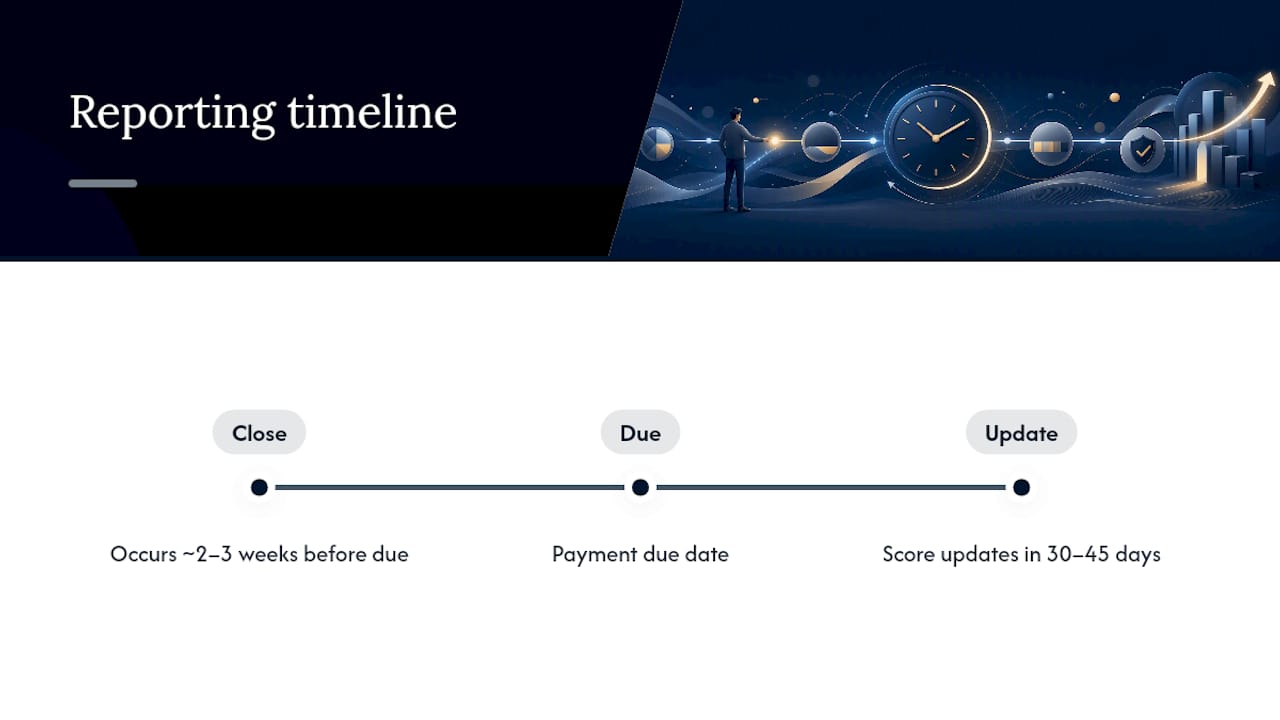
Timing matters just as much as the math. Your card issuer reports your balance to the credit bureaus on your statement closing date, not your payment due date. Those are usually different days, often two to three weeks apart. Pay only by the due date and you might report a high balance for weeks before the payment posts. Pay down the balance before the statement closes, and the lower number is what gets reported. Score updates generally reflect this within one billing cycle, often 30 to 45 days.
High-Impact Tactics to Lower and Manage Utilization
Not every tactic delivers the same return. Here's the order that tends to produce results, ranked by how fast they work and how little they cost you.
- Pay before the statement closes. This is the highest-leverage, zero-cost move available. Find your closing date (it's on your statement or in your card's app) and make a payment a few days before it hits.
- Split payments across the billing cycle. Making two or three smaller payments instead of one lump sum keeps your reported balance consistently lower, especially if you use a card heavily for everyday spending.
- Request a credit limit increase. A higher limit instantly lowers your utilization percentage, assuming your balance stays flat. Ask your issuer whether the request triggers a soft or hard pull. Experian notes this varies by issuer, so confirm before you apply.
- Spread spending across multiple cards. Rather than running one card to 80% utilization, distribute charges so no single card crosses 30%, let alone gets close to maxed.
- Keep older cards open. Closing a card erases its limit from your total available credit, which can spike your aggregate utilization overnight. A closed account also affects your credit age.
- Open a new card strategically, not reflexively. A new card adds available credit, but it also triggers a hard inquiry and lowers your average account age. Do this only when the math clearly helps.
- Consolidate with a balance transfer or personal loan. This can lower per-card spikes and interest costs, but a balance transfer alone doesn't reduce your aggregate utilization since the debt just moves. SuperMoney's analysis points out it only helps when it accelerates paydown or eliminates a maxed card.
Pro Tip: *If you can only attack one card right now, pay down the one with the highest individual utilization percentage first, not the highest balance.
Tactics 1 through 3 work fast for a short-term score boost, often ahead of a mortgage or auto loan application. Tactics 5 through 7 matter more for long-term debt reduction and stability.
Your 30/60/90-Day Utilization Action Plan
Turning this credit utilization strategy into results just takes a sequence, not a system overhaul.
- Days 1 to 7: Log into each card account and find its statement closing date. Make a pre-close payment on whichever card has the highest individual utilization, even if it's a small amount.
- Weeks 2 to 4: Submit credit limit increase requests on your oldest, best-standing cards. Set up biweekly automatic payments so balances never build up between statement dates. Avoid large purchases in the week before any card closes.
- Months 2 to 3: If balances are still stubborn after two cycles, look at a balance transfer or consolidation loan for the highest-interest debt. Pull your credit report to confirm the bureaus are reporting your new, lower balances accurately.
Expect the first score movement within 30 to 45 days of your first pre-close payment, per CardClassroom's optimization framework. Full results from limit increases and consolidation usually take a full 60 to 90 days to reflect completely.
Common Mistakes That Undo Your Progress
A few habits quietly cancel out the work you just put in.
- Treating 30% as a safe target instead of a ceiling; the 30% figure is a teaching rule of thumb, not a line where nothing bad happens below it and everything is fine above it.
- Letting one card creep to 90% or higher while your other cards sit untouched, which drags down your score even with strong aggregate utilization.
- Closing an old card with a big limit or long history, which shrinks your available credit and can shorten your average account age.
- Paying down a balance the week of a loan or mortgage application, since the payment may not post to the bureaus before your application gets pulled.
- Opening new cards just to add available credit without a plan for the resulting hard inquiries and lower average account age.
Does Utilization Affect VantageScore the Same Way as FICO?
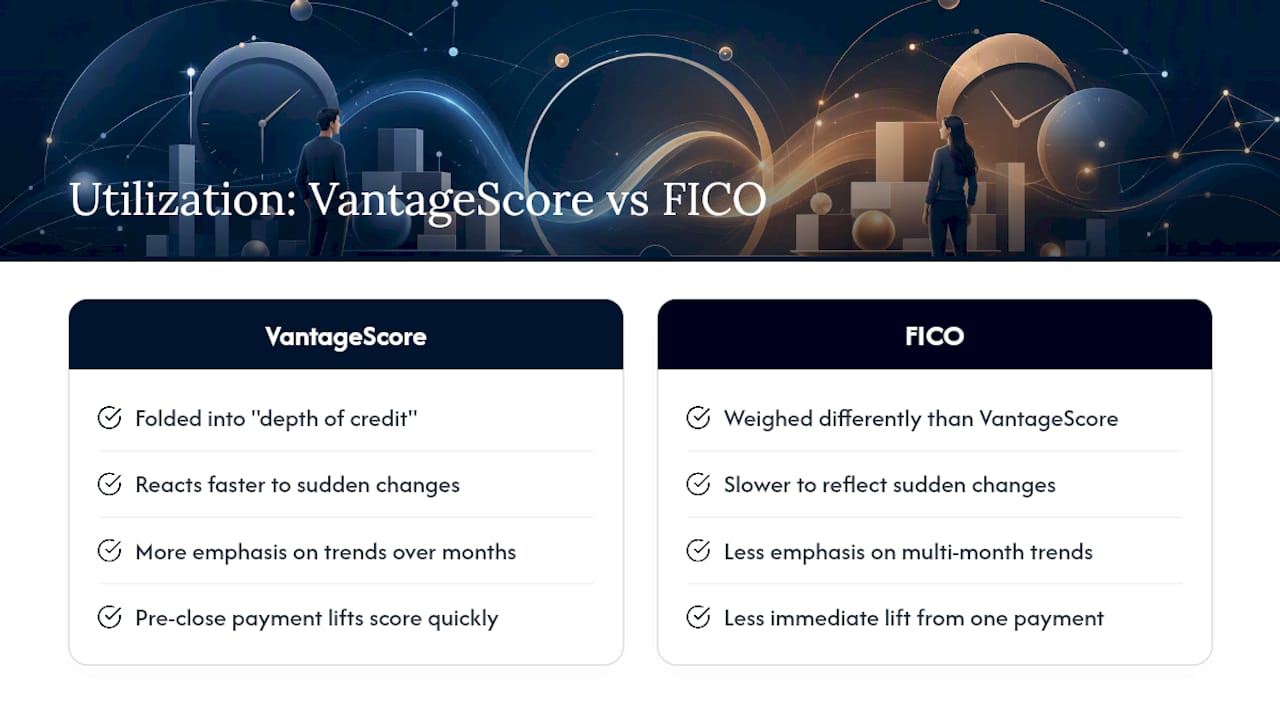
Utilization matters under VantageScore too, but the model weighs it a bit differently than FICO. VantageScore folds utilization into a broader "depth of credit" and balance category, and it also tends to react faster to sudden changes, both drops and spikes.
That speed cuts both ways. A well-timed pre-close payment can lift a VantageScore reading quickly, but a maxed card can also ding it faster than it would under FICO. VantageScore additionally puts more emphasis on trends over time, meaning a pattern of shrinking balances across several months can help you more than a single good month.
The practical takeaway is the same regardless of which model a lender pulls: scoring systems evaluate utilization on two levels, aggregate and per-card, and lower is consistently better across both. If you're applying for a mortgage or auto loan, ask the lender which score they pull. FICO 8 remains the most common for credit cards, while mortgage lenders often pull older FICO versions and some auto lenders lean on VantageScore. Either way, the tactics in this credit utilization strategy apply across the board.
Why Timing Beats Willpower Here
Most credit advice treats utilization like a discipline problem: spend less, pay more, wait it out. That framing misses what's actually happening. Utilization is a reporting problem disguised as a spending problem. Two people can carry identical balances and identical incomes, and the one who pays before the statement closing date will show a dramatically better score than the one who pays by the due date.
That's the part conventional advice glosses over, and it's exactly where automation earns its keep. An AI-powered coach like Finja can track each card's closing date and prompt a payment before it hits, spreading balances so no single card creeps toward a max. Grace K., who has written on credit mix optimization for Finja, has pointed out that most utilization mistakes aren't about overspending. They're about payment timing nobody was tracking.
The math rewards precision, not restraint. Get the timing right and the discipline problem mostly takes care of itself.
— Grace K.
Automate the Tactics With Finja
Reading this whole strategy is one thing. Remembering seven closing dates across seven cards every single month is another. That's the gap Finja was built to close.
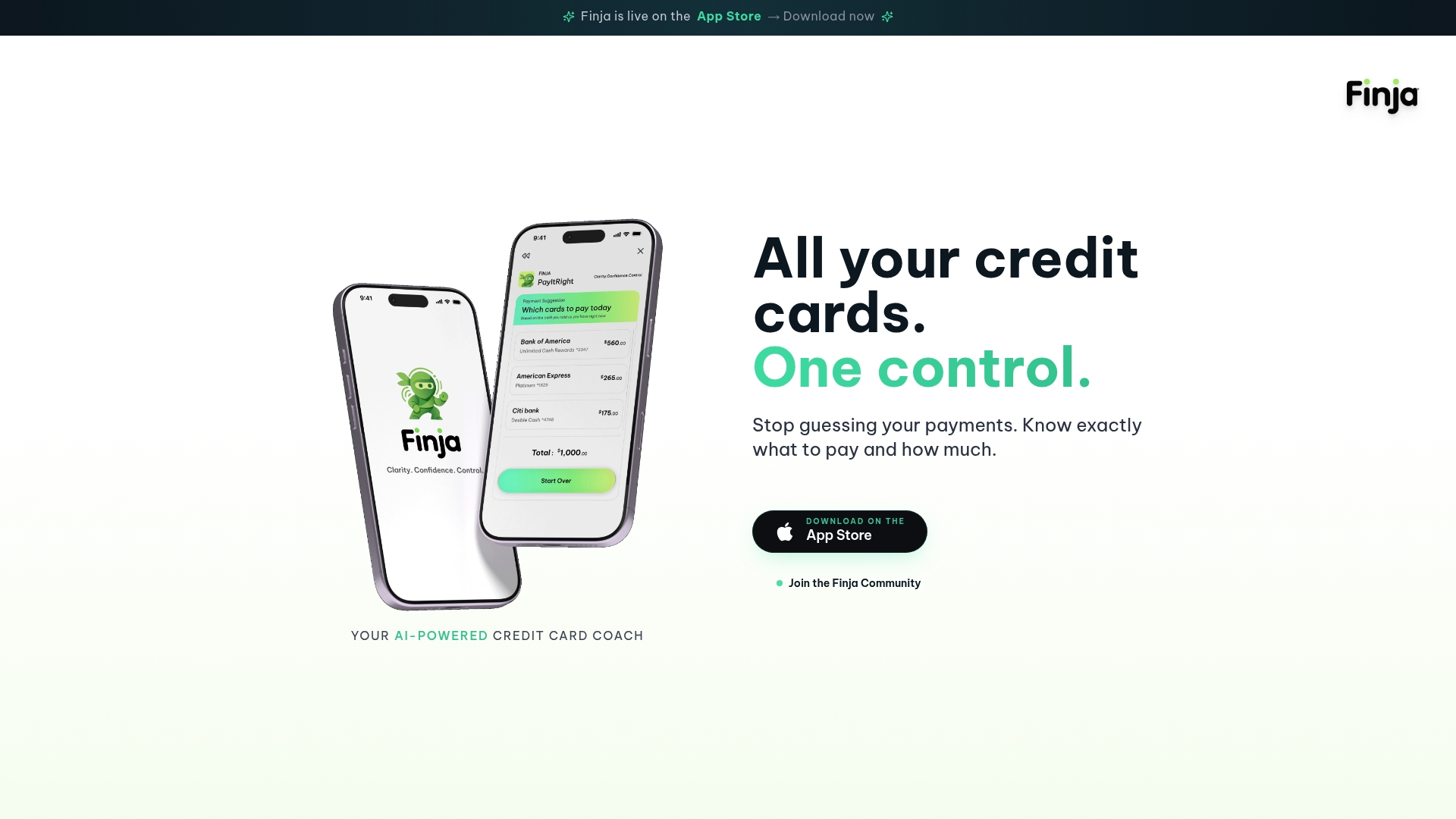
Finja is an AI-powered credit card coach that pulls every card into one consolidated view, so you can see per-card utilization at a glance instead of guessing which account is quietly creeping toward 90%. It flags upcoming statement closing dates and recommends payment amounts and timing designed to lower reported balances before they hit the bureaus, the same pre-close tactic that produces the fastest score movement. Rather than optimizing for rewards points, Finja focuses specifically on reducing interest costs and improving your credit health, which maps directly onto the tactics for spreading spending and managing multiple cards outlined above. If juggling statement dates across several cards has been the thing standing between you and a better score, check out Finja's landing page and see how the app fits into your current lineup of cards.
Sources
- How credit utilization affects your credit score — Chase
- 5 Ways to Keep Your Credit Utilization Low — Experian
- Credit utilization rate — Experian (detailed explainer)
- How to optimize credit utilization — CardClassroom
FAQ
Is 4% Revolving Utilization Good?
It sits well below the 7.1% average carried by people with exceptional FICO scores, so a 4% ratio puts you solidly in the top scoring range.
What Is the 2/3/4 Rule for Credit Cards?
This typically refers to an application pacing guideline some cardholders use to space out new credit card applications, commonly cited as no more than a small handful of new cards within short to medium time frames. It's not an official issuer or bureau policy, and definitions of the exact numbers vary depending on where you read it.
Does Paying Twice a Month Lower Utilization?
Paying twice a month can lower your reported utilization if at least one of those payments lands before your statement closing date. A payment made only after the statement closes won't change what gets reported to the bureaus that cycle, even though it still reduces what you owe.
How Do I Keep My Credit Utilization Under 30 Percent?
Track each card's statement closing date and pay down balances a few days before it hits, rather than waiting for the due date.
Can an App Help Me Manage Utilization Across Multiple Cards?
Yes. An AI-powered platform like Finja consolidates all your cards into one view and can flag upcoming closing dates so you know exactly when to make a pre-close payment on each account.