
Yes, you can request a credit limit increase, and for most cardholders in good standing, it's worth doing. The fastest routes are your issuer's website, mobile app, or a phone call to customer service. Have your current income and housing costs ready, and ask upfront whether the check will be a soft or hard inquiry before you submit anything.
TL;DR:
- Waiting at least six months after opening an account or prior increase improves the chances of approval for a new credit limit increase.
- A request typically targets a 10% to 30% limit increase; larger jumps may trigger additional reviews or denials.
- Automatic credit limit increases occur without application if you maintain responsible usage, while manual increases require an active request.
- Most issuers consider payment history, income, account age, balances, and recent credit activity when evaluating requests.
- Keeping your utilization under 30%, updating income after raises, and timing requests around recent pay deposits can enhance approval chances.
Table of Contents
- How to Request a Credit Limit Increase Online, In-App, or by Phone
- What Issuers Evaluate When Deciding Your Request
- When to Ask and How Much to Request
- Soft Pulls vs. Hard Pulls: What Happens to Your Credit Score
- If Your Request Is Denied: Read the Notice and Next Steps
- What Happens After You Ask: Processing Times and Notification
- How Finja and Ongoing Credit Tracking Help You Plan an Increase
- Differences Between Automatic and Manual Credit Limit Increases
- Benefits of Requesting a Credit Limit Increase
- Potential Risks and Downsides of a Higher Limit
- A Practical Mindset for Requesting More Credit
- Finja: Know When You're Actually Ready to Ask
- Sources
How to Request a Credit Limit Increase Online, In-App, or by Phone
Every major issuer now supports at least one self-service option, and request processes vary by issuer: some give instant decisions online, while others route your request into manual review for up to 30 days.
Here's the actual sequence to follow:
- Log into your account and look for "credit limit increase" under account services or card management. It's often buried a few clicks deep, not on the main dashboard.
- If it's not there, open your issuer's mobile app and check the same menu. Some issuers only offer the option in-app, not on desktop.
- Have your gross annual income, monthly rent or mortgage payment, and employer name ready. Most forms ask for all three.
- State a specific reason if there's a text field. Advisors suggest documenting something concrete, like a recent raise or a jump in monthly expenses, rather than leaving it blank.
- If no online option exists, call the number on the back of your card and ask a representative directly.
If you'd rather skip the risk entirely, ask the representative point blank: "Will this request involve a hard inquiry?" Many will tell you before running anything.
Pro Tip: Request the increase within a day or two of a paycheck deposit hitting your linked bank account. It won't change the math, but issuers sometimes pull recent account activity, and a healthy balance doesn't hurt.
What Issuers Evaluate When Deciding Your Request
Card companies aren't guessing. They're pulling a specific set of data points, and issuers weigh payment history, income, account age, existing balances, and recent credit activity before approving or denying.
- Payment history and account seasoning. A card you've held for three years with zero late payments carries more weight than one opened last month.
- Income and housing costs. Issuers want to know what you earn and what you owe monthly on rent or a mortgage, since that shapes how much new credit you can realistically handle.
- Current balances and utilization. If you're carrying high balances across several cards, a new limit increase looks riskier to underwrite, even if you've never missed a payment.
- Recent hard inquiries and new accounts. Opening three cards in the past six months signals credit hunger, and that works against you.
Your account age and utilization together tell the issuer most of what they need to know before anything else gets reviewed.
When to Ask and How Much to Request
Timing matters almost as much as the request itself. Industry guidance points to waiting at least six months after opening the account or receiving a prior increase before asking again, since asking too soon often triggers a denial or manual review.
- Stick to a 10% to 30% increase as your target range. Bigger jumps invite scrutiny.
- A modest, staged request beats one large ask that doubles your limit in a single move.
- Skip the request if you've missed a payment in the last six months, you're carrying high balances, or you're about to apply for a mortgage or auto loan.
Soft Pulls vs. Hard Pulls: What Happens to Your Credit Score
A soft inquiry doesn't affect your credit score and isn't visible to other lenders. A hard inquiry does show up on your report and can shave a few points off your score, though the dip is typically small and temporary.
Practices genuinely differ by issuer. Capital One and similar issuers sometimes use a soft pull for limit increase requests, but that's not universal, so don't assume anything. Always ask the representative or check the online disclosure before you submit. If the form doesn't say, call and ask directly: "Does this request involve a hard inquiry on my credit report?" Get the answer in writing or note the date and time of the call if you're worried about a dispute later.
If Your Request Is Denied: Read the Notice and Next Steps
A denial isn't the end of the conversation. Issuers must send an adverse action notice explaining the reason for the decision, and that notice is more useful than most people realize.
- Read the notice carefully. It will cite specific factors like insufficient income, high utilization, or too many recent inquiries.
- Pull your credit reports and check for errors that might have influenced the decision.
- Pay down revolving balances if utilization was cited as a factor.
- Update your income on file if it's outdated, especially after a raise or new job.
- Wait roughly six months before reapplying, and address the specific reason listed before you try again.
Pro Tip: If one card denies you, consider requesting an increase on a different card in your wallet instead of hammering the same issuer twice in one year.
What Happens After You Ask: Processing Times and Notification
Some requests resolve instantly. Others don't. Processing times range from immediate online approvals to as long as 30 days for requests that get flagged for manual review.
- Online and in-app requests often return a decision within seconds.
- Phone requests sometimes get approved on the call, but larger asks may need underwriting review.
- You'll typically be notified through the app, by email, or by mail, and the new limit shows up on your account as soon as the decision posts.
- If you're offered a smaller increase than you asked for, you can usually accept it on the spot or decline and try again later.
How Finja and Ongoing Credit Tracking Help You Plan an Increase
Timing a request well means knowing your own numbers cold: current utilization, how long it's been since your last increase, and whether your income on file is current. Finja tracks utilization and payment timing across every card you carry, which makes it easier to spot the moment your profile actually looks ready for a request instead of guessing.
For readers who want more background before they ask, Finja's guide on managing multiple credit cards and its breakdown of financial health indicators both go deeper into the mechanics issuers care about.
None of this replaces checking your specific issuer's policy directly. Finja helps you prepare and monitor your standing, but it doesn't guarantee approval, and issuer rules change without notice.
Differences Between Automatic and Manual Credit Limit Increases
Not every credit limit increase starts with a request. Issuers routinely run periodic account reviews that can produce an unsolicited increase for cardholders who show consistent, responsible usage over time.
Automatic increases happen in the background. The issuer's system flags your account based on on-time payments, healthy utilization, and account age, then raises your limit without you lifting a finger. You'll usually just see a notification or a new number on your statement. No application, no inquiry of any kind, soft or hard, since the issuer already has everything it needs from your existing account history.
Manual increases are the opposite. You initiate them, you supply updated income and housing information, and the issuer runs a specific evaluation tied to that request. This is where a soft or hard inquiry might come into play, depending on the issuer's policy.
The practical difference for you: automatic increases reward patience and clean account behavior, while manual requests let you push the timeline forward when you have a specific reason, like a raise or an upcoming large purchase. If you've had a card for years with flawless payments and haven't seen an automatic bump, that's often a sign it's worth trying the manual route instead of waiting indefinitely. Some issuers lean heavily on automatic reviews and rarely approve manual requests outside of those cycles, so a denied manual request doesn't necessarily mean you're a bad candidate. It might just mean the issuer prefers its own review cycle over yours.

Benefits of Requesting a Credit Limit Increase
The most immediate benefit is math, not psychology. Raising your limit while your balance stays flat lowers your credit utilization ratio automatically, and utilization is one of the more heavily weighted factors in most scoring models. If you're carrying $3,000 on a $6,000 limit, that's 50% utilization. Bump the limit to $9,000 with the same balance, and you're down to 33% without paying off a dime.

Lower utilization tends to translate into a better score over the following billing cycles, which opens doors elsewhere: better rates on future loans, stronger approval odds on new cards, and more negotiating room if you ever call to ask for a lower APR. Financial guides generally recommend keeping utilization well under 30% on any single card and across your total available credit, and a higher limit gives you more room to stay under that line even during a heavy spending month.
There's also the practical spending-power angle. A higher limit means more breathing room for large, unexpected expenses, like a car repair or a medical bill, without maxing out a card and triggering a utilization spike right when you can least afford one. For anyone managing several cards, a higher limit on your oldest, most trusted account can also mean you rely less on newer cards with less favorable terms.
None of this requires you to actually spend more. The benefit shows up simply by having the room available.
Potential Risks and Downsides of a Higher Limit
A bigger limit is only useful if your spending habits stay put. The most obvious risk is the temptation to fill the new space. Plenty of cardholders request an increase with good intentions, then watch their balance creep up simply because the limit made a purchase feel more affordable in the moment.
That creep matters because it can undo the exact benefit you were chasing. If you raise your limit from $6,000 to $8,000 and your balance grows right along with it, your utilization ratio never actually improves, and you've just taken on more potential debt with nothing to show for it. Interest charges scale with balances, not limits, so a larger cushion that gets used still costs real money every month it carries a balance.
There's a secondary risk worth naming: a higher limit can quietly recalibrate what "normal" spending looks like. Purchases that once felt like a stretch start to feel routine, and that shift in perception is harder to notice than a rising balance on a statement.
The fix isn't avoiding the increase. It's treating the new limit as a buffer, not a budget. If you request more room specifically to lower utilization, hold yourself to your current spending pattern for at least a few billing cycles afterward and watch whether the balance stays flat. If it doesn't, that's the signal to dial back before the debt outpaces the benefit you were trying to capture in the first place.
A Practical Mindset for Requesting More Credit
Getting approved for a higher limit isn't the finish line. The real win is what you do with the extra room. Keep your balance flat, and your utilization drops on its own.
One habit worth building: update your income in your issuer's profile every time you get a raise, then reassess your limits a few months later. That single update often does more for approval odds than any script you could rehearse on the phone.
— Grace K.
Finja: Know When You're Actually Ready to Ask
There are apps that offer a dashboard across every card you carry, so you can see real utilization, payment timing, and spending patterns instead of piecing it together from separate apps. That's the exact information you need before requesting a credit limit increase, since issuers are checking many of the same signals Finja already tracks for you.
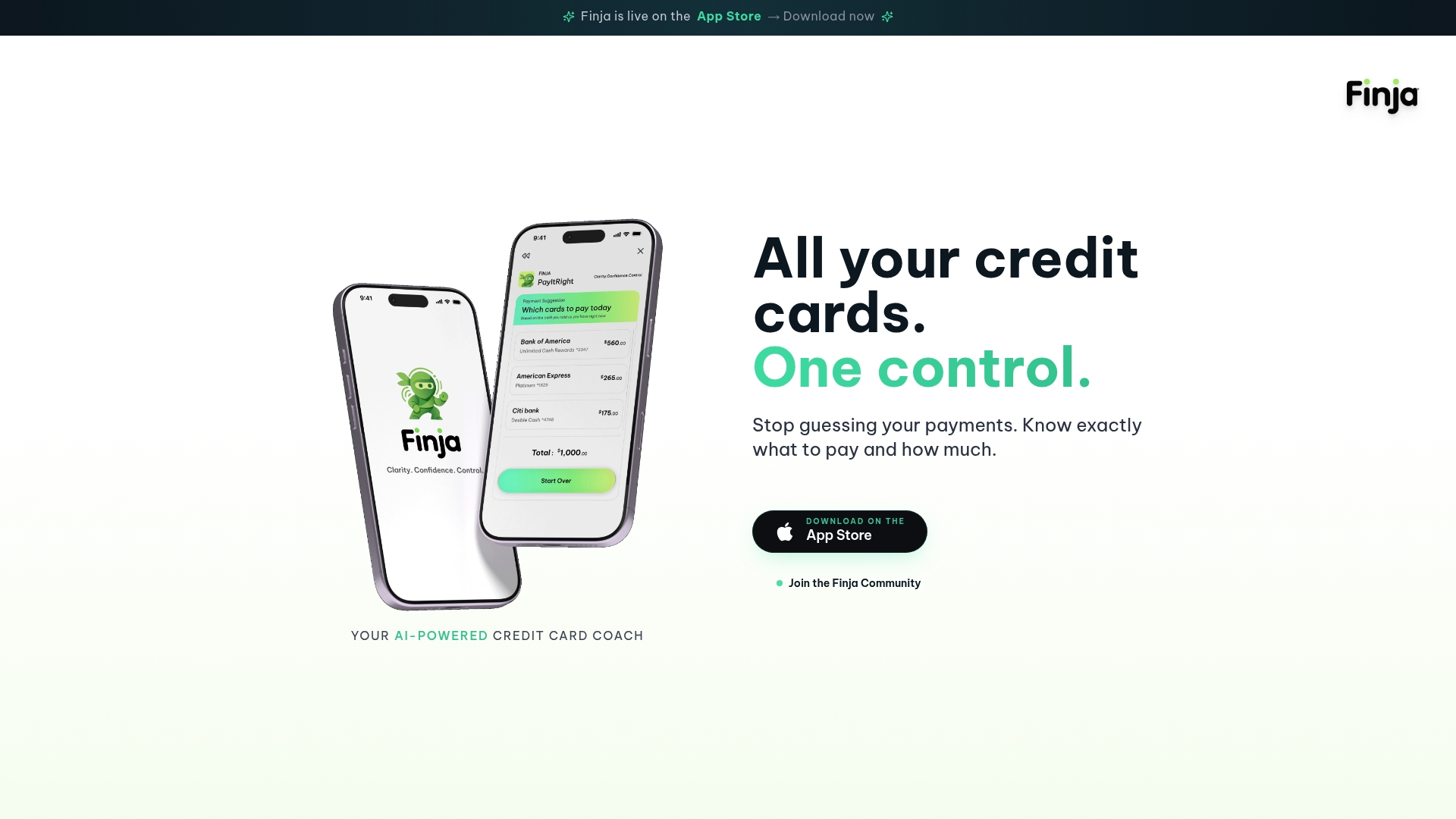
Such apps can flag when your utilization has stayed low for a stretch, when a payment streak looks strong enough to support a request, and when a balance on another card might be worth paying down first. Instead of guessing whether this is a good month to ask, you get a clearer read on your own numbers before you pick up the phone or open the issuer's app. Check your current utilization and payment trends with Finja and decide for yourself whether now's the right time to make the call.
This article is general information, not a substitute for advice from a qualified financial advisor. Consult a qualified financial professional about your own circumstances before acting on anything here.
Sources
- How to increase your credit limit | Experian
- How to increase your credit limit | Fidelity
- How To Increase Your Credit Limit | The Points Guy