
Yes, account diversity improves your credit profile, but only modestly, and only when it happens naturally. Credit mix makes up about 10% of your FICO Score, far behind payment history and utilization. It matters most if you have a thin file or sit in the 610 to 680 range. It matters least if you're already juggling several account types responsibly. The biggest caution: don't open accounts you don't need just to chase a mix bonus. That move usually costs more than it earns.
Key Takeaways
| Point | Details |
|---|---|
| Credit mix weight | Accounts for about 10% of your FICO Score, well behind payment history and utilization. |
| Biggest impact zone | Matters most for thin files and scores in the 610 to 680 range; negligible above 750. |
| Minimum viable mix | One revolving account plus one installment account covers most of the mix benefit. |
| Avoid manufactured mix | Opening accounts solely for diversity usually backfires through inquiries and lower average age. |
| Manage what you have | Finja consolidates multiple cards, optimizes payments, and tracks credit health to protect the factors that matter most. |
Table of Contents
- Why Account Diversity Improves Credit Profile: The Basics
- The Account Types That Actually Count Toward Your Mix
- How Much Does Credit Mix Actually Move Your Score?
- Why Lenders Actually Care About a Varied Account Mix
- Low-Risk Ways to Diversify Your Credit Mix
- When Credit Mix Actually Moves the Needle, and When It Doesn't
- A Practical Note on Chasing Credit Mix
- Manage the Accounts You Already Have Before Adding New Ones
- Frequently Asked Questions
- Sources
Why Account Diversity Improves Credit Profile: The Basics
Credit mix, sometimes called account diversity, refers to the variety of loan types listed on your credit report. Scoring models sort your accounts into two main buckets: revolving and installment.
Revolving accounts let you borrow up to a limit, pay some back, and borrow again. Installment accounts give you a fixed sum upfront, repaid in set payments over a defined term. The distinction matters because each type reveals different repayment behavior to a lender.
- Revolving examples: credit cards, store cards, home equity lines of credit (HELOCs)
- Installment examples: auto loans, mortgages, student loans, personal loans
A file with only credit cards looks different to a scoring model than one with a card and a car loan. That gap is what "improving your mix" actually addresses.
The Account Types That Actually Count Toward Your Mix
Not every account moves the needle the same way. Revolving accounts, primarily credit cards and HELOCs, report a credit limit and a balance, so utilization swings can hit your score fast if balances climb. Installment loans, like auto loans, mortgages, student loans, and credit-builder loans, report a fixed payment schedule instead, which builds a steadier track record over time.

Other tradelines add texture without adding much new mix value. Becoming an authorized user adds revolving history to your file, but it won't touch your installment side. Secured cards function like ordinary revolving accounts once approved.
Here's the part most people miss: holding five credit cards from five different banks still counts as one type of account. Multiple cards all report as revolving credit; stacking more of them adds no diversity at all. Diversity comes from type, not quantity.
How Much Does Credit Mix Actually Move Your Score?
Credit mix accounts for roughly 10% of your FICO Score, which places it well below payment history (35%) and amounts owed (30%), and on par with length of credit history (15%) and new credit (10%).
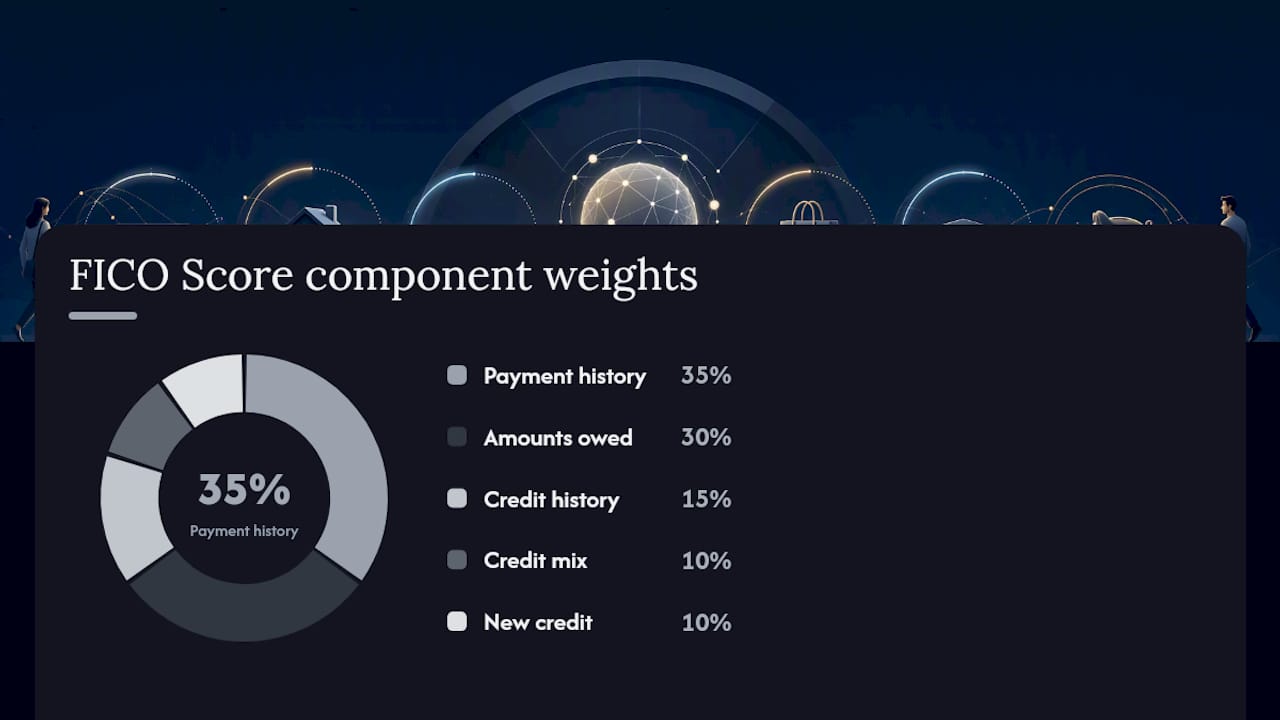
The size of the effect depends heavily on where you're starting. In certain files, credit mix can swing a score by around 55 points on the 300 to 850 scale, but that effect concentrates in thin or borderline files. If you're already sitting at 780 with a long, clean history, adding a new loan type will barely register.
Timing matters too. A new account typically needs one to a few billing cycles before it shows up meaningfully in your score, since scoring models weight reported payment history over time, not just account existence. In the short term, you're more likely to feel the downside: a hard inquiry ding and a lower average account age, both of which hit before any mix benefit arrives.
That's why mix rarely operates alone. Utilization and payment history respond immediately to your behavior. Mix responds slowly and only within a narrow band of influence. If you're managing several cards already, keeping utilization low across all of them, as covered in this guide to credit card financial health indicators, will do more for your score than adding a new loan type ever will.
Why Lenders Actually Care About a Varied Account Mix
Lenders read a diverse mix as evidence you can handle different repayment structures. Managing a revolving balance responsibly takes different discipline than sticking to a fixed installment schedule for years.
An underwriter reviewing a mortgage application, for instance, wants to see that you've handled long-term commitments before, not just monthly card payments. A file with only cards leaves that question unanswered.
- Revolving accounts signal short-term discipline and restraint with available credit.
- Installment accounts signal follow-through on a fixed, multi-year obligation.
- Lenders still weigh payment history and utilization far more heavily than mix when deciding.
Low-Risk Ways to Diversify Your Credit Mix
If your file is missing installment history entirely, or you've never carried a revolving account, a few tactics add the missing piece without much downside.
- Try a credit-builder loan. These are small, low-cost installment loans designed for exactly this purpose, and they add controlled installment history with minimal risk.
- Ask to become an authorized user. Riding on someone else's well-managed card adds revolving history without a new application or a hard inquiry on your own file.
- Lean on installment loans you already have. If you've got a car loan or student loan, that history already contributes to your mix. You don't need to add more.
- Only apply for new credit you genuinely need. A mortgage, an auto loan, or a card you'll actually use is fine. A card opened purely for mix is not.
Each step up that list carries more risk. A credit-builder loan or authorized-user status won't touch your utilization or trigger a hard inquiry in most cases. Applying for a new loan or card does both: it dings your score temporarily through the inquiry and drags down your average account age.
Timing matters more than people expect. New accounts hit "new credit" and "length of history" simultaneously, so opening one within six months of a major loan application like a mortgage is a bad idea. Give any new account time to settle before you need your score at its peak.
Pro Tip: Track how utilization shifts after any new account before you assume mix is the win. A tool built for multiple credit card management can flag a utilization spike faster than you'd catch it manually.
When Credit Mix Actually Moves the Needle, and When It Doesn't
Mix follows a pattern of diminishing returns. The biggest jump happens when a file goes from one account type to two; a third or fourth installment loan after that adds almost nothing further.
Mix matters most for thin files and for borrowers stuck in the 610 to 680 range, where every factor still carries weight. Above roughly 750, most experts consider mix the least useful factor to try to engineer, since strong payment history and low utilization already do the heavy lifting.
Pro Tip: If you're above 750, skip the mix project entirely. Equifax notes most consumers build a healthy mix naturally through normal life events, buying a car, financing a home, without ever chasing it on purpose.
A Practical Note on Chasing Credit Mix
Manufacturing mix for its own sake is a trap I see people fall into constantly: they open a personal loan or a new card specifically to "improve diversity" and end up with a lower score for six months. Payment history, utilization, and account age carry far more weight, and they respond to daily habits, not new applications. If you're managing several cards already, tools built specifically for multiple-card payment optimization will do more for your score than adding a new loan type ever will.

Manage the Accounts You Already Have Before Adding New Ones
Most of the risk in this whole conversation comes down to one thing: juggling several accounts by hand invites missed payments and creeping utilization, both of which outweigh any mix benefit you're chasing. Finja is built for exactly that problem. It's an AI-powered credit card management app that consolidates every card into one view, models how a new account or a closed one would actually affect your score, and schedules payments so nothing slips through.
If you're weighing whether to add a credit-builder loan or worried a new balance will spike your utilization before you know it, Finja's payment optimization flags the risk before it hits your report. It also tracks credit health over time, so you can see whether a change is actually helping or just adding noise. Start a free trial at Finja and see your full card picture in one place before you make your next move.
Frequently Asked Questions
Does having more credit cards improve my credit mix? No. Multiple cards all count as the same revolving account type, so adding more cards doesn't diversify your mix. You'd need an installment account, like an auto loan or credit-builder loan, to add real diversity.
How long does it take for a new account type to help my score? Expect one to a few billing cycles before you see any mix-related change, and the short-term hit from a hard inquiry or lower average account age often shows up first.
Should I open a loan just to improve my credit mix? Generally, no. Unless you need the loan for its own purpose, the inquiry and account-age hit usually outweigh the mix benefit, especially if your score is already above 750.
What's the minimum mix I need for a good score? Having at least one revolving account and one installment account covers most of the credit mix benefit. Beyond that, additional accounts of the same type add little extra value.
This article is general information, not a substitute for advice from a qualified financial advisor. Consult a qualified financial professional about your own circumstances before acting on anything here.
Sources
- Types of Credit and How They Affect Your FICO Score | myFICO
- What Is Credit Mix? How account diversity affects your credit score | Experian
- What is a Credit Mix and How Can it Affect Credit Scores | Equifax