
A strong bank relationship is defined as an ongoing, trust-based connection between a consumer and their financial institution that shapes credit access, loan terms, and financial guidance. Understanding how bank relationship benefits credit management gives you a real edge. Relationship banking, the industry term for this practice, goes far beyond having a checking account. It means your bank knows your financial history, advocates for you during lending decisions, and alerts you before small problems become credit damage. FICO scoring, account seasoning, and relationship managers are the three forces that make this work in your favor.
How does a banking relationship influence credit approvals and limits?
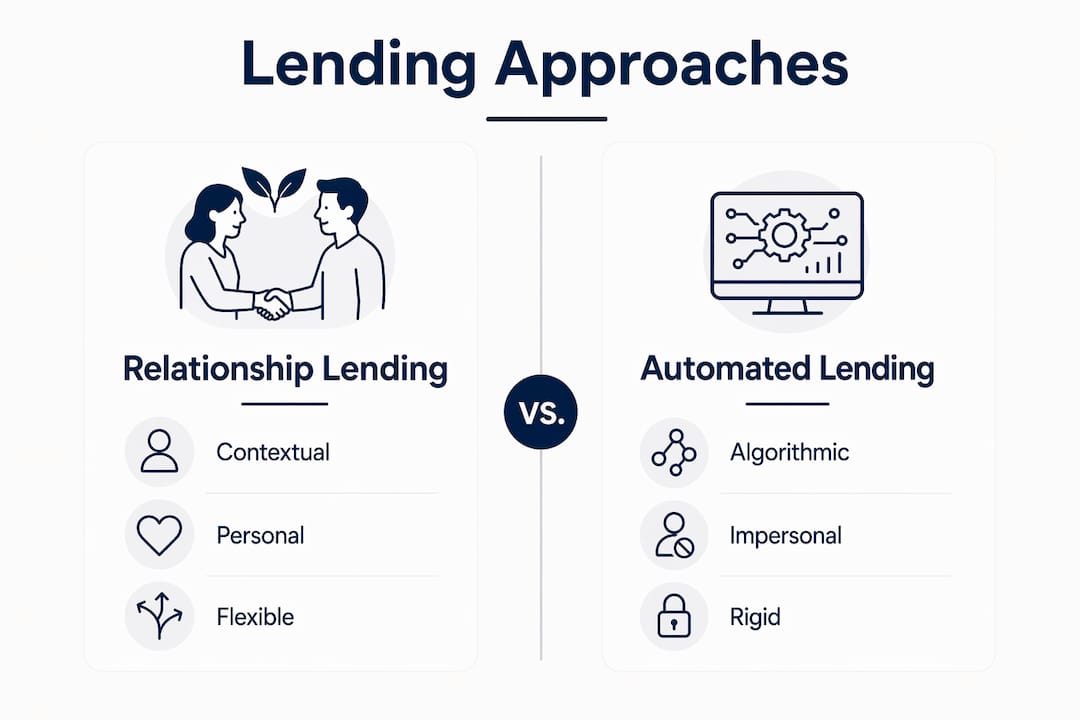
Relationship-based underwriting is fundamentally different from automated credit scoring. When a bank knows your transaction history, your cash flow patterns, and your financial goals, it evaluates your application with context. An automated scorecard sees a number. A relationship banker sees a person with a track record.

The numbers back this up. Small banks using relationship-based underwriting approve 57% of applicants in full, outperforming large banks and fintech lenders that rely on automated scorecards. That gap exists because relationship lenders fill in what a credit score cannot tell them.
Account seasoning is one of the most underused tools in credit management. A seasoned checking account with consistent deposits and regular cash flow signals reliability to a lender. Seasoned accounts with strong transaction history can unlock significantly higher credit limits than cold applications from borrowers with no account history at that institution. The difference in outcomes is not marginal. It is the difference between a lender saying yes or no.
Relationship managers accelerate the entire process. Relationship managers act as internal advocates, pre-briefing credit committees with your background and purpose before your file ever reaches a decision-maker. That preparation reduces skepticism and cuts approval time. Established banking relationships reduce loan approval times from weeks or months down to days by keeping your financial history and documentation on file.
Pro Tip: Open a checking account at your target lending institution at least six months before you plan to apply for credit. Consistent deposits during that window build the account seasoning that relationship lenders reward.
| Feature | Relationship-based lending | Automated lending |
|---|---|---|
| Underwriting method | Contextual, history-based | Scorecard only |
| Approval speed | Days | Days to weeks |
| Credit limit potential | Higher with account history | Based on score alone |
| Flexibility during income changes | High | Low |
What credit management benefits come from personalized banking alerts and advice?
Payment history is the single biggest factor in your FICO score. Payment history accounts for 35% of your total FICO score, making it the most critical variable in credit management. One missed payment can undo months of careful credit behavior. A strong bank relationship reduces that risk through proactive communication.
Banks that know your spending patterns can flag unusual activity before it becomes a problem. These alerts work in several concrete ways:
- Low balance warnings notify you before a payment bounces, protecting your payment history from a late mark.
- Spending threshold alerts help you stay below 30% credit utilization, which directly supports your FICO score.
- Upcoming payment reminders tied to your account give you a second layer of protection beyond calendar apps.
- Overdraft notifications prevent the chain reaction where a bounced payment triggers a late fee, then a missed credit card payment.
- Personalized spending reviews from a relationship banker help you spot patterns that quietly erode your credit health over time.
Tailored financial advice from a banker who knows your history goes further than generic credit tips. A relationship banker can tell you which card to pay down first based on your actual balances and interest rates, not a one-size-fits-all formula. That kind of guidance connects directly to multiple credit card management strategies that protect your score across several accounts at once.
Pro Tip: Ask your banker to set up a quarterly financial review. Use that meeting to discuss your credit goals explicitly. Banks prioritize clients who communicate clear intentions, and that communication shapes the advice and products they offer you.
Maintaining a positive credit report also means catching errors early. Your bank can flag discrepancies between your account activity and what appears on your credit report, giving you a head start on disputes. Understanding your credit card account status and how it appears to lenders is a practical step most consumers overlook.
Why is trust and mutual understanding vital in building a beneficial bank relationship?
Trust is the foundation that turns a transactional bank account into a genuine financial partnership. Without it, you get standard products at standard rates. With it, you get fee waivers, tailored terms, and a banker who picks up the phone when you need a fast answer.
Meaningful banking relationships require mutual intent and early communication of financial goals. That means the relationship is not passive. You have to show up with clear objectives, not just a deposit. Banks respond to clients who articulate what they need and why.
Building that trust follows a clear sequence:
- Open the right accounts early. A checking account, savings account, and one credit product at the same institution creates a financial footprint the bank can evaluate over time.
- Communicate your goals directly. Tell your banker you are building credit for a home purchase, a business loan, or a major expense. That context shapes every recommendation they make.
- Maintain consistent activity. Regular deposits and on-time payments signal reliability. Irregular or dormant accounts do not build the relationship capital you need.
- Ask questions and request reviews. Clients who engage proactively get more attention and better advice than those who only call when something goes wrong.
- Scrutinize bundled product offers. Consumers must vet bankers and scrutinize bundled product fees to confirm that a relationship serves their financial goals, not just the bank's revenue targets.
Technology plays a supporting role in this trust-building process. Digital banking tools should support rather than replace human advisors, because trust-based relationships generate real credit and financial management impact that automated systems alone cannot replicate. The best banking relationships blend app-based convenience with a human contact who knows your name and your goals.
How do established banking relationships help during financial fluctuations?
Financial life is not linear. Income varies, expenses spike, and seasonal changes affect cash flow. Automated lending systems treat these variations as red flags. Relationship banking treats them as context.
Relationship-based underwriting allows contextual evaluation of financial fluctuations, preventing the automatic credit holds that automated lenders impose when they detect irregular patterns. That distinction matters enormously when your income dips temporarily but your overall financial picture remains strong.
The practical advantages during financial fluctuations include:
- Credit holds avoided. A relationship banker who understands your seasonal income pattern will not flag a slow month as a default risk.
- Higher limits maintained. Banks that know your history are less likely to reduce your credit limit during a temporary income dip, which protects your credit utilization ratio.
- Cash flow documentation recognized. If you can show your banker bank statements that explain an irregular period, that documentation carries weight in a relationship context. An algorithm ignores it.
- Faster access to bridge credit. Consumers with established relationships can access short-term credit products more quickly when cash flow tightens, reducing the risk of missed payments.
- Proactive restructuring options. A relationship banker may offer payment deferrals or restructured terms before you miss a payment, keeping your credit report clean.
The contrast with automated lenders is stark. An algorithm sees a missed deposit and triggers a review. A relationship banker sees a client with three years of consistent history and asks what happened. That human judgment is a direct banking relationship advantage that protects your credit score when life gets unpredictable. Strategies for reducing credit card bills become far more effective when your bank is already familiar with your financial situation and can tailor options to your specific circumstances.
Key Takeaways
A strong bank relationship directly improves credit management by accelerating approvals, raising credit limits, and providing personalized support that automated systems cannot match.
| Point | Details |
|---|---|
| Relationship underwriting beats automation | Small banks using relationship-based underwriting approve 57% of applicants in full, outperforming automated lenders. |
| Account seasoning raises credit limits | Consistent transaction history in a seasoned account unlocks higher credit limits than cold applications. |
| Payment history is the top FICO factor | Payment history drives 35% of your FICO score; bank alerts help you protect it before damage occurs. |
| Trust requires active communication | Telling your banker your financial goals early leads to tailored advice and better credit products. |
| Relationships buffer financial fluctuations | Relationship lenders interpret income variability with context, preventing unnecessary credit holds. |
What I've learned from watching people ignore their banker
Grace K. here. After years of writing about personal finance, the pattern I see most often is this: consumers treat their bank like a vending machine. They insert a deposit, take out a product, and never speak to a human being. Then they wonder why their loan application gets rejected or why their credit limit never moves.
The most financially healthy people I have observed do the opposite. They schedule annual reviews with their banker. They call ahead before a major financial change, like a job switch or a large purchase. They treat the relationship as a two-way street, and their credit outcomes reflect that.
The mistake I see most often is waiting until you need something to introduce yourself. By then, you are a stranger asking for a favor. The consumers who get faster approvals and better terms are the ones who showed up consistently before they needed anything.
My honest warning: not every banker has your interests at heart. Relationship banking works best when focused on transparency and client empowerment rather than sales quotas. If your banker keeps pushing bundled products you did not ask for, that is a signal to find a different relationship manager. The goal is a banker who knows your name and your goals, not one who knows your account number and their commission.
Technology is a useful complement, not a replacement. Use your bank's app for alerts and tracking. Use a human for decisions that carry real credit consequences.
— Grace K.
Finja's AI Credit Card Coach and your bank relationship
Managing credit across multiple cards while building a strong bank relationship takes more than good intentions. Finja's AI Credit Card Coach works alongside your banking relationship by giving you real-time payment guidance, interest cost analysis, and credit health tracking in one place.
Finja helps you walk into your next banker meeting with a clear picture of your credit utilization, payment history, and card balances. That preparation makes your conversations with a relationship manager more productive and your credit outcomes more predictable. When you combine the personalized support of a strong bank relationship with Finja's AI-powered analysis, you get a complete view of your credit health. Explore how Finja can help you manage credit card stress and make every banking conversation count.
FAQ
How does a bank relationship improve credit approval odds?
Banks using relationship-based underwriting approve a higher share of applicants in full compared to automated lenders. Your account history, cash flow, and direct communication with a relationship manager all strengthen your application.
What role does account seasoning play in credit limits?
Account seasoning refers to the length and consistency of your transaction history at a bank. Accounts with regular deposits and activity over time qualify for significantly higher credit limits than new or inactive accounts.
How does payment history connect to relationship banking?
Payment history accounts for 35% of your FICO score. Relationship banks provide personalized alerts and reminders that help you avoid late payments, directly protecting the most important factor in your credit score.
Can a bank relationship help during periods of irregular income?
Relationship-based underwriting evaluates income fluctuations with context rather than triggering automatic credit holds. A banker who knows your history can advocate for you during a slow period, keeping your credit intact.
What is the biggest mistake consumers make with relationship banking?
The most common mistake is waiting until a credit need arises to engage with a banker. Building the relationship before you need credit gives your bank the history and trust it needs to advocate for you when it matters most.