
Credit card account status is defined as the composite of real-time internal signals, including billing cycle state, delinquency stage, risk flags, and account lifecycle condition, that reflect how your credit card account currently stands. Most cardholders treat it as a single label. It is actually a layered set of indicators that issuers track across multiple internal systems. Understanding what is credit card account status, and how its components interact, gives you the clarity to manage payments, avoid surprises on your statement, and protect your credit health.
What is credit card account status made of?
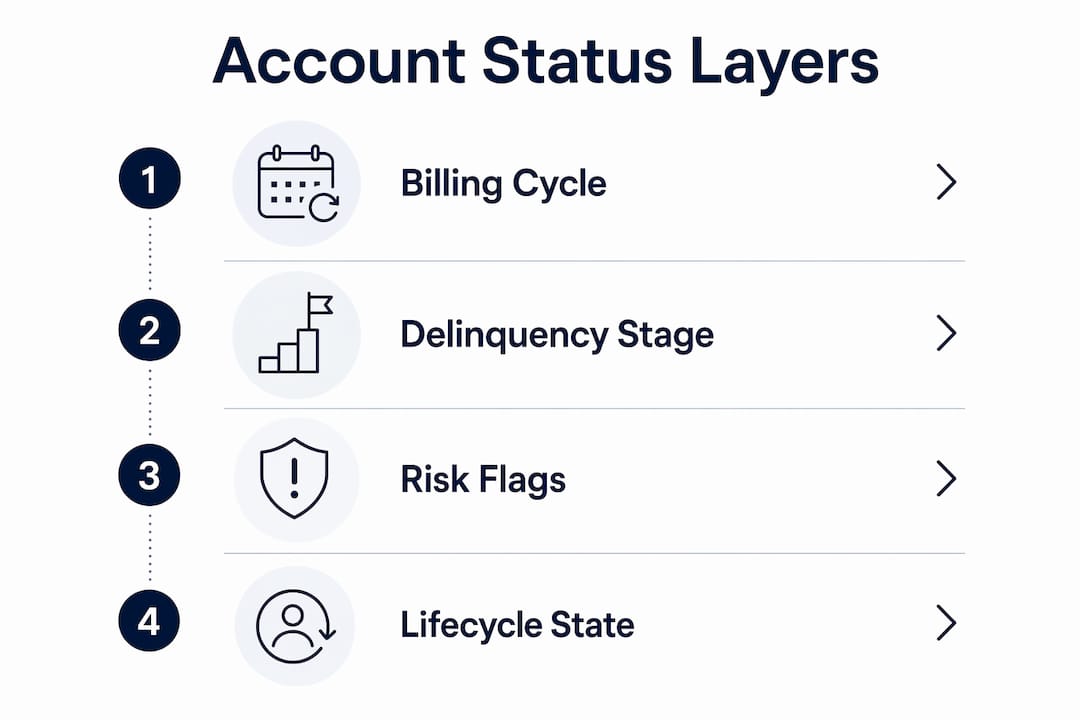
Credit card account status is a composite of four distinct layers, not a single field. Each layer updates on its own schedule and carries its own operational weight.
Billing cycle state tracks where you are in your current statement period. A standard billing cycle runs 28–31 days, followed by a grace period of 21–25 days before payment is due. Your account moves through these phases automatically, and the state changes the moment a cycle closes.

Delinquency stage measures how far past due a payment is. Issuers segment delinquency into buckets: 1–29 days past due, 30–59 days, 60–89 days, and beyond. Each bucket triggers a different internal response, from automated reminders to collections workflows. The bucket your account sits in directly shapes what options are available to you.
Risk and fraud flags are overlaid on top of billing and delinquency data. A fraud alert, a disputed transaction, or a failed identity verification can restrict your account even when your payment history is spotless. These flags are invisible to most cardholders but carry real consequences, including temporary blocks on purchases or cash advances.
Account lifecycle state captures where the account stands in its overall life. The main states are:
- Active: The account is open and in normal use.
- Inactive: No transactions have posted for a defined period.
- Blocked or suspended: The issuer has restricted use, often due to a risk flag.
- Closed: The account is no longer available for new transactions.
- Charged-off: The issuer has written the balance off as a loss, typically after 180 days of non-payment.
Internal status codes trigger automated workflows across risk, compliance, and credit bureau reporting. That means a status change affects far more than what you see in your online portal.
Pro Tip: Check your account lifecycle state separately from your payment status. An account can show "current" on payments while still being flagged as suspended due to a fraud review.
How does credit card account status differ from payment rating?
These two fields are often confused, but they measure entirely different things. Account status reflects current standing, while payment rating summarizes your historical payment behavior. Lenders use both together to build a complete picture of your credit risk.
Account status codes include designations like "11" for current and "71" for 30 days past due. Payment ratings run from 0 (current) to 3 (90 or more days late). A cardholder who missed payments six months ago but has paid on time since will show a current account status alongside a payment rating that still reflects those past misses.
| Field | What it measures | Time frame | Example codes |
|---|---|---|---|
| Account status | Current standing of the account | Right now | 11 (current), 71 (30 days past due) |
| Payment rating | History of payment behavior | Past months or years | 0 (current), 3 (90+ days late) |
Using both fields together lets lenders distinguish between someone who is currently delinquent and someone who recovered from past delinquency. That distinction matters enormously when you apply for a new card, a loan, or a mortgage. Misreading these two fields as identical is one of the most common mistakes cardholders make when reviewing their credit reports.
Why might your account appear delinquent even after payment?
A cleared payment does not immediately update your delinquency status. Payment posting and account status run on separate processing cycles, and the gap between them causes real confusion.
Here is the sequence that creates the problem:
- You submit a payment. The payment enters the issuer's payment processing system and posts to your balance, often within one to two business days.
- Your balance updates. The amount owed drops, and your available credit increases. This part happens relatively fast.
- The delinquency flag stays. The account status system runs on a separate schedule, often tied to statement closing dates or nightly batch jobs. Until that system refreshes, the delinquency code remains.
- The credit bureau receives old data. Credit bureaus receive monthly Metro 2® format files from issuers, not real-time updates. If your payment cleared after the last file was sent, the bureau's record still shows the prior status.
- The status corrects on the next cycle. Once the batch job runs or the statement closes, the delinquency code resets and the corrected status flows to the bureau on the next monthly file.
Delinquent status after payment is almost always a timing issue, not a payment failure. The practical response is to keep your payment confirmation, wait one full billing cycle, and then check again before contacting the issuer.
Pro Tip: Screenshot your payment confirmation immediately after submitting. If the delinquent status persists beyond one full billing cycle, that confirmation is your primary evidence when you call the issuer.
How to monitor and interpret your credit card account status effectively
Reading your account status correctly starts with knowing where to look and what each section of your statement actually tells you.
Statement balance vs. current balance are not the same number. Your statement balance is what was owed at the close of your last billing cycle. That is the figure reported to credit bureaus and the one that determines your credit utilization ratio. Your current balance includes all transactions since the statement closed. Paying the statement balance in full by the due date avoids interest charges entirely.
Key sections to review on every statement:
- Account Summary: Shows your credit limit, statement balance, minimum payment due, and payment due date. This is the fastest way to confirm your account is in good standing.
- Payment Information: Lists the minimum payment required and the consequences of paying only that amount, including projected interest costs.
- Transaction History: Confirms all charges posted during the cycle. Unfamiliar transactions here are the earliest signal of fraud, which can trigger a risk flag on your account status.
- Notices and Messages: Issuers place status alerts, rate change notices, and policy updates here. Most cardholders skip this section entirely.
Credit card statements cover billing cycles of 28–31 days, with a grace period of 21–25 days before the due date. Timing your payments to land at least three days before the due date, not on it, protects against processing delays that can push your account into a past-due state.
Set up issuer alerts for payment due dates, large transactions, and any account restriction notices. Most issuers offer these through their mobile apps at no cost. Alerts give you a real-time signal that something has changed in your account status before it affects your credit report. If your status shows restricted or suspended and you cannot identify a reason, call the issuer directly. Ask specifically which internal flag triggered the restriction and what documentation is needed to clear it.
Pro Tip: For managing multiple credit cards, track each card's statement closing date on a calendar. Payments made just after a statement closes give you the longest possible grace period before the next due date.
Key takeaways
Credit card account status is a composite of billing cycle state, delinquency stage, risk flags, and lifecycle condition, and reading all four layers together is the only way to understand your account's true standing.
| Point | Details |
|---|---|
| Status has four layers | Billing cycle, delinquency stage, risk flags, and lifecycle state each update independently. |
| Status and payment rating differ | Account status shows current standing; payment rating records historical payment behavior. |
| Delinquency after payment is normal | Separate processing cycles cause the gap; wait one billing cycle before escalating. |
| Statement balance drives credit reporting | Bureaus receive monthly Metro 2® files, not real-time data, so statement balance matters most. |
| Alerts and statements are your early warning | Reviewing the Account Summary and setting issuer alerts catches status changes before they hit your credit report. |
What I've learned from watching cardholders misread their account status
The most damaging misconception I see is treating a credit report as a live feed. A credit report is a structured extract, built for consistency at scale, not for real-time accuracy. Cardholders who panic when they see a delinquent status the day after making a payment are reacting to a system snapshot, not a verdict.
The second mistake is conflating account status with payment rating. I have watched people apply for mortgages convinced their credit was clean because their current status showed "current," without realizing their payment rating still reflected a 90-day late from two years prior. Both fields matter. Reading only one gives you half the picture.
My practical advice: build a habit of reviewing your full statement, not just the balance, every single cycle. The notices section alone has saved cardholders from missing rate changes that quietly increased their minimum payment. Understanding the financial dynamics of your credit card is not complicated once you know which numbers to watch and why they move when they do.
— Grace K.
How Finja helps you read and manage your account status
Knowing what your account status means is one thing. Acting on it across multiple cards, billing cycles, and due dates is where most cardholders lose track.
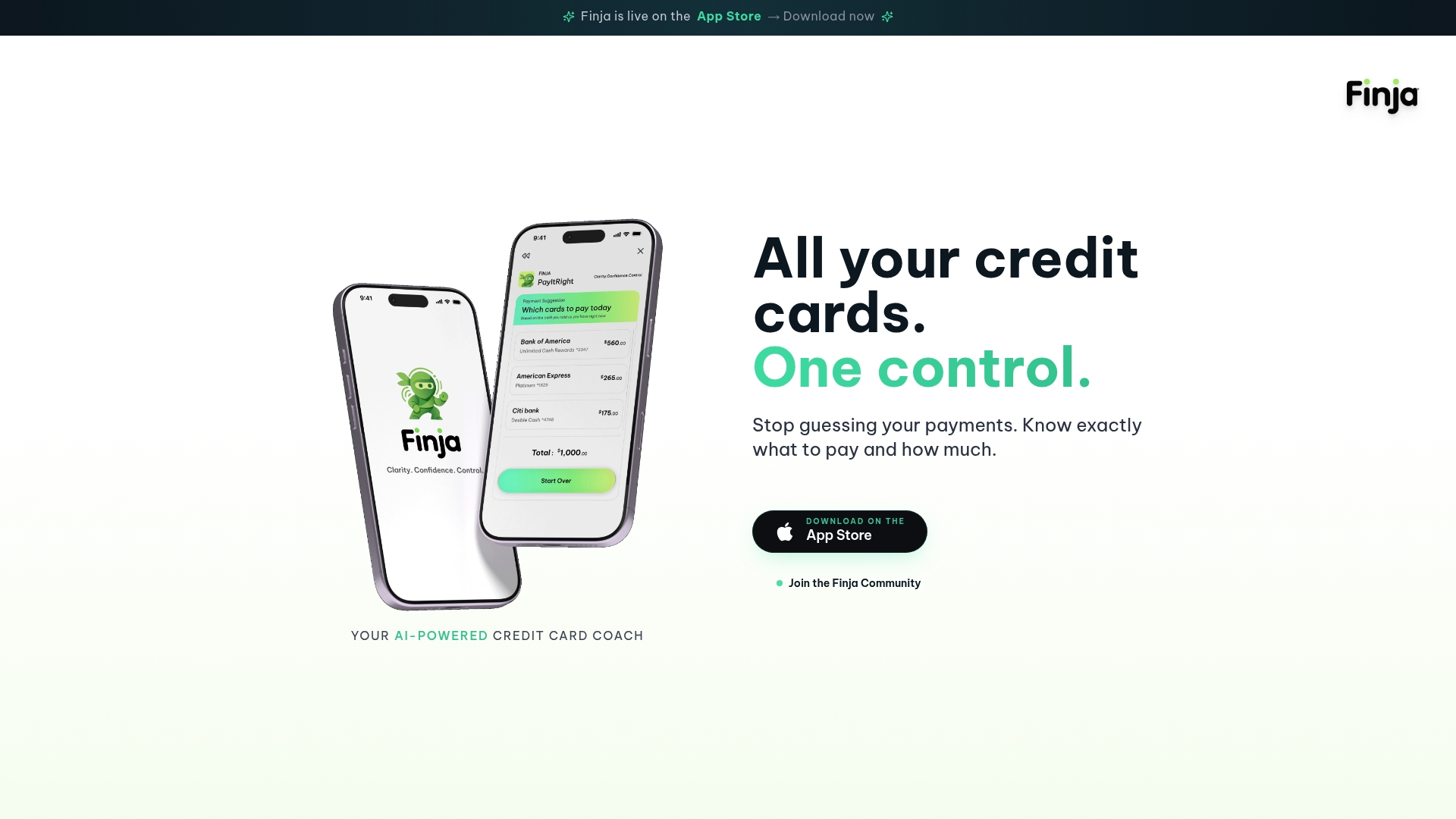
Finja is an AI-powered credit card management platform built for exactly this situation. It reads the composite signals behind your account status, including billing cycle position, delinquency risk, and payment timing, and translates them into clear guidance on what to pay, when, and why. Finja tracks due dates and statement closing dates across all your cards, flags accounts that are approaching a risk threshold, and helps you reduce the financial stress that comes from managing credit without a clear picture of where each account stands. Visit Finja's AI credit card coach to see how it works for your specific card lineup.
FAQ
What does "current" account status mean?
"Current" means your account has no past-due balance and all required payments have been received on time. It corresponds to status code 11 in standard credit reporting formats.
How often does credit card account status update?
Account status updates run on internal batch schedules tied to statement closing dates, not in real time. Credit bureaus receive updated status data through monthly Metro 2® files from issuers.
Can a paid account still show delinquent on my credit report?
Yes. Payment posting and status system updates run on separate cycles. A cleared payment can take one full billing cycle to correct the delinquency code in both the issuer's system and the bureau's record.
What is the difference between account status and payment rating?
Account status reflects your account's current standing right now. Payment rating summarizes your historical payment behavior over past months or years. Lenders use both fields together to assess credit risk accurately.
What should I do if my account status shows "blocked" or "suspended"?
Contact your issuer directly and ask which internal flag triggered the restriction. Common causes include fraud alerts, failed identity verification, or a disputed transaction. The issuer can tell you exactly what documentation is needed to lift the restriction.