
Reducing your credit card count to one or two cards is the most effective way to simplify your finances and protect your credit health. The benefits of reducing credit card count go beyond convenience. Fewer cards mean fewer missed payments, lower fraud risk, and less mental overhead from tracking multiple due dates and statements. One or two cards cover most spending needs while cutting the complexity that comes with managing five or more accounts. This guide breaks down exactly why limiting your card count pays off, and how to do it without hurting your credit score.
1. Benefits of reducing your credit card count
Simplifying credit card usage delivers concrete financial and behavioral advantages. The gains are not marginal. They compound over time as better habits replace the chaos of juggling multiple accounts.
Lower risk of missed payments
Missed payments are the single biggest threat to your credit score. Managing one or two statements instead of five or more makes it far easier to pay on time, every time. Fewer cards reduce complexity and cover roughly 90% of everyday spending needs. That simplicity alone removes one of the most common causes of credit score damage.

Less temptation to overspend
High credit limits across multiple cards create a psychological trap. Research from the Federal Reserve shows that credit limit increases lead to increased borrowing and higher interest costs. Cardholders begin treating available credit as an extension of their income. Cutting your card count removes that temptation at the source.
Fewer unnecessary annual fees
Dormant cards with annual fees are a direct drain on your budget. Simplifying to one or two cards can eliminate annual fees ranging from $95 to over $800 per year on underused accounts. That money stays in your pocket instead of funding a card you rarely swipe.
Better fraud detection
Monitoring one or two accounts is far easier than scanning five or more for suspicious charges. Inactive cards risk delayed fraud detection because cardholders check them infrequently. Fewer accounts means faster response when something looks wrong.
Stronger credit score management
A focused card strategy makes it easier to maintain low credit utilization and a clean payment history. Both factors carry significant weight in standard credit scoring models. Fewer cards reduce the variables you need to track to keep your credit profile healthy.
Pro Tip: Set up autopay for the full balance on your remaining cards the day you close any account. This locks in your payment discipline before your habits have a chance to slip.
2. How fewer cards improve mental clarity and financial organization
The cognitive cost of managing multiple credit cards is real and measurable. Every additional card adds another due date, another password, another set of rewards rules, and another statement to review. That overhead quietly erodes your ability to make good financial decisions.
Fewer due dates, less stress
Tracking multiple payment deadlines each month creates chronic low-level stress. Missing even one due date triggers a late fee and a potential credit score hit. Consolidating to one or two cards collapses your mental calendar. You spend less time managing finances and more time living within them.
Simplified rewards tracking
Tracking numerous cards for small rewards gains is inefficient and increases stress. The math rarely works out in your favor once you account for the time spent managing each account. One or two well-chosen rewards cards deliver most of the value without the administrative burden.
No more decision fatigue at checkout
Choice fatigue at checkout causes many cardholders to abandon any attempt at optimizing which card to use. Most people end up defaulting to one card anyway, making the others redundant. Reducing your count to match your actual behavior eliminates a decision that was never adding value.
Fewer accounts to secure
Every credit card account is a potential entry point for identity theft. Fewer accounts mean fewer passwords to manage, fewer login portals to monitor, and fewer data breach exposures. Financial minimalism is also a security strategy.
Pro Tip: Before closing any card, redeem all outstanding rewards points. Many issuers forfeit your balance the moment an account closes.
3. Impact of reducing credit card count on credit utilization and credit score
Closing cards does affect your credit score, but the impact is manageable and often temporary. Understanding the mechanics helps you consolidate cards without unnecessary damage to your credit profile.
How credit utilization works
Credit utilization is the ratio of your total credit card balances to your total available credit. Most scoring models reward cardholders who keep this ratio below 30%. Closing a card reduces your total available credit, which can push your utilization ratio higher if you carry any balance. The fix is straightforward: pay down balances before closing any account.
The temporary score dip
Closing old unused cards can temporarily lower your credit score by 5–15 points. That dip is real but short-lived. Experts note that avoiding debt and maintaining financial simplicity outweigh a brief score reduction. Your score recovers as you build a clean payment history on your remaining cards.
The table below compares the credit score factors affected by card consolidation versus the benefits gained.
| Factor | Impact of closing cards | Benefit of fewer cards |
|---|---|---|
| Credit utilization | May rise temporarily if balances remain | Easier to keep below 30% with focused management |
| Payment history | Unchanged if you pay on time | Simpler to maintain with fewer due dates |
| Average account age | Can decrease if newer cards are closed | Preserved by closing newest cards first |
| Fraud exposure | Reduced | Faster detection on fewer accounts |
| Annual fee cost | Eliminated on closed cards | Direct savings of $95–$800+ per year |
Which cards to close first
Always close your newest, lowest-limit cards first. This preserves your oldest accounts, which contribute positively to your average credit age. It also minimizes the impact on your total available credit. A credit card portfolio rebalancing approach treats consolidation as a deliberate process, not a one-time purge.
4. Situations when reducing your card count is especially beneficial
Not every cardholder needs to consolidate, but certain patterns signal that fewer cards would deliver clear gains. Recognizing your own situation is the first step.
- You regularly miss payment due dates. Multiple due dates scattered across the month create gaps where payments slip through. One or two cards collapse that complexity immediately.
- You feel overwhelmed by statements. If reviewing your monthly statements feels like a chore you avoid, that avoidance is costing you money in unnoticed fees and interest.
- You cannot track your rewards. Maintaining fewer than three to five financial accounts reduces forgotten balances and unredeemed rewards. If you cannot name the rewards balance on each card you hold, you are likely leaving value on the table.
- You have a history of overspending. Multiple high-limit cards amplify spending behavior. Removing the available credit removes the temptation.
- You are rebuilding your credit. A focused strategy with one or two cards makes it easier to demonstrate consistent, responsible payment behavior to credit bureaus.
- You want financial minimalism. Financial minimalism reduces the mental overhead caused by too many accounts. Fewer cards align your financial tools with your actual spending life.
5. Tips for consolidating your credit cards without hurting your credit
Reducing your card count requires a plan. Done carelessly, consolidation can temporarily damage your credit score or eliminate a card you actually need. Done correctly, it delivers lasting financial clarity.
- Identify your core card. Choose one card with broad rewards or cash back that covers your everyday spending. This becomes your primary account.
- Add one category card if needed. A second card for a specific category, such as travel or groceries, is justified only if you use that category heavily and the rewards outpace the annual fee.
- Pay down balances before closing. Reduce your balances to zero on any card you plan to close. This prevents your utilization ratio from spiking when the credit limit disappears.
- Close cards gradually. Close one card at a time and wait 60–90 days before closing another. This gives your credit score time to stabilize between changes.
- Start with the newest cards. Closing your newest, lowest-limit accounts preserves your oldest credit relationships and minimizes the impact on your average account age.
- Set up autopay and alerts on remaining cards. Managing multiple cards requires automation to avoid missed payments. Apply that same discipline to your consolidated setup from day one.
- Review annual fees before closing. Confirm that the card you are keeping delivers enough value to justify its fee. If it does not, that card may be the one to close instead.
Pro Tip: Check your credit report at AnnualCreditReport.com before and after any consolidation. Errors sometimes appear when accounts close, and catching them early protects your score.
Key takeaways
Reducing your credit card count to one or two well-managed cards delivers better payment discipline, lower fees, and stronger credit health than managing a large portfolio of underused accounts.
| Point | Details |
|---|---|
| Fewer cards, fewer missed payments | One or two statements are far easier to track and pay on time each month. |
| Annual fee savings are real | Closing dormant cards eliminates $95–$800+ in annual fees per account. |
| Score dip is temporary | Closing cards may lower your score by 5–15 points, but it recovers with consistent payments. |
| Mental clarity has financial value | Fewer accounts reduce decision fatigue and the risk of forgotten balances or unredeemed rewards. |
| Close newest cards first | Preserving your oldest accounts minimizes the impact on your average credit age. |
What I learned from cutting my cards down to two
Grace K., Personal Finance Editor
I used to carry six credit cards. Each one had a specific purpose in theory: one for groceries, one for travel, one for cash back, one for a store I visited twice a year. In practice, I missed a payment on the store card three months in a row because I forgot it existed.
The conventional wisdom says more cards mean more rewards and more flexibility. That advice assumes you have the organizational capacity to manage them all perfectly. Most people do not, and I was not an exception. The right number of cards depends on your personal organizational capacity, not on what a rewards blog tells you to collect.
When I cut down to two cards, the change was immediate. I stopped dreading my monthly statement review. I stopped second-guessing which card to use at checkout. My credit utilization dropped because I was actually paying attention to one balance instead of six. The rewards I earned were fewer in theory but higher in practice because I actually redeemed them.
The uncomfortable truth about multiple cards is that the complexity is the cost. You pay for it in time, stress, and the occasional missed payment that wipes out months of rewards gains. Two cards, managed well, beat six cards managed poorly every single time. If you are on the fence, start by closing the card you have not used in six months. You will not miss it.
— Grace K.
Finja can help you find the right card setup
Knowing which cards to keep and which to close is harder than it sounds. Finja is an AI-powered credit card management platform that analyzes your spending, payment history, and card benefits to give you a clear picture of your optimal card setup.
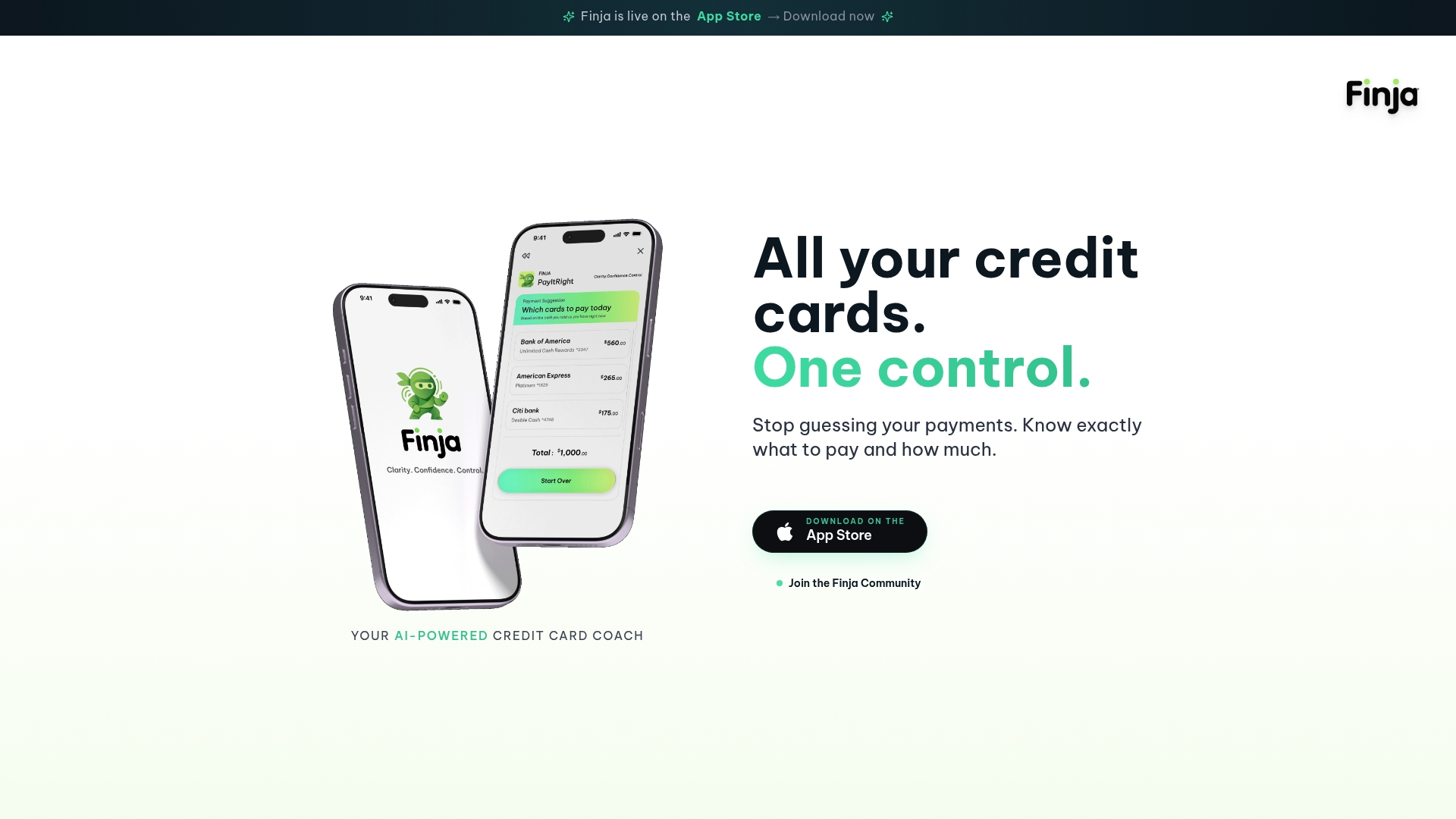
Finja identifies which cards are costing you more than they earn, flags accounts with unnecessary fees, and helps you build a payment plan that keeps your credit score stable during consolidation. You get personalized recommendations based on your actual financial behavior, not generic advice. Visit Finja's credit card coach to see which cards deserve a place in your wallet and which ones are holding you back. For a broader look at managing what you keep, the multiple credit card management tips guide covers the 2026 best practices in detail.
FAQ
How many credit cards should I keep?
Most financial experts recommend keeping one to two cards that cover your core spending categories. Two to three well-managed cards outperform a larger portfolio of poorly managed accounts in both credit health and financial clarity.
Will closing credit cards hurt my credit score?
Closing cards can temporarily lower your score by 5–15 points, primarily by reducing your total available credit and potentially your average account age. The impact is short-lived if you maintain low balances and on-time payments on your remaining cards.
What is the best card to close first?
Close your newest, lowest-limit cards first. This preserves your oldest credit relationships, which contribute positively to your average account age and overall credit profile.
Does reducing credit cards lower my credit utilization?
Closing cards reduces your total available credit, which can raise your utilization ratio if you carry a balance. Pay down balances before closing any account to keep your utilization below 30% after consolidation.
How do I avoid losing rewards when closing a card?
Redeem all outstanding rewards points before closing any account. Many card issuers forfeit your rewards balance the moment the account closes, so check your balance and redeem it first.