
The simplest correct way to set category budgets is to gather your income and one month of tracked spending, pick 10 to 15 categories, choose an allocation method like the 50/30/20 rule or zero-based budgeting, assign dollar amounts, build sinking funds for irregular costs, then review monthly. Consumer.gov's budgeting guidance and an app like Finja can support the process, but the framework matters more than the tool.
TL;DR:
- Budgeting with 10 to 15 main categories ensures visibility without overwhelming complexity, with housing, food, transportation, utilities, and savings being the core focus areas.
- Using the 50/30/20 rule provides a simple starting point, but zero-based budgeting allows for tighter control by assigning every dollar to specific categories before the month begins.
- Incorporating sinking funds for irregular costs like annual fees, pet care, and tax payments helps prevent surprises from lump-sum expenses that don’t occur monthly.
- Syncing budget categories with credit card billing cycles and pay schedules reduces interest accumulation and missed payments, especially for those who carry balances.
- Starting with fewer categories and making small adjustments over time prevents abandonment of the budget and encourages sustainable tracking.
Table of Contents
- Which budget categories should you start with?
- How should you allocate amounts across categories?
- Step-by-step: set category budgets from your income and tracked spending
- Handling irregular expenses with sinking funds
- Track, review, and adjust on a set timeline
- Sample allocations and quick templates you can copy
- Perspective: credit-card-aware budgeting and category choices
- Start simple and let the budget catch up to you
- Finja as an alternative approach for credit-card-centered budgeters
- Worksheets and guides worth downloading
- Sources
- FAQ
Which budget categories should you start with?
Ten to 15 categories is the sweet spot for most households, according to category-planning guidance aimed at budgeters. Fewer than that, and you lose visibility into where money actually goes. More than that, and you spend your Sunday evenings updating spreadsheets instead of living your life.
Start with the categories that cover the bulk of a typical paycheck:
- Housing: rent or mortgage, property tax, HOA fees.
- Food: groceries and dining out, tracked separately if you eat out often.
- Transportation: car payment, gas, transit passes, maintenance.
- Utilities: electricity, water, internet, phone.
- Insurance: health, auto, renters or homeowners.
- Savings: emergency fund, retirement, general savings.
- Debt payments: credit cards, student loans, personal loans.
- Healthcare: copays, prescriptions, out-of-pocket costs.
- Personal care: haircuts, toiletries, gym memberships.
- Subscriptions and entertainment: streaming, hobbies, nights out.
Once those are in place, look for the categories people forget until the bill arrives. Annual subscription renewals, pet care and vet visits, and tax payments for anyone with self-employment income are the usual blind spots, and comprehensive expense lists flag them repeatedly as the categories that catch new budgeters off guard. A dedicated sinking fund category, covered in more detail below, solves most of this. If you find yourself splitting hairs over whether a purchase is "food" or "entertainment," that's a sign you have too many categories rather than too few.
How should you allocate amounts across categories?
The 50/30/20 rule is the fastest starting point: 50% of income to needs like housing and utilities, 30% to wants like dining out and entertainment, and 20% to savings and debt payoff beyond the minimums. It works best for people who want a rule they can apply without recalculating every month.
Zero-based budgeting assigns every dollar a job before the month starts, income minus every category equals zero. It takes more setup time but gives tighter control, which makes it a better fit if you've overspent for several months running or you're paying down debt aggressively. The cash envelope method, physical or digital, caps spending by making the money physically unavailable once a category is empty, and it works particularly well for food and entertainment categories that tend to creep.
For variable income, whether from freelancing, commission, or running a small business, the fixed-percentage approach breaks down. Instead:
- Reserve a percentage for taxes before allocating anything else, often 25 to 30% for self-employed earners.
- Base your monthly plan on your lowest expected income, not your average.
- Use a rolling forecast that updates each month as actual income comes in, rather than a fixed annual plan.
Whichever method you pick, the categories themselves stay largely the same. Only the math changes.
Step-by-step: set category budgets from your income and tracked spending
Setting up your first real budget takes about an hour if you have your statements handy. Here's the sequence that works:
- Gather your documents. Pull pay stubs, bank and credit card statements, and at least one month of tracked spending so you're working from real numbers, not guesses.
- Choose your category count and method. Pick a moderate number of broad categories and decide between popular budgeting methods like 50/30/20, zero-based, or envelope budgeting based on how much control you want.
- Assign dollar amounts. Cover essentials and minimum debt payments first, then savings, then discretionary categories. If money runs out before you reach entertainment, that's useful information, not a failure.
- Create sinking funds and a buffer. Set aside a fixed amount each month for annual costs and add a small cushion, often 5 to 10% of income, to absorb the expenses you didn't plan for.
- Set up tracking and schedule a review. Use a notebook, spreadsheet, or an app, then put a recurring monthly review on your calendar so the budget doesn't quietly drift.
Syncing this process to your actual pay schedule and credit card billing cycles makes step three far more accurate, since due dates rarely line up neatly with the first of the month.
Pro Tip: Do your first review after two weeks, not a full month. Catching a miscategorized bill early saves you from redoing the whole budget later.

Handling irregular expenses with sinking funds
A sinking fund is money set aside monthly for a cost you know is coming but that doesn't hit your account every month. The math is simple: take the annual cost and divide it by 12, according to CFPB guidance on building savings through automatic transfers. A $600 car insurance premium becomes a $50 monthly contribution.

Use several sinking funds when you can name the expense and its timing (car registration, holiday gifts, an annual software renewal).
Common irregular categories worth labeling separately:
- Annual fees: credit card fees, professional memberships.
- Pet care: vet visits, annual vaccinations.
- Taxes: quarterly estimated payments for self-employed income.
- Home and auto maintenance: repairs that come in lumps, not monthly.
Track, review, and adjust on a set timeline
Budgets fail less from bad math and more from neglect. A short weekly check, five minutes scanning app alerts or your account balance against each pay period, catches problems while they're still small.
The monthly review is where real adjustments happen:
- Compare planned amounts to actual spending category by category.
- Reallocate leftover money from underspent categories into savings or debt.
- Flag any category that has overrun its budget two months running.
A category that consistently runs over isn't a discipline problem, it's usually a sign the category needs to be split or the allocation was wrong from the start. Raise the amount, split the category, or move the overage into a sinking fund if the cause turns out to be seasonal.
Pro Tip: If a category overruns three months straight, stop adjusting the number and start asking whether it should be two categories instead of one.
Sample allocations and quick templates you can copy
A basic household budget on take-home pay of $4,000 a month might look like this: housing $1,120 (28%), food $500 (12.5%), transportation $450 (11%), utilities $200 (5%), insurance $250 (6%), debt payments $400 (10%), savings $600 (15%), personal care $150 (4%), subscriptions and entertainment $200 (5%), and a buffer of $130 (3%) for the unplanned.
For a zero-based version of the same income, every dollar gets a line: the categories above would need to add up to exactly $4,000, with any leftover swept into savings or an extra debt payment rather than left unassigned.
A small business starting its first category budget typically needs:
- Revenue tracked by source or client, so you can see what's actually predictable.
- Cost of goods sold, covering materials or direct service costs.
- Payroll, including your own wages if you pay yourself a set amount.
- Marketing, capped as a fixed percentage of revenue rather than an afterthought.
- Taxes, set aside from every deposit rather than calculated at year end.
- Owner draw, kept separate from payroll so personal and business money don't blur.
Perspective: credit-card-aware budgeting and category choices
Category budgets usually ignore one detail that matters a lot if you carry a balance: when your card's billing cycle falls relative to your paycheck. If your statement closes a week before payday, a "wants" category can look fine on paper while interest quietly stacks up on unpaid debt.
That's why debt categories often deserve a bigger share than a generic 50/30/20 split suggests, at least until balances are under control. Syncing category budgets to both paycheck timing and card billing cycles reduces missed payments, which matter more to your credit health than most category tweaks combined.
The categories are the map, but timing is what keeps you from missing the turn.
An AI credit-card coach can help here by tracking balances across cards and flagging payment timing, without replacing the budgeting decisions that are still yours to make.
Start simple and let the budget catch up to you
Most people overbuild their first budget, then abandon it in month two because it demands too much upkeep. Start with fewer categories than you think you need, and add detail only when a category keeps causing confusion.
Pick one change to test next month: one new sinking fund, or a tighter cap on one category. Small, testable adjustments beat a perfect plan you never actually follow.
— Grace K.
Finja as an alternative approach for credit-card-centered budgeters
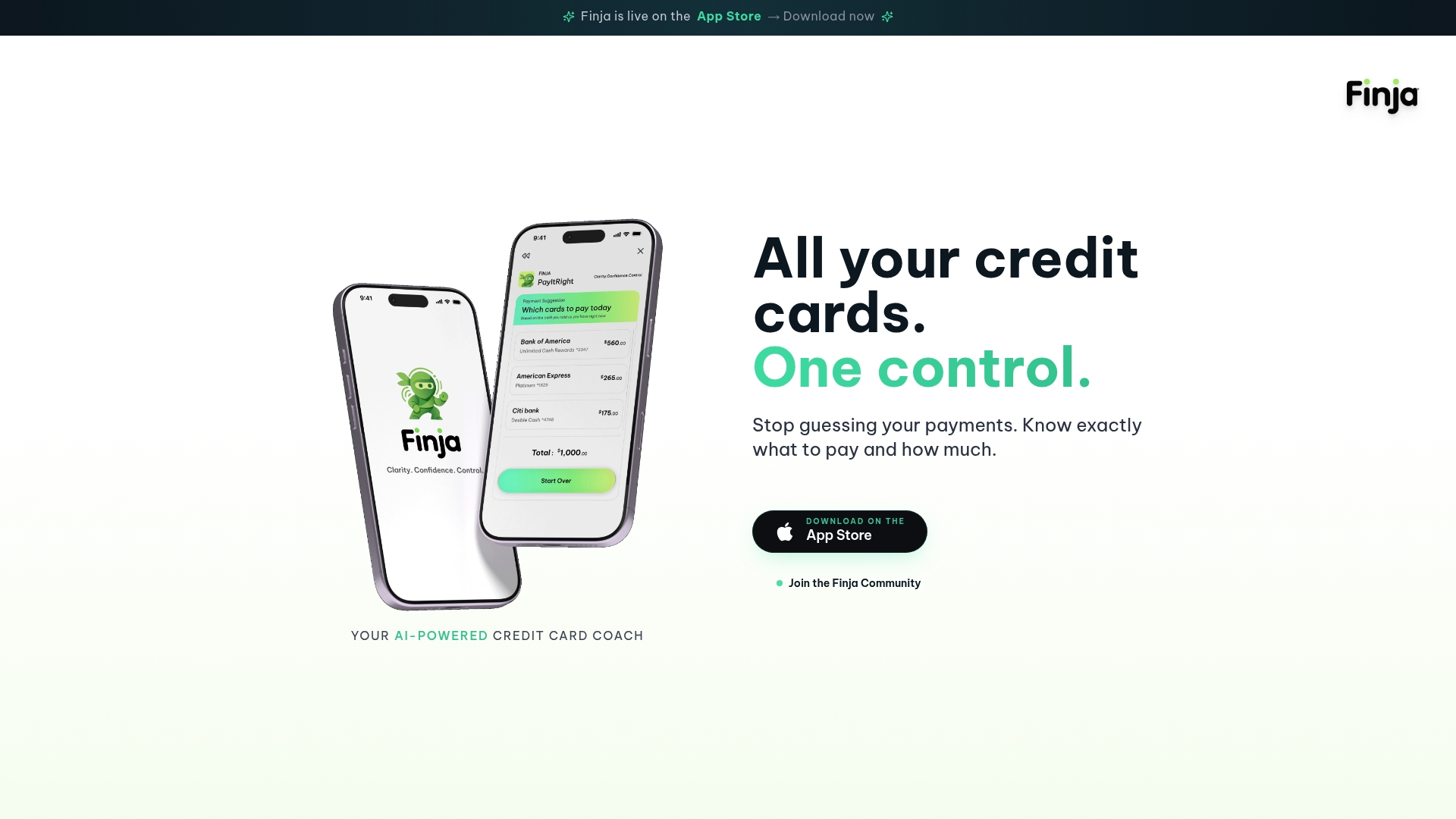
If most of your spending runs through credit cards, category budgeting works better when it accounts for card timing, not just monthly totals. An AI-powered credit card coach can bring your cards into one consolidated view, offer payment recommendations aimed at reducing interest, and track your credit health alongside your spending categories.
It isn't a general budgeting app, and it doesn't replace the category-planning work above. It's a tool that can help with managing multiple cards without losing track of due dates or interest costs.
| What you handle yourself | What Finja supports |
|---|---|
| Choosing your 10 to 15 categories | Consolidated view of all your cards |
| Picking an allocation method | Payment timing recommendations |
| Monthly budget reviews | Ongoing credit health tracking |
Visit Finja to see whether a credit-card coach fits your current setup.
Worksheets and guides worth downloading
For official templates, start with Consumer.gov's budgeting guidance and the CFPB's spending rule worksheet, both free and downloadable. For emergency fund and sinking fund mechanics, the CFPB's emergency fund guide walks through automatic transfers. For a longer list of category ideas, The Penny Hoarder's expense guide covers more than 100 options.
Sources
- Consumer
- My spending rule to live by (CFPB worksheet)
- An essential guide to building an emergency fund | Consumer Financial Protection Bureau
- Budget categories: A complete list of 100+ expenses to include in 2026 | The Penny Hoarder
FAQ
What is a set budget?
A set budget is a written plan that assigns your income to specific spending categories before the month begins, so every dollar has a purpose. It's built from your income and tracked spending, following the approach outlined in Consumer.gov's budgeting guide.
What is the best way to categorize expenses for a budget?
Group expenses into 10 to 15 broad categories covering housing, food, transportation, utilities, insurance, savings, debt, healthcare, personal care, and entertainment, then split a category only if it consistently causes confusion. Comprehensive category lists can help you spot commonly forgotten items like annual fees or pet care.
How do I add categories in my actual budget?
Start from your tracked spending, group similar purchases together, and create a new category only when an existing one no longer gives you useful information. Add sinking fund categories for irregular annual costs so they don't disrupt your monthly numbers.
What are examples of each budget category?
Housing includes rent or mortgage and property tax, food covers groceries and dining out, transportation includes car payments and gas, and savings covers your emergency fund and retirement contributions. Debt payments cover credit cards and loans, while a buffer or sinking fund category absorbs irregular costs like vet bills or annual renewals, as described in CFPB guidance on building savings.