
Yes, you can budget with credit cards, and it works better than cash for most people, as long as you pay the statement balance in full and time your payments around your paychecks. Chase's own guidance backs this up, and a tool like Finja can automate the timing piece. Success looks like this: zero interest charges, stable utilization, and rewards earned at no real cost.
TL;DR:
- Budgeting with credit cards is most effective when payments are timed around paychecks and the full statement balance is paid to avoid interest charges.
- Regular weekly reconciliation of charges, credits, rewards, and pending transactions helps catch errors early and prevents overspending.
- Mapping budgeting methods onto credit cards requires setting category caps, pre-funding digital envelopes, and automating scheduled payments to maintain discipline.
- Managing multiple cards benefits from consolidating balances, assigning specific roles to each card, and using alerts to monitor large charges and approaching limits.
- Tools like Finja automate consolidation, schedule payments, and optimize repayment timing to reduce friction and improve credit health management.
Table of Contents
- How to Track Your Spending With a Credit Card Budget
- What's Your Weekly Credit Card Budgeting Checklist?
- Which Budgeting Method Works Best for Credit Card Spending?
- How Do You Reconcile Credit Card Statements Each Week?
- When Should You Pay a Credit Card to Avoid Interest?
- How Do You Stop Credit Card Interest From Draining Your Budget?
- What Does a Multi-Card Workflow Actually Look Like?
- A Realistic Take on Habit Formation
- Finja: Your AI Coach for Multi-Card Budgeting
- Where This Article's Research Comes From
- Sources
- FAQ
How to Track Your Spending With a Credit Card Budget
You already have the raw data. Every issuer portal generates category breakdowns, monthly summaries, and year-end spending reports that do the tagging work most people think requires a separate app. Log into your card account, pull the current statement, and check whether it groups purchases into categories like groceries, gas, and subscriptions. Most major issuers do.
- Open each card's online portal and locate the "spending summary" or "year-to-date" report.
- Export or screenshot the category totals for the current month.
- Cross-check that total against your budget category for the same period.
- Flag anything that doesn't match a recognized purchase.
Bankrate's research on statement review points out that this is also the fastest way to catch recurring subscription charges you forgot you were paying for. A $12 app subscription hides easily in a $2,400 monthly statement. It doesn't hide in a category report that shows "Entertainment: $84" when you expected $36.
What's Your Weekly Credit Card Budgeting Checklist?
Treat the first week of any new system as setup, not maintenance. Once these pieces are in place, the weekly time cost drops to minutes.
- Sync due dates to paydays. Call your issuer or use the online portal to move each due date to 3 to 5 days after you get paid.
- Turn on autopay for at least the minimum, then manually pay the full balance until you trust the system.
- Pick one weekly review day and put it on your calendar as a recurring event.
- Assign each card a job (bills, groceries, travel) so spending isn't scattered across cards.
- Set a per-card spending cap tied to your budget category, not your credit limit.
- Turn on issuer alerts for large charges and approaching due dates.
- Keep a small cash buffer (even $200) so a mistimed charge never forces a scramble.
Pro Tip: Make a mid-cycle payment a few days before your statement closes. Issuers report your balance to credit bureaus on the closing date, not the due date, so a payment before that date lowers your reported utilization even if you were always planning to pay in full anyway.
Which Budgeting Method Works Best for Credit Card Spending?
The three most common frameworks all need small adjustments once most of your spending routes through plastic instead of a debit card.
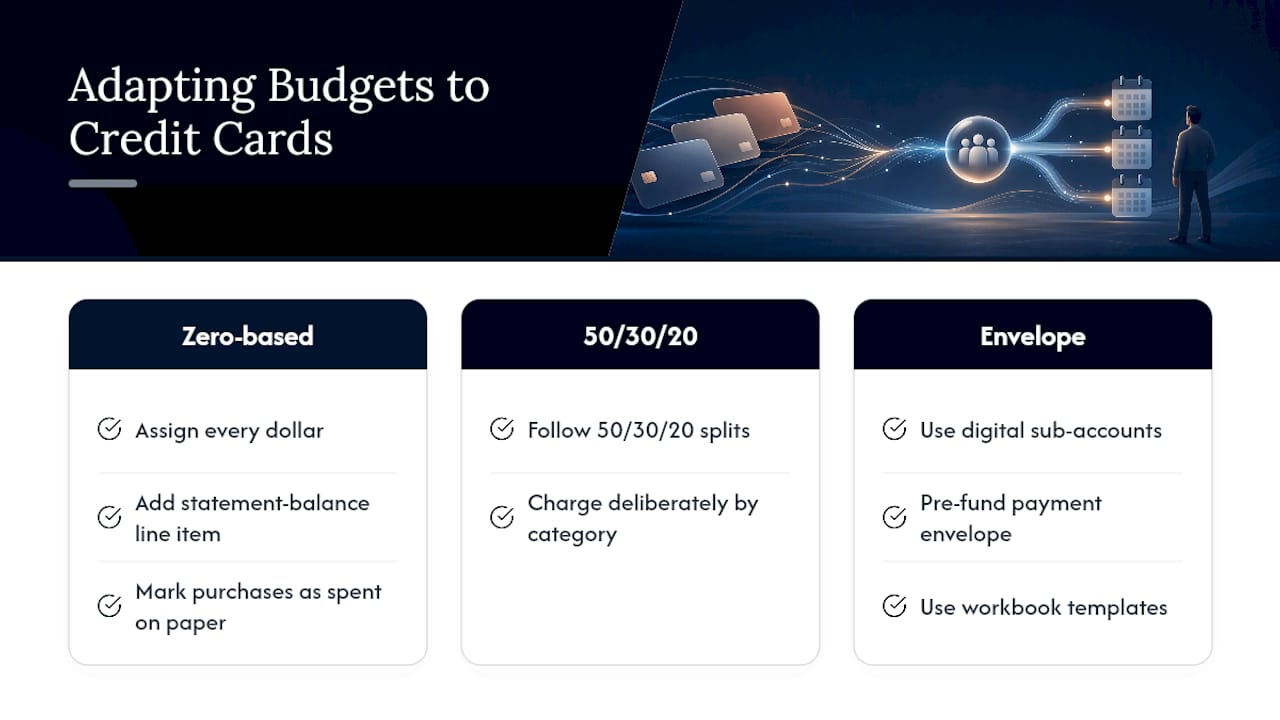
Zero-based budgeting gets easier with cards, not harder, because you're allocating against a known future bill instead of guessing at daily cash needs. Say you take home $4,200 a month. You'd assign every dollar a job, including a line item equal to your projected statement balance, due in full on the due date. If your card spending typically runs $1,800, that entire amount gets "spent" on paper the moment you make each purchase, even though the cash doesn't leave your bank account until the due date arrives.
The 50/30/20 rule maps cleanly onto cards if you're deliberate about which categories you charge.
Envelope budgeting translates to digital sub-accounts or a spreadsheet with category caps instead of physical cash. The trick with cards is pre-funding a "payment envelope" in a separate savings account equal to what you've charged that cycle, so the money is already set aside before the due date. That's the digital equivalent of moving cash out of the jar the moment you spend it, and it's the single easiest way to adapt the envelope method for card use. A workbook-style tool like No Spend Reset's budgeting templates can help you build these digital envelopes if a spreadsheet feels clunky.
How Do You Reconcile Credit Card Statements Each Week?
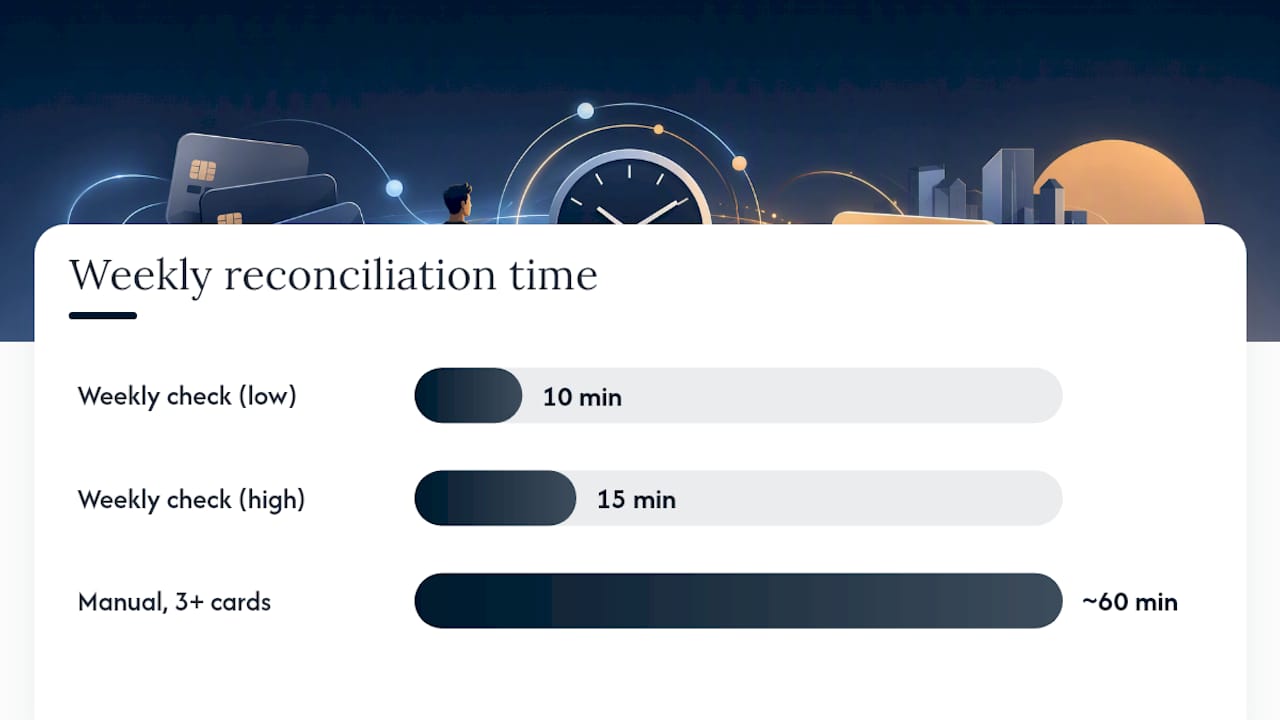
A 10 to 15 minute weekly routine catches almost everything before it becomes a problem. Bankrate's data on statement review suggests this short, regular check is more effective than a once-a-month deep dive, because small errors compound less when caught early.
Each week, reconcile these four things:
- New charges against your budget category caps
- Any returns or credits that haven't posted yet
- Rewards or cash back that landed since the last check
- Pending transactions that could push you over a spending cap
Set alerts for three triggers: your due date approaching, any single charge over a threshold you pick (say, $150), and your balance crossing 70% of your planned monthly cap. Experian's guidance treats these three alerts as the minimum viable setup for anyone using more than one card.
Spreadsheets work fine for one or two cards. Once you're managing three or more, manually copying numbers from separate issuer portals turns a 10 minute task into an hour, which is exactly the friction an aggregator tool is built to remove.
Pro Tip: Reconcile pending transactions separately from posted ones. A pending charge that later drops (a hotel authorization hold, for example) can make your budget look tighter than it actually is if you don't distinguish the two.
When Should You Pay a Credit Card to Avoid Interest?
Three dates control everything: the statement closing date, the due date, and the grace period between them, typically 20 to 25 days. Miss the logic here and you can carry a balance by accident even while thinking you're debt free.
- Find your statement closing date in your card's online account settings; it's usually listed next to the current billing cycle.
- Map your paydays against that date. If you're paid on the 1st and 15th, and your statement closes on the 20th, you have a natural window to pay in full right after the 15th.
- Request a due-date change if the default doesn't line up. Most issuers allow this through the app or a single phone call.
- Make a mid-cycle payment if a big purchase early in the cycle would otherwise sit unpaid for weeks. Paying it down immediately protects your utilization and removes the temptation to let it ride.
A simple example: paycheck lands the 1st, statement closes the 20th, due date falls on the 15th of the following month. Pay the full statement balance between the 1st and the 5th, and you've used the grace period documented by JPMorgan Chase Institute research as free financing rather than a debt trap.
How Do You Stop Credit Card Interest From Draining Your Budget?
Pay the full statement balance, every cycle, without exception. That single habit eliminates interest entirely, because card issuers only charge it on balances carried past the due date.
If you're already carrying a balance, the avalanche method beats a flat minimum-payment approach: rank your cards by APR, throw every extra dollar at the highest rate first, and pay minimums on the rest. Minimum payments are structured to keep you paying for years. A $5,000 balance at a typical APR, paid at the minimum, can take many years to clear and may cost more in interest than the original charges.
- Balance transfers and 0% APR offers can buy breathing room, but treat them as temporary. A transfer typically carries a 3% to 5% fee, which adds $30 to $50 in cost on a typical transfer amount, and the promotional rate always expires.
- If you're falling behind, contact your issuer about a hardship plan before you miss a payment, not after.
- A certified credit counselor can help if balances span multiple cards and the avalanche math feels unmanageable alone.
JPMorgan Chase Institute's research found that firms with larger cash buffers were meaningfully less likely to revolve a balance month to month. The same logic applies to a household budget: a thin buffer is what turns an unplanned expense into a carried balance.
What Does a Multi-Card Workflow Actually Look Like?
Once you're past two cards, the checklist above needs a system behind it, not just good intentions.
- Consolidate first. Pull current balance, APR, due date, and statement close date for every card into one view.
- Assign each card a job. One for bills, one for groceries, one for travel. Set a spending cap per job, not per card limit.
- Automate the schedule. Set autopay for the full balance where possible, and calendar mid-cycle top-ups for the cards carrying the heaviest job.
- Run a monthly checkpoint. Check utilization per card, total interest exposure, and rewards captured against what you spent to earn them.
This is close to what an AI-driven credit card management system automates by design, pulling the consolidation and scheduling steps into one dashboard instead of four browser tabs.
Pro Tip: Track your utilization rate per card and in aggregate. Scoring models weigh both, so one maxed-out card can drag your score down even if your overall utilization across all cards looks fine.
A Realistic Take on Habit Formation
Autopay plus a 10 minute weekly check beats any perfect system you abandon after three weeks. Watch one number: your revolving balance percentage. Give it 30 days before judging whether the system is working.
— Grace K.
Finja: Your AI Coach for Multi-Card Budgeting
Finja is the tool for the exact workflow described above: consolidate every card into one view, assign spending jobs, automate the schedule, and let the app flag what a manual spreadsheet would miss. The app pulls balances, APRs, and due dates from every card into a single dashboard, then recommends which card to pay first and when, based on your actual due dates and utilization, not a generic rule of thumb.
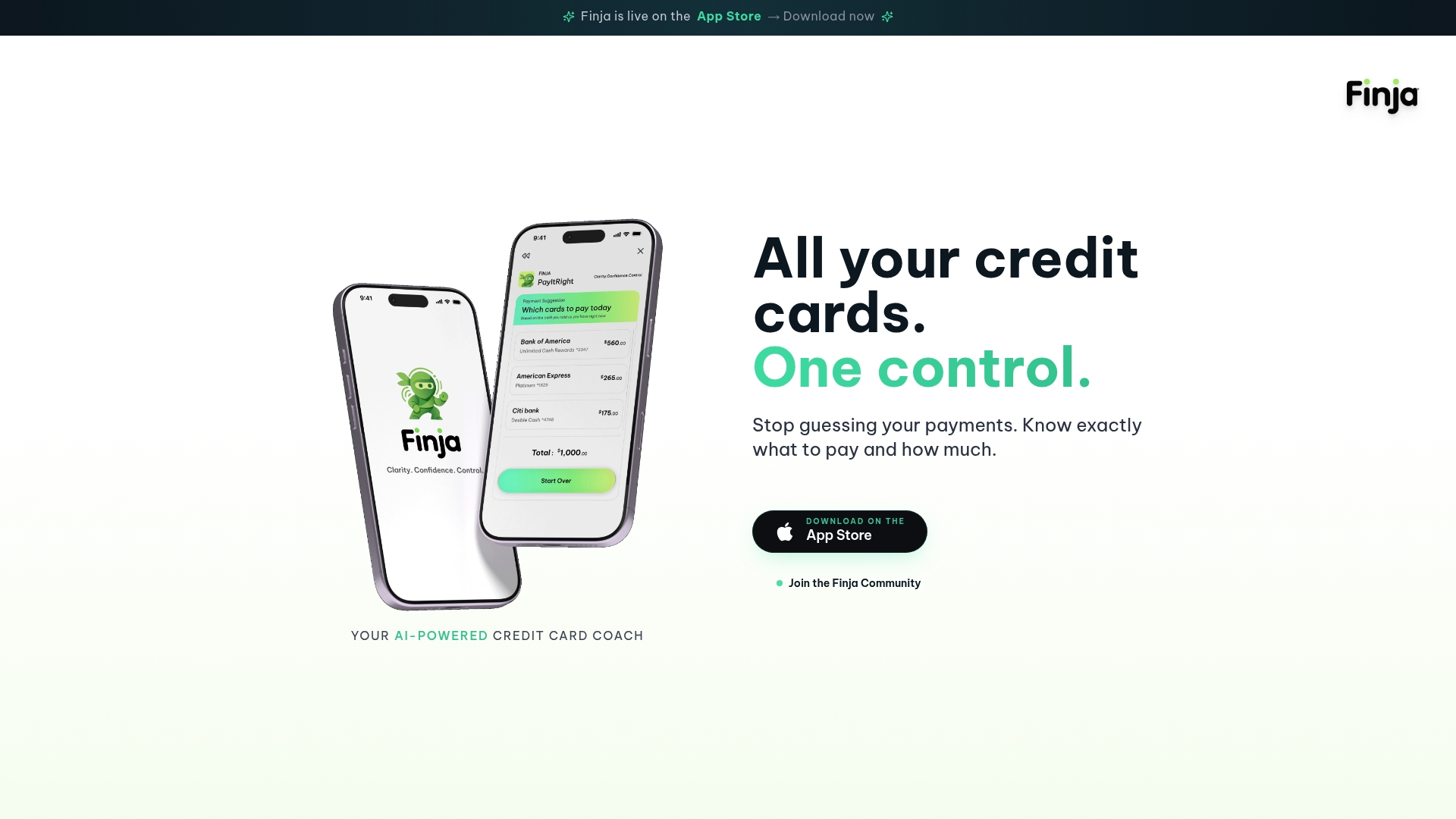
If you're running three or more cards and reconciling statements by hand every Sunday night, that's exactly the friction an app was built to remove. It tracks credit health alongside spending, so utilization and APR exposure show up automatically instead of requiring you to check four separate portals. Start a trial at Myfinja and see whether the consolidated view saves you the weekly reconciliation time this article just walked you through.
Where This Article's Research Comes From
- Chase: issuer tools and category tracking
- JPMorgan Chase Institute: cash buffer and revolving-balance research
- Experian and NerdWallet: practical budgeting best practices
This article is general information, not a substitute for advice from a qualified financial advisor. Consult a qualified financial professional about your own circumstances before acting on anything here.
Sources
- A Guide to Budgeting with a Credit Card | Chase
- Cash or credit: Small business use of credit cards for cash flow management | JPMorganChase
- How to budget using a credit card | Experian
- How to use credit cards to manage your budget | NerdWallet
- How credit card statements help trim a budget | Bankrate
FAQ
What Is the 2/3/4 Rule for Credit Cards?
It's an unofficial guideline suggesting you apply for no more than two new cards in a rolling two-month period, three in a year, or four in two years, aimed at limiting hard inquiries and new-account risk to your credit score.
Why Does Dave Ramsey Say Not to Use Credit Cards?
Ramsey's position centers on behavioral risk: he argues that easy access to credit encourages overspending and that cash-only spending creates a harder psychological brake, regardless of whether someone could technically pay a card in full.
What Is the 70-10-10-10 Budget Rule?
It's one of several percentage-based alternatives to 50/30/20, and works the same way with cards: assign the "70" and "10" discretionary slices to card categories you plan to pay off in full.
What Bills Do Most Adults Pay Monthly?
Most household budgets include housing, utilities, insurance, transportation, groceries, and subscriptions as recurring monthly costs, several of which are commonly charged to a rewards card and paid off each cycle to capture points without added cost.
Can an App Like Finja Actually Reduce My Credit Card Interest?
Finja can't change your APR, but its payment optimization recommendations are designed to flag the highest-cost balance to prioritize and time payments to avoid interest altogether, which addresses the scheduling mistakes that cause most accidental interest charges.