
To stagger statement dates, you ask each card issuer to move its billing cycle so your closing dates and due dates land on different days of the month, ideally lined up with your paychecks. Staggering suits people with uneven cash flow or several cards, because each bill is smaller and easier to cover. Clustering suits people who want one payment session a month. Neither is better for everyone, and you can mix them.
Below you will find the difference between a statement date and a due date, how to decide between staggering and clustering, and a step-by-step way to make the change safely.
TL;DR
- The statement (closing) date ends the billing cycle and sets the statement balance. The due date is the deadline for at least the minimum payment.
- Staggering spreads payments through the month and can match them to paydays. Clustering batches them into one session.
- Many issuers let you request a new date online, in the app or by phone, and the CFPB advises asking when the change takes effect and what your next bill will be.
- Turn on autopay and alerts before the first bill on the new schedule, and keep a small cash buffer.
- Paying before the statement closes can lower the balance reported to the bureaus, which is a separate job from paying by the due date.
Table of Contents
- Statement date vs. due date: the two dates that matter
- What "staggering" and "clustering" mean
- Why staggering helps people with multiple cards
- How to stagger your dates: a step-by-step plan
- A sample month, staggered
- Does staggering change your interest or your credit score?
- Common mistakes to avoid
- Our perspective
- See all your card dates in one place
- FAQ
- Sources
Statement date vs. due date: the two dates that matter
Your statement closing date is when the billing cycle ends and your spending for that cycle is tallied. Citi explains that the payment due date is the deadline to make at least the minimum payment and avoid a late fee, generally around 21 days after the close. Billing cycles typically last about a month.
Issuers differ on the gap. One Wells Fargo account agreement filed with the CFPB states a due date at least 25 days after closing. Your own cardholder agreement tells you the rule for each card.
Two more facts shape how you plan:
- Federal rules require issuers to use equal billing cycles, with some flexibility for weekends, holidays and months of different lengths. So you will not find a card that closes on a random schedule, and the dates you see are predictable.
- A grace period is not guaranteed. The FDIC's Money Smart guide says creditors are not required to offer one, and when one is offered the bill must be mailed or delivered at least 21 days before the due date.
For a deeper look at how these two balances behave, see our guide to statement balance vs. current balance.
What "staggering" and "clustering" mean
Staggering means your cards have different due dates, spaced across the month. Say one card is due on the 5th, another on the 15th and a third on the 25th. Each payment is smaller than one combined bill, and you can tie each to a paycheck.
Clustering means your due dates sit close together, for example all within the same week. You pay every card in one sitting.
A third option sits between them: cluster by paycheck. If you are paid on the 1st and the 15th, you could put two cards due a few days after each payday. That is staggering at the month level and clustering at the paycheck level.

Which one fits you
The myFICO team notes that clustering may simplify bill-paying by letting you batch payments, while staggering around paychecks may make payments more manageable, depending on your cash flow, bills and preferences. Use this table as a starting point.
| Your situation | Staggering tends to fit | Clustering tends to fit |
|---|---|---|
| Pay schedule | Paid twice a month or every two weeks | Paid once a month |
| Cash flow | Tight in the days before payday | Comfortable after a big deposit |
| Number of cards | Three or more, with large balances | Two or three, small balances |
| Habits | You like small, regular payments | You prefer one monthly money session |
| Risk of forgetting | Low, you use alerts and autopay | Low, one date is easy to remember |
There is no scoring advantage built into either choice. What counts is that every payment lands on time, and that is easier when the dates fit your income.
Why staggering helps people with multiple cards
When four cards all come due on the same few days, one delayed paycheck can cause several late payments at once. Spreading the dates limits the damage of any single slip. It also makes each decision simpler: this week I handle this card.
There is a second benefit that is easy to miss. Because each card closes on a different day, the balance reported for each card is captured at a different point in the month. That makes it easier to plan a payment shortly before each close, which is the moment that matters for reported utilization (more on that below).
People juggling several cards also tend to lose track of recurring charges that quietly add to balances. Our piece on tracking subscription charges shows how to catch those before they turn into interest. And for the wider picture, our multiple credit card management tips cover the habits that make staggering work.
How to stagger your dates: a step-by-step plan
1. List every bill
The CFPB's guide on requesting a due date change recommends listing each bill with its due date, the day you normally pay, the payment method and the late fee. Include rent, utilities and insurance, not only cards.
2. Map them against your income
Compare the list with your expected income to see which dates could move. Mark your paydays on a calendar, then look for the weeks where money is short. Those are the dates to move first.
3. Pick target dates with a buffer
Choose due dates a few days after each paycheck, not on the same day. The myFICO guidance on choosing dates suggests building in a small buffer in case a paycheck is delayed. If your employer pays on the 15th, a due date on the 18th or 20th is safer than the 15th itself.
4. Ask each issuer
The CFPB says you can request a new date by phone, email, online or letter, and myFICO says that, depending on the issuer, you can often do it online or in the issuer's app. Not every company permits changes, so be ready to pick a second-choice date. Our walkthrough on how to move your card due date to match paychecks has a script and a timeline.
When you ask, get answers to three questions:
- When does the change take effect?
- When is my next payment due?
- How much will that payment be?
These are the questions the CFPB tells you to ask, and the third one matters more than it seems. The CFPB cautions that a later first due date can produce a larger first bill, because the cycle may be longer for that one time. Plan cash for it.
5. Expect a delay
Some issuers take a while. For a Capital One card, NerdWallet reports that it can take up to two months for the new billing date to be reflected. Keep paying on the old schedule until you see the new date in your account.
6. Automate the safety net
After you change dates, myFICO advises setting up payment alerts or autopay so you do not miss the first payment on the new schedule. The CFPB adds that you should keep your bill list updated, use reminders, calendars or planners, and set money aside early or pay early when funds are available.
A sensible autopay setup is the minimum payment on autopay as a floor, with a manual payment of the full statement balance on top whenever you can afford it. Autopay then protects you from a late fee while you stay in control of interest.
A sample month, staggered
Suppose you are paid on the 1st and 15th and hold three cards. A staggered plan might look like this:
| Card | Statement closes | Due date | Funded by |
|---|---|---|---|
| Card A | 8th | 3rd of next month | Paycheck on the 1st |
| Card B | 22nd | 17th of next month | Paycheck on the 15th |
| Card C | 28th | 23rd of next month | Paycheck on the 15th, saved in advance |
These dates are an illustration, not a promise that your issuers will offer them. Your options depend on each issuer's rules, and the gap between the close and the due date is set by the issuer.
Notice what the plan does. Card A is paid right after a payday. Cards B and C are covered by the mid-month check, with Card C needing a little saving first. No payment falls in the thin days just before money arrives.
Does staggering change your interest or your credit score?
Changing a date does not by itself change your interest rate or your score. What matters is when and how much you pay relative to the statement.
Interest. If you carry a balance, Experian notes that paying before you receive the statement can lower the interest you pay, because it reduces your balance. If you pay the full statement balance by the due date and your card has a grace period, you generally avoid interest on new purchases. Because the FDIC says grace periods are not guaranteed, confirm yours in your agreement.
Credit utilization. Issuers generally report around the time the cycle ends. Experian says the length and timing of a billing cycle do not directly affect scores, but knowing when it ends matters because of that reporting. Capital One similarly notes that a billing cycle can affect scores when your current balance is reported to the bureaus.
Chase explains that payments made before the statement closes can reduce the balance used for the short-term utilization calculation, while payments after the close generally affect the next month's reported utilization. So a pre-close payment and a due-date payment do different jobs. The first can lower the reported balance. The second keeps the account in good standing.
If you want to use this with staggered cards, our guides on paying before the statement date and when to pay for fees, interest or score show how to split a payment across both dates.
Common mistakes to avoid
- Moving every date at once. Change one or two cards, confirm the new dates, then move the next. This keeps a surprise from hitting all your accounts together.
- Ignoring the first bill. A longer first cycle can mean a bigger first statement. Ask the issuer for the amount.
- Stopping the old routine too early. Until the new date shows in your account, keep paying by the old one.
- Funding the due date on payday itself. Leave a few days of room.
- Forgetting non-card bills. Rent and utilities belong on the same calendar, since they compete for the same dollars.
A wider treatment of timing, including the rules that govern how payments are applied, is in our due date management guide and in our article on timing and Regulation Z. If you want every dollar assigned a job by paycheck, try the paycheck-aligned zero-based budget.
Our perspective
Most people with several cards do not have a discipline problem. They have a visibility problem. Each card shows its own dates in its own app, and nothing shows how they interact with your paychecks.
We built Finja around that gap. Our focus is reducing interest costs and improving credit health, not chasing rewards. We show all your cards in one place so you can see closing dates and due dates side by side, and our AI-powered guidance is designed to suggest when and how much to pay.
Staggering works best when you can see the whole month at once. That is why we think of Finja as a dedicated credit card coach rather than a general budgeting tool: the question it answers is which card to pay, when, and by how much.
Grace K.
See all your card dates in one place
If you are juggling three or more cards, a staggered schedule is easier to keep when every closing date, due date and balance sits on one screen. Finja is an AI-powered credit card coach built for people with multiple cards, with consolidated account views, payment recommendations aimed at reducing interest, credit health tracking, budgeting tools and spending limit controls.
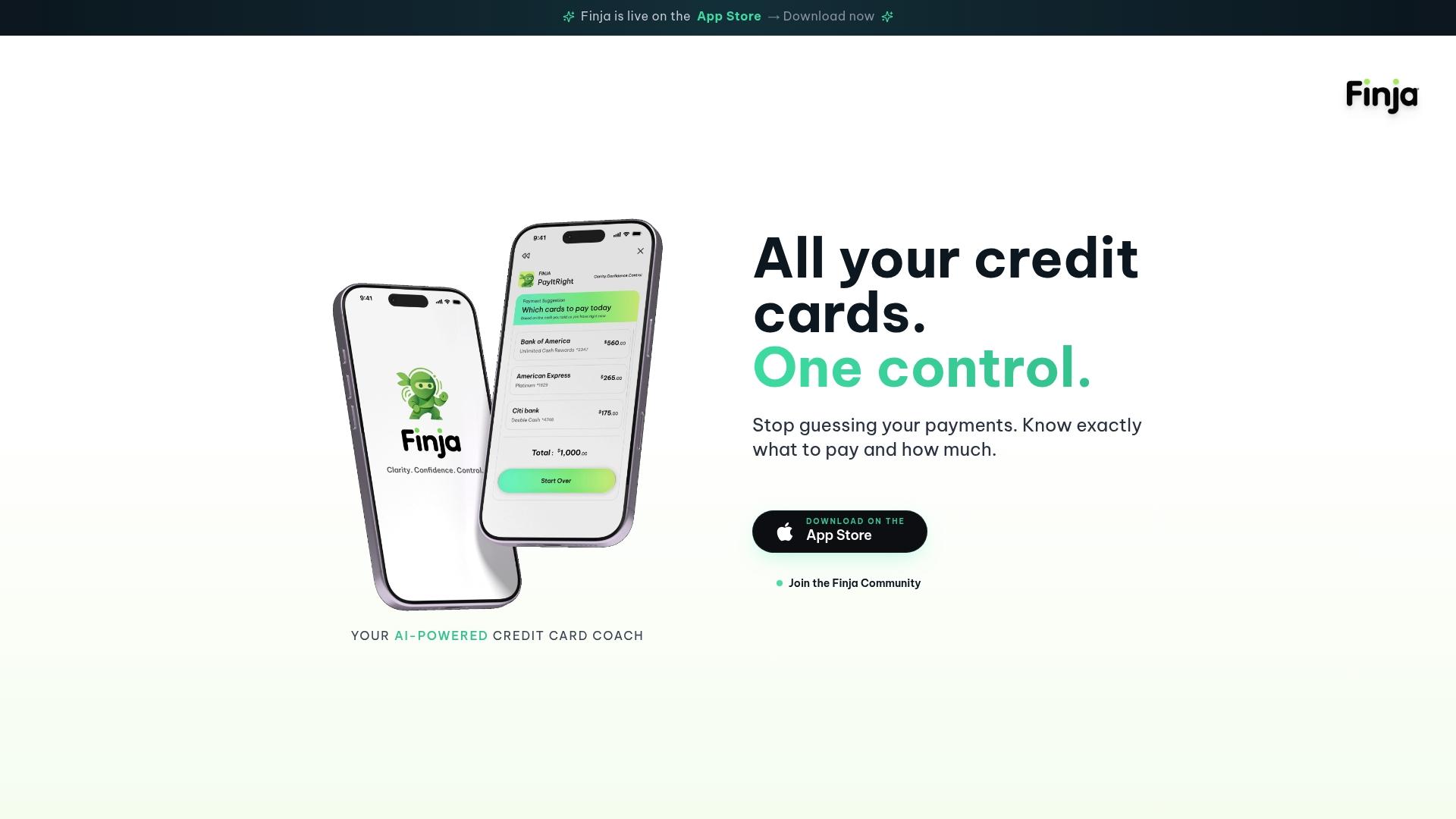
Meet your AI-powered credit card coach and see how your dates line up before you ask any issuer to change them.
FAQ
Can I change my credit card statement date?
Often yes, but not at every issuer. Depending on the issuer, you can request a change online, in its app or by phone. The CFPB says to ask when the change takes effect and when the next payment is due and how much it will be.
Is it better to cluster or stagger due dates?
It depends on your cash flow. Clustering lets you pay everything in one session, which is simple if you are paid monthly. Staggering spreads payments out and can match paychecks, which helps if you are paid twice a month or every two weeks.
How long does a due date change take?
It varies by issuer. NerdWallet reports that a Capital One change can take up to two months to be reflected. Keep paying on the old schedule until your account shows the new date, and check for alerts or autopay settings after it changes.
Does moving my due date hurt my credit score?
The date change itself does not affect your score. What can matter is the balance reported near each statement close and whether payments are on time. Paying before the close can lower the reported balance, according to Chase, and a missed payment is what causes real damage.
Should I pay before the statement closes or by the due date?
Do both when you can. A payment before the close can reduce the balance that gets reported, and a payment by the due date keeps the account current and avoids late fees. They serve different purposes, so one does not replace the other.
Sources
- Credit Card Due Date vs. Closing Date (Citi)
- Wells Fargo Visa Signature Card Account Agreement (CFPB database)
- What Is a Billing Cycle and How Long Is It? (Capital One)
- Money Smart for Adults Module 9 Instructor Guide (FDIC)
- The Benefits of Moving Your Credit Card Payment Dates (myFICO)
- Request a change in your bill due date (CFPB)
- Can You Change Your Credit Card Due Date? (NerdWallet)
- How to Read a Credit Card Statement (Experian)
- What Is a Billing Cycle? (Experian)
- Making Multiple Credit Card Payments (Chase)