
Yes, paying before the statement closing date can lower the balance your issuer reports to the credit bureaus, which can shrink your reported utilization and help your score. Paying by the due date alone only avoids late fees and interest. It won't touch utilization unless the payment posts before that closing snapshot. Expect the change to show up on your credit report and score with a lag, often one to two billing cycles.
TL;DR:
- Paying a few days before the statement closing date lowers your reported utilization because the bank reports the balance at or near that date.
- Confirm each credit card's exact closing date and schedule payments two to three days earlier to ensure they post before reporting.
- Making multiple payments during a billing cycle reduces your average daily balance, thereby decreasing interest charges.
- Paying only by the due date does not impact utilization reports, which are based on the closing date, not the payment deadline.
- Using automated tools or tracking reminders can help manage multiple cards' reporting dates and optimize both interest savings and credit scores.
Table of Contents
- What Is a Statement Closing Date and How Does It Affect Utilization?
- How Do You Pay a Credit Card Before the Statement Closing Date?
- Does Paying Early Actually Save You Money on Interest?
- What Are CFPB Rules on Credit Card Payment Timing?
- Common Myths About Paying Before the Statement Closing Date
- My Quick Starter Plan for This Billing Cycle
- An Automated Alternative to Manual Payment Timing
- Sources
- FAQ
What Is a Statement Closing Date and How Does It Affect Utilization?
Four dates control everything, and mixing them up is the single biggest mistake cardholders make.
- Statement closing date: the day your billing cycle ends and your issuer calculates your statement balance.
- Statement balance: what you owed at that exact moment. This is the number tied to your grace period.
- Current balance: whatever you owe right now, including anything charged after the statement closed.
- Payment due date: usually 21 to 25 days after the statement closes. This is your deadline to avoid late fees and interest, not your deadline for utilization purposes.
Here's the part most people miss: your issuer typically reports your balance to the bureaus on or near the statement closing date, not the due date. So if your closing date is the 15th and your due date is the 10th of the following month, paying on the 10th does nothing for the balance already reported on the 15th. It only affects next month's snapshot.
Say you have a credit limit and normally carry a balance into your statement close, resulting in a certain utilization ratio. If you pay a portion of that balance before the closing date, your statement balance drops accordingly, lowering your utilization rate, which is the number bureaus see. Confirm your own issuer's exact reporting day, since timing varies from one card to the next, and a call to customer service clears up any guesswork.
How Do You Pay a Credit Card Before the Statement Closing Date?
Three tactics cover most situations, and you can layer all three if you carry multiple cards.
- Schedule an early payment. Pay two to three days before your statement closes, not the day of, to give the payment time to post rather than sit pending.
- Split payments mid-cycle. If you revolve a balance, making two or three payments across the month keeps your average daily balance down, which lowers both interest and the final reported number.
- Shift your due date to match payday. Most issuers let you move your statement cycle once or twice a year, which makes early payments easier to remember and automate.
Before you set anything on autopilot, call your issuer or check your online account to confirm the exact closing date and cutoff time for that account. Reporting dates aren't always the same day the statement generates, and issuer practices differ enough that assuming a standard schedule can backfire.
Pro Tip: Set a recurring calendar alert for three days before each card's closing date, not the due date. That three-day buffer covers weekends and any processing delay without cutting it close.
Once you know your dates, the checklist is short: confirm each card's closing date, schedule payments to land two to three days early, verify the payment posted (not pending) before checking your balance, and repeat next cycle to see if your reported utilization actually moved.

Does Paying Early Actually Save You Money on Interest?
Utilization aside, timing changes what you pay in interest if you carry a balance month to month. Card issuers calculate interest using your average daily balance, not just your statement balance.
- If you pay in full by the due date and started the cycle with no unpaid balance, you keep your grace period and owe no interest at all.
- If you're carrying debt from a previous cycle, interest starts accruing immediately on new purchases, with no grace period to fall back on.
- Making multiple payments during the cycle shrinks that daily average, which shrinks the interest charged even if your total payment amount stays the same.
Paying it all at the due date means interest accrues on close to $3,000 for the full cycle. Splitting that into two payments of $1,500, one mid-cycle and one at the due date, cuts the average daily balance roughly in half and the interest bill along with it. Small shifts in when you pay compound over a year of statements.
What Are CFPB Rules on Credit Card Payment Timing?
The Consumer Financial Protection Bureau sets the baseline for what counts as "on time," and it has less to do with utilization than most people assume.
A payment is generally on time if the issuer receives it by 5 p.m. on the due date, or by the next business day when that date lands on a weekend or holiday.
That's the CFPB's standard for avoiding late fees and penalty interest. It says nothing about when your balance gets reported for utilization purposes, which is a separate clock entirely.
- On-time payment protects you from late fees and penalty APRs.
- It does not guarantee your balance updates before the next statement closes.
- The CFPB also found that many major issuers stopped furnishing actual payment amounts to the bureaus, so don't assume your credit report reflects real-time payment behavior.
Common Myths About Paying Before the Statement Closing Date
Plenty of cardholders chase the wrong number or the wrong strategy.
- Myth: paying on the due date fixes utilization. It doesn't, since the bureaus already saw last cycle's balance weeks earlier.
- Myth: 0% utilization is always ideal. A small reported balance, often in the single digits, tends to score just as well and shows the account is active.
- Mistake: trusting a pending payment. A payment has to post, not just show as pending, to change what gets reported.
- Mistake: draining savings to hit zero balance. Gaming one number isn't worth cash-flow risk if an emergency hits.
Pro Tip: Check your account activity two days after a scheduled payment to confirm it posted before assuming your utilization dropped.
My Quick Starter Plan for This Billing Cycle
Pull up each card's statement and note the closing date, then set a reminder three days ahead of it. Schedule one payment to post before that date and check the app afterward to confirm it landed. If you're carrying a balance, add a second payment mid-cycle. Watch your reported balances over the next one to two cycles before deciding it worked.
— Grace K.
An Automated Alternative to Manual Payment Timing
Tracking closing dates across two or three cards by hand works, until you miss one because a due date shifted or an issuer changed its cycle. That's the exact problem this kind of AI-powered credit card coach is built to solve.
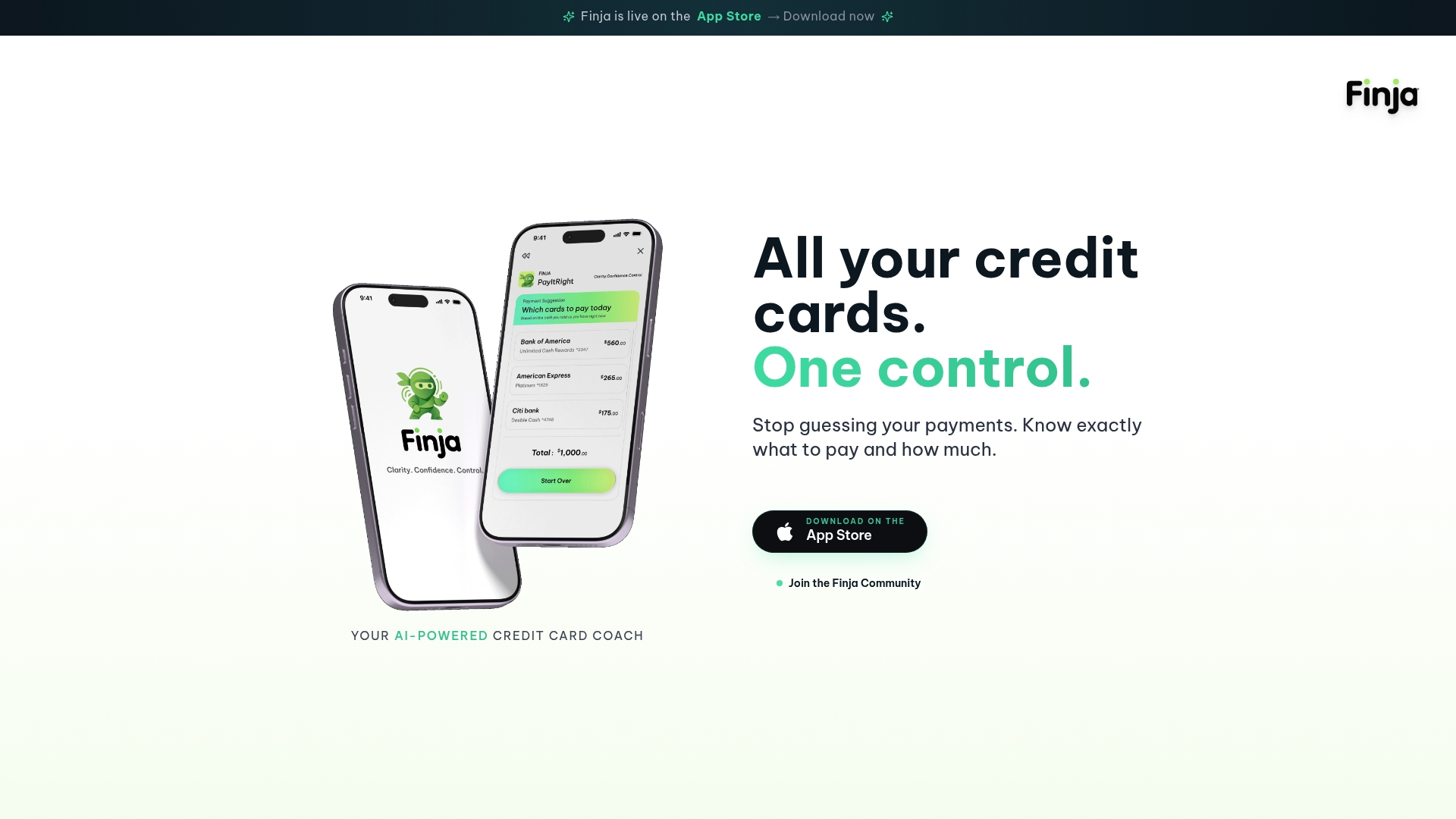
Finja is Your AI-Powered Credit Card Coach, pulling every card into one view and flagging the best day to pay each one based on its own statement cycle, not a generic rule of thumb. Instead of juggling reminders for several closing dates, you get a single dashboard with payment timing recommendations built around lowering interest and reported utilization. This approach focuses on cutting interest costs and improving credit health rather than chasing rewards points, and there's no learning curve to sort through before it's useful. If keeping every card's timing straight has started to feel like a second job, check out Myfinja and see what an automated payment schedule looks like for your specific cards.
Sources
Verify these mechanics directly through CFPB and Experian guidance on payment timing and reporting.
This article is general information, not a substitute for advice from a qualified financial advisor. Consult a qualified financial professional about your own circumstances before acting on anything here.
- When is my credit card payment considered to be late? | CFPB
- Is no credit utilization good for credit scores? | Experian
- CFPB letter: Summary of findings on actual payment data furnishing (May 2022 responses) | CFPB
FAQ
Is It Good to Pay a Credit Card Before the Statement Date?
Yes, if your goal is lowering reported utilization, since the balance at statement close is what gets sent to the bureaus. It won't speed up your score update, which can take one to two billing cycles to reflect.
What Happens if I Pay Before the Statement Date?
Your issuer reports a lower balance at the next closing snapshot, which usually means lower utilization on your credit report. Your current balance for new purchases still starts fresh, and your due date and grace period rules stay the same.
Is It Okay to Pay a Credit Card Bill Before a Statement?
Yes, there's no penalty or downside to paying early, and issuers accept payments any time during the billing cycle. Just confirm the payment posts rather than sits pending, since only a posted balance counts toward the statement snapshot.
What Is the 3 Day Rule for Credit Cards?
There's no official "3 day rule" from card issuers or regulators, but many people build in a 2 to 3 day buffer before their statement closes to make sure a payment posts in time. That buffer accounts for processing delays and weekends, similar to the next-business-day standard the CFPB applies to due dates.