
Keep one recurring-charge register reconciled to each card's statement every billing cycle. This single habit stops late fees and penalty APRs before they start, reduces the interest you pay because you catch problems before balances compound, and lets you control what utilization gets reported to the bureaus. The guidance below draws on rules from the Consumer Financial Protection Bureau, the FDIC, and Mycreditunion.
TL;DR:
- Reconciling each credit card’s recurring charges immediately after statement closing helps prevent late fees and minimizes interest accrual.
- Recording detailed fields like merchant description, expected amounts, and billing dates for each recurring charge improves error detection and dispute readiness.
- Paying at least the minimum before due date reduces penalty APRs, while early payments can lower daily interest and interest paid over time.
- Timing payments before statement closing lowers reported utilization, which supports credit scores, especially when nearing the 30% utilization threshold.
- Using tools that consolidate balances, payment dates, and recurring charges simplifies multi-card management and enhances accuracy in tracking expenses and plan adjustments.
Table of Contents
- Build a recurring-charge register: what to track and why
- Your monthly workflow for reconciling every card
- Payment allocation: minimums first, then target the right balance
- Timing payments to lower reported utilization
- Spotting billing errors and filing a dispute
- What alerts and tools should actually surface
- Identifying and categorizing your subscription charges
- Tools and apps to automate tracking of subscription charges
- Managing and canceling subscriptions you no longer want
- How subscription charges affect your credit and planning
- Switching cards or payment methods without losing track
- A note on building this habit
- Finja: built around this exact workflow
- FAQ
- Sources
Build a recurring-charge register: what to track and why
A register is only useful if it mirrors what your statement actually shows. For every card, you want fields that let you spot a missing charge, a wrong amount, or a cycle shift at a glance.
Your register needs these fields for each recurring charge:
- Card nickname and last four digits, so you know which account to check first.
- Merchant descriptor exactly as it appears, since many subscriptions post under confusing abbreviated names.
- Expected amount and posting frequency (monthly, annual, or variable).
- Statement closing date and due date for that card.
- APR, credit limit, current balance, and minimum payment.
Statement closing date matters as much as posting date because a charge that lands right at the edge of a billing period can shift to the next cycle. The CFPB's contract definitions explain that your statement reflects a defined billing period, and a due date typically falls at least 21 days after the statement is sent. If a charge you expected doesn't appear, check whether it simply posted after your billing period closed rather than assuming it stopped.
Keep statement copies for at least as long as a dispute window stays open. That record is what proves the charge, the date, and the amount if you need to challenge it later.
Your monthly workflow for reconciling every card
A repeatable routine turns tracking from a chore into a five-minute habit. Run through these steps on the same day each month, right after your statements close:
- Open or download each card's statement rather than relying on the app's running balance.
- Identify every recurring charge against your register.
- Match each one to its expected amount and mark it as expected, changed, duplicated, unknown, or stopped.
- Update the next expected posting date and amount for anything that changed.
- Calculate the minimum due on each card and how much extra you can put toward balances this month.
- Schedule payments so every minimum is covered before its due date.
The statement is your authoritative source, not a push alert. Alerts are useful for catching activity in real time, but they don't carry the billing period details, minimum payment, or due date the way a full statement does, and reconciling only from alerts leaves gaps.
If you find a charge you don't recognize, don't call the issuer first. Save a copy of the statement page and note the merchant descriptor and date, then contact the issuer once you have that evidence preserved.
Pro Tip: Set a recurring calendar reminder for the day after your latest statement closing date, not a fixed date each month, since closing dates shift across a 28 to 31 day cycle.
Payment allocation: minimums first, then target the right balance
Pay at least the minimum on every card by its due date. Missing one minimum risks a late fee and can trigger a penalty APR that applies to future purchases, not just the overdue balance.
Once minimums are covered, decide where extra money does the most good:
- Send extra payments to the balance carrying the highest APR if your goal is minimizing total interest paid.
- Send extra payments to the card closest to its limit if your goal is lowering overall utilization before a credit application.
- Pay a card in full to preserve its grace period on new purchases.
- Carrying any balance past the due date typically forfeits that grace period on new purchases, so new charges start accruing interest immediately.
Many card issuers calculate interest using a daily periodic rate applied to your average daily balance, according to the CFPB, which means paying sooner in the cycle, not just by the due date, reduces the balance those daily charges are calculated against. Say you carry a $1,000 balance at 22% APR. Paying $200 of that ten days earlier in the cycle shaves meaningful days off the balance that interest compounds against, even though the payment due date hasn't changed. Our guide on why tracking interest paid monthly matters walks through this in more detail.
Timing payments to lower reported utilization
Utilization is your total revolving balances divided by your total credit limits, and MyCreditUnion.gov suggests keeping that figure low to support credit health, generally under about 30%. The number that gets reported to the bureaus is usually whatever balance shows on your statement closing date, not what you owe today.
That timing detail creates a lever:
- Make a payment a few days before your statement closes if a card is sitting close to its limit, so a lower balance gets reported that cycle.
- Spread payments across the month instead of waiting for the due date if several cards carry recurring charges that push utilization up.
- Note each card's typical closing date in your register so you're not guessing when to act.
Watch for side effects. A pre-close payment on a card you're about to use again can push you back toward the limit before the next cycle, and shuffling balances between cards to chase lower utilization can backfire if it causes you to miss a due date elsewhere. Our breakdown of timing tactics to cut utilization covers more scenarios.
Pro Tip: Check each issuer's typical reporting date, since some report the statement balance and others report the balance on a different day entirely.
Spotting billing errors and filing a dispute
Watch your register for four common error types: a charge you never authorized, a duplicate post of the same subscription, an amount that doesn't match what you agreed to, and a charge that keeps posting after you canceled.
Before contacting your issuer, gather your evidence:
- Save or screenshot the statement page showing the charge.
- Note the exact merchant descriptor, date, and amount.
- Write down when you canceled or disputed the charge directly with the merchant, if applicable.
- Send written notice to your issuer, since Regulation Z protections generally require a written dispute within 60 days of the statement that first showed the error.
- Expect acknowledgement from the issuer within 30 days and resolution within two billing cycles, no later than 90 days, per FDIC guidance.
- Keep paying any undisputed portion of your balance while the disputed amount is investigated.
Catching the error early, while your statement and evidence are fresh, makes the whole process faster.
What alerts and tools should actually surface
Issuer alerts for new charges or upcoming payments are a good early-warning signal, but they're not a substitute for reading the statement itself. A useful tracking tool should surface the same fields your register needs:
- A consolidated view across every card you hold, not just one account at a time.
- Statement closing date and due date side by side for each card.
- Current APR, credit limit, and balance, updated per statement.
- A place to log recurring charges and their expected posting pattern.
- A way to schedule payments against minimums and extra targets.
A standalone app built only to list and cancel subscriptions won't help you allocate payments or minimize interest across multiple cards. Those are two different jobs, and conflating them leaves the harder, more expensive problem, interest and utilization, unmanaged.
Identifying and categorizing your subscription charges
Not every recurring charge behaves the same way, and lumping them together makes reconciliation harder. Sort what you find into a few buckets.

Free trials converting to paid are the easiest to miss because the first charge often arrives weeks after signup, under a merchant name that doesn't match the service you remember trying. Flag anything that starts small or at $0.00 and note the date it's scheduled to convert.
Fixed renewals post the same amount on a predictable schedule, monthly or annual. These are the simplest to track and the quickest to spot when something's wrong, since any deviation from the expected amount is an immediate red flag.
Variable-fee subscriptions, like usage-based software or metered services, change amount each cycle by design. For these, track a typical range instead of a single expected figure, and investigate only when a charge falls well outside that range.
Annual charges deserve their own note in the register even though they only post once a year, because a single large annual renewal can spike a balance and utilization in a month you didn't plan for. Mark the expected posting month clearly so it doesn't catch you off guard.
Categorizing this way turns a flat list of charges into something you can actually act on: trials you meant to cancel, renewals behaving normally, and variable fees worth a closer look only when they drift.
Tools and apps to automate tracking of subscription charges
Manually scanning every statement line by line works, but it's slow across multiple cards. A few categories of tools can take over parts of the job.
Your card issuer's own online statement and transaction search is the first and most reliable layer, since it's the authoritative record your dispute rights rely on. Beyond that, a dedicated credit card management app can consolidate balances, due dates, and APRs across every card you hold into one view, which is the harder problem multi-card holders actually face. Personal finance software with transaction categorization can flag recurring merchant patterns automatically, though it still requires you to verify amounts against the actual statement rather than a running feed.
Whatever combination you use, none of these replace the monthly reconciliation step. Automation is good at flagging that a charge exists; it's not as reliable at telling you whether that charge is pushing a balance toward a higher APR or a worse utilization ratio, which is the part that actually affects your credit. Our guide on tracking credit card debt in under an hour walks through a fast way to pull this together across several cards at once.
Managing and canceling subscriptions you no longer want
A recurring-charge register does double duty: it also surfaces subscriptions you forgot you had. When you review your statements each cycle, you'll start to notice charges for services you haven't used in months.
Handle these in order of effort. Cancel directly through the merchant's account settings first, since this is usually faster than going through your card issuer. If a merchant makes cancellation deliberately difficult or ignores your request, contact them in writing and keep a copy, since that record matters if the charge continues and you need to dispute it. For a subscription you're not ready to cancel but want to pause, check whether the merchant offers a hold option rather than a full cancellation, which avoids restart fees later.
Review your full register at least once a quarter specifically for subscriptions, separate from your monthly card reconciliation as explained in this guide to reconcile credit cards. A monthly review catches whether a charge posted correctly; a quarterly review catches whether you still want that charge at all. Small, easy-to-ignore charges are exactly the ones that add up over time without you noticing, since each one individually looks too small to bother canceling.
How subscription charges affect your credit and planning
A single subscription charge rarely moves a credit score on its own, but the pattern of how you manage many small recurring charges across multiple cards can.
The clearest link is utilization. A handful of small subscriptions sitting on a card that's already close to its limit can push that card's reported balance over a threshold that affects your utilization ratio, which MyCreditUnion.gov notes is calculated as total revolving balances divided by total credit limits. The subscriptions themselves aren't the problem; letting them sit unmonitored on a near-maxed card is.
The second link is payment history. If recurring charges you forgot about push a card's minimum payment higher than expected, or if a card you don't check regularly misses a due date because a subscription changed its billing date, that missed payment affects your credit history far more than the subscription cost itself ever would.
For financial planning beyond your credit score, recurring charges are worth tallying across all your cards at least once a quarter. Seeing the combined monthly total, rather than each charge in isolation, is often what prompts a reader to cancel something they'd stopped valuing.
Switching cards or payment methods without losing track
Updating payment details across every subscription when you replace a card is one of the easiest steps to miss, and it's also where charges most often fall through the cracks.
Start with your register rather than guessing. Pull up every active recurring charge tied to the old card and update the payment method directly with each merchant, one at a time, rather than waiting to see which ones fail. Many issuers will also forward charges automatically for a limited window after a card is replaced due to loss or fraud, but that grace period is temporary and not guaranteed for every merchant.

Keep the old card's final statement until you've confirmed every recurring charge has moved successfully. This gives you a complete list to check against, and it's the document you'd need if a merchant claims they never received an updated payment method and reports your account as unpaid.
Watch the first cycle on the new card closely. A merchant descriptor can look different the first time it posts under a replaced card, even for a subscription you've had for years, so don't assume an unfamiliar-looking charge is a mistake before checking the amount and timing against your register.
A note on building this habit
Tracking every recurring charge across several cards sounds tedious until you see what it catches: a forgotten trial, a card quietly creeping toward its limit, a dispute window about to close. Treat the monthly check as five minutes well spent, not a chore, and the register becomes the tool you reach for whenever you're deciding where to send extra money.
— Grace K.
Finja: built around this exact workflow
We built Finja as a credit card coach, not a general budgeting app, because the job of tracking recurring charges across several cards to cut interest is a different problem than categorizing where your money went last month.
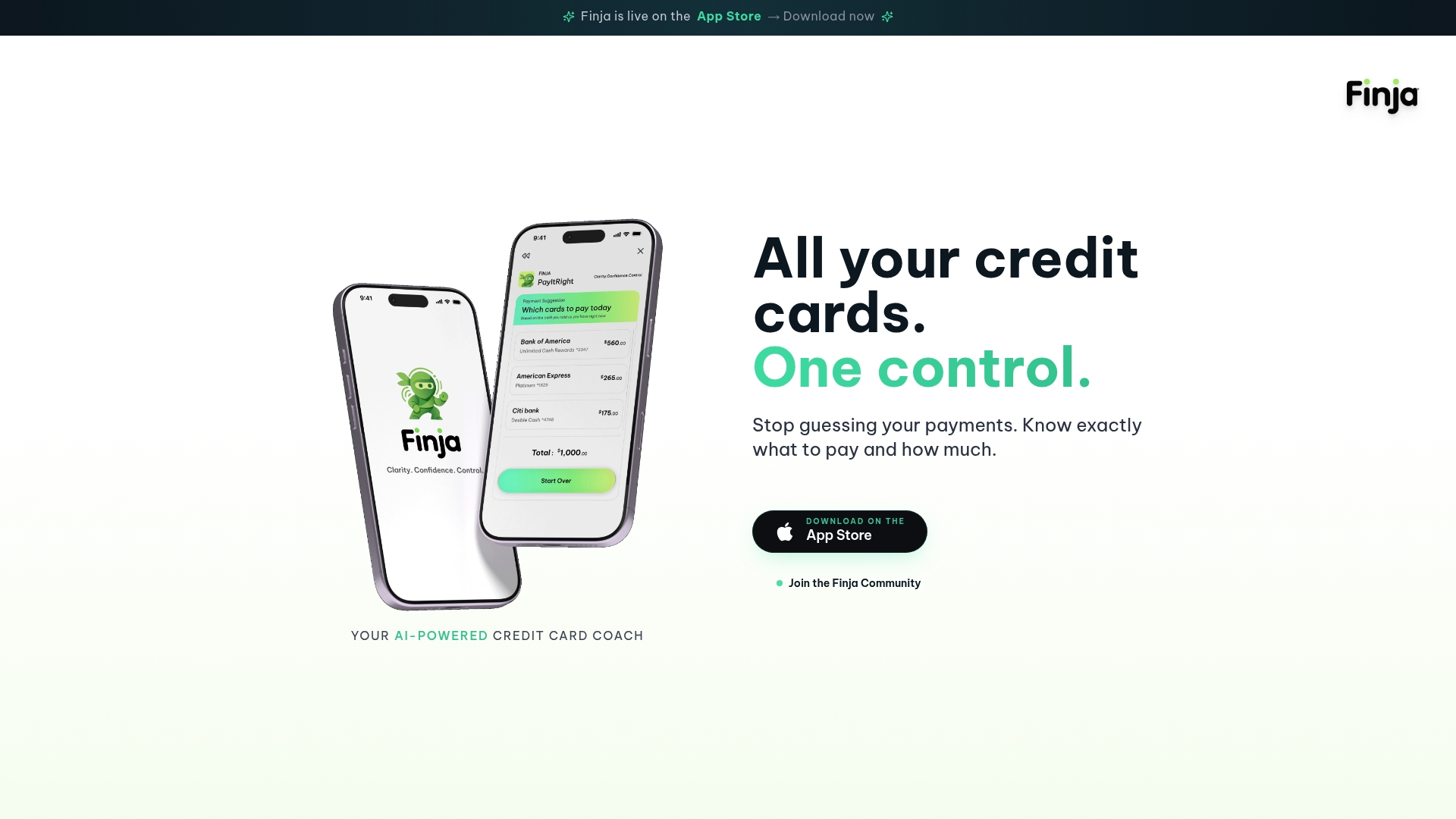
The app pulls every card into one consolidated view so you're not opening five separate statements to reconcile recurring charges. From there, it surfaces:
- Statement closing dates, due dates, APRs, and current balances for each card in one place.
- Payment timing recommendations aimed at reducing interest costs.
- Credit health tracking so you can see how a payment choice affects utilization before you make it.
If you're juggling multiple cards and tired of reconstructing this picture by hand every month, see how this app fits your cards at Myfinja.
FAQ
What should I record for each recurring charge on my cards?
Track the card's last four digits, merchant descriptor, expected amount, posting frequency, statement closing date, due date, APR, credit limit, current balance, and minimum payment. The CFPB's contract definitions outline these billing terms and why each one affects how a charge appears on your statement.
How often should I reconcile recurring charges against my statement?
Reconcile every billing cycle, right after each card's statement closes, rather than waiting for a monthly calendar date. This catches shifted posting dates and new or stopped charges before they affect your next payment decision.
Does paying a subscription charge early lower my interest?
Many issuers calculate interest daily on your average daily balance, so paying down a balance sooner, even before the due date, can reduce the interest that accrues, according to the CFPB. Paying in full also preserves your grace period on new purchases, while carrying a balance typically forfeits it.
How long do I have to dispute a subscription charge I don't recognize?
Federal rules generally require written notice to your issuer within 60 days of the statement that first showed the error, with the issuer acknowledging within 30 days and resolving within two billing cycles or 90 days, per FDIC guidance. Preserve your statement copy and the merchant descriptor before you contact the issuer.
Can Finja help me track recurring charges across multiple cards?
Yes, Finja consolidates every card into one view with statement closing dates, due dates, APRs, and balances, and offers payment recommendations aimed at reducing interest. It's built specifically for people managing several cards rather than tracking one account at a time.
Sources
- Credit card contract definitions | Consumer Financial Protection Bureau
- What You Need to Know About Credit and Debit Card Billing Issues | FDIC
- Mycreditunion