
Credit card float is the interest-free time between a purchase and the statement due date, and it's usable only if you pay the statement balance in full and preserve your card's grace period. Once you know your closing and due dates and keep a cash buffer to cover the statement, float becomes a scheduling tool rather than a risk. Miss either safeguard and the same mechanism turns into expensive revolving debt.
TL;DR:
- Using float effectively depends on paying the full statement balance on time and confirming your card offers a grace period for purchases.
- Purchases made right after your closing date can enjoy 50 or more days of interest-free float, while those just before might have less than a week.
- Missed full payments or carrying balances from previous cycles quickly erodes the interest-free benefit and can lead to high-interest debt.
- Managing multiple cards requires tracking each card’s closing and due dates carefully, ideally with automated tools or AI guidance.
- Float is a timing mechanism, not a way to spend extra money, so maintaining cash buffers and disciplined payment habits are essential.
Table of Contents
- What credit card float is and which transactions qualify
- How billing cycles, closing dates, and payment posting actually work
- Weighing the benefits against the real cost of getting it wrong
- A tactical playbook for using float without losing the grace period
- Three ways to get off the float, from instant to gradual
- Building a card-by-card float calendar you can actually maintain
- Applying the float calendar with help from an AI coach
- Float is a scheduling tool, not extra spending power
- Letting Finja run the calendar for you
- FAQ
- Sources
What credit card float is and which transactions qualify
Float works because of the grace period your card offers, the stretch between your billing cycle's closing date and your payment due date. Most cards include one, but issuers are not required to, and the period only stays interest-free when you pay the full statement balance by the due date. Pay less than that and new purchases typically start accruing interest immediately, with no grace period until you pay in full again.
Not every transaction gets this treatment. Cash advances usually accrue interest from the moment you withdraw, with no grace period at all, and the same often applies to balance transfers and convenience checks. Ordinary purchases are the main category that benefits.
To confirm your own card qualifies, check for a few things:
- Your most recent statement or card agreement mentions a grace period by name.
- You paid the prior statement balance in full, which is usually the condition for keeping it active.
- The transaction type is a standard purchase, not a cash advance or similar cash-equivalent transaction.
- You have not carried a balance that would already have triggered daily interest accrual.
Our guide on protecting your grace period walks through the specific dates that matter for each billing cycle.
How billing cycles, closing dates, and payment posting actually work
A billing cycle typically runs 28 to 31 days and ends on your closing date, the moment your issuer tallies every purchase, payment, and fee into a new statement. Your due date then falls roughly three weeks later. Everything you buy between one closing date and the next lands on the following statement, not the one that just closed.
Two balances matter here, and conflating them causes most float mistakes:
- The statement balance is the total as of your closing date. Paying this in full by the due date keeps your grace period intact.
- The current balance includes anything you have charged since the statement closed. You do not need to pay this part yet to avoid interest.
Our breakdown of statement balance versus current balance covers this distinction in more depth, since it trips up even experienced cardholders.
Payment timing also matters. Under Regulation Z's periodic-statement rules, issuers must credit your payment as of the date they receive it, and statements must generally be delivered at least 21 days before the due date. That 21-day floor is what makes the grace period workable in practice.
A simple example: say your card closes on the 10th of each month and the payment is due on the 5th of the following month. A purchase made on the 11th, one day after closing, will not appear on a statement until the cycle that closes a month later, and won't be due until roughly five weeks after that. A purchase made on the 9th, the day before closing, gets almost no float at all since it lands on the statement closing the very next day.
- Buy right after closing: maximum float, often 50 or more days before payment is due.
- Buy right before closing: minimum float, sometimes under a week.
Weighing the benefits against the real cost of getting it wrong
Used correctly, float lets you hold cash longer, align card payments with paychecks, and smooth cash flow for bills or inventory purchases without borrowing. For a small business, that can mean covering a vendor invoice with card spend, then paying the statement in full once customer payments land.
The risk side is steeper. The Federal Reserve's G.19 release put the aggregate average APR on accounts assessed interest at 22.15% in its most recent reported series. At such high rates, any balance you fail to pay off in full quickly erases whatever cash-flow benefit float gave you.
The grace period only protects you if you clear the statement balance every cycle. Carry a balance and you lose that protection along with any float advantage on new purchases.
The FTC's consumer education on minimum payments illustrates how fast this flips against you. A $300 purchase at 23% APR, paid down through $15 monthly minimums, took more than two years to clear and cost $82 in interest, nearly a third of the original purchase. Our piece on the minimum payment trap breaks down why minimums are structured to keep accounts "current" while interest keeps compounding.
A rule of thumb: if you are already carrying a revolving balance on any card, float stops being a useful strategy for that card. Focus on paying it down, covered in our APR explainer, before trying to optimize purchase timing.
- Benefit: weeks of interest-free use of your own cash between purchase and due date.
- Benefit: payments align with paycheck timing instead of an arbitrary due date.
- Risk: a single missed full payment can void the grace period on your next cycle.
- Risk: cash advances and carried balances accrue interest immediately, float or not.
A tactical playbook for using float without losing the grace period
The highest-float window is the day or two right after your statement closes. A purchase made then rides the longest possible stretch before it's even billed, let alone due, often giving you seven or more weeks before payment is required. Buying the day before closing gives you almost none, so if timing is flexible, push nonurgent purchases to just after your closing date.
You can also change your due date with most issuers, usually through a phone call or an online request, to land a few days after payday. That removes the scramble to find funds and keeps your buffer intact. Our guide to due date management covers how to request the change and what to expect from your issuer.
Autopay removes the human error factor, but set it up carefully:
- Set autopay to pay the statement balance in full, not the minimum, which is the default on many issuer portals.
- Test the linked bank account with a small manual payment first to confirm it clears without delay.
- Build in a buffer of two to three business days before the due date in case of posting delays.
- Keep a second funding source ready in case the primary account runs short.
Pro Tip: Set a calendar reminder two days before your statement closes, not two days before it's due, so you have time to adjust purchase timing before the cutoff.
Divide the balance by the number of promotional months and set a firm payoff date before the rate reverts, since the discipline that makes float work (paying in full, on time) is the same discipline a 0% offer requires.
For small-business owners, vendor-card timing carries extra weight. A business card used to float a vendor payment needs the same full-balance discipline, plus reconciliation against whoever handles the books, so a delayed statement does not turn into a missed payment and a liability dispute. Review authorized-user limits regularly, since one employee's purchase can shrink the float buffer for the whole account. Our note on payment timing and fees covers how posting delays specifically affect scores and late fees.
Three ways to get off the float, from instant to gradual
If you are relying on float to cover spending you can't otherwise afford, here are three ways out, ranked by speed.
- Instant. Transfer funds from savings or a linked account right now to fully cover the next statement balance. Pay it immediately rather than waiting for the due date, which stops interest from starting and resets your grace period cleanly.
- Fast. Cut discretionary spending for the rest of this cycle and redirect that money to the card. Review subscriptions, dining, and nonessential purchases; reallocate any available funds from other budget categories; pay down the gap before the next statement closes rather than waiting for the due date.
- Slow. Keep paying the statement balance in full each month while building a one-month expense buffer in a separate account. Add a fixed amount to that buffer every payday, and once it covers a full statement, you are no longer dependent on timing your paycheck around your due date.
For each approach, the moment you get paid, move the planned amount to the account you pay your card from before anything else claims it. When the statement arrives, check it against your records within 48 hours so any discrepancy surfaces while you can still dispute it before the due date. Our debt-free strategy guide extends the slow path into a full payoff plan for anyone carrying balances on multiple cards.
Building a card-by-card float calendar you can actually maintain
A float calendar is just a tracking sheet, one row per card, that tells you when money needs to move. Record these fields for each card:
- Closing date and due date for the current cycle.
- Statement balance and current balance, updated after each closing date.
- APR, so you can prioritize which card to pay down first if a balance ever carries.
- Autopay account and its cutoff time for same-day processing.
To calculate your maximum interest-free days on one card, subtract today's date from the due date, then add the days remaining until the next closing date. A card that closes on the 10th and is due on the 5th gives a purchase made on the 11th about 55 days of float: 30 days until the next closing date, plus another 25 days until that statement's due date.
Weekly, check your calendar for any card approaching its closing date and confirm your autopay account has enough funds for the upcoming statement. After each due date passes, verify the payment posted by checking your account within a day or two, since Regulation Z requires issuers to credit payments as of receipt, not days later.

Handle exceptions as they come up. If a statement arrives later than usual, contact your issuer, since federal rules call for mailing at least 21 days before the due date, but you still need confirmation of your actual payment deadline. Flag disputed charges immediately so they don't distort your statement balance, and treat any cash advance as due in full now, since it won't carry a grace period regardless of your calendar.
Applying the float calendar with help from an AI coach
Keeping a float calendar by hand works for one or two cards. Past that, an AI-powered coach can consolidate every card into one view, surface which statement needs attention first, and flag when a balance is at risk of losing its grace period, without requiring you to track spreadsheets manually.
A few priority rules hold regardless of what tool you use:
- Protect the grace period on every card before optimizing anything else.
- If any card carries a balance, prioritize paying down the highest-APR one first.
- Only after balances are clear should you fine-tune purchase timing for float.
Whatever app you connect your cards to, check its privacy policy and data permissions before linking accounts, since you are granting read access to real financial data.
Float is a scheduling tool, not extra spending power
The temptation with float is to treat the grace period as a cushion for spending you haven't actually budgeted for. It isn't. It's a timing mechanism that only works when the money to cover the statement already exists somewhere in your accounts. The discipline is the whole strategy: know your dates, keep a buffer, and never let float substitute for an emergency reserve you'd otherwise need anyway.
Letting Finja run the calendar for you
Tracking closing dates, due dates, and balances across several cards by hand is where most float strategies break down. Finja consolidates every card into one view and gives AI-powered guidance on which balance to pay and when, aimed at cutting interest costs rather than chasing rewards.
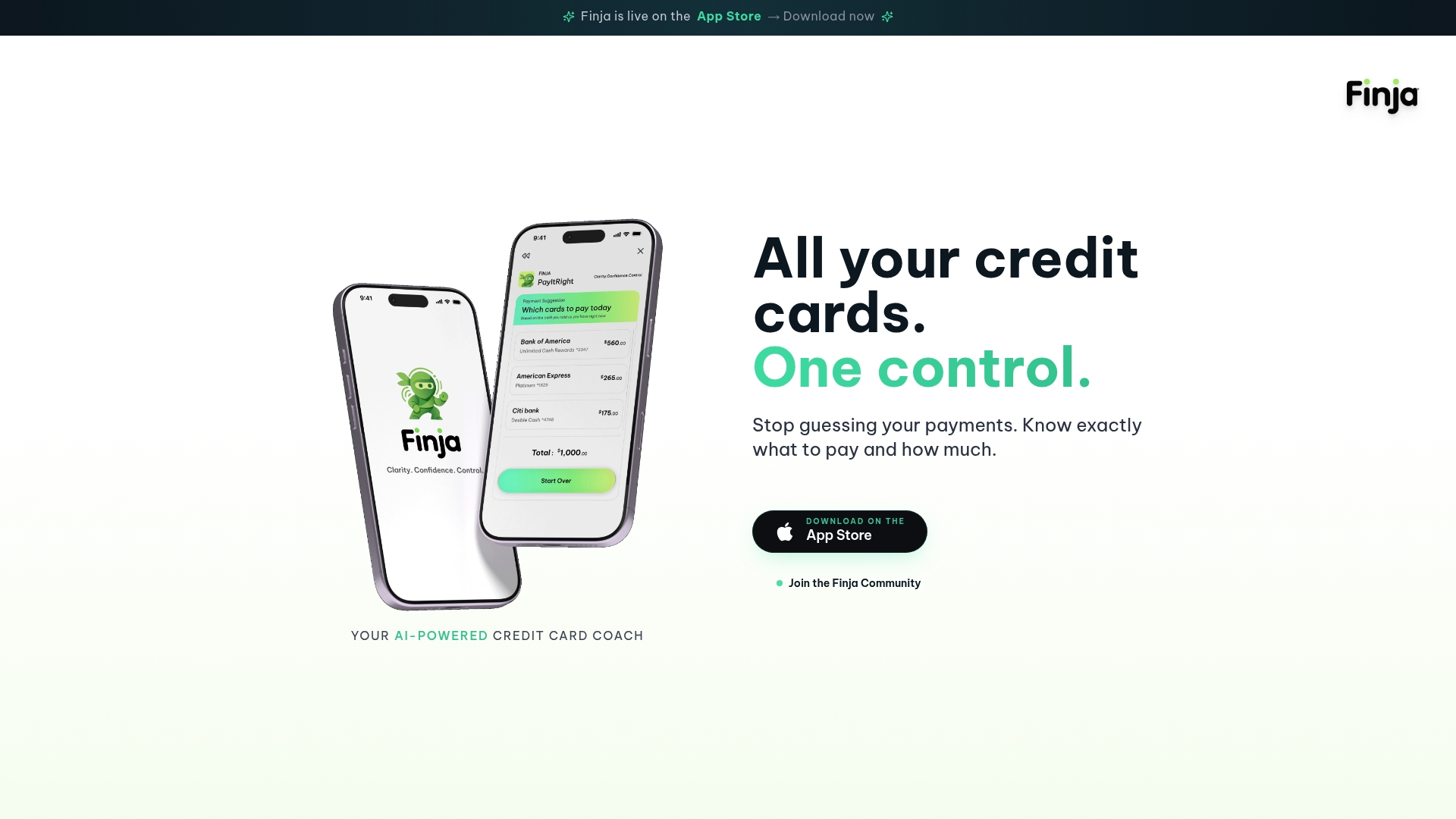
- Consolidated view of all your cards in one place, no separate logins or spreadsheets.
- Payment timing recommendations built around keeping your grace period intact.
- Credit health tracking alongside the payment guidance, not a general budgeting add-on.
If you're managing float across multiple cards and want the calendar built for you, see how it works at Finja.
FAQ
What is the 2/3/4 rule for credit cards?
There's no official 2/3 rule from the CFPB, Federal Reserve, or FTC; the term is informal advice that varies by source. The safest guidance remains the documented one: pay your statement balance in full by the due date to keep your grace period.
How to pay off $30,000 in debt in 1 year?
Paying off a large balance in a year generally requires cutting the amount into monthly targets and prioritizing the highest-APR balances first. At the average APR of 22.15% reported by the Federal Reserve, interest adds substantially to that monthly target, so a written payoff schedule and reduced new spending matter more than the specific method chosen.
Is credit card churning illegal?
Credit card churning, opening cards for rewards and closing them repeatedly, is not illegal, but it is discouraged by issuers and can affect your credit profile and approval odds for future cards. It also has nothing to do with float, which depends on grace periods, not account openings.
Is 3 credit cards in 3 months too many?
Opening three cards in three months can lower your average account age and trigger multiple hard inquiries, which may affect your credit score more than opening one card occasionally. For float purposes, what matters is tracking each card's closing and due dates consistently, which gets harder with more open accounts at once.
Sources
- What is a grace period for a credit card? | Consumer Financial Protection Bureau
- G.19 Consumer Credit (Current) | Federal Reserve
- Debt relief and credit repair consumer education | FTC