
A credit card can cover an emergency in the moment, but it works as a short-term loan, not as savings. The bill arrives with interest, the limit can shrink right when you need it, and the balance can pull your credit score down. The better setup is a small cash cushion kept separate from spending, with a card as a last-resort backup you manage on purpose.
This guide shows where the card-as-emergency-fund idea breaks down, how much cash to hold if you already carry balances, and how to use your cards without letting an emergency turn into long-term debt.
TL;DR
- A card gives you access to money, not money of your own. Interest and fees can make the original expense larger.
- Issuers can lower limits or close inactive accounts, so a card may not be available when you need it.
- If you carry high-interest balances, a starter cushion of roughly $1,000 to $2,500 is a common middle path.
- Automate small deposits into a separate account and send windfalls there first.
- Keep a plan for the card backup: know your limits, utilization and payoff timing before the emergency hits.
Table of Contents
- Why a credit card is not an emergency fund
- Three ways a card backup can fail you
- When a card still makes sense in an emergency
- How much cash should you hold if you carry card debt?
- Where to keep emergency cash
- Building the cushion while you pay cards
- Making the card backup work for you
- When an expense becomes a crisis
- Perspective
- Put your cards on a plan with Finja
- FAQ
- Sources
Why a credit card is not an emergency fund
An emergency fund is cash set aside for unplanned costs such as car repairs, medical bills or lost income, as the Consumer Financial Protection Bureau describes it. The key word is set aside. It exists before the problem does.
A credit card is the opposite. You spend first and pay later. The CFPB notes that setting money aside can help you avoid relying on credit cards or loans, and that using a card for an emergency can make the original expense larger because of interest and fees.
There is also a subtler problem. Using a card as your fund means borrowing from your future self. If the emergency is a job loss, your future income is exactly what is in doubt, and that can start a cycle of financial distress.
None of this means a card is useless in a crisis. Cards are fast, widely accepted and often carry purchase protections. The point is to treat them as a backup layer, not the foundation.

Three ways a card backup can fail you
The limit may not be there
Issuers can lower credit limits or close inactive accounts. A card you tucked away for emergencies might be smaller or gone at the worst possible time. If you have already been hit by a limit cut, our 72-hour plan after a credit limit decrease walks through what to do first.
The balance can hurt your score
Charging a large emergency expense raises your credit utilization, the share of your available credit you are using. Higher utilization can damage your credit score, which makes the next loan or card more expensive. That is a real cost even if you pay the bill on time.
If you do end up with a big balance, timing matters. Paying before the statement closes can lower the utilization that gets reported. We break down the mechanics in timing tactics to cut credit utilization and in how to lower utilization in one or two billing cycles.
The interest compounds
High-rate card debt grows quickly. A $2,000 car repair that sits on a card for months costs more than $2,000, and every dollar of interest is a dollar not going to savings. This is why the usual advice is to keep emergencies off revolving balances when you can.
When a card still makes sense in an emergency
A card is a reasonable tool when three things are true:
- You have a cash cushion that covers the first stretch of the problem.
- The card has a limit large enough that the expense will not push utilization sky-high.
- You have a payoff plan that you can start the same week.
Some people also use a charge card, which must be paid in full each month, for small, manageable emergency expenses. That route removes the revolving balance but demands cash flow to clear the bill, so it suits modest costs, not a $5,000 surprise.
The common thread is that the card smooths timing. It does not replace savings.
How much cash should you hold if you carry card debt?
This is where most readers get stuck. Full emergency funds of three to six months of expenses feel out of reach when balances are growing at double-digit rates.
Experts often recommend a starter fund of $1,000 to $2,500 while you pay off high-interest debt. The idea is a small safety net for minor setbacks without stalling your progress on the expensive debt. The same reporting notes that keeping a minimal fund while aggressively paying down high-rate card balances is often the right move because the interest compounds so quickly.
The math behind it is simple. Cards are technically a form of emergency liquidity, but an exceptionally expensive one, and when rates are high, prioritizing debt reduction can come out ahead of building a large cash reserve.
Here is how that plays out in practice:
| Your situation | Reasonable starting move |
|---|---|
| High-rate balances on several cards, no savings | Build a starter cushion in the $1,000 to $2,500 range, then put extra cash toward the highest-rate card |
| Low or no balances, little savings | Build savings steadily toward a larger cushion, with a card as backup only |
| Unstable income | Lean toward a bigger cushion sooner, since repayment ability is the risk |
| Balances you pay in full monthly | Keep the card for convenience, and build cash so a bill never becomes a balance |
These are starting points, not rules. Your own bills, dependents and job stability decide the right number. If you are unsure, a nonprofit credit counselor can look at your whole budget.
Where to keep emergency cash
The CFPB advises keeping emergency savings somewhere safe and accessible, where you are not tempted to spend it on non-emergencies. Its options include a dedicated bank or credit union account, a prepaid card, or cash at home or with a trusted person.
A few practical notes:
- Separate account. A savings account at a different institution than your everyday checking adds just enough friction to stop casual spending.
- Insurance. Money in a bank savings account is insured by the U.S. government, which cash under a mattress is not.
- Cash at home. The CFPB itself warns about theft, loss or destruction, so keep only a small amount this way.
- Prepaid card. Handy for access, but check the fees and protections before you load it with your cushion.
The goal is a balance you can reach within a day or two without touching your credit line.
Building the cushion while you pay cards
You do not need a big raise to start. The approach is small, automatic and boring.
- Automate it. The FDIC suggests direct deposit or automatic withdrawals from checking so saving happens without a decision each month. Even a modest amount per paycheck adds up.
- Route windfalls. Tax refunds and bonuses can go straight to savings. Truist also points to redirecting the cash from a paid-off debt into your emergency fund once the balance is gone.
- Set a spending ceiling on each card. Fewer surprise charges means fewer reasons to dip into the cushion. Our guide to setting credit card spending limits in five steps shows how.
- Keep old cards open when you can. A card with a long history and an available limit helps your utilization. Here is why canceling old cards hurts your score.
Sequence is the trick. Starter cushion first, then aggressive payoff of the most expensive balance, then grow the cushion toward a fuller fund. Juggling several cards makes that sequence hard to follow by hand, which is where tooling helps.
Making the card backup work for you
If your emergency plan includes a card, treat it like equipment you maintain, not something you grab in a panic.
- Know your headroom. Check each card's limit and current balance so you know how much you could charge without a utilization spike.
- Use the card with the lowest rate first. If you carry balances on several cards, the one with the least expensive interest is the least bad place for a new charge.
- Plan the payoff before the swipe. Decide how much per month you can send to the new balance and when it will be gone.
- Watch for a score drop. If your score moves after a large charge, triage it by cause rather than guessing.
- Track the bigger picture. Utilization, payment history and balances together tell you whether you are recovering. Our guide to credit card financial health indicators lists what to watch.
When an expense becomes a crisis
Sometimes the emergency outgrows any cushion. Two official resources are worth knowing.
If you cannot pay your card bill after a disaster, your card company may be able to help, and the CFPB offers tips on explaining your situation to the company. Call before you miss a payment, not after.
In a presidentially declared disaster area, D-SNAP may provide short-term funds for food. Check eligibility on the official page for your state.
In both cases, early contact beats silence. Lenders and agencies have more options for people who reach out first.
Perspective
Most people who ask whether a card can be an emergency fund already own several cards. The honest answer is that the card is a tool for timing, and what hurts is not having a plan for the bill that follows.
At Finja, we built our product around that gap. We focus on reducing interest costs and improving credit health, not on chasing rewards, because for someone juggling multiple cards the expensive mistakes are paying the wrong card, at the wrong time, in the wrong amount.
That is why we put every card in one place and use AI guidance on payment timing and amounts. When an emergency does land on a card, our aim is that you already know which card to use, how much to pay, and when, so a one-time expense does not become a year of interest.
We think of Finja as a dedicated credit card coach rather than a general budgeting tool, and the emergency fund conversation is where that difference shows up most.
Grace K.
Put your cards on a plan with Finja
If your backup plan involves cards, you need to see them together. Finja is an AI-powered credit card management app for people with multiple cards. It brings your accounts into one view, recommends payment decisions designed to reduce interest, and tracks your credit health so a surprise expense is easier to absorb.
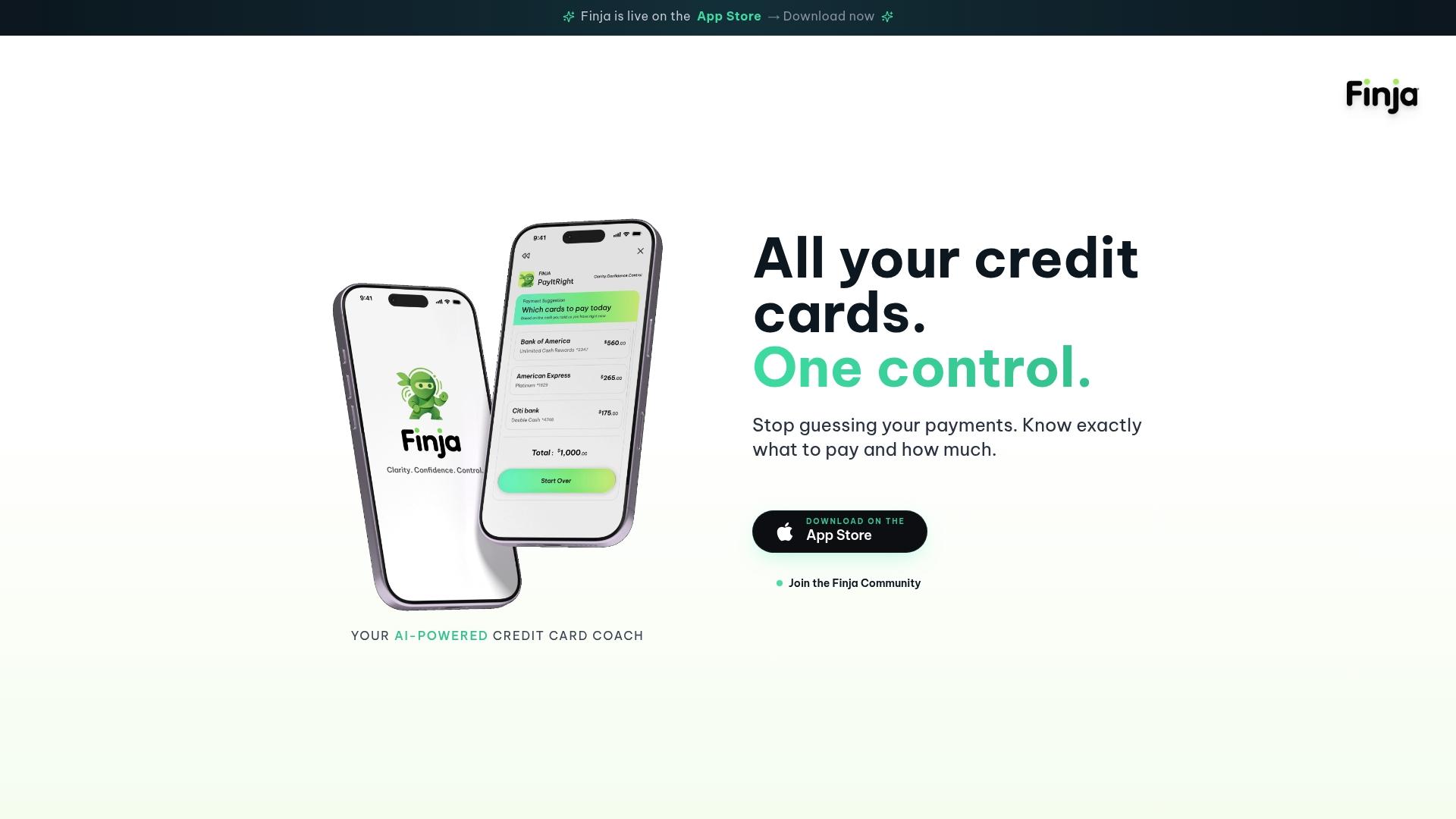
See how it works at Finja, your AI-powered credit card coach, and set up your cards before the next surprise bill arrives.
FAQ
Can I use my credit card as my emergency fund?
You can use it in an emergency, but it is not a substitute for savings. Interest and fees can make the expense larger, and the issuer can lower your limit or close an unused account. A small cash cushion with a card as backup is the safer combination.
How much should I save first if I have credit card debt?
Many experts suggest a starter fund of about $1,000 to $2,500 while you pay down high-interest balances. That covers minor setbacks without stalling your debt payoff. If your income is unstable or you support others, you may want more sooner.
Should I pay off my cards or build savings first?
It depends on your interest rate and income stability. With high rates, paying down the balance often saves more than a large cash reserve earns, as long as you keep a minimal cushion. Build the starter fund first, then put extra money on the most expensive card.
What can I use instead of a credit card in an emergency?
The CFPB lists a dedicated bank or credit union account, a prepaid card, or a small amount of cash kept at home or with a trusted person. A charge card paid in full each month can also work for small expenses. Keep any cash at home limited, because of theft and loss risk.
Will a big emergency charge hurt my credit score?
It can. A large balance raises your utilization, which can lower your score. Paying the balance down before the statement date, or spreading charges across cards with room, can reduce the effect.
Sources
- An essential guide to building an emergency fund, Consumer Financial Protection Bureau
- Why credit cards aren't an ideal emergency fund
- Credit cards for emergencies and building an emergency fund
- How much emergency savings to keep while paying off debt, CBS News
- How to think about an emergency fund when you're in debt, CNBC
- Your savings: good for you, your family and your peace of mind, FDIC
- Should you save money for your emergency fund or pay debt? Truist
- FDIC Consumer News, May 2021
- Get help with bills after a disaster, USAGov
- D-SNAP disaster food relief, USAGov