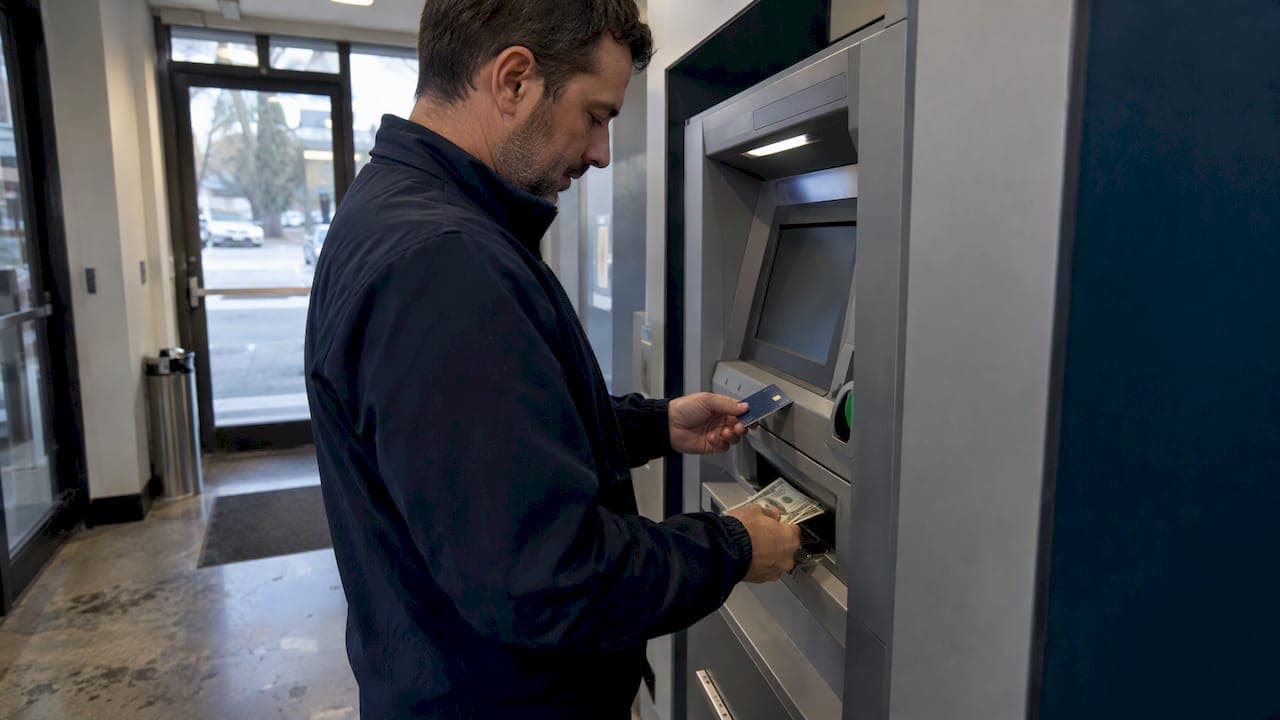
Cash advance interest is charged at its own APR, usually higher than your purchase rate, and it starts accruing on the transaction date with no grace period. Issuer fees are added to the same cash-advance balance, so the fee earns interest too. The cheapest cash advance is the one you repay immediately.
TL;DR:
- Issuers classify convenience checks, wire transfers, foreign currency, money orders, and gambling purchases as advances, even when no physical cash changes hands.
- Your cash advance limit may be lower than your overall credit limit, so check your card agreement or card back before withdrawing.
- Cash advance fees often use a flat minimum or a percentage of the withdrawal, whichever is greater, so larger advances can carry higher upfront charges.
- When purchases and advances coexist, payments above the minimum must go to the highest APR balance, but issuers may allocate the minimum under their terms.
- A personal loan, bank line of credit, or savings withdrawal generally costs less than a card advance; contact your issuer if repayment is difficult.
Table of Contents
- What counts as a cash advance on your card?
- Why is the cash advance APR higher, and when does interest start?
- How is cash advance interest calculated each day?
- How do transaction fees and ATM fees raise the cost?
- How do Regulation Z payment rules affect paying down a cash advance?
- What does a $500 cash advance really cost?
- How can you reduce or avoid cash advance costs?
- Where should a cash advance sit in your multi-card plan?
- Finja can coach your payments toward lower interest
- FAQ
- Sources
What counts as a cash advance on your card?
A cash advance is any transaction where you use your credit line to get cash or something that works like cash. Card issuers place these transactions in a separate balance category with their own rate, fee and, often, their own limit. Knowing what lands in that category helps you spot it before it shows up on a statement.
The Consumer Financial Protection Bureau's contract definitions show issuers classifying these common transactions as cash advances:
- ATM withdrawals made with your credit card
- Cash obtained from a bank teller or another cash source
- Wire transfers funded by your card
- Foreign currency purchases and traveler's checks
- Money orders
- Lottery tickets, gambling chips and wagers
- Cashing access checks tied to your card
That last item catches people off guard. The FDIC explains that convenience checks mailed by your issuer are treated as cash advances in many card agreements. They usually carry the cash advance APR and a fee based on a percentage of the check amount.
Issuers call things like casino chips and money orders "cash equivalents." You never touch a bill, but the card company treats the purchase as cash. A swipe at a casino cage may post as an advance even though it looked like a normal card purchase.
Many issuers also set a cash advance limit that sits below your overall credit limit. If your card has a $5,000 limit, your cash advance limit might be a fraction of that. Your agreement or the back of your card tells you where yours sits.
Why is the cash advance APR higher, and when does interest start?
Your cardmember agreement lists a separate cash advance APR, and Experian notes that this rate is typically higher than the purchase APR. Issuers price it that way because cash is riskier and more costly for them to fund than ordinary retail spending. They also know borrowers who reach for cash may be under financial pressure.
Look at the pricing table in your agreement and you will often see the rate written as a formula, such as the prime rate plus a set number of percentage points. That is why the rate can move when the prime rate does. A sample issuer pricing table filed with the CFPB shows cash advance APRs in the mid-to-high 20% range and states that interest on cash advances begins on the transaction date.
The bigger shock is timing. Purchases usually come with a grace period: pay your full statement balance by the due date and you owe no interest on them. Cash advances do not get that courtesy.
The CFPB notes that interest on a cash advance commonly starts as soon as the cash is withdrawn. Paying your statement in full does not erase interest already charged on the advance.
So a higher rate and an earlier start compound the problem. Even a short-lived advance carries a cost you cannot avoid by paying on time.
How is cash advance interest calculated each day?
Issuers use a daily periodic rate (DPR) applied to your average daily balance (ADB). The CFPB explains that the daily periodic rate is the APR divided by 365. Issuer agreements, like this Synchrony pricing table, describe applying that rate to the balance in each category, so your cash advance balance gets its own calculation.
Here is the process:
- Divide the cash advance APR by 365 to get the daily periodic rate.
- Take that day's cash advance balance, including any fee and unpaid interest already added.
- Multiply the balance by the DPR to get that day's interest.
- Repeat every day of the billing cycle, then add up the daily amounts.
- Interest posts to your account, and the next cycle starts from the higher balance.
Fees can join the cash-advance balance and accrue interest. Check your agreement to see how interest is calculated.
For an illustration, use the APR and balance shown in your card agreement. Divide the APR by 365 to get the daily periodic rate, then apply that rate to the cash-advance balance. The interest adds to the cost, along with any fee.
The ADB is simply your daily balances averaged across the cycle. Repay half the advance midway through and your average drops, which trims that cycle's interest. Every day the full balance stays open, you pay for it.

How do transaction fees and ATM fees raise the cost?
Fees are the second layer of cost, and they land immediately. Most card agreements charge either a flat amount or a percentage of the advance, whichever is greater.
Here is what to watch for:
- Flat versus percentage: Small advances usually trigger the flat minimum. Larger ones trigger the percentage, so the fee scales up with the amount you borrow.
- ATM operator fees: The ATM owner can charge its own fee on top of your issuer's. These are separate charges, so a single withdrawal can cost you twice before interest even enters the picture.
- Fee placement: Experian explains that cash advance transaction fees are usually added to the cash-advance balance, which means the fee itself accrues interest from the day it posts.
- Foreign cash: Withdrawing cash abroad can stack currency conversion costs on top of the cash advance fee and the ATM operator's fee.
Add it up and the effective cost of a small, short advance can be steep. A fee based on the amount, charged upfront, can make a cash advance costly even if you repay it quickly. Check your own agreement's fee formula before you ever withdraw.
How do Regulation Z payment rules affect paying down a cash advance?
If you carry both purchases and a cash advance, the order your payment is applied matters. Under CFPB Regulation Z, section 1026.53, when you pay more than the required minimum, the issuer must apply the excess to the balance with the highest APR first. The minimum payment itself can be allocated however the issuer's terms allow, which often favors the lower-rate balances.
What that means in practice:
- If your cash advance APR is higher than your purchase APR, any amount above the minimum targets the cash advance first.
- Paying exactly the minimum may leave the cash advance largely untouched while its interest keeps building.
- If you have two balances at different rates, an extra $200 lands on the pricier one automatically, but only the part above the minimum.
- A promotional or lower-rate balance gets paid down last, which is usually the order you want.
The takeaway is simple: the biggest payoff comes from paying well beyond the minimum, because every extra dollar goes to your most expensive debt. Pay the minimum and you leave the costliest balance growing.
Pro Tip: Make your extra payment a few days before the statement closes. A lower balance earlier in the cycle reduces your average daily balance, so less interest accrues.
What does a $500 cash advance really cost?
The cost of a cash advance depends on your card's APR, fee, balance, and how long you carry it. Check your agreement for the fee and rate, then use those terms to estimate the cost. Any new transactions or missed payments can change what you owe.
An upfront fee can make up a large part of the cost, even when you repay quickly. Carrying the balance longer allows more interest to accrue.
Even a short-lived cash advance can be costly, mostly because of the upfront fee.
Because the fee sits inside your balance, you are also borrowing it. That is why the ADB starts at $525, not $500.
How can you reduce or avoid cash advance costs?
The best move is not to take the advance. If it is already done, these steps limit the damage:
- Repay it right away. Interest runs daily, so every day you shorten the loan saves money.
- Avoid a second advance. Each one brings another fee and another balance charging the higher rate.
- Look at lower-cost sources first. A personal loan or a bank line of credit generally costs less than a card cash advance, and a withdrawal from savings costs nothing.
- Call your issuer. Ask about hardship options if you cannot repay quickly. Some issuers will discuss a plan.
- Pay more than the minimum. Under the allocation rule above, the extra goes to your high-APR balance first.
- Check where the money went. If the advance covered a tax bill, specialist help such as these tax debt reduction tips may point you to cheaper options than borrowing on a card.
If you hold several cards, tracking which balance carries which rate gets complicated fast. Our guides on multiple credit card management and reducing effective APR across cards walk through how to build a payoff order. Payment-optimization tools can also help multi-card holders direct each payment where it saves the most interest.
Pro Tip: Write down every balance and its APR on one page. The highest rate gets your extra dollars first, and cash advances almost always top that list.
Where should a cash advance sit in your multi-card plan?
I've spent my time studying how cardholders sequence their payments, and one pattern repeats: people treat a cash advance like a purchase and let it ride in the background. That is the wrong instinct. Because it starts accruing on day one at a higher rate, a cash advance belongs at the top of a repayment list, ahead of balances that have grace periods or lower APRs. Pay it first, then return to your usual order. Tools like Finja exist for exactly this kind of prioritization across several cards.
— Grace K.
Finja can coach your payments toward lower interest
We built Finja as an AI-powered credit card management app for people juggling multiple cards. It shows all your cards in one place and recommends payment timing and amounts so more of your money goes toward reducing interest. When you can see where each dollar saves the most, you are less likely to reach for high-cost borrowing like a cash advance in the first place.
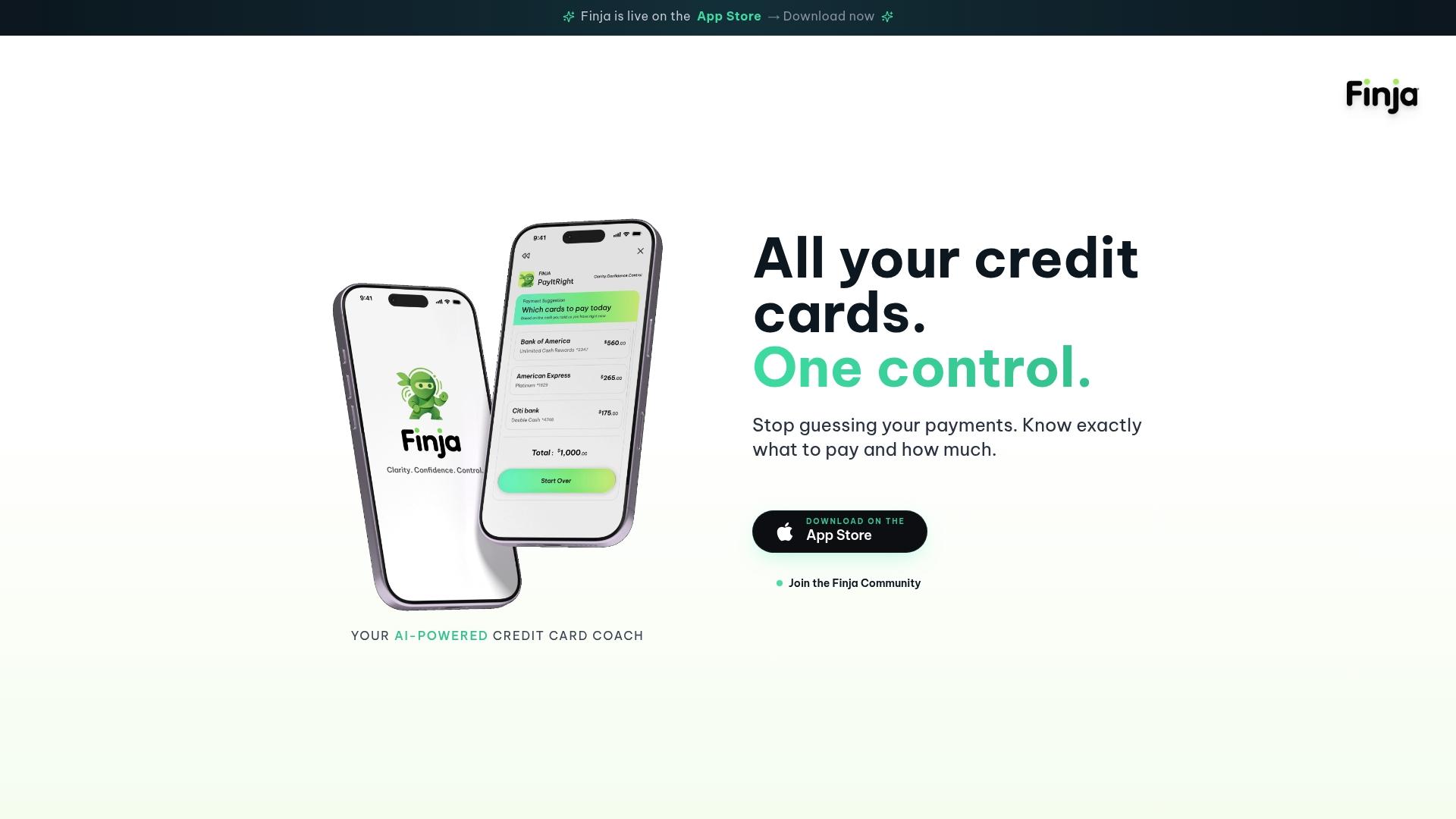
- One view of every card and balance
- Guidance on which payment to make first
- Credit health tracking to keep you on course
Ready to take the guesswork out of paying down cards? Learn more about Finja, your AI-powered credit card coach.
This article is general information, not a substitute for advice from a qualified financial advisor. Consult a qualified financial professional about your own circumstances before acting on anything here.
FAQ
What does cash advance interest mean on a credit card?
It is the interest charged on cash you borrow against your card, billed at a separate cash advance APR. Experian notes this rate is typically higher than the purchase APR. Interest also begins immediately, with no grace period.
How bad is it to do a cash advance on a credit card?
It is one of the more expensive ways to borrow. You pay an upfront fee, a higher rate and interest from day one, and the CFPB calls cash advances often expensive. The cost is manageable only if you repay almost at once.
How do you pay off a cash advance on a credit card?
Pay more than the minimum. Under Regulation Z, the excess goes to your highest-APR balance first, which is usually the cash advance. Paying sooner also lowers the interest that builds each day.
Does the transaction fee earn interest too?
Yes in most cases. Experian explains that the fee is typically added to the cash-advance balance, so it accrues interest from the day it posts. Check your own agreement for the exact terms.