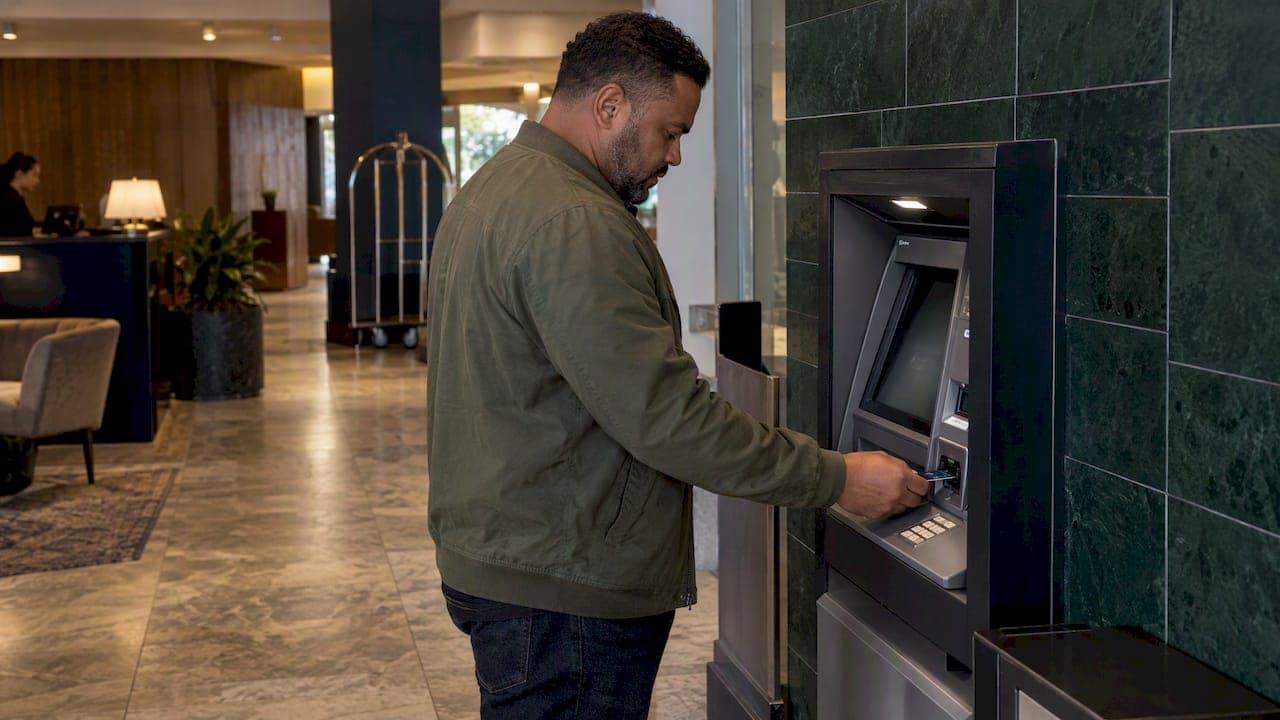
The best way to avoid a credit card cash advance is to treat your card's cash feature as off limits and line up a cheaper source of money before you need it. A cash advance usually costs more than a purchase on the same card, and it starts costing you immediately. Below you'll find what a cash advance really costs, the situations that trigger one by accident, the alternatives worth trying first, and how to pay down a balance you already have.
TL;DR
- A cash advance has no grace period. Interest starts the day you take the money, usually at a higher rate than purchases, according to the CFPB.
- Most issuers also charge an upfront fee, commonly the greater of $10 or 5%, so small advances are the most expensive per dollar.
- Cheaper options include a credit union payday alternative loan, a 0% intro APR offer (read the transfer fee first), help from a nonprofit, or a call to the creditor.
- Cash advances also hide in places you may not expect: convenience checks, some money transfers and gambling deposits. Check how a transaction will be coded before you confirm it.
- If you already have a cash advance balance, pay more than the minimum. Federal rules send the extra to your highest-APR balance first.
Table of Contents
- Why a cash advance costs more than it looks
- The cash advances you don't mean to take
- Alternatives to try before a cash advance
- Our perspective
- If you already have a cash advance balance
- How Finja helps you stay out of cash advances
- A short checklist
- FAQ
- Sources
Why a cash advance costs more than it looks
A cash advance lets you pull cash against your credit line. It feels like a purchase, but the card treats it as a different product with its own price list. Three things stack up.
No grace period. On purchases, many cards let you avoid interest if you pay the statement balance in full by the due date. Cash advances don't get that. The CFPB says interest starts as soon as you withdraw cash. If you want to understand how that purchase grace period works and why cash skips it, our guide to the credit card grace period walks through it.
A higher rate. The same CFPB page notes that the rate is usually higher than the purchase rate. Your latest statement lists the current cash advance rate, and the CFPB suggests checking your card terms or calling the company about the cash advance limit and fees before you act.
An upfront fee. The fee may be a flat amount or a percentage of what you withdraw, depending on your card. A CFPB review of agreements from seven issuers found that most charge the greater of $10 or 5%. The same report notes that minimum interest charges, from $0.50 to over $2, add to the cost of smaller transactions.

A worked example

Say you take a $200 advance. Under a "greater of $10 or 5%" term, 5% is $10, so you pay $10 before a single day of interest. That is 5% gone on day one.
Now take $500. The fee is $25. Assume a hypothetical cash advance APR of 29.99% (your card's will differ). Daily interest is about $0.41, so a month of carrying that $500 adds roughly $12. You paid about $37 to use $500 for 30 days, which is around 7.4% of the amount for one month.
| Advance | Fee (greater of $10 or 5%) | Interest, 30 days at a hypothetical 29.99% | Total cost | Cost as % of advance |
|---|---|---|---|---|
| $100 | $10 | about $2.47 | about $12.47 | about 12.5% |
| $200 | $10 | about $4.93 | about $14.93 | about 7.5% |
| $500 | $25 | about $12.33 | about $37.33 | about 7.5% |
| $1,000 | $50 | about $24.65 | about $74.65 | about 7.5% |
The numbers are illustrations, not a quote from any issuer. The pattern is real: the fee hits first, interest runs from day one, and small advances are the worst deal per dollar. For more worked scenarios, see our high interest cost examples, and for the day-one mechanics, our piece on cash advance interest.
The cash advances you don't mean to take
Many people who want to avoid cash advances never walk up to an ATM with a credit card. They get charged through a side door. Watch these.
Convenience checks
Cheques that arrive in the mail from your issuer look like free money. The FDIC explains that these convenience checks are cash advance loans, often charged a higher rate than purchases and usually a transaction fee. Many lenders begin charging interest when the check posts, even if your purchases have a grace period. Shred the ones you won't use, and read our breakdown of convenience check risks before you sign one.
Money transfers and funding other accounts
Sending money to a person, loading a prepaid or payment account, or buying something that works like cash can be coded as a cash advance. Chase, for example, says you can avoid its cash advance fees and APR by using a debit card or checking account through a third-party payment service, or Zelle in its app or website. Other issuers set their own rules, so look at your card agreement.
Gambling deposits
The CFPB reported that some cardholders were caught off guard by cash advance fees and interest on sportsbook transactions. If you fund any betting or similar account, use a debit card or bank transfer, and check your statement to see how the first deposit was coded.
A habit that catches all of these
Before you confirm any payment that isn't a normal store purchase, stop at the final payment screen and read the line items and the payment method. It's the same discipline travelers use to avoid surprise award change fees: the charge you didn't expect is almost always visible on the last screen, if you look. After the transaction, check the statement within a day or two and call the issuer if something posted as cash.
Alternatives to try before a cash advance
Which option fits depends on how much you need, how fast, and how soon you can repay. Start at the top and work down.
1. Ask whether you need cash at all
If the real problem is a bill, call the creditor first. The CFPB lists negotiating with creditors or debt collectors about a bill as an alternative to expensive short-term credit, along with nonprofit and community groups that offer advances or emergency credit. A payment plan or a due date change costs nothing. Cash advance fees do.
2. A credit union payday alternative loan
Federal credit unions can offer payday alternative loans, known as PALs. The maximum interest rate on these loans is 28 percent, and they must be closed-end, meaning a fixed repayment schedule rather than a revolving balance. That can still be a high rate, but it is a defined cost with an end date. You generally need to be a member of the credit union, so ask what the membership requirements are in your area. Not every credit union offers PALs.
3. A 0% intro APR card or balance transfer
A new card with a 0% introductory rate can cover a larger expense, but it is not free. The FDIC cautions that repeated balance transfers could involve fees that more than offset an attractive promotional rate. Do the math on the transfer fee, and make sure you can clear the balance before the promotional period ends. Applying for a new card also means a hard inquiry, so this is a planned move, not an emergency one.
4. Use your debit card or checking account
If the goal is cash, a debit card at an in-network ATM pulls your own money without the interest. If you're sending money, pay from a bank account or debit card through a payment service rather than your credit card.
5. Ask family or friends, with terms
It's uncomfortable, but it is often the cheapest option. Agree on an amount and a date and write it down so the relationship stays intact.
6. Other short-term options
Employer paycheck advances, and small-dollar loans from banks or community lenders, can be cheaper than a cash advance, but terms vary a lot. Ask for the total cost in dollars and the repayment date before you agree. Be most careful with payday lenders and apps that charge "tips" or subscription fees: convert every charge into a dollar cost and compare it with the roughly 7.5% a $200 or larger card advance cost in the table above.
| Option | Typical cost shape | Best when |
|---|---|---|
| Call the creditor | Usually free | The need is a specific bill |
| Credit union PAL | Interest capped at 28%, fixed schedule | You need a few hundred dollars and can repay in installments |
| 0% intro APR card | Transfer fee, then 0% for the promo period | You need a larger amount and can repay within the promo |
| Debit or bank transfer | Usually none | You just need cash or to move money |
| Family or friend | Whatever you agree | You need short-term help and can set a date |
| Credit card cash advance | Upfront fee plus day-one interest at a higher rate | Last resort only |
Our perspective
We see the cash advance problem from the angle of people who hold several cards. The trap is rarely one big decision. It's a bill due Friday, three cards with different limits and rates, and no clear view of which one is safe to touch. A cash advance feels like the card is solving the problem, so it gets used without a look at the terms.
Two habits help the most. The first is knowing, in one place, each card's purchase APR, cash advance APR, due date and available credit, so that the cost of a bad option is visible before you commit. The second is deciding in advance where emergency money comes from, so a stressful moment doesn't make the choice for you.
We also think the rewards conversation distracts from this. A 1.5% cashback rate does nothing for you if cash costs a fee plus a much higher APR; our comparison of rewards versus interest shows how quickly interest outruns the points.
— Grace K.
If you already have a cash advance balance
If a cash advance is already on your statement, the goal is to clear it as quickly as you can afford to, because it's probably your most expensive balance.
- Find the rate. Your statement lists the cash advance APR separately from the purchase APR. Note the balance at each rate.
- Pay more than the minimum. The FDIC notes that if you can't pay in full, paying even slightly more than the minimum reduces your interest cost.
- Know where the extra goes. Under federal regulation, when you pay more than the minimum, issuers must generally apply the excess first to the balance with the highest APR. Because cash advance rates are typically higher than purchase rates, the extra often lands on the cash balance. The rule covers the amount above the minimum, and how the minimum itself is applied depends on your issuer, so check your agreement. Our explainer on how payment allocation works covers it in detail, and the smart balance allocation examples show the dollar effect.
- Stop adding to it. Interest builds from the transaction date, so every new advance deepens the hole. Set a rule: no further cash from any card.
- Check your other balances. If new purchases are also carrying interest because you no longer get a grace period while a balance remains, the bill grows quietly. Paying the whole balance down is what restores the grace period.
A 2008 study for the Federal Reserve found that after reading a payment allocation disclosure, correct answers to three questions rose only from 17.7% to 22.9%. In other words, even careful readers struggle with these rules, so ask your issuer to confirm in writing how your payments are applied.
Breaking the cycle
The people who keep returning to cash advances usually have a pattern: a gap between income and bills at the same point every month. Write down the three weeks before each shortfall. If the gap is predictable, you can fix it with a due date change, a small buffer in checking, or a call to a nonprofit credit counselor. If it is not predictable, an emergency fund of even a few hundred dollars removes the temptation to reach for the card.
How Finja helps you stay out of cash advances
Finja is an AI-powered credit card coach for people who juggle more than one card. It shows all your cards in one place and gives guidance on the timing and amounts of your payments to reduce interest costs and improve credit health. That means you can see which card is carrying the cost before a cash advance becomes the easy answer, and you can decide what to pay first with the whole picture in front of you. It is built around reducing interest rather than maximizing rewards. You can see how it works at Finja, your AI-powered credit card coach.
If you carry balances across several cards, our guide on APR-first spending reports shows how to see where interest actually comes from. For the rate terms themselves, see credit card APR explained and APR vs. APY.
A short checklist
- Read the cash advance section of each card's agreement: fee, APR, limit.
- Shred convenience checks you won't use.
- Pay person-to-person and betting deposits with a debit card or bank transfer.
- Decide now who you'd call, and which cheaper option you'd use, if you needed $300 by Friday.
- Review every statement for transactions coded as cash.
FAQ
How do I avoid cash advance fees on my credit card?
Don't use the card for cash, convenience checks or money transfers, and pay with a debit card or bank account instead. Some issuers, such as Chase, point customers to a debit card or Zelle for transfers. Check your statement after any unusual transaction to confirm it didn't post as cash.
How can I avoid paying interest on a cash advance?
You can't avoid it entirely, because there is no grace period and interest starts when you withdraw. You can only shorten it by repaying fast. Pay more than the minimum, and since excess payments generally go to the highest-APR balance first, the extra works on the cash balance.
What is a good cash advance alternative?
It depends on the need. For a bill, ask the creditor for a payment plan. For a few hundred dollars, ask a federal credit union about a payday alternative loan, and for a larger planned expense, compare a 0% intro APR offer after counting the transfer fee. Nonprofit and community groups can also help in an emergency.
Is a cash advance ever worth it?
Rarely. If every other option is closed and you can repay within days, the cost is an upfront fee plus interest from day one. Look up your fee and rate first, and take only what you need.
Sources
- Can I withdraw money from my credit card at an ATM? (CFPB)
- Data Spotlight: Credit card cash advance fees (CFPB)
- Should I get a payday loan if I need money now? (CFPB)
- Credit Card Checks and Cash Advances (FDIC)
- Take Charge of Your Credit Cards (FDIC)
- Section 1026.53, Allocation of Payments (Federal Reserve)
- Design and Testing of Effective Truth in Lending Disclosures (Federal Reserve)
- Using your card to transfer money or fund other accounts (Chase)
- Comparing PALs I and PALs II Loans (America's Credit Unions)