
If you carry a balance, low interest beats rewards; if you always pay in full, rewards usually win. That single distinction, backed by Federal Reserve APR data and the fine print in most issuer agreements, decides whether a cashback card actually makes you money or quietly costs you more than it pays out. Watch out for balance transfers, promotional 0% offers, and pricey rewards cards with annual fees, since each can flip the math. The break-even examples and payoff tactics below show exactly how to run the numbers for your own accounts.
TL;DR:
- Carrying a balance with an average interest rate around 20 percent can quickly erode the value of rewards, especially if redemption rates are less than face value or spending caps apply.
- Most people who pay their statement balance in full should focus on maximizing their rewards rate without paying unnecessary annual fees, since interest costs are negligible for them.
- Paying interest costs can outweigh rewards if the balance transfer or spending on high-APR cards is not managed carefully, particularly when promotional rates expire or cash advances are involved.
- The timing of payments influences interest costs more than the card choice, as making mid-cycle payments can significantly lower your average daily balance and interest accrual.
- Using AI tools or coaching can help optimize payment timing and balance management across multiple cards, especially for those with inconsistent payment habits or multiple accounts.
Table of Contents
- How to weigh annual interest cost against rewards value
- How APR and grace periods decide whether you pay interest at all
- Which rule of thumb fits your spending habits
- How to keep earning rewards without paying interest
- Why payment timing matters more than card choice for most revolvers
- Let Finja help you protect your rewards from interest
- Where these numbers and rules come from
- Sources
- FAQ
How to weigh annual interest cost against rewards value
The comparison boils down to two numbers you can calculate from your own statements. Annual interest cost is roughly your average revolving balance multiplied by your APR. Annual rewards value is your annual spend multiplied by your rewards rate, minus any annual fee and minus whatever value you lose to redemption discounts or spending caps.
Say you spend $1,000 a month on a 1.5% cashback card with no annual fee. That is $12,000 a year in spend, or $180 in cashback. Now say you also carry an average balance of $500 at 22% APR, which is close to the average rate the Federal Reserve reports for accounts that are actually charged interest. That balance costs you about $110 a year in interest. You are still net positive by roughly $70, but the margin is thin, and a slightly higher balance or a slightly lower rewards rate erases it entirely.

According to the Federal Reserve's G.19 release, the average APR for all accounts and for accounts assessed interest is approximately in the low 20 percent range. That gap matters because the second figure reflects what people who actually carry balances are paying, not the blended average that includes cardholders who pay in full every month.
A few things routinely shrink the rewards side of that equation:
- Redemption rates that pay less than face value, such as points worth 0.8 cents instead of 1 cent when cashed out for cash back.
- Spending caps that limit bonus categories to the first $1,500 or $6,000 quarterly, after which the rate drops.
- Categories excluded from earning, including many rent payments, tax bills, and some subscription services.
- Annual fees that need to be subtracted before you know your true net rewards.
How APR and grace periods decide whether you pay interest at all
APR is the yearly cost of carrying a balance, but issuers charge it daily through a periodic rate applied to your average daily balance, the sum of each day's balance divided by the number of days in the cycle. The Federal Reserve's G.19 release tracks the national averages, but the mechanics of how your own balance gets calculated live in your card's cardholder agreement. A sample issuer agreement from PNC Bank lays out the average daily balance method in detail, along with the grace period rules that most cardholders never read closely.
That grace period, typically at least 21 days between your statement closing date and your payment due date, only protects you from interest if you paid the previous statement balance in full. Carry any balance forward and new purchases start accruing interest immediately, with no grace period at all. A few situations can make this worse:
- Cash advances almost never get a grace period and often carry a higher APR from day one.
- Balance transfers typically start accruing interest immediately unless the offer specifically waives it.
- Promotional 0% rates can expire suddenly if you miss a payment, triggering a penalty APR on the remaining balance.
For a deeper walkthrough of the average daily balance formula, see how issuers calculate your interest, and for the specific behavior that keeps your grace period intact, that guide breaks down the exact payment timing that matters.
Which rule of thumb fits your spending habits
Most cardholders fall into one of three patterns, and each one points to a different priority.
- Transactors, who pay their statement balance in full every month, should prioritize the highest rewards rate they can get without paying more in annual fees than the rewards return. Since interest rarely applies to them, APR becomes almost irrelevant to their decision.
- Revolvers, who regularly carry a balance month to month, should prioritize the lowest available APR over any rewards rate, since even a generous cashback card cannot outpace 20 percent-plus interest on a growing balance. A balance transfer or personal loan sometimes offers a cheaper path than sticking with a high-APR revolving balance.
- Mixed or seasonal spenders, who occasionally carry a balance around large purchases, should time big-ticket spending to align with 0% promotional windows and plan payments around their billing cycle to minimize the average daily balance.
- Cash advance or emergency borrowers should treat that debt separately, since the combination of no grace period and elevated APRs on cash advances means rewards earned on that transaction almost never offset the cost.
Pro Tip: If you're not sure which category you fall into, check your last three statements: if you paid in full every time, you're a transactor; if you carried a balance even once, plan around revolver math instead.
How to keep earning rewards without paying interest
A few consistent habits let most transactors keep their rewards cards without ever triggering a finance charge.
- Set autopay to the full statement balance rather than the minimum due, and confirm the payment posts before the due date.
- Make a mid-cycle payment ahead of a large purchase to lower your average daily balance for the billing period, a tactic explained in more detail in this guide on cutting daily interest.
- Run a payoff check a few days after your statement closes to catch any trailing interest still accruing from a prior balance.
- Track bonus category windows on a calendar so you use the right card for the right purchase, an approach covered in how calendar rewards work.
- Before accepting a 0% balance transfer offer, add the transfer fee (commonly 3% to 5% of the transferred amount) into your break-even math, and confirm whether new purchases on that card will still get a grace period.
Pro Tip: Read the redemption section of your rewards program terms at least once a year: a points program that quietly cut its cash-out value can turn a "1.5% card" into something closer to 1.1% without any notice.
Why payment timing matters more than card choice for most revolvers
The math above assumes a fixed average balance, but that number is not fixed. It moves with every payment you make and when you make it. An AI-powered credit card coach can track balances across every card you hold and recommend the payment timing and amount that keeps your average daily balance, and therefore your interest cost, as low as possible. That is the core idea behind tools offering multiple cards in one view, with guidance on tactics such as mid-cycle payments, avalanche-style payoff order, and payoff checks that catch trailing interest before it compounds. The people who benefit most are those juggling several cards with inconsistent payment habits and meaningful balances, since a single missed mid-cycle payment can undo an entire year of cashback.
— Grace K.
Let Finja help you protect your rewards from interest
This tool is built as an AI-powered credit card coach for people managing more than one card, focused on cutting interest costs and improving credit health rather than chasing the highest rewards rate. 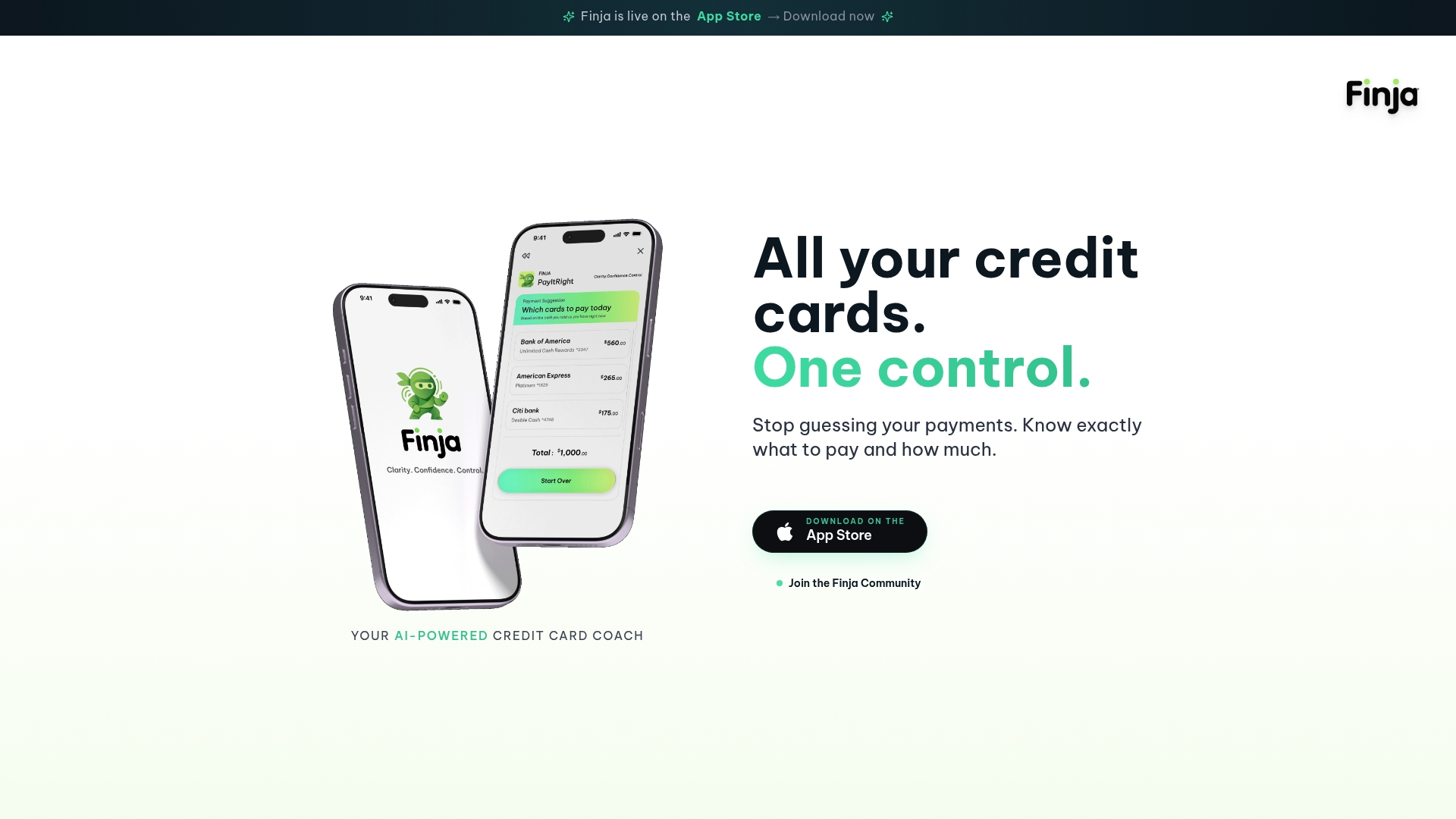
- See every card balance and due date in one consolidated view instead of switching between apps.
- Get payment timing and amount recommendations aimed at lowering your average daily balance.
- Track credit health alongside spending so rewards decisions do not come at the cost of your score.
If you are juggling multiple cards and want to keep earning rewards without losing money to interest, visit Finja to see how the coaching works for your accounts.
Where these numbers and rules come from
This article draws on the Federal Reserve's G.19 consumer credit release for national APR averages, a sample PNC Bank cardholder agreement for grace period and balance computation language, and NCUA rate tables for broader market rate context. For personal loan comparisons against balance transfers, ExpressPlanner's guide covers when each option makes more sense.

This article is general information, not a substitute for advice from a qualified financial advisor. Consult a qualified financial professional about your own circumstances before acting on anything here.
Sources
- Federal Reserve Board - Consumer Credit (G.19) — current
- PNC Bank Visa credit card agreement (sample issuer agreement)
- NCUA — Credit union and bank rates (2025 Q3)
FAQ
How much interest will $1,000,000 earn in a year?
This depends entirely on where the money sits, since a savings account, a certificate of deposit, and a money market fund all pay different rates. There is no single national rate that applies to a deposit of that size, so the honest answer requires checking your specific bank or credit union's current rate.
What are the four types of interest?
The common taxonomy includes simple, compound, fixed, and variable interest, each describing a different way interest accrues or changes over time. For credit cards specifically, what actually determines your cost is the APR and how your issuer calculates your average daily balance, not which of these four categories applies.
Which is better, cashback or rewards points?
Neither is universally better since it depends on how you redeem them and how disciplined your payment habits are. Cashback tends to be simpler to value since $1 back is always $1, while points and miles can be worth more or less than a cent each depending on redemption, so compare the real payout rather than the advertised earn rate.
How can I avoid paying interest on a credit card?
Pay your full statement balance by the due date every cycle to keep your grace period intact, since that grace period only protects you when the prior balance was paid off completely. Making a mid-cycle payment ahead of a large purchase and checking your account a few days after the statement closes for trailing interest further reduces the risk of an unexpected charge.
Do I owe taxes on credit card rewards?
Rewards earned by spending, such as cashback or points on purchases, are generally treated as a discount rather than taxable income. Rewards received without a purchase requirement, such as a bank account sign-up bonus, can be treated differently, so check the specific terms or a tax professional for your situation.