
If your credit card APR is at or above common high-interest levels, you are already in high-interest territory. Experian defines high-interest debt as any account carrying roughly 8% APR or more, but for credit cards, 20%+ is the practical threshold that matters. The single most effective immediate action is to stop adding new charges to your highest-rate card and redirect every extra dollar toward that balance. The Consumer Financial Protection Bureau and tools like Finja can help you see exactly how much that shift saves.
Key Takeaways
High-interest debt costs real money every month, and the scenarios that escalate costs most are predictable and avoidable with the right payment priority.
| Point | Details |
|---|---|
| 20%+ APR is the credit card threshold | Experian sets high-interest debt at 8%+ APR, but 20%+ is the practical danger zone for credit cards. |
| Minimum payments barely touch principal | On a $10,000 balance at 24% APR, a $200 minimum payment leaves only about $0–$17 for principal reduction. |
| Mortgage score gap costs six figures | A 700 vs. 625 credit score on a $400k, 30-year mortgage can mean $50,000+ in additional lifetime interest. |
| Payday loans annualize near 400% APR | A $15-per-$100 flat fee on a two-week loan converts to roughly 391% APR when annualized. |
| Finja automates payment prioritization | Finja identifies your highest-cost balance and updates payment recommendations as balances change. |
Table of Contents
- What counts as a high interest cost scenario on credit cards?
- How mortgage scenarios produce dramatically different total interest
- How student loan rates change your lifetime cost
- How APR and flat fees hide the true annual cost
- Common real-world scenarios that escalate interest costs
- A prioritized plan to avoid and repair high interest costs
- How to model your own interest costs
- Methodology and assumptions behind these examples
- What I've seen working with consumers carrying high card debt
- Finja helps you see exactly where your interest is going
- Sources
What counts as a high interest cost scenario on credit cards?
On a real balance, it is not.
Credit card interest accrues daily using a daily periodic rate applied to your average daily balance. A quick first-month estimate: balance × (APR ÷ 12). Neither number sounds alarming until you see what minimum payments do to the timeline.
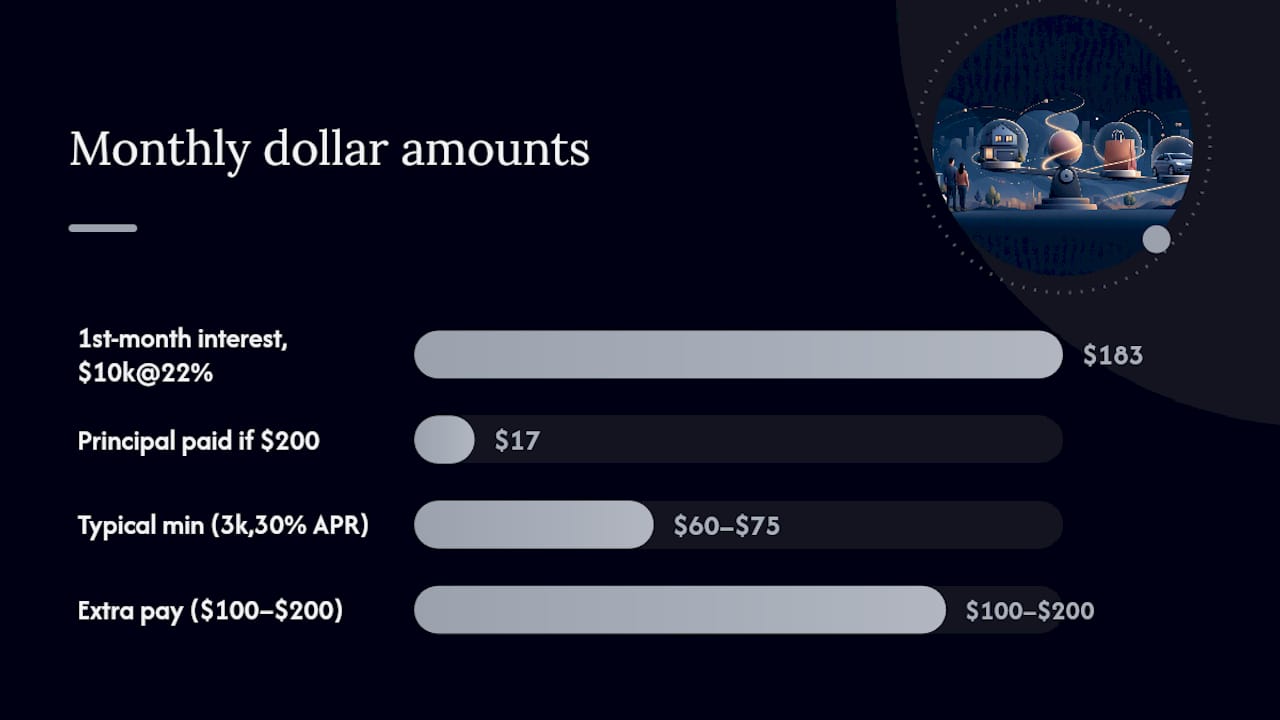
A $10,000 balance at 22% APR generates roughly $183 in first-month interest alone. If your minimum payment is $200, only $17 touches the principal.
Key takeaways from these numbers:
- A typical minimum payment on a $3,000 balance is around $60–$75, meaning nearly all of it covers interest at 29.99% APR.
- Paying an extra $100–$200 per month cuts payoff time by years, not months.
- Carrying any balance through a promotional period ends the 0% window and triggers retroactive interest on some cards.
Grace periods matter. Pay your full statement balance by the due date and you owe zero interest. Miss that deadline once, and cash advances and penalty APRs start accruing immediately with no grace period, often at 29.99% or higher. That is a structural trap worth understanding before you need to escape it. For a deeper look at how issuers price these tiers, the credit card APR mechanics guide on Finja's blog breaks it down clearly.
How mortgage scenarios produce dramatically different total interest
A few APR points on a 30-year mortgage translate into six figures of difference. Consumerfinance illustrate this clearly using a $400,000 purchase price, 10% down payment, and varying credit scores and loan terms.
Figures are illustrative estimates based on ConsumerFinance.gov assumptions. Actual rates vary by lender, date, and borrower profile.
A borrower with a 700 credit score on a 30-year mortgage can save roughly $50,000 or more in lifetime interest compared to a 625-score borrower on the same loan, based on ConsumerFinance.gov rate modeling.
The 15-year vs. 30-year comparison is the starkest. Monthly payments are higher, but lifetime interest drops by roughly $147,000 in the 700-score scenario above. For readers weighing a refinance or cash-out, a practical mortgage structure guide can help clarify which loan type fits the situation. Your credit score's effect on card and loan APRs follows the same logic: a 75-point score improvement can shift you into a meaningfully cheaper rate tier.
How student loan rates change your lifetime cost
Earnest's analysis confirms that even modest rate differences on student loans materially change lifetime cost.
Before refinancing federal loans, consider what you give up:
- Income-driven repayment plans and Public Service Loan Forgiveness eligibility disappear when you refinance into a private loan.
- Variable-rate private loans may start lower but can reset upward, erasing initial savings.
- Fixed-rate refinancing makes sense when your credit score qualifies you for a rate meaningfully below your current federal rate and you have stable income.
Federal student loan rates are set each spring for the following academic year, effective July 1. Check StudentAid.gov for current rates before modeling a refinance decision.
How APR and flat fees hide the true annual cost
Payday lenders rarely advertise an APR. They advertise a flat fee: $15 per $100 borrowed. That sounds manageable. Annualized, it is not.
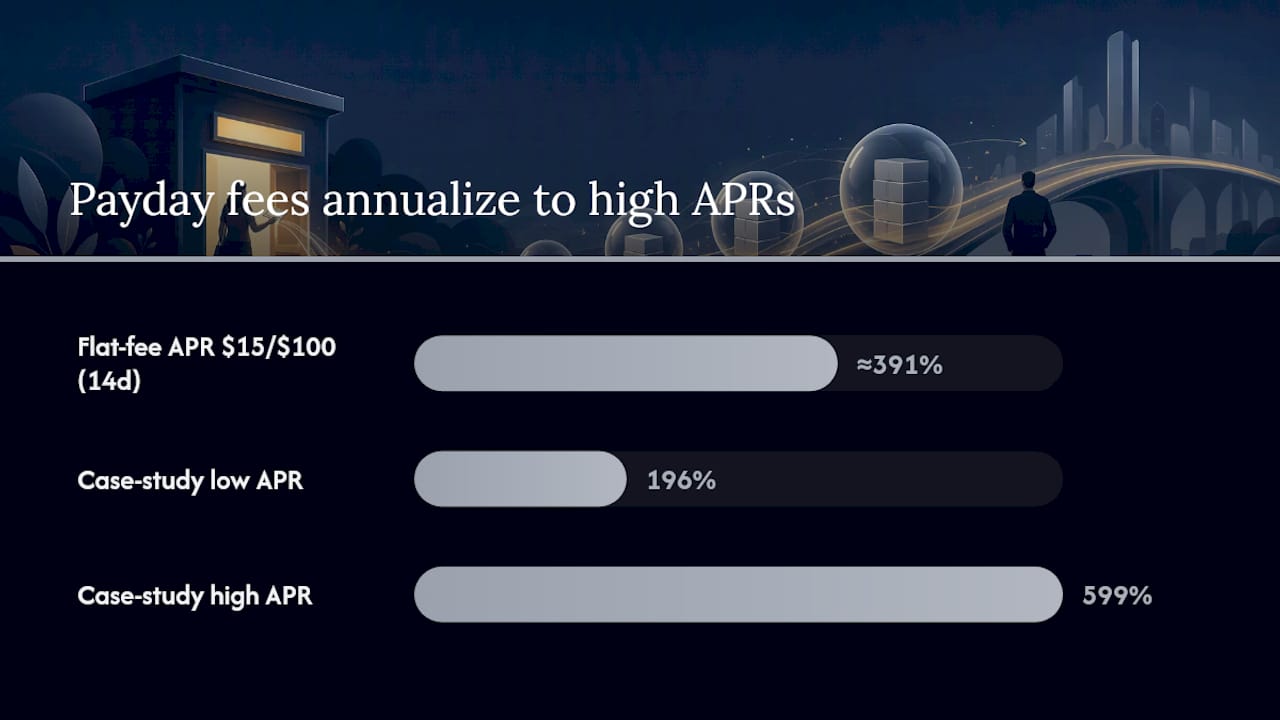
A two-week $1,000 payday loan at $15 per $100 costs $150 in fees. Annualized: ($150 ÷ $1,000) × (365 ÷ 14) = roughly 391% APR. CBS News confirms that a $1,000 payday loan with typical flat fees annualizes near 400%. Rollovers compound that cost fast. Real borrower case studies show effective APRs ranging from 196% to 599%, with cheaper alternatives like credit-union Payday Alternative Loans (PALs) often available.
For credit cards, the daily periodic rate (DPR) drives the math: DPR = APR ÷ 365. Multiply that by your average daily balance for the billing cycle to get billed interest.
Pro Tip: To convert any flat fee into an APR equivalent, use this formula in a spreadsheet: =(fee/loan_amount)(365/loan_term_days). Paste it into Excel or Google Sheets, swap in your numbers, and you can compare any short-term offer against a credit card APR in seconds. The APR vs. interest rate breakdown at Baywall is a useful reference for understanding how fees interact with nominal rates.*
Common real-world scenarios that escalate interest costs
These are the situations that quietly push your effective rate higher:
- Penalty APR after a missed payment: issuers can raise your rate to ~29.99% after one late payment, and it can stay there for six months or more.
- Cash advance charges: no grace period, a separate (higher) APR, and an upfront fee of 3%–5% of the amount.
- High utilization: using more than 30% of your credit limit signals risk to issuers and can trigger repricing on variable-rate accounts.
- Payday loan rollovers: each rollover adds another full fee cycle, turning a two-week loan into a months-long debt spiral.
- Minimum-payment-only plans: on a $10,000 balance at 24% APR, paying only the minimum can extend payoff beyond 20 years and double the total cost.
Red flags to watch on your statement: a "change in terms" notice, a new cash-advance line item, a minimum payment that keeps growing while the balance barely moves, or a rate that jumped without a missed payment (variable-rate index reset). Variable-rate resets are tied to the prime rate and can move your APR up without any action on your part.
A prioritized plan to avoid and repair high interest costs
Act in this order, because speed matters when interest compounds daily.
- Stop new purchases on high-rate cards. Freeze them if needed. Every new charge resets your average daily balance upward.
- Pay more than the minimum on your highest-rate balance. Even $50 extra per month cuts months off the payoff timeline.
- Call your issuer and request an APR reduction. This works more often than most people expect, especially with a clean payment history. Set autopay for at least the minimum on every card to prevent penalty APRs.
- Evaluate a 0% balance transfer. A 3%–5% transfer fee is often worth it if you can pay off the balance before the promotional period ends. Run the math: transfer fee vs. months of interest saved. The practical APR reduction guide on Finja's blog walks through the decision criteria.
- Build your credit score. A 50-point improvement can move you from a 26.99% APR tier to a 20% tier, saving hundreds per year on the same balance.
Decision rule for consolidation vs. balance transfer vs. refinance: if the all-in cost (fees plus new interest) is lower than staying on your current rate for the same payoff period, the move saves money. If fees eat more than three months of interest savings, reconsider.
Pro Tip: Target the highest-APR balance first (avalanche method). The payment allocation mechanics article explains how issuers apply payments across balances.
How to model your own interest costs
You do not need specialized software to run these numbers. A basic spreadsheet with these inputs covers most scenarios:
- Balance (current statement balance per card)
- APR (find it on your statement or issuer's app)
- Daily periodic rate (APR ÷ 365)
- Minimum payment (from statement)
- Planned extra payment (what you can realistically add)
- Promotional window (end date of any 0% offer)
Core formula: monthly interest ≈ balance × (APR ÷ 12). For daily compounding: monthly interest ≈ balance × DPR × days in cycle. Tracking interest paid monthly is the fastest way to see whether your payments are actually reducing principal.
An AI payment optimizer like Finja runs these comparisons across all your cards simultaneously, flags which balance to hit first, and updates recommendations as balances change.
Pro Tip: *The three inputs that change outcomes most are APR, extra payment amount, and loan term. Test those three first before adjusting anything else.
Methodology and assumptions behind these examples
All credit-card examples use simple monthly interest (balance × APR ÷ 12) as a first-month estimate, consistent with the DebtOptimizerHub heuristic.
Mortgage examples assume a $400,000 purchase price, 10% down payment ($40,000), and credit score bands of 700 and 625, sourced from ConsumerFinance.gov's rate explorer. Student-loan examples use a $35,000 balance on a 10-year standard repayment term.
Key assumptions:
- All credit-card interest figures are first-month estimates; actual billed interest uses average daily balance.
- Mortgage rate figures are illustrative ranges based on ConsumerFinance.gov modeling; actual rates vary by lender, lock date, and borrower profile.
- Student-loan payments calculated using standard amortization; federal rates change each July 1.
- Payday-loan APR conversion uses: (fee ÷ principal) × (365 ÷ term in days).
Rates change. Check current offers directly with lenders before making any refinance or transfer decision. Rounding is to the nearest dollar throughout.
What I've seen working with consumers carrying high card debt
Most people carrying $8,000–$15,000 in credit card debt are not ignoring the problem. They are paying every month. The issue is that they are paying just enough to keep the balance from growing, which is not the same as reducing it.
The behavioral pattern I see most often: someone knows their APR is high but avoids looking at the exact number because the math feels discouraging. That avoidance is expensive. Knowing that number is not depressing; it is a target. Pay $325 instead of $200, and you cut the payoff timeline dramatically.
Autopay is underused. Setting autopay for the minimum on every card prevents penalty APRs, which is the single cheapest insurance available. Then schedule a 20-minute monthly review to manually add extra payments to the highest-rate card. That combination, autopay plus intentional extra payments, outperforms every elaborate debt strategy I have seen attempted without it.
The 2026 interest rate forecast suggests rates are unlikely to drop fast enough to wait out the problem. The math rewards acting now over waiting for a better environment.
Finja helps you see exactly where your interest is going
Carrying multiple cards with different APRs makes it genuinely hard to know which balance to hit first. Finja's AI-powered platform consolidates all your card accounts in one view, calculates the interest cost on each balance in real time, and tells you exactly where to direct extra payments for the fastest interest reduction.
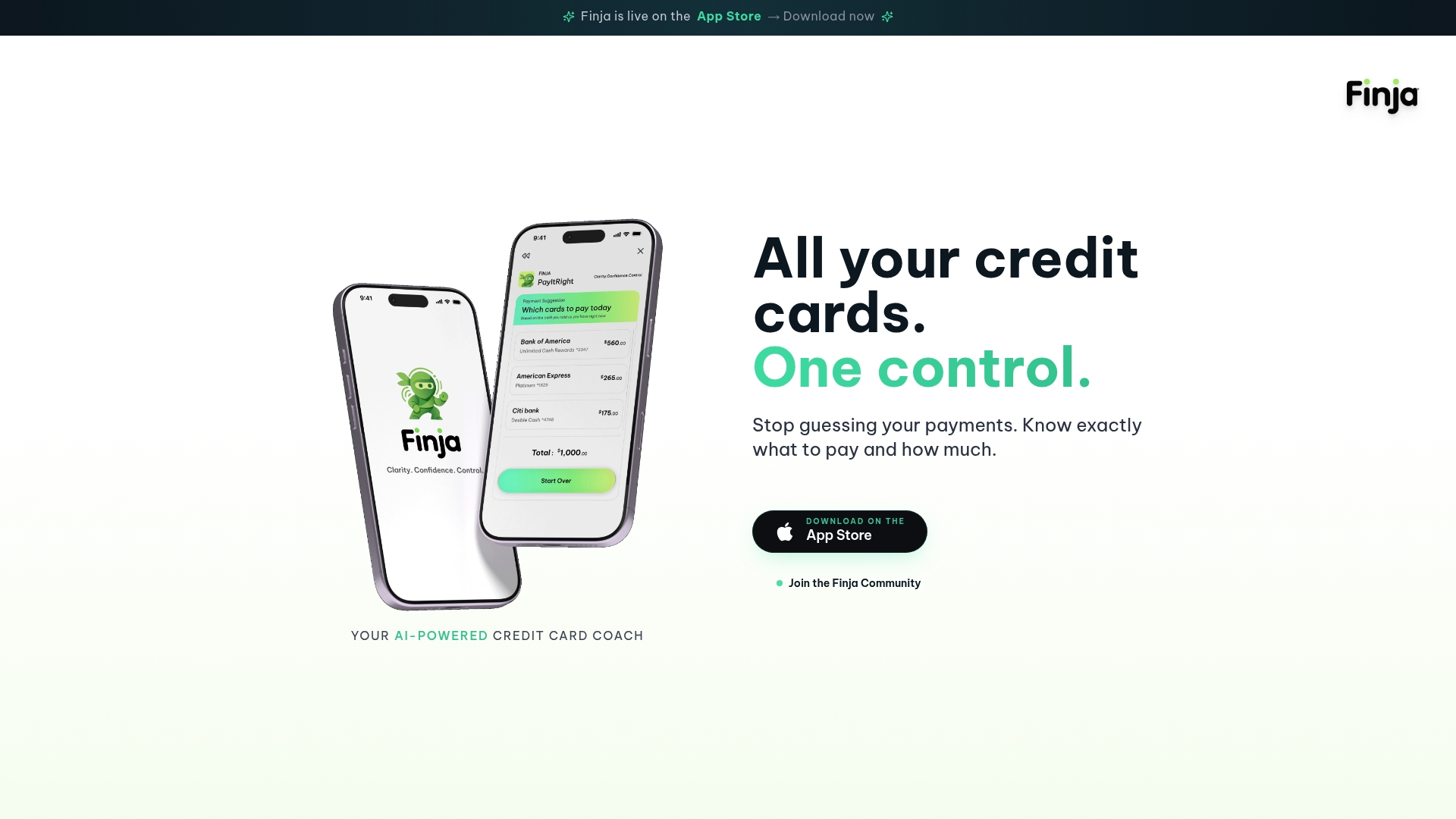
You get payment optimization recommendations, credit health tracking, and spending controls, all built around your actual balances and rates. No spreadsheet required. Finja runs the scenario comparisons automatically and updates them as your balances change, so the plan stays accurate month to month.
Start with a free trial at Myfinja and see your personalized payment priority plan within minutes.
Finja is a subscription-based app. A free trial is available; premium features require a paid plan.
Sources
Rates change frequently. Check these sources directly for current figures before making any financial decision.
- What Is Considered High-Interest Debt?
- Explore rates | Consumer Financial Protection Bureau
- How Credit Card Interest Works: APR Explained (2026) - AdvoraHQ
- Credit Card Interest Cost Examples by Balance - DebtOptimizerHub
This article provides general financial information, not professional financial or legal advice. Confirm current rates and terms with your lender or a qualified financial advisor before making any borrowing or repayment decisions.
This article is general information, not a substitute for advice from a qualified financial advisor. Consult a qualified financial professional about your own circumstances before acting on anything here.