
If your card issuer sends a notice that your APR is going up, you often have a choice: accept the new rate, or reject it and keep paying off your existing balance at the old rate, usually on a closed account. The right to reject applies to many changes, not all of them, and the clock starts the day the notice arrives. Federal guidance says significant changes generally require 45 days' advance notice, and that window is where your decision gets made.
This guide walks through how to read the notice, when opting out is available, what happens to your balance and your credit, and how to decide when you hold several cards.
TL;DR
- Most significant APR increases require written notice at least 45 days ahead, and for many changes you can opt out within the window stated in the notice.
- Opting out usually means the issuer may close the account. The balance is not due immediately, but you must keep repaying it and should stop using the card.
- Closing a card can hurt your credit score by shrinking your available credit and raising the share you use, so weigh that before you reject.
- Some increases are not something you can opt out of, such as a rise tied to a public index on a variable-rate card or the end of a promotional rate you were told about.
- With several cards, the best decision depends on all of them together: balances, limits, due dates and what each one costs you in interest.
Table of Contents
- What an APR increase notice actually tells you
- Can you opt out of an APR increase?
- Which balance does the new rate hit?
- What happens if you reject the increase
- Opting out vs. product change vs. cancelling
- A decision framework when you hold several cards
- Other ways to get the rate back down
- Where Finja fits
- Our perspective
- FAQ
- Sources
What an APR increase notice actually tells you
APR stands for annual percentage rate, the yearly cost of carrying a balance on your card. When an issuer raises it, the law gives you a paper trail. The Office of the Comptroller of the Currency's consumer site explains that significant APR changes and many fee changes generally require written notice at least 45 days in advance. The notice is often a short letter, an email or a statement insert, and it is easy to mistake for routine mail.
Read it for four things:
- The new rate and the date it takes effect.
- Which balance it applies to: only new purchases, or your existing balance as well.
- Your right to cancel or reject, and the exact deadline and method for doing so (phone, mail, online).
- The reason, if one is given: a promotional rate ending, a variable-rate index moving, or a change in your account's terms.
The Federal Reserve's material on the 2009 Credit CARD Act rules says issuers must give 45 days' written notice and tell consumers about the right to cancel before the increase or significant change takes effect. So the opt-out instructions should be in the notice itself. Michigan's consumer protection office stresses the practical side: reading it late can cost you the chance to reject the change within the issuer's stated window.
Can you opt out of an APR increase?
For many changes, yes. The Consumer Financial Protection Bureau (CFPB) says that for many changes you have the right to opt out, and the notice should tell you how. Michigan's alert gives the sensible routine: review statements and inserts carefully, follow the opt-out instructions inside the stated timeframe, and avoid putting new purchases on an account you have closed by opting out.
Two practical points:
- Use the method in the notice. If it says to call a number or send something in writing, do that. Keep a record of the date and what you did.
- Do it before the deadline, not on it. A rejection that arrives late is treated as no rejection.
Increases you generally cannot opt out of
Opting out is not a way to freeze any rate forever. The CFPB explains that increases on existing balances are restricted, with listed exceptions: an expired temporary rate that lasted at least six months, an increase in the index behind a variable rate, changes to a hardship arrangement, or a minimum payment not received within 60 days after its due date.
The OCC's guidance adds that the 45-day notice has exceptions too, including increases caused by a public variable-rate index and the expiration of a promotional rate you were told about in advance. If your card has a variable APR, the rate moves when its benchmark moves, and that is part of the original agreement rather than a new term to reject.
Which balance does the new rate hit?
This is the first question the CFPB suggests answering when you get a notice: does the increase apply to new purchases or to what you already owe? According to the CFPB, issuers generally may not raise the rate on new transactions during the first year of an account, and may not raise the rate on existing purchases except in the specified circumstances above.
There is a timing detail that matters if you keep using the card: purchases made more than 14 days after the issuer gives advance notice are treated as new transactions for the purposes of a disclosed rate increase. In plain terms, a swipe made after that point can be charged the higher rate, while older balances generally keep the old one unless an exception applies.
A simple example with made-up numbers: you owe $3,000 at one rate and get a notice that a higher rate starts in 45 days. If the increase applies only to new purchases, your $3,000 keeps its current rate. Anything charged after the 14-day mark may get the new one. If you stop adding to the card, the increase may never touch you in practice. That is a decision you can make with a clear view of how much of your spending sits on each card.

What happens if you reject the increase
The CFPB is direct about the trade-off. If you opt out, the card company might close the account. It adds that the balance is not due immediately and must still be repaid, and that the new minimum payment cannot exceed the greater of two amounts: what it takes to repay the balance in five years, or twice the prior minimum periodic payment.
So rejecting gives you three things to plan around:
- The old rate on the existing balance, which is the point of rejecting.
- A likely closed account, so no new purchases and a smaller set of cards in your wallet.
- A repayment schedule set by the issuer, with a minimum payment that can be higher than before.
If the closed card is one you rely on, see our guide on what to do when an issuer closes your credit card, including what to move or update first.
Opting out vs. product change vs. cancelling
These three get mixed up, and they have very different effects.
| Opt out of the change | Cancel the card yourself | Ask for a different card product | |
|---|---|---|---|
| Who starts it | You, in response to a notice | You, any time | You, by asking the issuer |
| What happens to the old rate | Existing balance generally stays at the old rate | Balance is still owed at the current rate | Depends on the terms of the new product |
| Account status | The issuer may close it | Closed | Stays with the same issuer under different terms |
| Credit score risk | Closure can reduce available credit | Closure can reduce available credit | Depends on the issuer and the new terms |
The distinction matters because of how scores work. The CFPB warns that closing a card may hurt your score by reducing your available credit and raising the share of it you are using. Opting out can end in the same place as cancelling, since the issuer may close the account. If the card is an old one, our explanation of why canceling old cards hurts your credit score shows how the effect works.
A product change is something you ask your issuer about. Whether a different card is available, and on what terms, is up to the issuer, so ask for the rate and fee terms in writing before agreeing to anything.
A decision framework when you hold several cards
The notice arrives for one card, but the decision belongs to your whole set of cards. Run through these questions.
1. How much of the balance would the new rate touch? If the increase applies only to new purchases and you can stop using the card, accepting it may cost you nothing. If it covers a large revolving balance, the math changes.
2. Can you pay the balance off before the increase starts? The Federal Deposit Insurance Corporation (FDIC) suggests reviewing the notice and considering paying the balance in full before the increase takes effect. Our article on paying your statement in full to cut interest shows how much that saves.
3. What would closing this card do to your utilization? Utilization means the share of your total credit limit that you are using. Closing a card lowers the limit side of that ratio. If you hold balances on other cards, the effect is bigger. Add up your limits and balances before you decide.
4. Is there a cheaper place for the balance? The FDIC describes a lower-rate balance transfer as a possible option if you cannot pay in full, and says to weigh transfer fees and what happens when a promotional period ends before the transferred balance is repaid. Our comparison of a balance transfer and a personal loan lays out the arithmetic, and the timing guide explains how to protect an intro rate.
5. Is the rate really the problem, or the pattern? The CFPB's credit card guide points to a few habits that keep interest down: shopping for lower-APR cards, avoiding high-APR transactions such as cash advances, paying on time and above the minimum, and paying before the due date when possible. A rate increase on one card is a good moment to check whether those habits hold across all of them.
Worked example
Say you hold three cards. Card A has a $2,000 balance and a $5,000 limit and just got an increase notice. Card B has a $1,000 balance on a $4,000 limit. Card C has no balance and a $6,000 limit. Your total limit is $15,000 and your balances total $3,000, so you use 20%.
If you reject the increase on Card A and it is closed, your limit drops to $10,000 and you use 30% of it, even though you owe exactly the same amount. That is the credit score effect the CFPB describes. If instead you accept the higher rate but stop using Card A and send your extra payments there first, you keep the limit and still cut the interest. Different facts would point the other way: if Card A's new rate is far higher than anything else you hold and you cannot pay it down quickly, rejecting may protect you more than the utilization hit costs you.

There is no universal answer. The right one comes from seeing all the cards side by side, which is the hard part when each issuer shows you only its own account.
Other ways to get the rate back down
If you accept the increase, or the increase has already happened, you are not stuck. The CFPB says to contact the issuer if you believe the increase was made in error, and notes that issuers generally must review certain increased rates at least every six months. That review is the moment to ask. Our scripts for requesting a lower APR cover what to say, and the practical plan for reducing your effective APR across cards covers the order in which to pay balances. If you want to understand the number itself, start with how credit card APR works.
Where Finja fits
The hard part of an APR notice is not reading it. It is knowing what your decision does to everything else you owe. Finja is an AI-powered credit card management app built for people with multiple cards. It shows all your cards in one place, recommends payment timing and amounts aimed at reducing interest, and tracks your credit health, with budgeting tools and spending limit controls alongside.
That means that when a notice lands on one card, you can look at it next to the others: which balances carry the most interest, how your limits and balances add up, and where the next dollar of payment does the most good. Finja is a credit card coach rather than a general budgeting tool, and it focuses on interest costs and credit health, not rewards. You can see how it works at Finja, your AI-powered credit card coach.
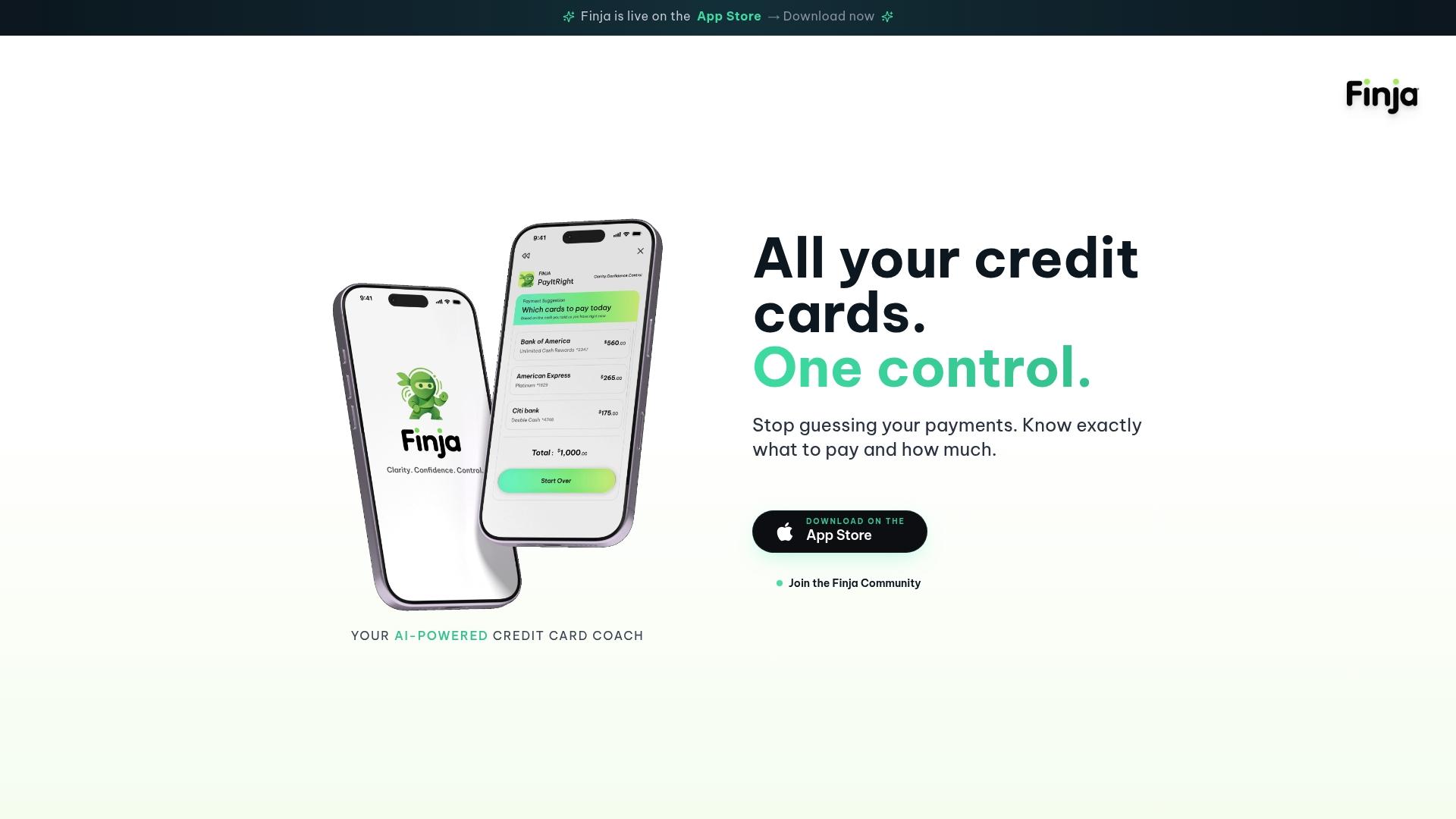
The same logic helps with timing. Paying a card before its due date and in the right amount is easier when every due date and balance sits on one screen, and our guide on optimizing card payments with timing and Regulation Z explains the rules behind it.
Our perspective
Most people treat an APR notice as a yes-or-no question about one card. We think that frame costs them money. The notice is really a question about the whole set of cards you carry: which balance is expensive, which limit is protecting your score, and which payment should go where.
When we built Finja, we put the focus on interest costs and credit health rather than rewards, because that is where multiple-card households lose the most. Opting out can be the right call. So can accepting a higher rate on a card you have stopped using. What matters is deciding with every card in view, inside the notice window, instead of reacting to a single letter.
Seeing all your cards in one place and getting clear guidance on payment timing and amounts turns a stressful letter into a decision you can make calmly.
Grace K.
FAQ
How long do I have to opt out of a credit card APR increase?
The notice states your deadline, and significant changes generally require at least 45 days' written notice before they take effect. Follow the opt-out method the notice describes and act well before the last day. If you cannot find the instructions, call the number on the back of your card right away.
Will opting out close my card?
It might. The CFPB says that if you opt out, the issuer may close the account. The existing balance is not due immediately and you keep repaying it, but plan on not using the card for new purchases.
Does the new APR apply to my existing balance?
Usually not, unless an exception applies. Federal guidance lists exceptions such as an expired temporary rate that lasted at least six months, a rise in the index behind a variable rate, a hardship arrangement change, or a minimum payment more than 60 days late. Check the notice to see which balance the increase covers.
Is a product change the same as cancelling?
No. A product change means asking your issuer to move you to a different card under the same issuer, on that card's terms. Cancelling closes the account and can reduce your available credit, which may hurt your score. Ask for the new terms in writing before you agree.
What if I think the increase was a mistake?
Contact the issuer and say so. The CFPB advises this, and notes that issuers generally must review certain increased rates at least every six months, so you can also ask for a review at that point.
Sources
- CFPB: Can my credit card company change the terms of my account?
- CFPB: When can my credit card company increase my interest rate?
- CFPB: Know Before You Owe: Credit cards
- OCC HelpWithMyBank: How must the bank notify me when they change my credit card terms?
- Federal Reserve Board: interim final rule, July 15, 2009
- FDIC: Credit Cards for Young Adults
- Michigan Consumer Protection: Rising Credit Card Interest Rates and Fees