
A 0% intro APR does not change your credit score by itself. The balance you carry on that card does. Credit utilization, the share of your limit you report as owed, counts the same whether the interest rate is 0% or 25%. So the way to use a 0% offer well is to decide how much of the limit you can show on your statement date, then pay the balance down on a schedule that keeps that number reasonable.
This guide explains how utilization works on a 0% card, what the numbers look like on a real balance, and how to time payments so the offer saves you interest without dragging your score down.
TL;DR
- The 0% rate is not scored. Experian says scoring models don't consider the interest rate on a card, but the balance still counts toward utilization.
- Utilization makes up about 30% of your FICO Score, and the CFPB notes that many experts suggest staying under 30% of your limit, with top scorers often under 10%.
- Issuers usually report your balance around the statement closing date, so paying before it closes is what lowers the reported figure.
- Zero reported utilization is not the goal either. A small, non-zero balance is slightly better than nothing.
- Pay the promo balance down in equal monthly chunks so it is gone before the offer ends.
Table of Contents
- Does a 0% APR offer affect your utilization?
- What the numbers look like on a real balance
- When your balance gets reported
- A step-by-step plan for the promo period
- Is 0% utilization a good thing?
- Using a 0% offer with several cards
- What happens if you use 90% of the limit
- When the promo is ending and the balance isn't gone
- Perspective
- Keep every card's timing in one place
- FAQ
- Sources
Does a 0% APR offer affect your utilization?
Two things get mixed up here: the interest rate and the balance.
The interest rate is invisible to your score. Experian explains that credit scoring models do not factor in the rate on a loan or card. A card at 0% and a card at 24% with the same balance look identical to the model.
The balance is very visible. Bankrate points out that carrying a balance affects your utilization ratio, which makes up about 30 percent of your FICO Score, even on a 0 percent introductory card. Put $6,000 on a card with a $10,000 limit and your utilization on that card is 60%, no matter that you pay nothing in interest.
That is why people who open a 0% card for a big purchase or a balance transfer sometimes see a score dip. It isn't a penalty for using a promotion. It's the ordinary effect of a higher balance against a limit.
There is an indirect upside too. Experian's Louis DeNicola notes in the same article that the money you save on interest can free up room in your budget to pay down debt, which can help your scores over time.
What the numbers look like on a real balance
Let's use a simple example. Say you open a card with a $10,000 limit and 15 months at 0%. You put a $4,500 purchase on it.
| Scenario | Balance reported | Utilization on this card |
|---|---|---|
| Statement closes with the full purchase on the card | $4,500 | 45% |
| You pay $1,500 before the statement closes | $3,000 | 30% |
| You pay $3,500 before the statement closes | $1,000 | 10% |
| You pay the full $4,500 before the statement closes | $0 | 0% |
The figures are our own arithmetic, not a prediction of any score. What matters is the pattern: the same purchase can be reported at 45% or 10% depending on when you pay.
The benchmarks to hold in mind come from a few sources:
- The CFPB says many experts recommend using less than 30 percent of your total credit limit, and that consumers with the highest scores often use less than 10 percent.
- Experian's card guide says that if you must carry a balance, aim to stay at or under 30% of your credit line, and that using more can do more significant damage while staying under 10% can help.
- TD Bank adds that people with very good or exceptional scores generally have utilization of 15% or less.
The 30% figure is a widely repeated guideline, not a cliff. Scoring is continuous, so 28% is better than 38%, and 8% is better than 28%. Treat 30% as a ceiling you want to stay under, not a finish line.
When your balance gets reported
The number that counts is usually not your balance on the due date. It is the balance on your statement when the issuer reports to the credit bureaus.
Chase explains that issuers send activity reports to the bureaus at the end of your statement period, so you should pay off any remaining balance before your statement closes. The same page defines a large purchase as one that would take you over 30 percent of your utilization.
This matters on a 0% card because your due date and your statement date are different days. You can pay on time every month, owe zero interest, and still have a high balance reported because the statement closed before your payment arrived.
If you want a deeper walk-through of timing, our guides on paying before the statement date and on statement balance versus current balance cover how it plays out across several cards.
A step-by-step plan for the promo period
1. Check the limit and set a utilization ceiling
Before you charge anything, divide the purchase or transfer by the limit. If the result is above the level you are comfortable reporting, you have three options: split the purchase across two cards, make a payment mid-cycle, or accept a temporary higher number and plan how quickly it will fall.
A new card often comes with a limit lower than people expect. A $3,000 limit holds a $2,000 balance at 67%, which is a very different picture than the same balance on a $15,000 limit.

2. Find your statement closing date
Look at your latest statement or your issuer's app. The closing date is the day the statement period ends. Write it down. Your payment due date is typically a few weeks later, and it is not the one that decides what gets reported.
3. Make a payment a few days before closing
A payment that posts before the statement closes lowers the reported balance. Leave a few days for processing, since a payment sent on closing day may not post in time.
4. Divide the promo balance by the months left
The 0% rate is temporary, and these offers often last 12 to 18 months. Divide your balance by the number of months remaining and treat that as your real monthly payment.
The minimum is rarely enough. The CFPB warns that a 0% promotion still means you are borrowing money you must repay, and that the minimum payment due is usually not enough to clear the balance by the end of the period.
On a $4,500 balance with 15 months left, that is $300 a month. Paying it in two halves, one before each statement close, can also keep the reported figure lower than a single payment after the statement posts.
5. Leave a small balance when you reach the end
Once the promo balance is gone, you do not need to leave the card idle. See the next section.
Is 0% utilization a good thing?
Not necessarily. After a promo is paid off, many people want to bring everything to zero. Scoring models treat that differently from what you might expect.
Experian states that 0% utilization gives no extra benefit over single-digit utilization, and that avoiding revolving credit to keep it at zero doesn't help scores. myFICO says that reporting no revolving balances is slightly riskier than reporting a small one, and that a low utilization moving to 0% may cause a score drop, all else equal.
So what about the common advice to put a small recurring charge on the card and pay it immediately? myFICO cautions that if the issuer then reports a $0 balance, the score may read it as a lack of activity. It suggests timing your payment for the billing date so a small, non-zero balance shows up.
The practical target is a low single-digit to low-teens percentage reported, paid in full after the statement posts so you never pay interest on that small amount. On a $10,000 limit, a reported balance of $300 is 3%. That sits inside the range SoFi suggests when it recommends keeping utilization under 10%.
There is a second reason to keep the card in use. Experian notes that an issuer can cut the limit or close an account that stays inactive for a long time, which lowers your total available credit and can push your overall utilization up. If that ever happens, our guide on what to do when an issuer closes your card lays out the first steps.

Using a 0% offer with several cards
Most people who take a 0% offer already have other cards. That makes the picture more complicated, because utilization shows up in two places: on each card and across all of them together. A low total can hide one card that is nearly maxed out, and a high total can hide a few cards that look fine. Look at both.
A few habits help:
- Put the promo balance on the card with the most room. If you have a choice, the higher limit keeps the percentage lower.
- Don't close old cards to "simplify." Closing a card removes its limit from your total. Here is why canceling old cards hurts your score.
- Keep ordinary spending off the promo card. New purchases on a card carrying a promo balance muddy the payoff math and can push the reported figure higher. Check your card terms for how payments and new purchases are applied.
- Compare effective rates across all cards. When one card sits at 0% and others carry interest, the order of payments matters. Our practical plan to reduce effective APR across cards walks through it.
For more on timing tactics across a wallet, see 7 timing tactics to cut credit utilization.
What happens if you use 90% of the limit
A balance near the limit is the situation to avoid reporting. Scores respond to higher utilization with lower numbers, and the steepest effect is at the top of the range. Published figures for the size of the drop come from commentary sites rather than from the scoring companies, and the scoring formulas are proprietary, so we won't give a number. What the official and issuer sources agree on is the direction: the CFPB and Experian both point to under 30% as the ceiling, and under 10% as where the strongest scores tend to sit.
The effect is also not permanent. Utilization has no memory in the way a missed payment does. When a lower balance is reported, the ratio is recalculated. That's why a high figure for one or two cycles, followed by a payoff, is usually a short-term issue, while a missed payment is a different matter. If you plan to apply for a mortgage or car loan soon, though, try to have a low balance reported in the months before.
When the promo is ending and the balance isn't gone
The risk with a 0% card is not utilization. It is the day the rate changes. Bankrate notes that carrying a balance on an intro card can make sense in some scenarios but carries more risk if you pass the end of the promo with a balance.
If you're a few months out and the math doesn't work, act now rather than at the deadline:
- Recalculate the monthly payment needed to clear the balance on time.
- Move discretionary spending to cover it for the remaining months.
- Consider whether a new offer is realistic. A balance-transfer fee and a hard inquiry both cost something, so compare them with the interest you'd otherwise pay.
- If the balance has become hard to manage alongside other debts, debt management options can help you build a repayment plan that deals with minimum payments and the interest that follows a promotional offer.
We cover this in more detail in why your interest-free period ends and what to do next and in are zero APR offers worth it.
Perspective
Most advice about 0% offers asks one question: is the rate good? The better question is what the balance looks like on the day it gets reported. Interest and utilization are two separate clocks. One runs on your due date and the other on your statement date.
When you hold several cards, those clocks multiply. One card has a promo ending in March, another has a statement closing on the 9th, a third has a due date on the 24th. It is easy to pay everything on time and still report a balance you didn't intend to.
That is the problem we built Finja to address. We see it as a dedicated credit card coach rather than a general budgeting tool: it puts your cards in one place and gives AI-powered guidance on when to pay and how much, with the aim of reducing interest cost and supporting credit health, not chasing rewards.
Our view is that a 0% offer is at its best when it comes with a schedule. Know the closing date, know the payoff date, and let the plan decide the payments instead of the reminder that arrives after the fact.
Grace K.
Keep every card's timing in one place
A 0% offer adds one more date to track, and the cost of missing it is real. Finja is an AI-powered credit card coach for people with multiple cards. It shows all your cards in one view and gives guidance on payment timing and amounts, aimed at reducing interest and supporting credit health.
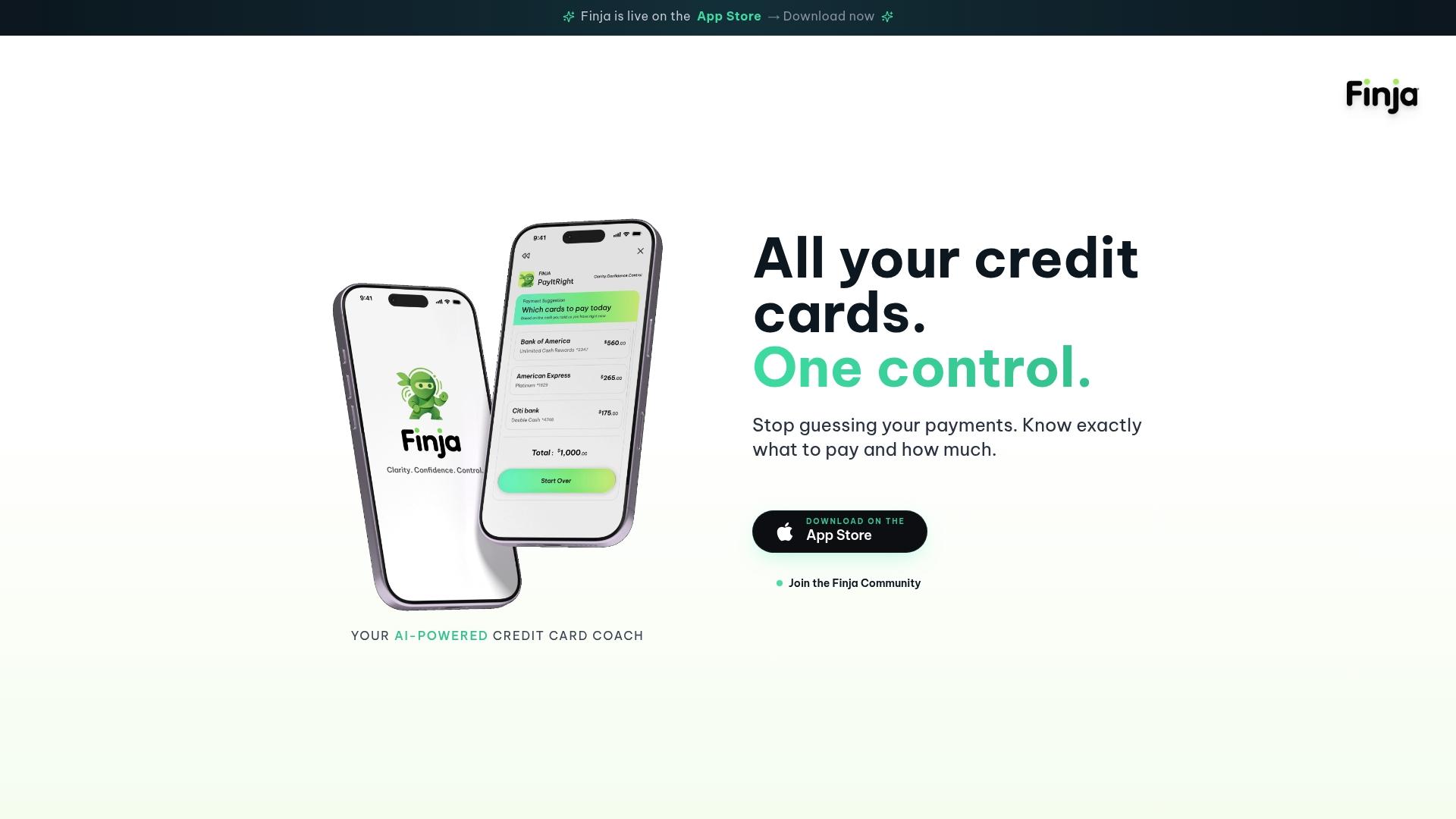
If you're planning a 0% balance and want help deciding what to pay and when, take a look at Finja.
FAQ
Does a 0% APR card hurt my credit score?
The rate itself doesn't. The balance does, in the same way as on any card, because it adds to your utilization. Opening the card also brings a new account and a credit inquiry, which can cause a small short-term change. Paying the balance down before the statement closes keeps the reported utilization lower.
Is 3% credit utilization good?
Yes. It sits well below the under-30% guideline, and the CFPB notes that people with the highest scores often use less than 10 percent. A small non-zero figure also shows the card is active. You don't need to carry a balance or pay interest to get there.
Is 0% utilization bad for my credit score?
It isn't harmful in a serious way, but it isn't the best result either. myFICO says a small reported balance is slightly less risky than none. Letting a card sit unused can also lead an issuer to lower the limit or close it. A small purchase paid after the statement posts keeps the card active.
What happens if I use 90% of my credit limit?
A ratio that high is reported as heavy use of your credit and can lower your score, because utilization is about 30% of a FICO Score. It is usually temporary: once a lower balance is reported, the ratio updates. If you need to carry a large balance, split it across cards or make a payment before the statement closes.
Should I pay off a 0% balance early?
You don't have to pay it early to avoid interest, as long as it is cleared before the promo ends and you make the minimum payments on time. Paying down in steady chunks does two things: it lowers reported utilization and it removes the risk of a balance left over when the rate changes.
Sources
- Does 0% APR Affect Credit Score? (Experian)
- Is It Better To Pay off Your Credit Card Or Keep A Balance? (Bankrate)
- How do I get and keep a good credit score? (CFPB)
- The Simple Guide to Using Credit Cards (Experian)
- What Is Credit Utilization & How Much Should I Use? (TD)
- Credit cards for big purchases (Chase)
- How to understand special promotional financing offers on credit cards (CFPB)
- Is 0% Utilization Good for Credit Scores? (Experian)
- How do revolving accounts impact my FICO Score? (myFICO)
- Is 0 Greater Than 1 When it Comes to Utilization? (myFICO)
- How Does Credit Utilization Affect Your Credit Score? (SoFi)
- Debt Management (National Debt Advice)