
In most cases, a charge card does not count toward your credit utilization. It has no preset spending limit, so there is no limit to divide your balance by. Your charge card still shows up on your credit report, though, and your payment history on it still matters. Your regular credit cards are the ones that set your utilization ratio, so those are the ones to manage.
Below, we explain how scoring models handle charge cards, where the exceptions are, and how to keep utilization low on the cards that do count.
TL;DR
- Charge cards are generally left out of FICO utilization when the issuer reports them as open accounts, and VantageScore does not use them in utilization either, because there is no credit limit.
- Exceptions exist. If a charge card is reported as a revolving card with a limit or a high balance, it can be pulled into the calculation.
- Charge cards still affect your score through payment history, account age, inquiries and credit mix.
- Your regular credit cards decide your utilization. Keep each card and your overall total under 30%, and lower is better.
- Issuers report the balance on your statement closing date, so paying in full by the due date does not erase a high reported balance.
Table of Contents
- What a charge card is, and why utilization works differently
- How utilization is calculated on the cards that count
- Do charge cards affect utilization? It depends on the model
- What a charge card still does to your score
- Pay Over Time and what shows on your report
- Statement timing: why paying in full may not show a zero
- What utilization to aim for
- Perspective
- Keep every card in view with Finja
- FAQ
- Sources
What a charge card is, and why utilization works differently
A traditional charge card requires you to pay the balance in full every month. An ordinary credit card lets you carry a balance and pay interest on it. NerdWallet's comparison of charge cards and credit cards describes this difference, and also notes that charge cards often have no preset spending limit.
That missing limit is the key. Utilization is a ratio: what you owe divided by what you could borrow. Without a fixed limit, the ratio cannot be calculated the usual way. Experian says that because charge cards lack credit limits, they cannot be given a standard utilization ratio. As a result, cardholders are not penalized for going over the 30% mark.
The tradeoffs are real, and worth knowing before you choose between the two card types. Charge cards are less flexible because the balance is ordinarily due in full. Late fees can be steep, and some carry high annual fees. Some issuers also offer a Pay Over Time feature that lets you spread certain purchases out, with interest. We come back to that feature below, because it is where utilization questions get tricky.
How utilization is calculated on the cards that count
Before looking at the exceptions, it helps to be precise about the normal case. Chase explains that credit utilization is the share of your available revolving credit that you are using. You divide your revolving balances by your credit limits and multiply by 100. The same logic applies to personal lines of credit and home equity lines of credit.
You can run it two ways:
- Per card: balance divided by that card's limit.
- Overall: the sum of all revolving balances divided by the sum of all limits.
Here is a worked example with three cards and no charge card in the mix.
| Card | Balance | Limit | Utilization |
|---|---|---|---|
| Card A | $600 | $3,000 | 20% |
| Card B | $2,000 | $5,000 | 40% |
| Card C | $1,500 | $2,000 | 75% |
| Total | $4,100 | $10,000 | 41% |
The overall ratio of 41% is above the usual guideline, and Card C at 75% is the one dragging things down. Because FICO looks at individual cards as well as the total, paying Card C down first usually helps more than spreading a payment evenly.
Now add a charge card with a $3,000 balance. If the scoring model leaves it out, your utilization stays at 41%. The charge card's balance does not lift the ratio, and it does not dilute it either. The $3,000 neither raises nor lowers the percentage.
One more point trips people up. Utilization uses the balances and limits your lenders report to the credit bureaus. It does not use the live balance you see in your banking app. myFICO makes this distinction when it explains which accounts feed the ratio.

Do charge cards affect utilization? It depends on the model
The short answer is no for most scoring models, with a couple of caveats.
FICO. myFICO says FICO Scores calculate utilization for certain revolving accounts, including credit cards and personal lines of credit. Charge cards are generally excluded when the issuer reports them as open credit accounts. The same page notes that FICO Score 10T considers trends in your credit history, which can include how your utilization has moved over time.
VantageScore. Per Reliant Community Credit Union, the VantageScore model does not use charge card accounts in utilization calculations, again because there is no credit limit.
The exception that matters. A FICO spokesperson told WalletHub in 2013 that charge cards with no preset limit are only included in utilization if the trade line is categorized as a revolving credit card and either a credit limit or a high balance is reported. WalletHub's study is the source for that point, and it also reports that a charge card reported as an open line of credit is generally excluded. The takeaway is that how the issuer labels and reports the account can matter as much as the card type.
| Situation | Typical effect on utilization |
|---|---|
| Charge card reported as an open account | Generally left out of FICO utilization |
| Charge card with no limit, under VantageScore | Not used in utilization |
| Charge card reported as revolving, with a limit or high balance | May be included |
| Business-issued charge card | May not appear on your personal report at all |
That last row comes from Chase, which notes that issuers may not report activity on business charge cards to consumer credit reports.
If you want to understand which score your lender is likely to use, our guide on FICO or VantageScore and which one to watch walks through the difference.
What a charge card still does to your score
Leaving utilization out of the picture does not make a charge card invisible. CNBC Select notes that charge cards do not factor into utilization, but payment history, account age, inquiries and credit mix can all affect your scores.
In practice that means:
- Payment history. A missed payment on a charge card can hurt like any other late payment. American Express's credit bureau FAQ says delinquency is generally reported once an account is 30 days past due. Because a charge card balance is due in full, a missed bill is a large one.
- Account age. A charge card you keep open for years adds to the average age of your accounts. Closing it can shorten that history over time. For the logic, see why canceling old cards hurts your score.
- Inquiries. Applying for a charge card triggers a hard inquiry. Here is how long hard inquiries last and how to plan around them.
- Credit mix. A charge card can add variety to your accounts. Our credit mix strategies cover how that factor works.
Pay Over Time and what shows on your report
Pay Over Time is where a charge card starts to behave like a credit card. When you carry a balance, you pay interest, and the issuer may report the account differently from a pay-in-full card. If the account ends up reported as a revolving card with a limit or a high balance, the exception described above can apply. We cannot predict that for your particular card. Your issuer and your credit reports are the places to confirm it.
Account data on your report is typically updated monthly. The CFPB's credit report handout says it usually includes payment history, current or past-due status, balance and account type. American Express's FAQ adds that balance and credit limit are reported monthly on the billing-period closing date.
The practical step is simple: pull your free credit reports and look at how each charge card is listed. Check whether it shows a limit, a high balance, or neither, and whether it is labeled as revolving or open. If a limit appears where you did not expect one, that card may be in your utilization math. The CFPB points consumers to the official credit report process for understanding and checking what lenders report.
Statement timing: why paying in full may not show a zero
This section applies to your regular credit cards, and to any charge card that is counted. Many people assume that paying in full each month means a zero balance on their report. Often it does not. myFICO says issuers generally report the outstanding balance from your last billing statement, whether you pay it in full or only in part.
In its piece on carrying a balance, myFICO also says you do not need to carry a balance to build a good score. The balance as of the statement closing date is what gets reported, and paying by the due date does not change it.
That gives you a lever. If you make a payment before the statement closes, the reported balance is lower, and so is the utilization on your report. Our guides on paying before the statement date and on statement balance versus current balance show how to do this without paying interest. For a longer list of ideas, see timing tactics to cut credit utilization.
A quick example: you spend $1,800 on a card with a $3,000 limit during the month and the statement closes at the end of the cycle. Reported utilization is 60%. If you pay $1,200 a few days before the closing date, the statement balance is $600, and reported utilization is 20%. You still pay the remaining balance by the due date, so no interest is charged.

What utilization to aim for
The CFPB says experts advise keeping your credit use at no more than 30% of your total credit limit. myFICO adds that some people recommend keeping both individual and overall rates under 30%, that lower can be even better, and that people with 850 FICO Scores average about 4.1% overall utilization.
Treat 30% as a ceiling, not a target. For anyone with several cards, a sensible routine looks like this:
- List each revolving card with its limit and its statement closing date.
- Find the card with the highest individual ratio and pay it down first.
- Make a payment before each closing date on cards that run high.
- Keep older cards open where the cost is low, since closing one removes its limit from your total.
- Recheck after each cycle, because reported figures lag your real activity.
Utilization does not only matter for scores. Lenders look at the balance you carry against your limits when deciding whether to approve you. Fannie Mae's guidance says high balances relative to limits on revolving accounts signal increased credit risk in manual underwriting. If you want to see how lenders weigh debt burden elsewhere in the world, this overview of debt-to-income style limits shows a similar principle at work. Our own 2026 guide to credit card financial health indicators covers the other numbers worth tracking.
Perspective
Most people with a charge card also hold two, three or more regular credit cards. That is where the real utilization risk sits. The charge card is easy: you pay it in full, and in most models it stays out of the ratio. The regular cards are harder, because each has its own limit, its own statement date and its own due date.
We built Finja around that problem. We think a dedicated credit card coach does more for you than a general budgeting tool, because the decisions that move your score are specific: which card to pay down first, how much to pay, and when. Seeing every card in one place makes the high-utilization card obvious. Guidance on payment timing and amounts then turns that view into action.
Our focus is reducing interest costs and improving credit health, not chasing rewards. If you carry several cards, that is where we believe your attention is best spent.
Grace K.
Keep every card in view with Finja
If you juggle a charge card and several regular cards, the hard part is tracking limits, statement dates and balances in one view. Finja is an AI-powered credit card coach built for people with multiple cards. It shows all your cards in one place and gives guidance on payment timing and amounts, with the aim of reducing interest costs and improving credit health.
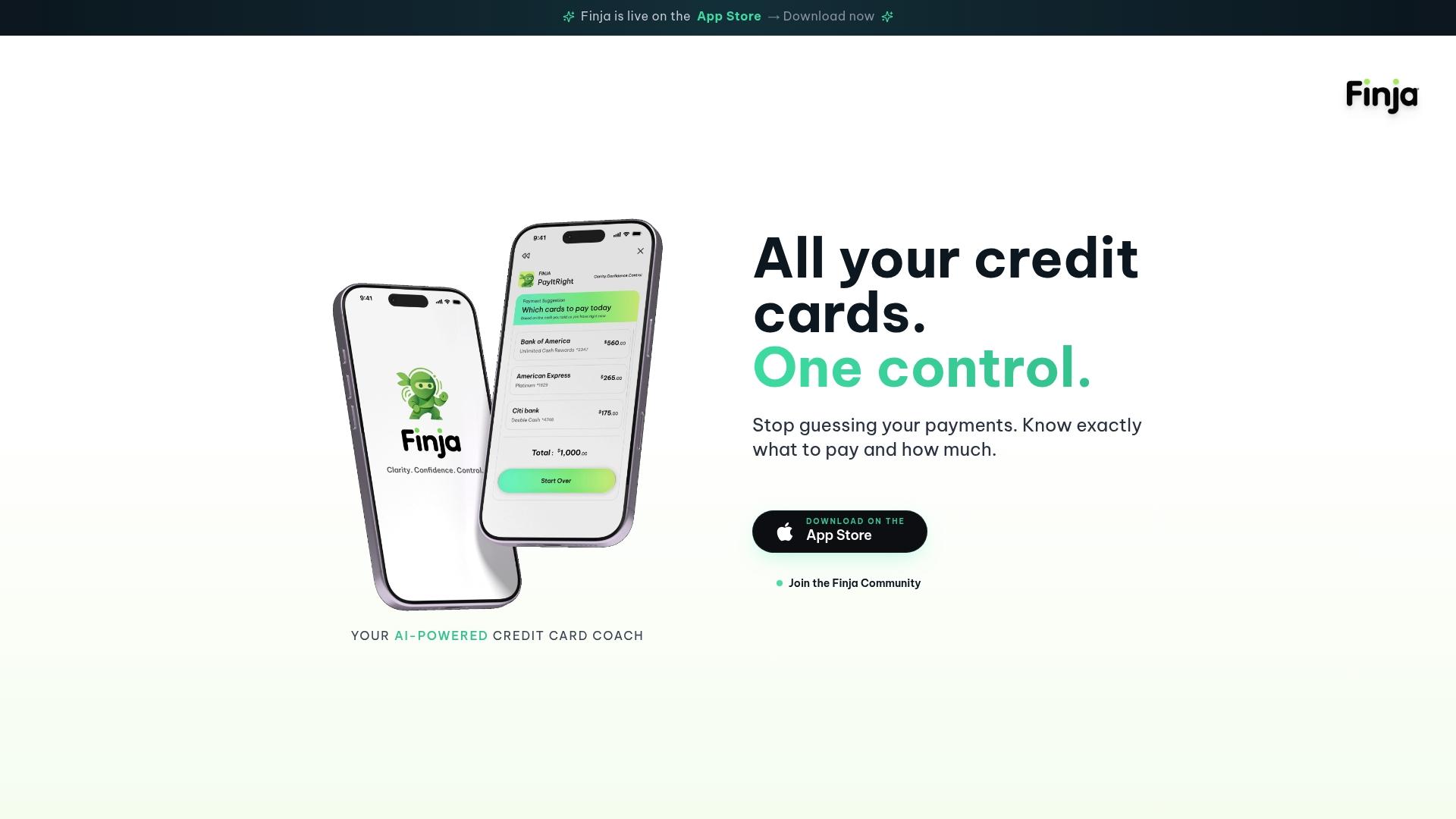
See how Finja works and put your cards in one place.
FAQ
Do charge cards affect utilization?
Generally not. Charge cards have no preset limit, and FICO generally excludes them when they are reported as open accounts. VantageScore does not use them in utilization either. The exception is a charge card reported as a revolving card with a limit or a high balance, so check how yours appears on your credit report.
Does a charge card help or hurt my credit score?
It can do either, through factors other than utilization. On-time payments and a long account history help. A late payment can hurt, and a new application adds a hard inquiry. It can also add variety to your credit mix. If it is a business charge card, the issuer may not report it to your personal file at all.
What are the disadvantages of a charge card?
The balance is normally due in full each month, which makes it less flexible than a credit card. Late fees can be steep, and some charge cards have high annual fees. Many credit cards have no annual fee. Pay Over Time, where offered, lets you spread some purchases out, but with interest.
Is a 30% utilization rate good?
It is a common ceiling. The CFPB says experts advise keeping credit use at no more than 30% of your total limit. Lower is better for your scores, and checking both per-card and overall ratios gives you the full picture.
Why does my report show a balance when I paid in full?
Issuers generally report the balance from your last billing statement, whether or not you later pay it off. To show a lower balance, make a payment before the statement closing date.
Sources
- NerdWallet: Difference between credit cards and charge cards
- Experian: How do charge cards affect your credit score?
- Chase: How is credit card utilization calculated?
- myFICO: Understanding accounts that may affect your credit utilization
- Reliant Community Credit Union: Are charge cards treated the same as credit cards?
- WalletHub: No pre-set spending limit credit card study
- Chase: Do charge cards build credit?
- CNBC Select: How do charge cards affect your credit score?
- American Express: Credit bureau reporting FAQs
- CFPB: Understand your credit report
- CFPB: Understand your credit score
- myFICO support: Why does my credit report show balances when they're paid off?
- myFICO: You don't need to carry credit card balances
- Fannie Mae: Credit utilization