
To freeze a spending category, pick a discretionary category such as dining out or online shopping. Set a hard start and end date, and stop all new purchases in it across every card you carry. Then track the category weekly so nothing slips through on a second or third card. A freeze is a rule you set and enforce, not a single switch. It works best when you can see all your cards in one place.
This guide shows how to choose categories, how long to freeze them, what a card lock does and does not stop, and how to review the results. It is written for people who carry several credit cards and want to cut interest costs, not chase rewards.
TL;DR
- A freeze pauses a category for a fixed period. A limit is a ceiling you can spend up to. Use a freeze for habits you want to reset and a limit for ongoing costs.
- Freeze discretionary categories (dining out, delivery, clothing, gadgets, optional subscriptions). Keep housing, utilities, insurance, minimum debt payments, essential groceries, health care and childcare available.
- Start with 7 days or a 30-day month, and write the end date down before you begin.
- A card lock stops new purchases, but pending and recurring charges can still go through. Check subscriptions and recent transactions by hand.
- At the end, compare against your baseline, subtract postponed purchases, and keep one or two changes that were easy to live with.
Table of Contents
- Freeze or limit: which one do you need?
- Which categories to freeze, and which to leave open
- How to choose a category based on what you actually spend
- How long should a freeze last?
- What a card lock stops, and what it does not
- Tracking a freeze across several cards
- Shared, essential and unexpected expenses
- Reviewing the results and resuming
- Our perspective
- See every card, and set limits you can follow
- FAQ
- Sources
Freeze or limit: which one do you need?
The two tools sound similar but behave differently. A freeze pauses non-essential purchases for a fixed period. A budget with category limits lets you keep buying until the allotted amount runs out. That is how The Finance Tree frames the difference.
The behavioral argument for a freeze is simple. Removing a category takes away the repeated in-the-moment decisions. A limit still asks for monitoring and self-control on every purchase, which is hard when a coffee shop, a delivery app and an online cart all sit on different cards.
A limit has its own strength: it gives you a stopping point. Capital One's explanation of envelope budgeting says that when the money in an envelope is gone, spending in that category is on hold until it is replenished. That is a freeze that triggers automatically when a category runs dry.
A practical rule:
- Freeze a category when the habit is the problem (late-night delivery, impulse shopping, subscriptions you never open).
- Limit a category when you cannot avoid it but tend to overshoot (groceries, gas).
- Combine them: freeze one or two categories hard and put limits on the rest.
If you want a deeper look at limits built around your statement dates, see our guide to setting category budgets that respect card timing.
Which categories to freeze, and which to leave open
The goal is to pause wants, not needs. InCharge's no-spend guide names good temporary targets: discretionary dining and delivery, clothing, décor, gadgets, entertainment, impulse shopping, convenience purchases and optional subscriptions.
The same guide says to keep available whatever you need for health, safety, work and family responsibilities: housing, utilities, insurance, minimum debt payments, essential groceries, health care, childcare and necessary transportation. U.S. Bank's list of essential expenses lines up with this. It names housing, utilities, groceries, healthcare, transportation, childcare and debt payments as core.

If you carry balances, the minimum payment line matters most. A freeze exists to free up money for the cards that cost you the most interest. It should never push a payment late.
A quick sort for your categories
| Category | Freeze? | Why |
|---|---|---|
| Restaurants, takeout, delivery | Yes | Discretionary and easy to substitute |
| Clothing and accessories | Yes | Rarely urgent |
| Gadgets, décor, hobby gear | Yes | Impulse-prone |
| Streaming and unused subscriptions | Yes, then cancel | Recurring and easy to forget |
| Entertainment and events | Yes | Discretionary |
| Essential groceries | No | Needed. Use a limit instead |
| Rent or mortgage, utilities | No | Fixed obligations |
| Insurance, health care, childcare | No | Health and family responsibilities |
| Gas and commuting costs | No | Needed for work. Use a limit |
| Minimum card payments | No | Late fees and credit damage |
Groceries are the classic gray area. Freeze the restaurant-style spending inside the category (snacks, treat items, delivery), not the weekly shop.
How to choose a category based on what you actually spend
Do not guess. Look at the last few months first. Fidelity's guide recommends reviewing recent spending to see what can be eliminated. The Sunday Budget suggests basing the target on the previous two or three months, minus planned exceptions and replacement costs.
Here is a simple process:
- Pull two or three months of statements from every card. Total each category across all cards, not card by card. One card often hides what the others show.
- Rank the discretionary categories by total. Pick the largest one or two. A freeze on a category you barely use proves nothing.
- Note the exceptions. A birthday dinner or a planned trip belongs on a written exception list before you start.
- Name the goal for the money. Paying down the highest-APR card works well, because it cuts interest directly.
- Write down your baseline. This is the number you will compare against later.
If you cannot yet commit to a full freeze, set a limit first. Symple Lending's guide suggests assigning a monthly amount from what remains after fixed bills and savings goals, then splitting it into weekly targets. Its example turns a $600 grocery limit into about $150 a week. Weekly pieces make an overage visible while you can still fix it.
When several cards have different due dates, the calendar matters as much as the category. Our post on how to budget by billing cycle covers that.
How long should a freeze last?
Shorter than you think, at first. Family Credit recommends starting with seven days on a first attempt, with 7, 14 or 30 days as options. The Finance Tree describes typical freezes as 7 to 30 days and recommends a hard start and end date. Fidelity presents a weekend, a week, a month or longer, and says many people choose a month because it is ambitious but achievable.
A good path for most card users:
- First try: one week on one category.
- Second try: 30 days on two categories, once you know where the leaks are.
- Ongoing: a smaller limit on the categories that tempted you most.
A fixed end date makes it an experiment, not a punishment. You know when you can reassess, which makes a tough week easier to finish.
What a card lock stops, and what it does not
This is where many freezes fail. People lock a card and assume everything stops. U.S. Bank's card-controls documentation says a temporary lock prevents new purchases, but pending or recurring transactions may still process. It also describes category rules for business cards: transactions in unselected categories are declined. That describes business card controls, not a guarantee for every consumer card.
Reap's help center says the same about already-authorized charges: freezing blocks new transactions but does not affect charges already authorized. It adds that an unapproved recurring charge may be declined after a freeze, and that to stop a specific subscription you should contact the merchant directly.
So before you start:
- List every recurring charge on every card. Cancel the ones in your frozen categories, or pause them with the merchant.
- Check pending transactions and count them in the old period, not the new one.
- Expect gaps. Trial conversions and annual renewals can land mid-freeze. Put them on your calendar.
- Understand your card's controls. Our breakdown of what still goes through on a frozen or locked card walks through the difference.
For subscriptions in particular, tracking subscription charges across cards is the fastest way to find the ones you forgot.
Tracking a freeze across several cards
Rules without tracking turn into good intentions. The simplest method is to log every purchase in the frozen category as it happens. Symple Lending recommends recording purchases daily or every few days and holding a weekly check-in to compare spending with your limits and decide what to pause next.
Two habits keep it honest:
- Use a stop threshold. For limit-based categories, decide in advance when you pause. Freezing at about 90% of the category budget leaves a small buffer so you do not blow past 100%.
- Log the skipped purchase. InCharge recommends recording each skipped purchase, its normal cost, the substitute cost, whether you bought it later, and the amount you actually kept. Postponed purchases should not count as savings.
The last point is where most people overstate their results. If you skip a $60 jacket in October and buy it in December, you did not save $60. You moved it.
With three or more cards, the hard part is seeing everything in one place. If you are building that routine, our guide on budgeting with credit cards by syncing to paychecks and our APR-first spending report show how to combine your cards into one view.
Shared, essential and unexpected expenses
A freeze has to survive real life. Plan for three situations.
Essentials inside a frozen category. The Sunday Budget's allowed list includes necessary repairs, health needs, dependent care and genuinely necessary replacements. Write that list before you begin, so you are not deciding under pressure.
Planned and unplanned exceptions. Fidelity says exceptions may be set for preplanned occasions, such as a wedding, or for unexpected expenses, such as replacing a broken laptop. Set a rule up front: any exception gets logged, with a reason.
Genuine emergencies. Ramsey's guide permits stopping the challenge for a car repair or medical emergency and restarting later. Pause the freeze. Do not skip necessities to protect a streak.
Shared households. If you share finances, agree in advance which categories are shared and which are personal, and who covers what. A partner's dinner you paid for should not eat your own frozen category, so track the shared portion separately and note when you are repaid. Hold a short weekly check-in so nobody is surprised.
One failed day does not end the experiment. InCharge recommends logging an unplanned purchase and moving on to the next decision instead of abandoning the month.

Reviewing the results and resuming
When the end date arrives, run the same review every time:
- Compare actual spending with your baseline. Use the same cards and the same categories.
- Subtract postponed purchases. Anything you bought a week later is not savings.
- Account for exceptions and replacement costs. The Sunday Budget gives the math as baseline spending in the paused category, minus actual spending, minus replacement costs.
- Reconcile upcoming bills. Make sure the money is really available before you move it.
- Send the savings to the goal. A payment toward your highest-APR balance is the most direct way to turn a freeze into lower interest.
- Resume selectively. InCharge recommends keeping one or two sustainable changes, such as packing lunch, dropping an unused subscription, or keeping a smaller online-shopping limit.
A worked example, using made-up numbers: your baseline for dining and delivery was $320 a month. During a 30-day freeze you spent $40 on an approved birthday dinner, and you bought $50 of groceries to replace takeout meals. Your result is $320 minus $40 minus $50, or $230 kept. You send $230 to your highest-APR card, then set a $150 monthly dining limit going forward.
Treat the freeze as a defined experiment with a comparison period, explicit exceptions and a review. It is not a permanent rule of deprivation.
Our perspective
Most advice about freezing spending assumes one card and one statement. Real card users have three or four, each with its own due date, APR and habits. A freeze on dining looks easy until you find lunches on the card you forgot you had.
We built Finja around that problem. Our focus is lowering interest costs and improving credit health, not maximizing rewards. That is why we think a category freeze should start with a single view of every card, so you can see where the category money really goes, and end with a payment decision: where should the freed-up cash go this month?
A freeze is only as useful as what you do with the savings. Our AI-powered guidance on payment timing and amounts is designed to help you point that money at the card where it cuts the most interest.
Grace K.
See every card, and set limits you can follow
A category freeze gets easier when your cards, balances and spending sit in one place. Finja is an AI-powered credit card coach for people with multiple cards. It offers consolidated account views, spending limit controls, budgeting tools and credit health tracking, plus guidance on payment timing and amounts designed to reduce your interest costs.
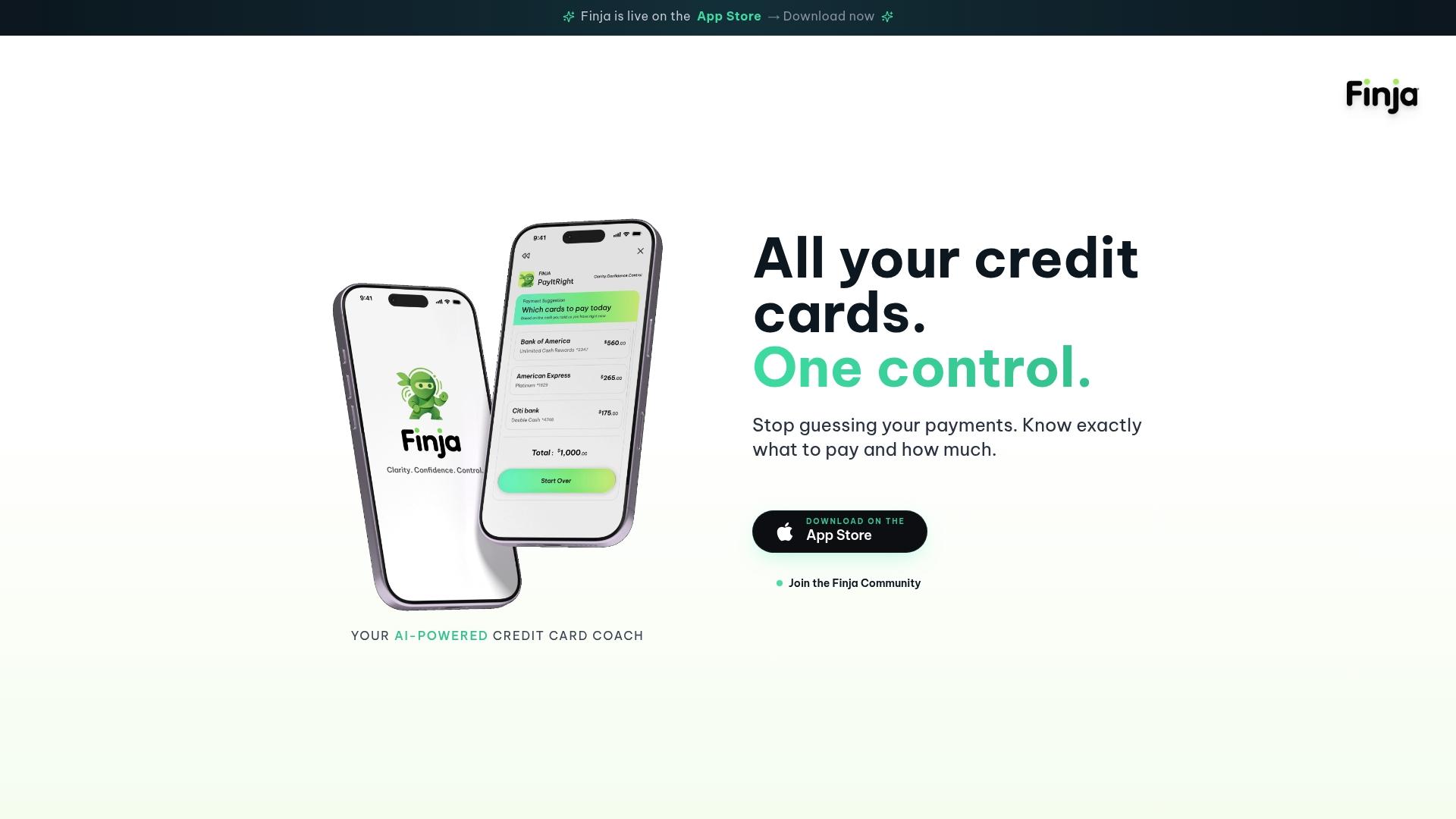
If you are ready to run your first freeze with a clearer picture of your cards, meet your AI-powered credit card coach. For a bigger-picture plan, our credit card financial control system guide and our tips on managing multiple credit cards are good next steps.
FAQ
Can I freeze a spending category directly on my credit card?
It depends on your issuer and card. Some business card programs let administrators allow or decline purchases by merchant category, as U.S. Bank's documentation describes. For most personal setups, a category freeze is a rule you set and track yourself, with limits and a weekly check-in. Check your card app for the controls it offers.
Will locking my card stop my subscriptions?
Not reliably. A temporary lock blocks new purchases, but pending or recurring transactions may still process. To stop a particular subscription, contact the merchant directly and cancel or pause it. Then watch the next statement to confirm.
How long should my first freeze last?
Seven days is a sound start. Once you see how it feels, move to a 14- or 30-day freeze. Choose the end date before you begin, so the freeze has a clear finish and a review.
What should I do if I break the freeze?
Log the purchase, note why it happened, and carry on with the next decision. One slip does not erase the experiment. If a real emergency such as a car repair or medical bill hits, pause the freeze, pay for it, and restart later.
Should I freeze groceries?
No. Essential groceries should stay available. Freeze the optional extras inside the category, such as takeout, snacks and treat items, and keep the weekly shop under a limit instead.
Sources
- Spending Freeze Challenge, The Finance Tree
- How to Use the Envelope Budget System, Capital One
- The No-Spend Challenge: A 30-Day Money Reset, InCharge
- Essential expenses, U.S. Bank
- No spend challenge: How to do a no-spend month, Fidelity
- No-Spend Month: Rules, Tips, and a Free Tracker, The Sunday Budget
- Set Category Limits And Make Your Budget Stick, Symple Lending
- How a Spending Freeze Can Boost Your Financial Health, Family Credit
- What types of card controls are available, U.S. Bank
- How do I freeze or delete my card, Reap Help Center
- How to Win a No-Spend Challenge, Ramsey