
To manage a 0% APR balance, divide it by the number of promo months, pay that amount every month (not the minimum), stop using the card for new purchases unless you can pay the full balance each month, and track the end date alongside every other card you carry. The promo only saves money if the balance reaches zero before the rate resets, and if the rest of your cards are not quietly costing you more than the promo saves.
This guide is for people who hold more than one card and want a repeatable routine. It covers the math, the traps that bring interest back, and how to keep the 0% balance from getting lost among your other accounts.
TL;DR
- Divide the promotional balance (plus any transfer fee) by the number of promo months. That is your real monthly payment. The minimum due is usually not enough, according to the CFPB.
- New purchases on the same card can start accruing interest right away unless you pay the full balance, including the promo balance, by the due date.
- A balance transfer fee can apply even on a 0% offer, so count it in your payoff target.
- Keep paying at least the minimum on every other card and send extra money to the highest-rate card first.
- Put the promo end date and the post-promo rate where you will see them every month.
Table of Contents
- What 0% APR actually promises
- Step 1: Set the real monthly payment
- Step 2: Count the fee and the deadline
- Step 3: Protect your grace period on new purchases
- Step 4: Keep the other cards from undoing the savings
- Step 5: Plan the exit before the promo ends
- Is the offer worth it?
- Where Finja fits
- Our perspective
- FAQ
- Sources
What 0% APR actually promises
APR is the yearly cost of borrowing on a card. A 0% promotional rate means that for a set period you are charged no interest on a specific balance. Under federal rules, the CFPB's examination procedures for Regulation Z describe a promotional rate as one that applies for a specified period and is lower than the rate that applies afterward. Ads must say when the promotion ends and what rate follows.
Two promotion types matter here:
- Balance transfer 0%: you move debt from one card to another, and the moved amount carries 0% for the promo window.
- Purchase 0%: new purchases on the card carry 0% for the window.
Both are different from a deferred-interest offer, which is common in store financing. The CFPB's 2017 guidance on promotional financing draws the line clearly. With a true 0% promotion, interest on whatever is left starts only from the day the promo ends. With deferred interest, interest going back to the purchase date is added if you do not pay in full. Its example: a $100 leftover balance costs $100 under a 0% offer, but $165 under a 25% deferred-interest offer after 12 months. Read your terms to know which one you have.
Even at 0%, you are still borrowing. The same CFPB guidance notes that the money has to be repaid, so the promo length, the rate afterward and any conditions such as minimum purchase amounts decide the total cost.
Step 1: Set the real monthly payment
The minimum payment is built to keep your account in good standing, not to clear the promo. The CFPB advises working out what you must pay each month to finish the promotional balance before the period ends, and warns that the minimum is usually not enough.
The formula is simple. Retailer financing programs describe it the same way: TD Retail Card Services defines the fixed payment as the purchase amount plus any promotional fee, divided by the months in the promotional period, with no prepayment penalty. Wells Fargo's equal-payment example shows $3,600 over 36 months as $100 a month.
Here is a worked example with made-up numbers for illustration:
| Item | Amount |
|---|---|
| Balance moved | $6,000 |
| Transfer fee (assume 3%) | $180 |
| Total to repay | $6,180 |
| Promo length | 18 months |
| Monthly payment to finish on time | $343.33 |
If the card's minimum is, say, $60, paying only the minimum would leave most of the balance standing when the rate resets. Set an automatic payment at the full target amount, not the minimum.
If the target is more than you can afford, you have learned something useful before the clock ran out: you will likely carry a remainder. Then the post-promo APR matters, and so does reducing the cost of your other cards. Our guide on how to reduce effective APR across cards walks through that plan.
Step 2: Count the fee and the deadline
A transfer fee is what a card charges to move a balance to it. The CFPB confirms a company may charge it even on a zero percent offer. In a CFPB guide to consolidating card debt, the fee is usually a percentage of the amount moved or a fixed amount, whichever is greater. That fee is part of the balance you must repay, so add it to your target as in the table above.
Timing also needs attention:
- Processing time. Terms vary by issuer. One major issuer's published terms say transfers post in 4 to 6 days, or up to 15 business days when a check must be sent. Another's offer terms say the account must be open 14 days before it can process a transfer, and that transfers cannot pay certain same-issuer accounts. Keep paying the old card until the transfer posts, or you risk a missed payment.
- Minimum length. Per the CFPB, an introductory rate must stay in effect at least six months unless you are more than 60 days late on a payment. A variable introductory rate can still move if its index changes.
- The 60-day rule. Being more than 60 days late lets the issuer raise the rate on all balances, including the transferred one, as the CFPB's consolidation guide explains.
Our article on balance transfer timing covers how to post a transfer quickly while protecting the intro rate.
Step 3: Protect your grace period on new purchases
This is the trap that surprises people most. The grace period is the window in which new purchases carry no interest if you pay the statement balance in full. Once you carry a balance, you normally lose it.
The CFPB explains that on most cards, if you carry a balance month to month, new purchases accrue interest from the transaction date even when another balance on the card is at 0%. You avoid it only by paying the entire balance, including the transferred balance, in full by the due date. The agency's 2014 consumer alert says the same, and its Bulletin 2014-02 warns issuers to disclose it clearly.
The practical rule: treat the 0% card as a payoff card, not a spending card. Keep everyday spending on a different card you pay in full each month. For more on the mechanics, see how to protect your credit card grace period.
Payment allocation is the other piece. Card issuers must apply amounts above the minimum to the highest-rate balance first, so a 0% balance sits at the back of the line. That is a reason to check each statement and confirm where your money went rather than assume.
Step 4: Keep the other cards from undoing the savings
Most people with a 0% balance also have other cards with real interest. A 0% card saves money only if the rest of the picture is under control. The St. Louis Fed compared three multi-card payoff strategies and found that paying the highest-rate card first, with minimums on the others, pays off all debt faster and costs less interest than smallest-balance-first or proportional payments.
A simple monthly routine for several cards:
- Pay at least the minimum on every card, on time. One late payment can cost you the promo rate.
- Pay the 0% target amount from Step 1.
- Send any extra money to the card with the highest regular APR.
- When you pay off a card, redirect its payment to the next one.
Which card gets the extra payment can also depend on statement dates. Our walkthrough on deciding which card to pay first shows how to do it in about 15 minutes.
Utilization is the share of your limit you are using. A transfer can raise utilization on the new card even as the old one drops. If your score matters for a coming loan, read how to use a 0% offer without hurting your score.
Step 5: Plan the exit before the promo ends
Set three reminders on the day the transfer posts:
- Halfway point. Check that your balance is on pace. If you are behind, raise the payment now, not in the last month.
- 60 days before the end. Confirm the remaining balance, and find the post-promo APR on your card agreement. The issuer must disclose how long the introductory rate lasts and what applies afterward.
- Last statement. Pay the full remainder so nothing rolls into the regular rate.
If a balance will remain, compare your options early: a second transfer where you qualify, a fixed-rate personal loan, or a faster payoff using money from your budget. Our comparison of a balance transfer versus a personal loan lays out the trade-offs for a 12 to 21 month promo. The CFPB's consolidation guide also suggests building a budget first and contacting your creditors, who may lower payments, waive fees, reduce your rate or move your due date.
One caution from the same guide: be wary of consolidation offers that sound too good to be true. Many companies advertising consolidation are actually debt settlement firms that charge up-front fees and may tell you to stop paying your debts, which is risky. A 0% offer from a card issuer is a loan with disclosed terms. A promise to erase your debt is a different thing.
If you feel the balances are slipping away from you, the 72-hour plan to stop a credit card debt spiral gives you a place to start.
Is the offer worth it?
A 0% balance transfer helps most when three things are true: the fee is smaller than the interest you would otherwise pay, you can realistically clear the balance inside the window, and you will not add new debt on the same cards. If any of those is shaky, the math changes. We explain the strategic case in are zero APR offers worth it.

Where Finja fits
Finja is an AI-powered credit card management app built for people with multiple cards. It shows all of your cards in one place, recommends payment timing and amounts to reduce interest, and tracks credit health. For a 0% balance, that means the promo card sits next to your other cards in one view, so you can see how your payments fit together.
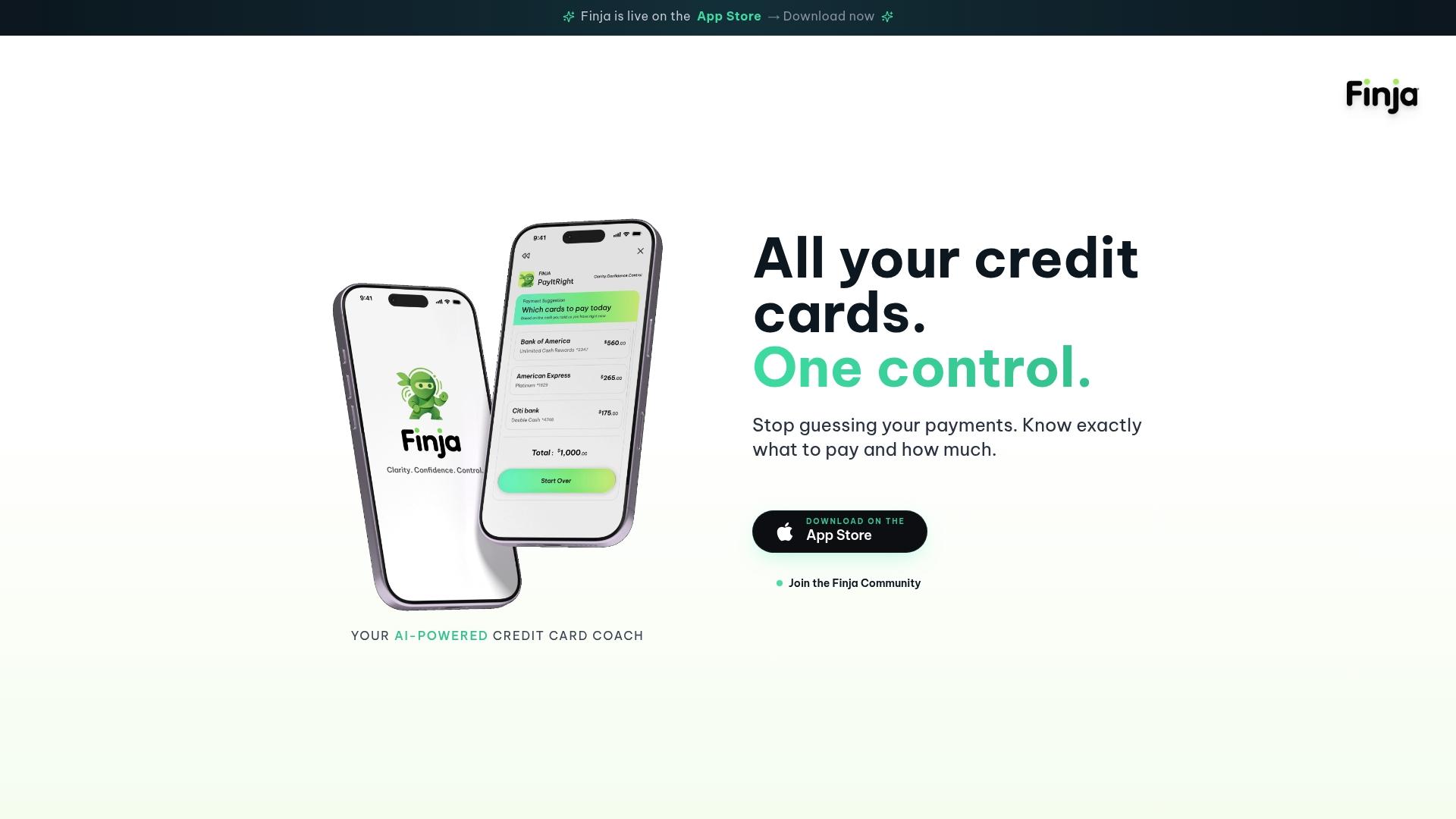
If you are juggling a promo balance and other cards, see how Finja works as your credit card coach.
Our perspective
Most advice about 0% offers stops at choosing the card. The harder part starts the day after the transfer posts, when the promo balance becomes one more number among several cards, each with its own due date and rate.
We built Finja around reducing interest costs and improving credit health, not around chasing rewards. Our approach is a dedicated credit card coach rather than a general budgeting tool: all cards in one place, with AI-powered guidance on when to pay and how much.
For a 0% balance, we think the winning habit is simple. Know the end date, pay the target amount, and let the rest of your payments follow the highest-rate card. Clarity is what makes that routine stick.
Grace K.
FAQ
What balance do I pay to avoid interest?
To avoid interest on new purchases, pay the full statement balance, including any 0% promo balance, by the due date. To avoid interest on the promo balance itself, pay it off before the promotional period ends. The monthly minimum alone usually will not do that.
Is a 0% balance transfer a good idea?
It can be when the transfer fee is lower than the interest you would pay and you can clear the balance within the promo window. It works best when you stop adding new debt on the cards involved. Calculate the monthly payment first, as in Step 1.
What happens if I miss a payment on a 0% balance?
A late payment can cost you the promotional rate. Per the CFPB, the introductory rate must last at least six months unless you are more than 60 days late, and after that the issuer can raise the rate on all balances. Set autopay for at least the minimum, and pay the full target on top.
How is 0% APR different from deferred interest?
With true 0% APR, interest on any remaining balance begins only when the promo ends. With deferred interest, interest from the original purchase date can be added if the balance is not paid in full. Your card terms will say which applies.
Sources
- CFPB Credit Card Account Examination Procedures
- CFPB: How to understand special promotional financing offers
- TD Retail Card Services: 0% APR financing plans
- Wells Fargo: Understanding 0% APR with Equal Payments
- CFPB: What is a balance transfer fee?
- CFPB: Consolidating your credit card debt
- Capital One: Balance transfer credit cards
- Discover Card application terms
- CFPB: How long can I keep a low rate on a balance transfer?
- CFPB: Do I pay interest on new purchases after a balance transfer?
- CFPB: You could still end up paying interest on a zero percent offer
- CFPB Bulletin 2014-02 on promotional APR offers
- St. Louis Fed: Best strategy for paying off credit card debt