
Yes, you can make a credit card payment before autopay runs, and on most cards that is a smart move. You can stay enrolled in autopay as a safety net and still pay extra mid-cycle to cut interest or lower the balance your issuer reports. What changes from card to card is whether your early payment shrinks the upcoming autopay or whether autopay pulls the same amount anyway. This guide shows how to find out which one you have and how to set things up so you never miss or double up.
TL;DR
- You can pay manually while enrolled in autopay. Many issuers reduce the next automatic payment by what you already paid.
- Not every system adjusts. Some lock in the amount when the statement is generated, so check your issuer's autopay terms before paying close to the due date.
- Paying mid-cycle, a few days before the statement closes, can lower the balance reported to the credit bureaus and the interest on a carried balance.
- Keep a cash buffer in your checking account and look at your account a day or two before autopay fires.
Table of Contents
- Does an early payment change your autopay?
- How your autopay option shapes the result
- Why pay mid-cycle at all
- Timing: when does an early payment actually count?
- How to run autopay and early payments together without double paying
- Handling several cards at once
- Our perspective
- Put your payment timing on a schedule
- FAQ
- Sources
Does an early payment change your autopay?
In most cases, yes. Experian explains that most issuers reduce the autopay amount based on payments you make before the withdrawal date. Its example: if your scheduled payment is $150 and you pay $50 early, autopay takes the remaining $100. If you pay the full statement balance, autopay may be cancelled for that month.
Issuers' own rules say the same thing in their own words:
- Capital One: for the minimum payment and statement balance options, a payment made before AutoPay processes reduces the upcoming automatic payment. If your minimum payment AutoPay is $25 and you pay $10 first, the automatic payment becomes $15.
- Chase: the Automatic Payment Agreement says the AutoPay amount may be less because payments, returned purchases and other credits can reduce it if they post between the closing date and the date your payment is processed.
- Venmo Credit Card: while enrolled you may make an additional payment at any time, and it may reduce the scheduled Autopay payment. If your balance is zero or less, no Autopay payment is processed.
When autopay does not adjust
There is a catch. LegalClarity describes two kinds of billing systems: some check your balance a day or two before the withdrawal and adjust, while others lock in the amount when your statement is generated and pull it on the due date no matter what you paid in between.
Timing matters too. Most autopay withdrawals travel over the ACH network in batches. The same source says a biller typically submits the payment file one to two business days before the withdrawal date. Once that file is in transit, a manual payment made in that window will not stop it.

Capital One adds a related point: extra payments do not cancel or change scheduled payments by themselves under every option, and AutoPay still runs unless you cancel it or your balance is $0. Experian's LaToya Irby advises reviewing your issuer's policy before paying manually close to the due date, because you could end up paying twice if you pay after autopay has started.
A quick way to tell which type you have
- Open your issuer's autopay terms or help page and look for wording like "payments made before AutoPay processes will reduce the amount."
- Check which autopay option you chose: minimum payment, statement balance, current balance or a fixed amount. The option matters.
- Make a small early payment well before the due date, then look at the scheduled autopay amount in your account the next day.
- If the scheduled amount did not change and you cannot find the rule, ask your issuer directly.
How your autopay option shapes the result
The amount you chose at enrollment decides how an early payment plays out. Here is how the common options behave, based on the issuer rules above.
| Autopay option | What an early payment usually does | What to watch |
|---|---|---|
| Minimum payment | Reduces the upcoming automatic payment (Capital One example: $25 minus $10 paid = $15) | If you pay more than the minimum, autopay may have nothing to take |
| Statement balance | Reduces the automatic payment by the amount already paid | Paying the full statement balance early may cancel autopay for that month |
| Fixed amount | Chase says the amount is never more than the fixed amount, but may be less if credits reduce the balance | If the fixed amount is below the minimum due, you must pay the difference yourself or the account goes past due |
| Custom or other amount | Varies by issuer, so check the terms | Fidelity lists the next minimum payment, the full balance or a custom amount as choices |
Two setup details are worth knowing. Chase notes that if your fixed amount is less than the minimum payment due, you must pay outside of AutoPay to avoid going past due. And Fidelity says new AutoPay requests can take up to two to three business days to process. Until you are told setup is complete, keep paying on your own so a payment is not missed.
Why pay mid-cycle at all
Autopay protects your payment history. Early payments do other jobs: they can lower interest and the balance that gets reported. Both are worth understanding.
Interest on a carried balance
If you carry a balance from one billing cycle to the next, you generally lose your grace period and interest is usually charged daily on the outstanding balance. The CFPB explains that the daily periodic rate is the APR divided by 365, applied under methods such as the average daily balance.
Because interest builds on a daily balance, every day a dollar sits unpaid costs a little. Paying earlier lowers the average daily balance. A simple illustration with made-up numbers: on a $2,000 balance at a 24% APR, the daily rate is roughly 0.066%, or about $1.32 a day. Paying $1,000 on day 10 instead of day 30 spares about 20 days of interest on that $1,000, close to $13. The exact figure depends on your issuer's method, so treat it as a rough guide.
If you pay in full every month by the due date, the CFPB notes that a grace period applies and no interest is charged on that balance. Capital One adds that after paying in full for at least two consecutive months, you avoid interest the following month. For a deeper look, see our guide to protecting your credit card grace period.
The balance that gets reported
Issuers often report your balance to the credit bureaus around the end of the statement period, roughly three to four weeks before the bill is due. That means you can pay in full each month and still see a higher utilization ratio than you expected. Capital One also notes that experts recommend keeping utilization below 30% of your total available credit.
Chase says that payments made before your statement close date can lower your credit utilization ratio and potentially improve your score. Personal One describes the useful window as between the middle of the billing period and statement close, with a payment three to five days before close, after most of the month's spending, as the most reliable approach.
That is where the second search many readers run comes in: a mid-cycle credit card payment is simply any payment made between the start of the cycle and the statement closing date, before your bill is even issued. Autopay normally fires on the due date, weeks after the statement closes, so it cannot do this job. Only a manual payment can. Our walkthrough on lowering utilization in one to two billing cycles covers the tactics in detail.

Chase also recommends paying your entire balance in full on or before the due date whenever possible, which brings the benefits of a stronger credit history and no interest or fees. Autopay for the statement balance is the simplest way to do that, and mid-cycle payments sit on top of it.
Timing: when does an early payment actually count?
A payment is only useful once it posts. A few rules to know:
- Experian says the bank transfer behind a payment typically settles in one to three business days, but your issuer credits the payment on the date it is initiated.
- Issuers set cutoffs. Synchrony credits payments received before 11:59 p.m. Eastern Time the same day. SoFi posts payments from outside accounts made before 5:00 PM ET Sunday through Friday the same night.
- Capital One requires payment before 12 midnight ET on your due date to credit it to the current cycle, with an 8 p.m. ET cutoff if the due date is the same as the statement closing date.
- The CFPB says the due date falls on the same calendar day each month, at least 21 days after the bill is sent, and a payment is on time if it arrives by the time on your bill, or 5 p.m. if no time is stated.
If you are paying right before a statement closes, give yourself margin. Our articles on how long payment posting takes and weekend payments explain why a Friday night payment may not land when you think.
How to run autopay and early payments together without double paying
Here is a routine that works whichever type of billing system your issuer uses.
- Set autopay to the statement balance or the minimum. The minimum is your floor against a late payment. The statement balance avoids interest if you can afford it. Both options are ones where issuers like Capital One reduce the automatic payment after an early payment.
- Pick your mid-cycle date. Find your statement closing date, then schedule a manual payment three to five days before it.
- Check a day or two before autopay. LegalClarity suggests logging in then to confirm the withdrawal was adjusted, so you can catch a pending payment early by contacting your issuer.
- Switch the setting if needed. If your issuer offers a current balance or minimum payment option, that can reduce the chance of overpaying.
- Pause autopay only when sure. If you cancel autopay to pay manually, put a reminder in place, because a missed payment hurts more than a duplicate one.
- Keep a buffer. Leave extra money in checking so that if both payments go through, you do not overdraft.
A double payment is rarely lost money. The extra amount reduces your balance, and a credit balance can generally be refunded by your issuer on request. It can still cause an overdraft in your bank account, which is why the buffer matters.
If your due date is awkward for your paycheck schedule, see how to move your due date and our broader due date management guide.
Handling several cards at once
The routine above is easy for one card. With three or four, each has its own statement date, due date, autopay option and cutoff time. A mid-cycle payment that suits one card can collide with an autopay on another, and your bank balance is shared across all of them.
A workable approach:
- List each card's closing date, due date and autopay option in one place.
- Direct extra money first toward the card with the highest APR, since that is where each day costs most. Our guide to deciding which card to pay first walks through it.
- Space your manual payments so they land a few days before each statement closes, not all on the same day.
- Keep autopay on every card as the backstop.
The broader logic of matching payment dates to fees, interest and score is laid out in when to pay your credit card and timing and Regulation Z.
Our perspective
Most people treat autopay as the finish line: set it once and forget it. We see it as the floor. It makes sure you are never late, but it cannot decide how much to pay early, when to pay, or which card deserves the extra dollars.
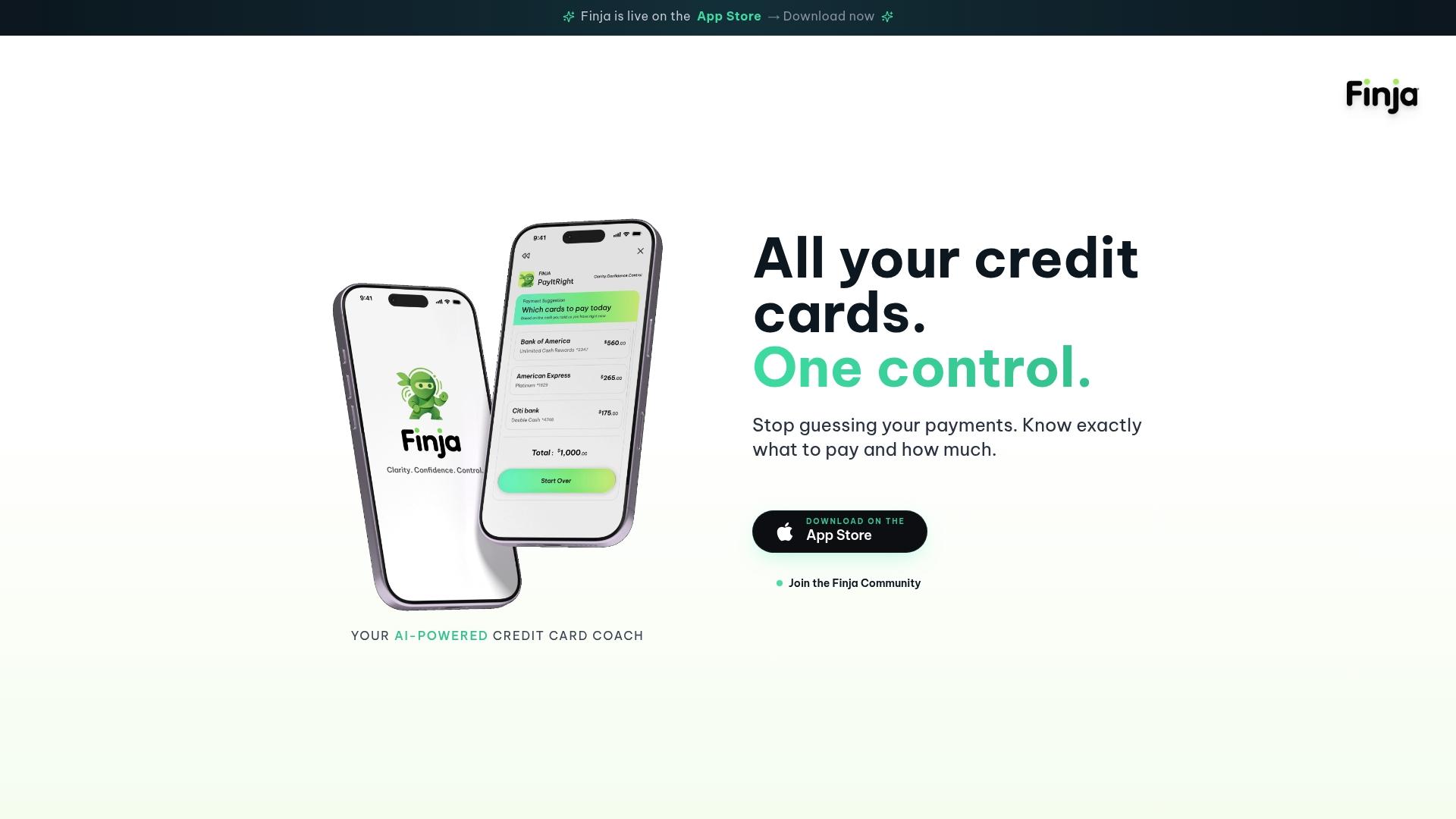
The hard part with multiple cards is not knowing that early payments help. It is tracking closing dates, due dates and autopay rules across every card, then choosing the amount and timing that reduces interest and keeps reported utilization lower. That is exactly what we built Finja to do: show all your cards in one place and give AI-powered guidance on payment timing and amounts.
We focus on interest costs and credit health rather than rewards, because that is where multi-card holders often feel the most pressure. Our goal is a dedicated credit card coach, simple enough that there is no learning curve.
Grace K.
Put your payment timing on a schedule
If juggling statement dates and autopay rules across several cards sounds like a second job, Finja is built for it. Our app brings all your cards into one view and recommends how much to pay and when, aiming to reduce your interest costs and support your credit health. You can see it at Finja, your AI-powered credit card coach.
It works best alongside the habits above: autopay on as your safety net, with guided early payments on top.
FAQ
Can I pay my credit card before autopay runs?
Yes. You can make manual payments while enrolled in autopay. Many issuers then lower the upcoming automatic payment by the amount you paid, though some lock in the amount at statement time, so confirm your issuer's rule.
Will I be charged twice if I pay early and autopay still runs?
You might be charged twice in the sense that both payments are withdrawn from your bank, especially if you pay within a day or two of the autopay file being sent. The money is applied to your card balance, so it is not lost, but it can overdraw your checking account. Check your account a day or two before the autopay date and keep a buffer.
Does paying mid-cycle help my credit score?
It can. Chase says payments made before the statement close date can lower your utilization ratio, and issuers often report balances around statement close. No payment guarantees a particular score change, since scores depend on your whole credit file.
Does paying early reduce the interest I owe?
If you carry a balance, yes in most cases. Interest is usually calculated daily on your average daily balance, so a lower balance for more days costs less. If you pay your full statement balance by the due date each month, you generally pay no interest on purchases anyway.
Is setting up autopay a hard pull?
Autopay is a payment instruction for an account you already have, and nothing in the issuer pages we reviewed describes it as a credit inquiry. If you are unsure, ask your issuer before enrolling.
Sources
- How Does Credit Card Autopay Work? (Experian)
- How to set up AutoPay (Capital One Help Center)
- Automatic Payment Agreement, Credit Card (Chase)
- Autopay Terms and Conditions (Venmo)
- What Happens If You Pay Before Autopay (LegalClarity)
- AutoPay (Fidelity Visa Signature Card)
- How Do Credit Card Payments Work? (Citi)
- Credit card contract definitions (CFPB)
- Making credit card payments (Capital One Help Center)
- How Carrying a Card Balance Can Affect Credit (Capital One)
- Making Multiple Credit Card Payments (Chase)
- Credit Card Statement Date vs Due Date (Personal One)