
To align paychecks with bills, put every bill in the week it is due, put every paycheck in the week it arrives, and look for bills that land before the money that pays them. Then fix each gap by moving the due date, paying early from a set-aside amount, or splitting a large bill. Credit cards are where this gets hardest, because each card has its own due date and statement cycle. If you carry several cards, we built Finja, an AI-powered credit card coach, to show them all in one place and guide the timing and size of each payment.
TL;DR
- List bills by the week they are due and income by the week it arrives. Any bill that falls a week or more before the income that covers it is a mismatch.
- Ask the company to move the due date. If it can't, set money aside from one part of the month for bills due in another, or pay some bills early.
- Credit card due dates fall on the same calendar day every month, so one successful change fixes the card for good.
- With irregular pay, plan on a confident low estimate and set windfalls aside for heavier months.
- With multiple cards, stagger the due dates around your paydays and pay in an order based on statement timing, not guesswork.
Table of Contents
- Why bills and paychecks drift out of sync
- Step 1: Build a one-month map of bills and income
- Step 2: Spot the gaps
- Step 3: Move the due dates that can move
- Step 4: Cover what can't move
- Step 5: Assign everyday spending to each paycheck
- Step 6: Schedule credit card payments around payday
- If your income is irregular
- A monthly routine that keeps it aligned
- Promo: one place for every card's dates
- Perspective
- FAQ
- Sources
Why bills and paychecks drift out of sync
Most people never chose their due dates. The rent is due on the 1st because the landlord said so. The phone bill is due on the 18th because that is the day you signed up. A credit card due date was set when you opened the account. Meanwhile your employer pays on the 7th and the 21st, or every other Friday, or whenever a shift is posted.
The result is a month in which money arrives and leaves on unrelated schedules. The Consumer Financial Protection Bureau (CFPB), the federal agency that oversees consumer finance, has reported that many people struggle to pay bills on time and that one reason is bill due dates and income streams that are not aligned. In other words, a missed payment is often a timing problem, not a spending problem.
That is good news, because timing is fixable. You don't have to earn more to stop bills from landing in the wrong week. You have to see the month the way your bank account sees it.
Step 1: Build a one-month map of bills and income
Start with a single sheet, a spreadsheet, or a calendar. The CFPB's bill due date worksheet uses a simple layout: write each bill in the week of the month it is due, then write your expected income in the week it arrives. Income includes paychecks, government benefits and child support. Then compare how the two line up.
What you need for each bill:
- The name and the amount (or your best average, for utilities)
- The due date, not the date the statement arrives
- Whether it is autopay or manual
- Whether the company lets you change the date
For each paycheck, record the amount that actually reaches your account, after taxes and deductions.
Where it goes wrong: people list only the big fixed bills. Credit card minimums, annual fees billed monthly, and subscriptions are what quietly break the plan. If you have more than one card, each one needs its own row with its own due date.
A second detail from the CFPB's Behind on bills? toolkit: its bill calendar suggests marking the date you will pay as 7 days before the due date for mailed payments and 2 days before for online payments. That cushion matters later, when we get to payment posting.
Step 2: Spot the gaps
Now read your map from left to right. You are looking for one pattern: a bill that falls in a week with no income behind it.
Here is a worked example. Say you are paid $1,800 on the 5th and $1,800 on the 20th. Your bills look like this:
| Bill | Amount | Due | Paycheck that should cover it |
|---|---|---|---|
| Rent | $1,500 | 1st | Paycheck from the 20th (15 days earlier) |
| Car insurance | $140 | 3rd | Paycheck from the 20th |
| Card A minimum | $60 | 9th | Paycheck from the 5th |
| Internet | $70 | 12th | Paycheck from the 5th |
| Phone | $85 | 18th | Paycheck from the 5th |
| Card B minimum | $45 | 24th | Paycheck from the 20th |
| Utilities | $160 | 27th | Paycheck from the 20th |
The 20th paycheck has to carry rent, insurance, Card B and utilities: $1,500 + $140 + $45 + $160 = $1,845. That is more than the $1,800 check, so the second half of the month is short by $45 before you buy a single groceries. The 5th paycheck carries only $215 in bills. The problem isn't the total income. It is that nearly everything is stacked on one side.
The CFPB worksheet gives a clear trigger: if a bill falls a week or more ahead of the income that covers it, consider asking the provider to change the due date. In the example, rent is due 12 days after the 20th paycheck and gets a fair shot at being covered, but the stack around it is the real issue. The fix is to rebalance.

Step 3: Move the due dates that can move
The cleanest solution is to change the date, not to juggle money. The CFPB worksheet walks through it:
- Check the company's requirements for changing a due date. Some want a call, others an online request or a letter.
- Choose a date that better matches your income, usually a few days after payday.
- Make the request by phone, email, online or letter, with your account number.
- Confirm when the change takes effect and what your next payment will be.
That last step is where people get burned. Keep paying on the old schedule until the company confirms the new one, and write down the next amount due so you don't send a payment that lands outside the new cycle.
The CFPB's Adjusting your cash flow tool adds a visual method. Mark income with a plus sign on the day it arrives and each expense with a minus sign on the day it leaves, then draw arrows to move expenses to dates after payday. It also suggests splitting large periodic bills into smaller, more frequent payments.
In our example, moving the rent is probably not possible, but you could ask for the insurance to move to the 8th and the Card B due date to the 10th. That shifts $185 out of the crowded second half and into the lighter first half.
Credit card due dates are the easiest to move
Card issuers set the due date, and federal rules keep it steady. The CFPB's credit card definitions explain that your due date always falls on the same calendar day of the month, at least 21 days after the bill is sent. So when an issuer approves a new date, you get a predictable day every month, and you can build around it.
If you want the mechanics, our guide on how to move your credit card due date in one or two cycles covers the request and what to expect while the change takes effect. For a bigger picture of how due dates, statement closing dates and grace periods fit together, see our credit card due date management guide.
Step 4: Cover what can't move
Some bills are fixed. Rent, a mortgage and some insurance premiums tend to resist date changes. For those, the CFPB worksheet gives two options: set aside money from one part of the month for bills due in another part, or pay some bills early when you have the money.
In practice, that looks like a small holding amount in a separate savings or checking account:
- Find the bill that lands before its paycheck (in the example, rent on the 1st).
- Divide it across the paychecks before it. A $1,500 rent split over two paychecks is $750 each.
- Move that amount the day each check arrives, so it never sits in spending money.
- Pay the bill on the due date, or a few days earlier, from the holding account.
This turns a monthly lump into a twice-monthly habit that matches your pay rhythm. It also shows you what is truly free to spend after each payday.
Where it goes wrong: the set-aside gets raided. Keep it in a place you don't look at daily, and name it after the bill so the purpose is obvious.
Step 5: Assign everyday spending to each paycheck
Once bills have homes, give the leftover money jobs. After a paycheck arrives, subtract the bills assigned to it and the set-aside amounts. What remains covers groceries, gas, and other variable costs until the next check.
A workable approach is to divide that remainder by the number of days until the next payday. If $620 is left after bills and you have 15 days to go, that is about $41 a day. It is crude, but it shows early whether you are drifting. The CFPB worksheet asks you to set a budget for variable expenses in the same way: decide the amount, then compare it against what comes in.
If your cards pay for much of this spending, the paycheck window and the card statement window are different. Our guide to budgeting by billing cycle shows how to track spending by the statement period so that what you charge this month matches what you can pay when the bill arrives.
Step 6: Schedule credit card payments around payday
Cards add two dates to every month: the statement closing date and the payment due date. A balance is reported at closing, and the bill is due weeks later. Aligning these with paychecks is where multi-card households gain the most.
A good order of work:
- List each card's due date and closing date. They are printed on every statement.
- Move due dates toward the days just after paychecks. Aim to have a couple of cards due after each check rather than all in one week.
- Pay a few days early. A payment needs time to post. Our explainer on payment posting covers how long it takes and why. That is also why the CFPB toolkit suggests a 2-day cushion for online payments.
- Decide the amount. The minimum protects you from a late fee. Paying more reduces interest. Our guide on when to pay your card for fees, interest or score shows how the goal changes the timing.
- Choose the order. If one paycheck can't cover everything, you need to know which card gets extra first. Our walkthrough on which card to pay first using statement timing takes about 15 minutes.
Autopay is helpful here, but it works best with a plan. Setting it for the minimum protects you from a missed payment; adding early manual payments handles the rest. We lay out how to use autopay and early payments together so one doesn't undermine the other.
With three or four cards, this is a lot of dates to hold in your head. That is the problem Finja was made for, and we come back to it below.
If your income is irregular
The method above assumes the same check on the same day. If your pay varies, the idea is the same but the inputs change.
The CFPB worksheet says to write down a confident amount for variable income, meaning one you are fairly sure you will receive, rather than your best week. It also tells you to plan for income that doesn't arrive every month, such as tax refunds or seasonal pay, by setting it aside for months when bills are higher.
Practical rules for variable pay:
- Plan on your low months. Use the lowest typical paycheck as the basis for assigning bills.
- Cover fixed bills first. Housing, utilities, insurance and card minimums go into the plan before anything else.
- Treat extra income as a refill. A strong week tops up the holding account for the weeks that follow.
- Ask for later due dates. If you tend to be paid late in the month, due dates in the first week of the month are your biggest risk. Moving them is worth the phone call.
We go deeper on the card side of this in our irregular income credit card budgeting plan.
A monthly routine that keeps it aligned
Aligning once isn't enough. Bills change, you pick up a subscription, a raise shifts your pay date. A short routine keeps the map current:
- On each payday (5 minutes): move set-aside amounts, confirm the bills assigned to this check, and note what is left to spend.
- Once a month (15 minutes): compare the map to your bank activity. Did any bill land in the wrong week? Did a new charge appear? Our guide to tracking subscription charges helps catch the small recurring ones that card interest is built on.
- Once a quarter: review each due date. If you've been tight in the same week three months running, make the call to change it.
If you share a household, one person's due dates affect the other's cash. Our household credit card management system shows how to keep that visible to both.
Promo: one place for every card's dates
A spreadsheet does the job with one or two cards. When you carry several, the problem is no longer making the map but keeping it right: closing dates, due dates, and amounts differ for every card, and they move as your balances do.
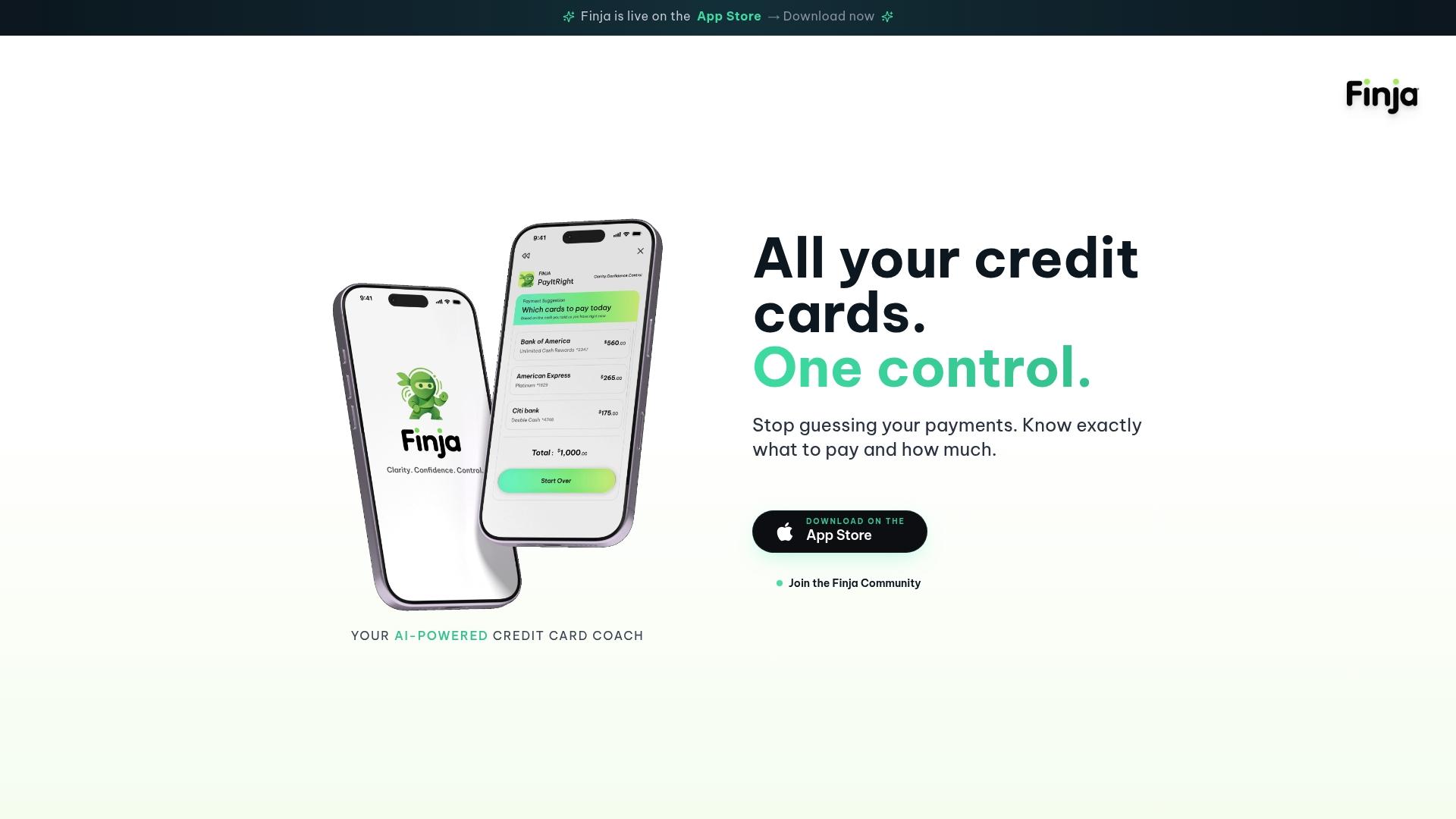
Finja displays all your cards in one place and gives AI-powered guidance on payment timing and amounts, with a focus on reducing interest costs and improving credit health. It is designed as a dedicated credit card coach, not a general budgeting tool, so the question it answers is the one in this article: what to pay, when to pay it, and on which card. You can see how it works at myfinja.com.
Perspective
Most advice about paychecks and bills treats every bill as equal. Credit cards are not. A rent payment is due once and done. A card keeps charging interest on what's left, and its due date, closing date and balance all change the cost of getting the timing wrong.
That is why we think multi-card households need a coach for cards, not another general budget. Our view is that the first step is clarity: all cards, balances and dates in one view, so you can see which payment matters most this week. The second step is guidance on timing and amount, so a paycheck goes where it reduces interest and protects your credit health instead of being spread evenly and hoping.
Finja's approach is built around interest cost and credit health rather than chasing rewards, because that is where a household with several cards usually has the most to win. We designed it to be simple, with no learning curve, so the plan survives a busy month.
Grace K.
FAQ
How do I budget by paycheck instead of by month?
Assign each bill to the paycheck that arrives before its due date, then subtract those bills from that check. The remainder is what you can spend until the next payday. This is the method the CFPB worksheet follows by placing bills and income in the same weeks.
Can I change my credit card due date?
Yes, many issuers allow it, and you usually ask by phone, online or in writing. Ask when the new date starts and what your next payment will be. Keep paying by the old date until you have confirmation, since the card's due date stays on the same calendar day each month once it is set.
What if one paycheck can't cover every bill due before the next?
First ask to move the due dates. If a date can't move, set money aside from an earlier paycheck for later bills, or pay some bills early when you have the cash. The CFPB worksheet recommends both approaches.
How far ahead of the due date should I pay?
Pay early enough to post on time. The CFPB's bill calendar suggests marking the payment date 2 days before the due date for online payments and 7 days before for mailed ones. Posting time varies by issuer and method, so build in that cushion.
Sources
- CFPB: Request a change in your bill due date (2025)
- CFPB: Behind on bills? Start with one step (2016)
- CFPB: Adjusting your cash flow tool (2018)
- CFPB blog: Adjusting your bill due dates (2018)
- CFPB: Credit card contract definitions