
Credit card sign-up bonus optimization is the deliberate planning of card applications, spending timing, and offer selection so you reliably capture high-value welcome bonuses without paying interest or damaging your credit. Think of each bonus as a short financial project with a start date, a spending target, and a deadline. If you're disciplined, carry no revolving balance, and have predictable large expenses on the horizon, this approach can generate hundreds of dollars in real value per year.
Common bonus types you'll encounter:
- Cash back: A fixed dollar amount deposited as a statement credit or check (e.g., $200 after $500 in spend)
- Points: Transferable or issuer-specific currencies (Chase Ultimate Rewards, Amex Membership Rewards) redeemable for travel, merchandise, or cash
- Miles: Airline-specific currencies tied to a frequent-flyer program
- Statement credits: Applied directly against your balance, the most liquid form of reward
For a debt-free credit card strategy to work alongside bonus optimization, paying your full statement balance every month is non-negotiable.
Table of Contents
- How sign-up bonuses actually work: MSR, windows, and timing
- Eligibility rules and issuer restrictions that can stop your bonus
- How to value a sign-up bonus and decide if it's worth pursuing
- Practical strategies to optimize sign-up bonuses safely
- Risks and trade-offs: when bonus chasing backfires
- Your step-by-step checklist before and after applying
- Worked example: comparing two offers and picking the better one
- Tools that make optimization easier
- Key Takeaways
- The case for treating bonuses like projects, not perks
- Finja helps you stop tracking and start earning
How sign-up bonuses actually work: MSR, windows, and timing
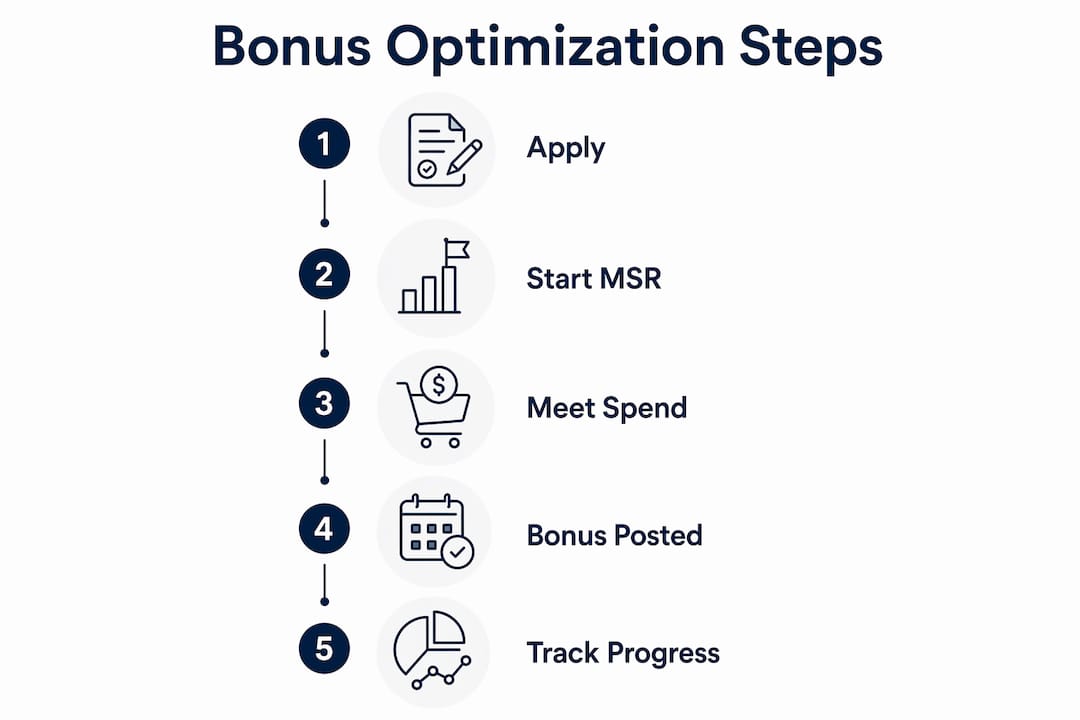
Every welcome offer has three moving parts: a minimum spend requirement (MSR), a time window to hit it, and a posting delay after you do.

The MSR is the dollar amount you must charge to the card within the window. Typical windows run 30–180 days, with 60–90 days being the most common for mid-tier cards. Larger offers often push to six months. Typical MSRs on premium cards run $4,000 in 3 months or $6,000 in 6 months. Once your spending crosses the threshold, the bonus doesn't appear instantly. Expect a processing delay of roughly 2–8 weeks after the MSR posts before the reward lands in your account.
| Stage | What happens | Typical timeframe |
|---|---|---|
| Application approved | Card issued; MSR clock starts | Day 0–7 |
| MSR window | Charge the required amount | 60–90 days (common) |
| Bonus triggers | Issuer confirms spend threshold met | Within 1–2 statement cycles |
| Bonus posts | Points, miles, or cash credited | 2–8 weeks after trigger |
| Reward usable | Available for redemption | Immediately after posting |
Offer structures vary in how liquid they are. Cash-back bonuses convert at a flat $1 per dollar, so valuation is simple. Points and miles require a conversion step. Statement credits are the most straightforward but often the least flexible. Understanding which type you're earning matters before you apply, not after.
Pro Tip: Set a calendar reminder for 60% of your MSR window. If you're not on pace, you still have time to shift recurring bills or prepay expenses before the deadline.
Eligibility rules and issuer restrictions that can stop your bonus
Getting approved for a card does not guarantee you'll receive the bonus. Issuers can approve your application but deny the bonus if you fall inside a cooling-off window or violate a product-specific rule. Check these before you apply:
- Lifetime or amended-lifetime rules: Some issuers restrict bonuses to cardholders who have never held that product, or who haven't held it within a defined period. Read the offer terms carefully for language like "not available to current or previous cardholders."
- 24-month cooling windows: Certain issuers apply a 24-month rule tied to when you last received a bonus on the same card, not just when you last held it.
- Application-velocity rules: Some issuers track how many new accounts you've opened across all banks in a rolling period and will decline or restrict bonuses if you've opened too many recently.
- Targeted vs. public offers: A targeted offer sent to you by email may carry different eligibility terms than the public offer on the issuer's website. Applying through the wrong link can make you ineligible for the higher bonus.
How to verify: read the offer terms inside the application itself, not just the marketing page. The eligibility language is usually in the fine print under "Offer Details" or "Bonus Terms." If you're inside a cooling-off window, the card may still approve you, but the bonus won't post.
Opening multiple cards also affects your credit mix and score, so factor that into your sequencing plan.
Pro Tip: Prioritize cards from issuers with the strictest velocity rules first in your sequence. If you open too many cards from more flexible issuers first, you may find yourself locked out of the most valuable offers later.
How to value a sign-up bonus and decide if it's worth pursuing
Headline numbers mislead. A $750 headline bonus in a low-value currency can be worth less than a $400 bonus in a high-value currency once you apply conservative redemption valuations. Here's the step-by-step method:
Step 1: Convert points to dollars conservatively. Use a realistic redemption value based on how you'll actually redeem, not the issuer's best-case scenario. Cash-equivalent redemptions are the floor; transfer-partner redemptions can be higher, but only count that if you'll actually use them.
Step 2: Calculate year-one yield. Add the bonus value to the estimated first-year ongoing rewards, then subtract the annual fee.
Year-one yield = Bonus value + Year-one ongoing rewards − Annual fee
Step 3: Apply the rule of three. The bonus should be worth at least three times the annual fee to justify the card. A $95 annual fee means the bonus alone should deliver at least $285 in value.
| Metric | Offer A (premium) | Offer B (no-fee) |
|---|---|---|
| Headline bonus | 80,000 points | $200 cash back |
| Conservative value | $800 | $200 |
| Annual fee | $95 | $0 |
| Rule-of-three threshold | $285 | $0 |
| Passes threshold? | Yes (bonus > $285) | Yes (no fee) |
Pro Tip: Value points against the way you actually redeem. If you always take cash back, use 1¢ per point as your ceiling. If you transfer to airline partners for business class, a higher valuation may be defensible, but only if you have a specific redemption in mind.
Practical strategies to optimize sign-up bonuses safely
The most common optimizer mistake is treating bonuses as windfalls rather than planned outcomes. Successful optimizers build a spending calendar for the next 12–18 months and align card applications to organic spend windows.

Timing applications around real expenses
Apply before large, predictable costs: insurance premiums, tuition payments, home repairs, tax bills, or holiday shopping. These are dollars you'd spend anyway. Charging them to a new card turns routine spending into bonus progress without adding a dollar to your budget. Applying right before a high-spend period makes hitting the MSR nearly automatic.
Staggering applications
Apply for one card, then wait 6–8 weeks before applying for the next. Overlapping MSR windows create tracking stress and increase the risk of missing a deadline. One card at a time, sequenced around your spending calendar, is the sustainable pace.
Natural-spend tactics that work:
- Shift recurring bills (cell phone, streaming, utilities) to the new card immediately
- Use the card for all household grocery and gas spending
- Ask family members to charge shared expenses and reimburse you
- Prepay recurring bills cautiously when you're close to the deadline
Tactics to avoid:
- Manufactured spend (buying gift cards to generate artificial transactions) — issuers flag this and can claw back bonuses
- Paying fees to process payments that cost more than the bonus is worth
- Opening cards you can't realistically use to meet the MSR organically
Dos and don'ts for everyday practice:
- Pay the full statement balance every month, without exception
- Track each card's MSR deadline and current spend progress in one place
- Space applications by at least 6–8 weeks
- Sequence issuers with strict velocity rules first
- Never apply for a card unless you can meet the MSR with spending you'd do anyway
For practical ideas to free up cash flow and meet MSRs without stress, the guide on reducing credit card bills covers several approaches worth reviewing.
Risks and trade-offs: when bonus chasing backfires
The math is unforgiving. A $500 bonus sounds attractive until you realize that carrying a balance to hit the MSR generates interest charges that can exceed the bonus value within a single billing cycle on a high-rate card.
Beyond interest, here are the concrete risks:
Annual fees that exceed realized value. If you don't use the card's ongoing benefits after the first year, a $550 annual fee on a premium card becomes a net loss by year two. Request a retention offer or downgrade to a no-fee version before the second annual fee posts.
Credit-score effects from multiple applications. Each application generates a hard inquiry, and opening several accounts in a short period lowers your average account age. Both factors can temporarily reduce your score. Spacing applications and monitoring your credit health indicators helps you track the impact.
Issuer clawbacks. Issuers can and do revoke bonuses when they detect manufactured spend or patterns that violate terms. This isn't a theoretical risk; it happens to optimizers who push tactics too far.
Red flags that the math doesn't work:
- The MSR is higher than your natural monthly spend can cover in the window
- The bonus currency has low redemption value for your actual travel patterns
- You'd need to carry a balance to hit the requirement
Managing multiple cards responsibly is a skill in itself. The guide on multiple credit card management covers the portfolio-level discipline that keeps this from becoming a liability.
Your step-by-step checklist before and after applying
- Run the decision filter. Can you meet the MSR with organic spending? Does the year-one yield pass the rule-of-three test? If either answer is no, skip the card.
- Check eligibility. Read the offer terms for lifetime rules, cooling-off windows, and velocity restrictions. Confirm you're applying through the correct offer link.
- Count recent applications. Know how many new accounts you've opened in the past 24 months across all issuers before you apply.
- Apply before a large planned expense. Time the application so your MSR window overlaps with a predictable high-spend period.
- Set up tracking immediately. Log the application date, MSR amount, deadline, and current spend progress in a spreadsheet or app the day the card arrives.
- Aim for 110% of the MSR before the deadline. Completing slightly above the requirement protects against processing delays that could push a transaction into the next cycle.
- Confirm the bonus posts. Check your rewards account 2–8 weeks after crossing the MSR. If it doesn't appear, contact the issuer with your application date and spend records.
- Decide: keep, downgrade, or cancel. Before the second annual fee posts, evaluate whether the card's ongoing value justifies the cost. Downgrading to a no-fee version preserves your account age without the fee.
- Update your portfolio calendar. Log the next application window based on your issuer sequencing plan.
For a broader rewards maximization checklist, Finja's blog covers how to integrate bonus capture into an ongoing strategy.
Pro Tip: Track your MSR progress weekly, not monthly. A weekly check gives you time to shift spending or prepay a bill if you're falling behind — a monthly check often leaves you scrambling in the final days.
Worked example: comparing two offers and picking the better one
Two offers, one household with $3,000 in average monthly spend. Which one wins?
Offer A: 80,000 points after $4,000 in 3 months. Annual fee: $95. Points valued conservatively at 1¢ each ($800). Ongoing rewards: estimated $360 in year one based on spending patterns.
Offer B: $200 cash back after $500 in 3 months. Annual fee: $0. Ongoing rewards: estimated $180 in year one.
| Metric | Offer A | Offer B |
|---|---|---|
| Bonus value (conservative) | $800 | $200 |
| Year-one ongoing rewards | $360 | $180 |
| Annual fee | $95 | $0 |
| Year-one yield | $1,065 | $380 |
| Rule-of-three threshold | $285 | $0 |
| MSR difficulty | High ($4,000 / 3 months) | Low ($500 / 3 months) |
Offer A wins on year-one yield by a wide margin, but only if the household can hit $4,000 in three months without manufactured spend or carrying a balance. At $3,000 in monthly spend, that's achievable in one billing cycle with normal expenses. If the household were spending $1,500 per month, Offer A becomes risky and Offer B is the clear choice.
Key takeaways from the math:
- Year-one yield often inverts headline rankings: a smaller bonus on a no-fee card can outperform a flashier offer once fees are subtracted
- MSR difficulty is a real constraint, not a footnote
- Conservative point valuations protect you from chasing numbers that don't match your redemption reality
For readers planning multiple offers over time, credit card portfolio management explains how to evaluate the full lineup, not just individual cards.
Tools that make optimization easier
Tracking a single card manually is manageable. Tracking three or four cards across different issuers, with different MSR deadlines and bonus-posting timelines, is where most people lose control.
| Tool type | What it does | Best for |
|---|---|---|
| Spreadsheet tracker | Logs application date, MSR, deadline, spend progress | Anyone starting out; full control |
| Rewards-tracking app | Aggregates points balances across programs | Multi-program optimizers |
| Calendar reminders | Alerts for MSR deadlines and annual fee dates | Preventing missed deadlines |
| AI coach (e.g., Finja) | Sequences applications, tracks MSR progress, flags issuer rules | Optimizers managing multiple cards |
What to look for in any tool: read-only account access (never share login credentials), multi-factor authentication support, and a clear privacy policy. A tool that requires write access to your accounts to "optimize" them is a red flag.
Finja's AI coach goes beyond passive tracking. It monitors offer availability, suggests which card to apply for next based on your issuer sequencing plan, and sends MSR deadline reminders before you're in danger of missing them. For optimizers managing more than two active MSR windows at once, that automation removes the single biggest source of error: forgetting.
For readers who want to model the financial decision math behind comparing year-one versus year-two card yields, a structured personal finance modeling approach can sharpen those comparisons.
Key Takeaways
Sign-up bonus optimization works when you treat each offer as a short financial project: value it honestly, time it to real expenses, and track it to completion without carrying a balance.
| Point | Details |
|---|---|
| Pay in full, always | Interest charges erase bonus value faster than any other mistake; never carry a balance to hit an MSR. |
| Use the rule of three | The bonus should be worth at least three times the annual fee — a $95 fee requires at least $285 in bonus value. |
| Time applications to real spend | Apply before large organic expenses (insurance, tuition, home repairs) so the MSR meets itself. |
| Track MSR progress weekly | Aim to complete 110% of the requirement before the deadline to absorb processing delays. |
| Finja automates the workflow | Finja's AI coach sequences applications, monitors MSR deadlines, and flags issuer rules so nothing slips. |
The case for treating bonuses like projects, not perks
Most people approach sign-up bonuses the way they approach lottery tickets: apply, hope for the best, and figure out the spending later. That's exactly why so many bonuses go unclaimed, get partially earned, or end up costing more in interest than they delivered in rewards.
The optimizers who consistently extract real value treat each card application the way a project manager treats a deliverable: they define the goal (the bonus), identify the constraints (MSR, window, issuer rules), build a timeline around known spend events, and track progress against a deadline. That framing sounds more formal than it needs to be in practice. A simple spreadsheet and two calendar reminders are enough infrastructure for most people.
Where I'd push back on the conventional "travel hacking" framing is the idea that aggressive sequencing is always the right move. Opening multiple cards in a short period to stack bonuses works on paper, but it compresses your MSR windows, multiplies your tracking burden, and accelerates the credit-score effects of new inquiries. For most people, one card every 6–8 months is a more sustainable pace that still generates meaningful value without the operational overhead of managing four simultaneous MSR clocks.
The manufactured-spend question is worth addressing plainly: don't. Issuers have become sophisticated at detecting it, clawbacks are real, and the risk-to-reward ratio has deteriorated significantly. The same energy spent on gift-card flips is better spent identifying the next large organic expense on your calendar and timing an application around it.
Finally, don't close cards impulsively after earning the bonus. A card you've held for three years contributes to your average account age, which is a meaningful factor in your credit score. Downgrade it to a no-fee version and leave it open. The long-term credit health benefit often outweighs the minor inconvenience of managing an extra account.
Finja helps you stop tracking and start earning
Most of the work in sign-up bonus optimization isn't finding good offers. It's the ongoing tracking: remembering which MSR deadline is next, knowing whether you're on pace, and keeping issuer sequencing rules straight across multiple cards. That's where most people slip up, and where Finja does the heavy lifting.
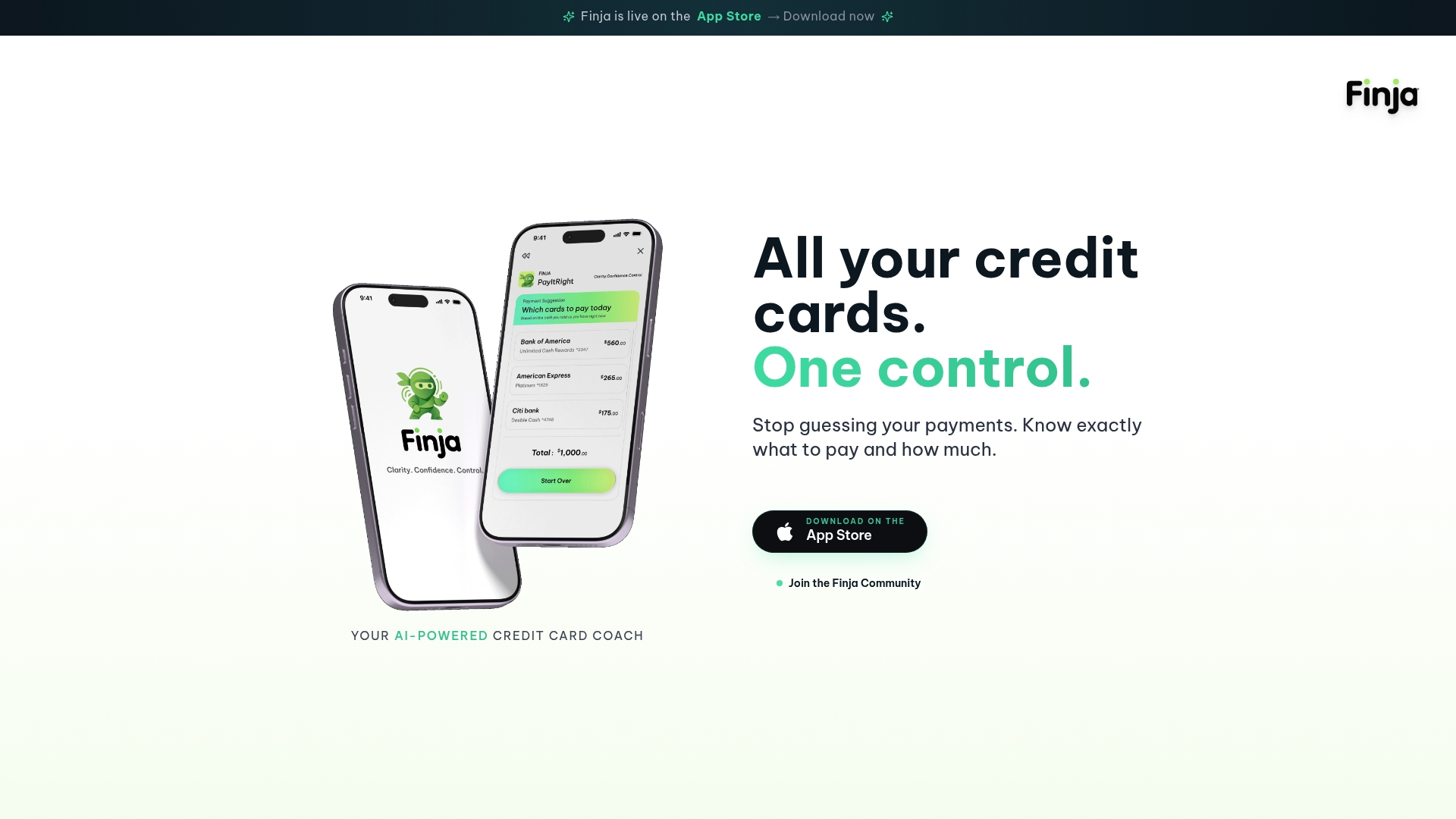
Finja's AI coach monitors your active MSR windows, flags upcoming deadlines before they become emergencies, and suggests which card to apply for next based on your spending profile and issuer sequencing rules. It doesn't make credit decisions for you — you still confirm eligibility and apply on your own terms — but it removes the manual overhead that causes most optimizers to miss bonuses they'd already earned. Finja uses read-only account access and standard security practices, so your data stays protected.
If you're managing more than one card or planning your next application, start with Finja and let the AI handle the calendar so you can focus on the spending.
Useful sources and further reading
- How to Maximize Sign-Up Bonuses — CardClassroom: Covers timing strategy, MSR tracking, and sequencing logic in detail; a strong starting point for building your application calendar.
- Sign-Up Bonus Math — Finbarrow: The clearest explanation of conservative point valuation and year-one yield calculations available; read this before comparing any two offers.
- Is a Credit Card Sign-Up Bonus Worth It? — NerdWallet: Explains the rule-of-three heuristic and walks through the fee-versus-bonus math with real examples.
- Credit Card Welcome Bonus Timing Strategy — Faroway: Practical guidance on staggering applications and managing overlapping MSR windows without losing track.
- Finja AI Credit Card Coach — Finja: The platform's landing page explains how the AI coach handles MSR tracking, offer monitoring, and application sequencing for U.S. cardholders.
This article is general information, not financial or credit advice. Confirm current issuer terms, eligibility rules, and offer details directly with the card issuer or a qualified financial professional before applying.