
There are seven main travel rewards credit card types worth knowing: transferable/general rewards cards, co-branded airline cards, co-branded hotel cards, flat-rate travel cards, premium/ultra-premium cards, no-annual-fee entry-level cards, and business travel cards. Experian notes that most of these offer points, miles, or cash back redeemable for flights, hotels, and rental cars, plus perks like lounge access and travel insurance. The right type depends almost entirely on how often you travel, whether you're loyal to a specific airline or hotel brand, and how much complexity you're willing to manage.
Here's the fast version:
- Flexible traveler who flies multiple airlines: transferable/general rewards card (Chase Sapphire Preferred® Card, Capital One Venture Rewards Credit Card)
- Loyal to one airline: co-branded airline card (free bags, priority boarding)
- Stays mostly at one hotel chain: co-branded hotel card (free nights, elite status)
- Infrequent traveler who wants simplicity: flat-rate travel card or cash-back card (Chase Freedom Unlimited®)
- Heavy traveler who can use premium perks: premium card (The Platinum Card® from American Express, Capital One Venture X Rewards Credit Card)
- New to rewards or budget-conscious: no-annual-fee travel card
- Small-business owner or freelancer: business travel card
Finja's card-management perspective adds one more layer: once you hold more than one card type, tracking which card to use where, and when bonuses post, becomes the real challenge. That's where a consolidated management tool pays off.
Table of Contents
- 1. Transferable-points cards give you the most flexibility
- 2. Co-branded airline cards reward loyal flyers on the ground
- 3. Co-branded hotel cards deliver on-property value you can't replicate elsewhere
- 4. Flat-rate travel cards keep things simple and predictable
- 5. Premium travel cards are worth it only if you actually use the perks
- 6. No-annual-fee travel cards are the right starting point for many people
- 7. Business travel cards serve a different set of needs entirely
- How do you choose the right travel card type for your habits?
- How Finja helps you combine multiple card types and get more value
- Key Takeaways
- The case for choosing card type before choosing a card product
- Finja makes managing multiple travel card types less complicated
- Further reading and sources
1. Transferable-points cards give you the most flexibility
General, transferable rewards cards let you book travel directly through the issuer's portal or transfer points to airline and hotel partners, often unlocking higher redemption value than a fixed-rate card can match. The tradeoff is complexity: you need to understand partner award charts and transfer timing to realize that upside.
Pros:
- Points transfer to multiple airline and hotel programs, expanding redemption options significantly
- Issuer travel portals offer a simpler redemption path when award space is tight
- Often earn bonus points in broad categories (dining, travel, groceries)
- High ceiling on award value when transfers align with premium cabin availability
Cons:
- Requires research to maximize transfer value
- Annual fees tend to be moderate to high
- Transfer ratios vary by partner and can change without notice
Representative cards: The Chase Sapphire Preferred® Card earns bonus points on dining and travel, with points transferable to multiple airline and hotel partners at a 1:1 ratio. The Capital One Venture Rewards Credit Card earns a flat rate of miles on all purchases, with transfer options to many travel partners. Both carry annual fees in the moderate range and typically require good to excellent credit (generally 690+ FICO).
Transfers tend to yield the most value on international business or first-class awards, where cash prices are prohibitive. For domestic economy flights, the issuer portal often makes more sense since award pricing is predictable and you skip the research.

Best for: Multi-airline travelers, people who want flexibility over brand loyalty, and anyone comfortable doing a bit of homework on partner programs.
2. Co-branded airline cards reward loyal flyers on the ground
Airline co-branded cards are issued in partnership with a single carrier. Every dollar spent earns miles in that airline's frequent flyer program, and the real value often shows up before you even board. Free checked bags and priority boarding are standard perks. A free bag alone can be worth $30 or more per bag per flight, which adds up fast for a family of four.
Pros:
- Day-of-travel perks (free bags, priority boarding, companion fares) with immediate, tangible value
- Accelerated miles earning on purchases with the partner airline
- Some cards include lounge day passes or discounts
- Companion certificate benefits on select cards
Cons:
- Miles are locked to one program, limiting redemption flexibility
- Award availability and program devaluation risk are real concerns
- Less useful if your home airport doesn't hub the partner airline
Representative cards: Cards co-branded with major U.S. carriers like United, Delta, and American Airlines typically carry annual fees from no fee up to moderate amounts at the entry level, with premium co-branded cards charging higher fees. Sign-up bonuses commonly offer substantial miles as incentives. Most waive foreign transaction fees, and credit score requirements generally sit at good to excellent.
Choosing between a co-branded card and a general travel card comes down to brand loyalty and your ability to use program-specific perks. If you fly one airline 80% of the time, the on-ground benefits alone often justify the fee.

Best for: Hub flyers, frequent single-airline travelers, and anyone who checks bags regularly.
3. Co-branded hotel cards deliver on-property value you can't replicate elsewhere
Hotel co-branded cards work similarly to airline cards but are built around a single hotel chain. The headline benefits go beyond just earning points: automatic elite status, anniversary free-night awards, and on-property credits can make loyal hotel guests materially better off than booking through a third-party site.
Pros:
- Automatic elite status unlocks room upgrades, late checkout, and bonus points on stays
- Anniversary free-night certificates often cover mid-tier properties with notable value.
- On-property credits (food, spa, resort fees) reduce out-of-pocket costs
- Accelerated earning on hotel purchases
Cons:
- Points are tied to one chain, so value drops if you stay at competing brands
- Award night pricing can vary widely by property category and season
- Some chains have narrower partner networks than airline programs
Representative cards: Cards co-branded with Hilton, Marriott Bonvoy, and World of Hyatt are the most widely held in the U.S. The American Express® Gold Card isn't a hotel co-brand, but it's worth noting here as a contrast: it earns transferable Membership Rewards points that can move to Marriott Bonvoy and Hilton Honors, giving hotel loyalists a flexible alternative to a pure co-brand.
Award nights through hotel programs often deliver better per-night value than transferring points from a general card, especially at aspirational properties where cash rates are high. The catch is that you're committing to one chain's ecosystem.
Best for: Travelers who stay repeatedly at one hotel chain, road warriors who value on-property perks, and anyone who books direct rather than through OTAs.
4. Flat-rate travel cards keep things simple and predictable
Flat-rate travel cards and cash-back cards work well for people who want predictable rewards without tracking rotating categories or juggling multiple earning structures. You earn the same rate on every purchase, which makes the math easy.
Pros:
- No category tracking required
- Predictable earning on all spending
- Often lower annual fees than category-based cards
- Cash-back variants offer maximum redemption flexibility
Cons:
- Lower ceiling on reward value compared with category multipliers or transfer sweet spots
- Miss out on elevated earning in high-spend categories like dining or travel
- Cash-back redemptions rarely beat well-executed point transfers for premium travel
Representative cards: The Chase Freedom Unlimited® earns 1.5% cash back on most purchases (with higher rates in select categories) and carries no annual fee. It's a strong everyday card on its own, and it pairs well with a Chase transferable-points card because the cash back converts to transferable Ultimate Rewards points when you hold both. The Capital One Venture Rewards Credit Card earns a flat 2x miles on all purchases, sitting between a pure flat-rate card and a transferable card.
Flat-rate wins when your spending is broad and you don't want to think about which card to swipe. For infrequent travelers who still want some travel value, a no-annual-fee cash-back card that redeems against travel statement credits is often the cleanest option.
Best for: Infrequent travelers, people who prefer simplicity, and those using a flat-rate card as a catch-all alongside a category-focused primary card.
5. Premium travel cards are worth it only if you actually use the perks
Premium and ultra-premium cards carry annual fees that can run $550–$695 or higher, but their recurring benefits can exceed the annual fee if you actively use the credits and perks. The key word is actively. These cards don't pay for themselves passively.
Pros:
- Airport lounge access (Priority Pass, proprietary lounges) worth hundreds per year for frequent flyers
- Large annual travel credits that directly offset the fee
- Elite status with hotel and car rental programs
- Comprehensive travel insurance and purchase protections
- Concierge services and luxury hotel partnerships
Cons:
- High annual fees require deliberate perk usage to break even
- Credits often come with restrictions (specific merchants, categories, or booking methods)
- Overkill for travelers who fly fewer than 4–6 times per year
Representative cards: The Platinum Card® from American Express carries a high annual fee and includes substantial airline fee credits, hotel credits, digital entertainment credits, and access to exclusive lounges among other benefits. The Capital One Venture X Rewards Credit Card carries a premium annual fee and includes a generous annual travel credit, anniversary bonus miles, and lounge access including Priority Pass. Premium cards are increasingly packaged with concierge services and luxury hotel partnerships that justify the fee for heavy travelers but not for occasional ones.
To evaluate whether a premium card makes sense, add up only the credits you will realistically use, not the theoretical maximum. If that number exceeds the annual fee, the card likely pays for itself before you earn a single reward point.
Best for: Frequent long-haul travelers, people who fly 8+ times per year, and anyone who values lounge access and travel insurance enough to use them consistently.
6. No-annual-fee travel cards are the right starting point for many people
Entry-level and no-annual-fee travel cards trade lower ongoing value for lower cost of ownership. Smaller sign-up bonuses, modest earning multipliers, and fewer perks are the price of admission, but for someone new to rewards or traveling infrequently, that's a reasonable deal.
Pros:
- Zero annual fee means no break-even pressure
- Good for building a rewards habit without financial risk
- Often serve as a long-term credit-history anchor even after upgrading
- Some offer decent earning rates in everyday categories
Cons:
- Sign-up bonuses are typically smaller (10,000–20,000 points vs. 60,000–100,000 on premium cards)
- Fewer travel protections and perks
- Foreign transaction fees are more common on no-fee cards, though not universal
Representative cards: The Chase Freedom Unlimited® is the most versatile no-annual-fee option in the U.S. market because its cash back converts to transferable Ultimate Rewards points when paired with a Sapphire card, giving it a growth path. Several airline and hotel co-brands also offer no-fee entry-level versions that earn miles or points without a fee.
Scaling up from a no-fee card to a premium card works best when you time it around a strong sign-up bonus and have a clear plan to use the new card's perks. A credit card portfolio rebalancing approach helps here: keep the no-fee card open for credit history, add the premium card when your travel frequency justifies it.
Best for: Students, budget-conscious travelers, first-time rewards users, and anyone who wants a low-risk entry point into travel rewards.
7. Business travel cards serve a different set of needs entirely
Business travel cards are a distinct category, not just a consumer card with a different name. They offer higher credit limits, employee card options, and expense management tools built around common business spending categories like advertising, shipping, and office supplies, alongside travel.
Pros:
- Elevated earning in business-specific categories (advertising, telecom, shipping)
- Employee cards with individual spending limits
- Expense reporting integrations (QuickBooks, Concur)
- Welcome offers are often separate from consumer card offers, allowing both
Cons:
- Require consistent business spending to justify category-based structures
- Personal liability on most small-business cards (not corporate cards)
- Mixing personal and business spend creates accounting headaches and can violate card terms
Representative cards: Business versions of Chase Ink, American Express Business Gold, and Capital One Venture X Business are the most widely recommended in U.S. roundups. The American Express® Gold Card has a consumer counterpart, but the Business Gold earns 4x on the two categories where you spend the most each month, making it a strong fit for businesses with variable spending patterns.
A business card pairs well with a consumer transferable card. Points from both often pool into the same program (Chase Ultimate Rewards, Amex Membership Rewards), effectively doubling your earning surface. For expense tracking across multiple business cards, a structured system matters as much as the card itself.
Best for: Freelancers, small-business owners, and anyone with consistent business expenses who wants to earn travel rewards on spending that a consumer card wouldn't reward as well.
How do you choose the right travel card type for your habits?
Match your dominant travel pattern and spending categories to the card type first, then pick a specific product. That single rule eliminates most of the confusion.
Comparison by card type
| Best for | Rewards structure | Redemption flexibility | Annual fee | Travel perks | Foreign transaction fee | Typical credit score | Sign-up bonus range |
|---|---|---|---|---|---|---|---|
| Flexible multi-airline travelers | Bonus categories + transferable points | High (airline + hotel partners) | $95–$695 | Varies by issuer | Usually none | Good–Excellent (690+) | 60,000–100,000 pts |
| Loyal single-airline flyers | Miles on airline purchases | Low (one program) | No annual fee to $695 premium | Free bags, priority boarding | Usually none | Good–Excellent | — |
| Loyal hotel guests | Points on hotel purchases | Low (one chain) | No annual fee to $695 premium | Free nights, elite status | Varies | Good–Excellent | — |
| Simplicity seekers | Flat rate on all purchases | Moderate (portal or statement credit) | No annual fee to moderate | Minimal | Sometimes present | Fair–Good (580+) | 20,000 pts |
| Heavy frequent travelers | Multiple bonus categories + credits | High (transfers + portals) | $550–$695+ | Lounges, credits, elite status | None | Good to excellent | — |
| Budget/new rewards users | Modest flat or category rate | Low–moderate | No annual fee | Minimal | Sometimes present | Fair–Good | 10,000–20,000 pts |
| Small-business owners | Business category multipliers | Moderate–high | No annual fee–$295 | Varies | Usually none | Good–Excellent | — |
Steps to pick your type
- Identify your dominant spending categories — Where does most of your money go: dining, groceries, travel, advertising? Match those to the card type that rewards them most.
Pro Tip: To estimate whether a premium card's annual fee is justified, list every credit the card offers, then cross out any you won't realistically use. If the remaining credits add up to more than the fee before you count a single reward point, the card pays for itself on perks alone.
How Finja helps you combine multiple card types and get more value
Using complementary card types together, typically a flexible transferable card for everyday spending plus a niche co-brand for on-brand perks, often yields the best net value. The catch is execution: tracking which card earns what, when sign-up bonuses post, and which payment to prioritize gets complicated fast across three or four cards.
Finja is built for exactly that situation. The platform consolidates multiple card accounts into a single view, surfaces payment optimization recommendations to reduce interest costs, and tracks credit health across your full portfolio.
Concrete use cases where Finja adds value:
- Transferable card + airline co-brand: Use the transferable card for dining and everyday spend; use the airline card for flights to earn bonus miles and get free bags. Finja's consolidated view shows both balances and due dates in one place, so you never miss a payment that could trigger a penalty APR.
- Flat-rate card as everyday catch-all: When no bonus category applies, a flat-rate card earns consistently. Finja flags when you're using a bonus-category card for non-bonus purchases and suggests the better card for that transaction.
- Business card + consumer card portfolio: Points from both cards often pool into the same program. Finja tracks earning across both and alerts you when a sign-up bonus spending threshold is approaching.
- Premium card perk tracking: Finja reminds you of expiring credits (airline fee credits, hotel credits) so you don't leave value on the table.
Pro Tip: Set a calendar reminder 60 days before each card's annual fee posts. That's your window to evaluate whether you've used enough perks to justify renewal, request a product change, or cancel before the fee hits. Finja's credit card rewards maximization checklist walks through this process in detail.
For managing multiple cards without losing track of due dates, bonus windows, or category rules, a structured system beats a spreadsheet every time.
Key Takeaways
The right travel rewards card type is determined by your travel frequency, brand loyalty, and willingness to manage complexity, not by which card has the highest advertised bonus.
| Point | Details |
|---|---|
| Match type to travel pattern | Loyal flyers benefit from co-brands; flexible travelers get more from transferable points cards. |
| Premium cards require active perk use | A $550+ annual fee only pays off if you realistically use the credits and lounge access. |
| No-fee cards are a smart starting point | Entry-level cards build rewards habits without break-even pressure; upgrade when travel frequency justifies it. |
| Combining card types beats a single card | A transferable card plus one co-brand typically outperforms either card alone for frequent travelers. |
| Finja simplifies multi-card management | Finja consolidates accounts, tracks bonus windows, and surfaces payment optimizations across your full card portfolio. |
The case for choosing card type before choosing a card product
Most people approach travel card selection backwards. They see a sign-up bonus, apply, and then figure out whether the card fits their life. The taxonomy covered here argues for the opposite sequence: lock in the card type first, then let the specific product competition happen within that type.
The reason this matters is that the type determines the structural value you get. A co-branded airline card will always be better than a transferable card at delivering free bags and priority boarding for a loyal flyer, regardless of which specific co-brand you choose. A premium card will always require active perk engagement to justify its fee, regardless of which issuer issues it. The type sets the ceiling and the floor.
What I find underappreciated in most card comparison coverage is the devaluation risk asymmetry between types. Transferable points programs have historically been more resilient to devaluation than co-branded programs because the issuer controls the currency. When an airline devalues its award chart, co-branded cardholders absorb the full hit. When a bank adjusts its transfer ratios, transferable cardholders still have other partners to lean on. That asymmetry is worth factoring into a long-term card strategy, not just the sign-up bonus math.
Finja's perspective on this is practical: the best card portfolio is one you can actually manage without losing track of what you're earning, what you owe, and when your perks expire. Complexity is only an advantage if you execute on it.
Finja makes managing multiple travel card types less complicated
Holding two or three travel cards from different types is often the highest-value strategy, but it creates real operational friction: multiple due dates, different bonus categories, expiring credits, and sign-up bonus spending windows all competing for your attention.
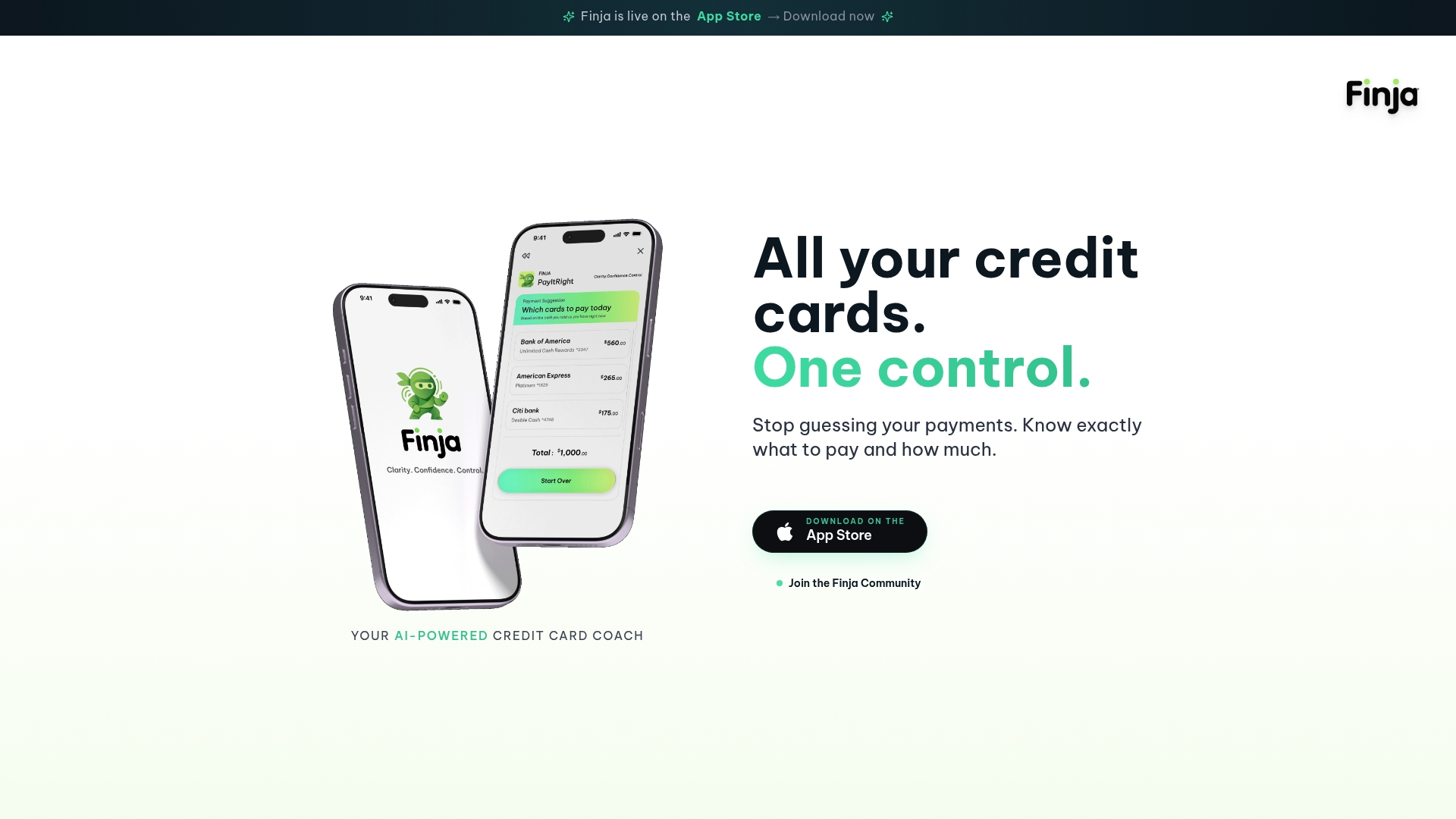
Finja addresses that friction directly. The platform gives you a consolidated view of all your card accounts, so balances, due dates, and available credits are visible in one place rather than scattered across five different apps. Its payment optimization engine analyzes your balances and recommends which card to pay first to reduce interest costs and protect your credit utilization, two factors that matter whether you're holding a no-fee starter card or a $695 premium card.
For travelers building a multi-card portfolio, Finja also tracks sign-up bonus progress and flags bonus-category opportunities you might otherwise miss. The goal isn't to add more complexity; it's to make the complexity you've already taken on actually pay off.
See how Finja works and start managing your travel card portfolio smarter at myfinja.com.
Further reading and sources
These are the primary sources used for factual claims in this article, plus Finja guides for readers who want to go deeper on implementation.
- How Do Travel Credit Cards Work? (Experian) — Covers the main card categories, common perks, and how points and miles redemptions work.
- How To Choose The Best Travel Card In 5 Steps (Bankrate) — Practical framework for evaluating loyalty vs. flexibility and estimating premium card value.
- Best Credit Cards For Travel Of 2026 (Forbes Advisor) — Roundup covering transferable points cards, business travel cards, and redemption flexibility comparisons.
- Best Travel Credit Cards (NerdWallet) — Covers flat-rate cards, premium card packaging trends, and comparison dimensions.
- Airline Credit Card vs. Travel Credit Card (Experian) — Direct comparison of co-branded airline cards and general travel cards.
- How does Global Entry work? Your 2026 airport guide — Explains Global Entry benefits and the application process, relevant to expedited-entry credits offered by premium travel cards.
- Credit Card Sign-Up Bonus Optimization (Finja) — How to plan new-account timing and maximize welcome offer value across multiple card types.
- Credit Card Data-Driven Spending Plan (Finja) — How to align your spending categories with the right card's bonus structure.
- Financial Dashboard for Multiple Cards (Finja) — Setting up a consolidated view to monitor balances and benefits across a multi-card portfolio.