
The simplest way to track pending transactions is to treat each one as a charge that has already cost you available credit but has not yet landed on your balance. Check each card's pending list, note the merchant and amount, and watch it until it posts. With one card, that takes a minute. With four or five, it takes a system, because pending charges are the ones that surprise you: they shrink your available credit, they can change amount, and they can vanish or double up. We built Finja, an AI-powered credit card coach, to show all your cards in one place, so you can see what is going on across every card without hopping between apps.
This guide explains what pending means, where to find pending charges, how long they usually last, and what to do when one looks wrong.
TL;DR
- A pending charge is authorized by your card issuer but not yet finalized by the merchant. It reduces your available credit right away but is not added to your account balance until it posts.
- Most pending charges post within 72 hours, though some take up to five days.
- The pending amount can differ from the final amount (restaurant tips, gas pumps, hotel and rental holds are common examples).
- An unfamiliar charge is a fraud question: act right away. A charge you made but disagree with can only be disputed after it posts.
- With several cards, keep one weekly routine and one combined view so no pending charge goes unnoticed.
Table of Contents
- What "pending" actually means on a credit card
- Why pending tracking matters more when you carry several cards
- Where to find pending transactions
- Why a charge stays pending, and why the amount can change
- How long pending transactions take
- A weekly routine for tracking pending charges on multiple cards
- What to do when something looks wrong
- How pending charges affect payments and interest
- Perspective
- Put every card in one view
- FAQ
- Sources
What "pending" actually means on a credit card
When you tap, swipe or type in your card number, the merchant asks your issuer (the bank that gave you the card) whether the purchase is allowed. If the issuer says yes, it sets aside that amount from your credit line. That approval is called an authorization. The merchant then finishes processing the sale on its side, and only after that does the charge become final.
The stretch between approval and finalization is the "pending" period. According to Capital One's help center, a pending charge has been authorized by the issuer but not fully processed by the merchant. It cuts your available credit immediately, yet it does not appear in your account balance until the merchant finalizes it.
That last detail is the root of most confusion. Two numbers describe your card at any moment:
| Figure | Includes pending charges? | What it tells you |
|---|---|---|
| Available credit | Yes | How much you can still spend today |
| Account balance | No, only posted charges | What you currently owe on finalized purchases |
If you only look at the balance, you can miss money that is already committed. If you only look at available credit, you may think you owe more than your statement will show. Neither is wrong; they answer different questions.
Pending versus posted
A posted charge is final. It has a posting date, it counts toward your balance, and it will appear on your statement. A pending charge has none of these yet. The date you made a purchase and the date it posts are often different, and that gap affects statement cut-offs and payment planning. We cover the difference in detail in our guide on posting date versus transaction date.
Why pending tracking matters more when you carry several cards
One card gives you one list. Five cards give you five lists, five apps, and five different layouts. Pending charges tend to hide in that gap for three reasons.
- Available credit shrinks without warning. A hotel hold on one card can leave you with less room than you planned for, and you only find out at the next checkout.
- Payment amounts get fuzzy. If you pay a card down to a target number, pending charges are not in the balance you see. The charge posts a day later and your plan is off.
- Errors blend in. A duplicate or unfamiliar pending charge is easy to spot on a single card you open daily. It is easy to miss on the card in the back of your wallet.
If you pay several cards each month, knowing what is still pending helps you pick the right amount to pay and the right day to pay it. Our walkthrough on statement balance versus current balance shows why the number you choose matters for interest.
Where to find pending transactions
Every issuer lays this out a little differently, but the pattern is consistent: look in the activity or transactions area of the app or website, and find the section labeled pending.
American Express, for example, tells cardholders to open Statements & Activity and look under Pending Charges. It also offers an option called "Alert Me When Posted", which monitors a charge and sends an email if it posts.
Other issuers use similar wording. If you cannot find it:
- Look near your balance and available credit on the account home screen.
- Open the full transaction list and check for a status column or a filter such as "pending" or "in process."
- Check whether the issuer's website shows more detail than its mobile app, or the reverse.
- Turn on push or email alerts for purchases, so each authorization reaches you as it happens.
Details to write down for each pending charge
When a charge matters (a large one, an odd one, or one you want to follow), capture these details:
- Card (last four digits)
- Merchant name as displayed
- Amount
- Date shown
- Where you were or what you bought
The merchant name on a pending line is sometimes a processor's name or a shortened business name rather than the brand on the storefront. The date and amount are usually what help you match it to a receipt.
Why a charge stays pending, and why the amount can change

A pending charge can stay open while the merchant finishes processing or adjusts the authorization. Capital One lists typical cases: a restaurant tip, a gas-pump authorization, or estimated incidentals at a hotel or rental, and notes that the pending amount may differ from the final amount.
Here is how those play out:
- Restaurants. The server runs your card for the meal. You add a tip afterward. The final charge includes the tip, so it can be higher than the pending line you saw at the table.
- Gas stations. The pump may authorize an amount before you fill up. The final charge is what you actually pumped.
- Hotels and rentals. The merchant may authorize an estimate for the stay plus incidentals. The final charge reflects what you actually used.
A worked example: you have a card with $2,000 of available credit. You check in to a hotel and the merchant authorizes $400. Your available credit drops to $1,600, but your balance has not changed. After checkout the stay posts at $312, and the unused $88 hold falls away. If you had planned a $1,800 purchase that afternoon on the same card, the hold would have blocked it even though your final cost was lower.
How long pending transactions take
Capital One says transactions usually post within 72 hours, but sometimes take up to five days. That is one issuer's guidance, and timing depends on the merchant, the type of purchase and how weekends and holidays fall, so treat it as a practical window rather than a promise.
A workable rule of thumb for your own tracking:
| Time since purchase | What to do |
|---|---|
| Under 3 days | Nothing, unless you do not recognize the charge |
| 3 to 5 days | Note it and recheck; hotel, rental and fuel holds often run longer |
| Past 5 days | Look closer: compare it with your receipt and contact the merchant if it still does not match |
The table is our working routine, not an issuer rule. The 72-hour and five-day figures are the issuer's.
A weekly routine for tracking pending charges on multiple cards
You do not need to check every card every day. You do need a consistent pass. Here is a routine that takes about ten minutes.
- Pick a fixed day. Choose one day each week, ideally before you decide how much to pay on any card.
- Open each card's pending list. Use the issuer's app or site and note every pending line.
- Match to receipts. Check each against something you remember: a receipt, a calendar entry, a ride or delivery confirmation.
- Flag the oddballs. Mark anything you do not recognize, any duplicate, and anything pending longer than five days.
- Recheck the flags in two days. Many odd lines resolve as the merchant finalizes. The ones that do not need action.
- Adjust your plans. Subtract significant pending amounts from the available credit you are counting on, and from any payment target you are working toward.
The weak point is step 2. Logging in to five apps takes time, and that is usually when the routine dies. Seeing every card in one view makes the weekly pass quick enough to stick. If you want a broader tracking setup, our guide on tracking credit card debt in under an hour walks through building one, and the one on tracking subscription charges helps with recurring charges that pop up as pending every month.
What to do when something looks wrong
The right move depends on whether you made the purchase.
You do not recognize the charge
Treat it as potential fraud and act right away. Capital One's guidance is to start a fraud claim immediately for an unauthorized charge. Call the number on the back of your card or use the issuer's fraud reporting option in its app or site. Ask about locking or replacing the card so more charges cannot follow. Waiting for it to post is not necessary for a charge you did not make.
Before you report, take thirty seconds to rule out the innocent explanations: a family member using an authorized card, a subscription renewal under a different company name, or a hold from a recent trip.
You made the purchase but something is off
This covers the wrong amount, a product that never arrived, a double charge you do not believe is legitimate, or a service you did not get. The sequence is:
- Wait for the charge to post. Per Capital One, for an authorized charge with a product, service or transaction-details problem, you wait until it posts, try to resolve it with the merchant, then start a dispute.
- Contact the merchant with your receipt or order number and the specific problem.
- If the merchant does not fix it, file a dispute with your issuer.
American Express likewise says a pending charge must post before a billing dispute can begin, and it recommends contacting the merchant about an incorrect charge. In the meantime you can keep watching the charge under Pending Charges.
Can you cancel a pending charge?
Not directly. A pending charge is the merchant's transaction in progress, so the practical fix is to ask the merchant to void or reduce it. Many merchants can do this before the charge finalizes, and the hold then drops off. Your issuer's formal dispute process starts after posting.
Keep a paper trail
Whatever route you take, record the date you noticed the charge, who you spoke with and what they said. Keep screenshots of the pending line, because it will change once it posts. If a dispute follows, these notes save time.
How pending charges affect payments and interest
Pending charges are not in your balance, so they are not in the number you would pay to clear what you owe today. Once they post, they join the balance and eventually appear on a statement. If you are aiming to pay a card in full or to a certain level, a large pending charge today can post tomorrow and move the number you thought you had to hit.
Two habits help:
- Before making a payment, scan the pending list and add up anything large that is likely to post soon.
- When you choose between paying the statement balance and a current balance, remember the current balance may not include everything pending yet. Our piece on statement balance versus current balance explains how each choice plays out.
Payments themselves also take time to show up. If you pay cards on or near weekends, see our explanation of how long a payment takes to post and what counts as on time on weekends.
Pending charges can also matter for utilization, the share of your credit limit you are using. Because pending charges lower available credit, you may want to read what counts and what does not in our guide to charge card utilization, and how account status is shown.
Perspective
Pending charges look like a small detail, but they are where card management quietly goes wrong. The money is already committed, the balance has not caught up, and the details can still change. Add three or four cards and the problem is not understanding the rule. It is seeing everything at once, often enough, to act on it.
That is why we built Finja around one idea: a dedicated credit card coach, not a general budgeting tool. Our focus is on reducing interest costs and improving credit health, so we put all your cards in one place and offer AI-powered guidance on payment timing and amounts. When your cards sit in a single view, the weekly check described above stops being a chore.
Our advice to anyone with multiple cards: pick a day, look at every card together, and let the payment decision follow from what you see. We designed the experience to be simple, with no learning curve.
Grace K.
Put every card in one view
If you carry several cards, we built Finja for exactly that situation. It is an AI-powered credit card coach that shows all your cards in one place, with payment optimization recommendations aimed at reducing interest, credit health tracking, budgeting tools and spending limit controls.
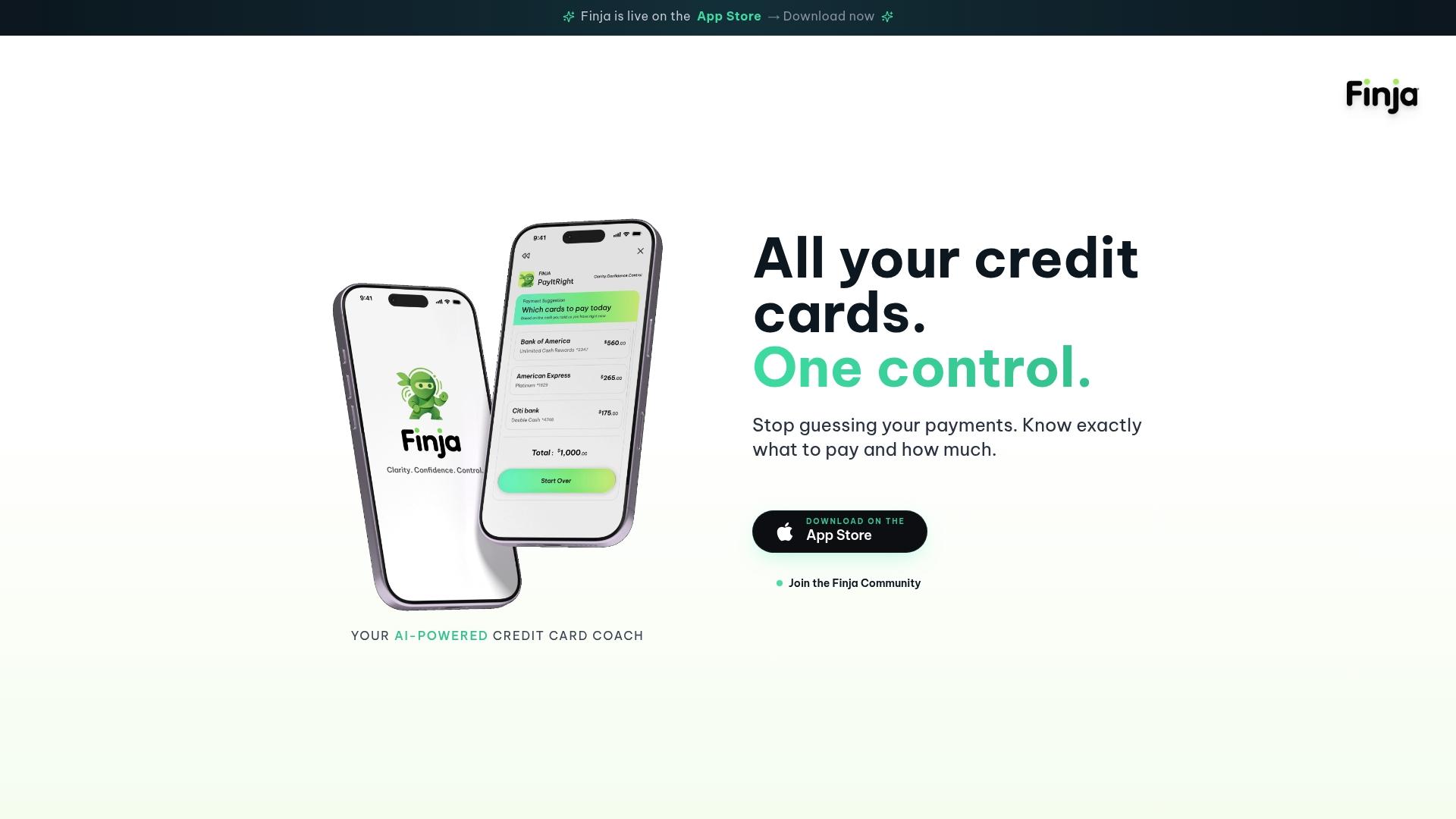
See how it works at Finja, your AI-powered credit card coach.
FAQ
Why do my transactions keep pending?
A charge stays pending until the merchant finishes processing it. Tips, fuel authorizations and estimated hotel or rental incidentals are common reasons, and the final amount can differ from the pending one. Most clear within 72 hours, and some take up to five days, according to Capital One's guidance.
How do I see pending transactions on my credit card?
Open your issuer's app or website and go to the activity or transactions area. Look for a section or filter labeled pending. At American Express, for example, it is under Statements & Activity, then Pending Charges. Alerts for purchases can also notify you as each authorization happens.
Can I dispute a pending charge?
Not until it posts. If you made the purchase and have a problem, wait for it to post, contact the merchant, and then file a dispute with your issuer if it is not resolved. If you did not make the purchase at all, report it as fraud right away rather than waiting.
Does a pending charge affect my available credit?
Yes. It reduces your available credit immediately, but it is not added to your account balance until it posts. That is why your available credit and balance can look out of step for a few days.
Sources
- Pending credit card transactions | Capital One Help Center
- @ Work Resource Center | Dispute Charge | American Express