
What a financial freedom credit strategy actually means
A financial freedom credit strategy is a disciplined plan for managing credit and debt so that your cash flow stays under your control, not a lender's. The goal is simple: stop relying on credit to survive, and start using it as a deliberate tool that works in your favor.
According to Michael Rusinak, VP of financial solutions at Fidelity, financial freedom is less about hitting a specific dollar amount and more about a "state of mind" where you feel genuinely secure covering your obligations. That framing matters because it shifts the focus from chasing a number to building habits.
The core components of a financial freedom credit strategy include:
- Cash flow clarity: Knowing exactly what comes in and goes out each month, with no guesswork.
- Low credit utilization: Keeping balances well below your credit limits to signal responsible usage to lenders.
- Full monthly payments: Paying your statement balance in full every month to avoid interest charges entirely.
- Strategic card selection: Choosing credit products that match your spending patterns and reward your habits.
- AI-powered decision support: Using tools that analyze your payment behavior and flag opportunities to reduce costs.
Two misconceptions trip people up constantly. First, your credit score is a measure of risk to lenders, not a measure of your personal wealth. Second, carrying debt to "build credit" actively delays financial independence because every interest payment is money that never builds equity or savings.
Table of Contents
- Why strategic credit management is crucial for financial independence
- How AI-powered tools make your credit strategy sharper
- How to implement a financial freedom credit strategy step by step
- Finja gives you an AI credit card coach in your corner
- Long-term planning and goal setting with your credit strategy
- What successful credit strategies look like in practice
- Finja puts AI-powered credit optimization within reach
- Key Takeaways
Why strategic credit management is crucial for financial independence
Debt is expensive in a way most people underestimate. High-interest debt inflates your required savings threshold for financial independence because every dollar paid in interest is a dollar that never gets invested. A $10,000 credit card balance with high interest costs thousands in interest annually, money that could otherwise compound in an index fund.

The psychological trap is just as costly. Many people obsess over pushing their credit score from 760 to 800 while carrying revolving balances. Once your score hits around 740–760, the practical benefits of further improvement shrink fast. Lenders offer their best rates in that range. Chasing incremental gains beyond that point while paying interest is a losing trade.
The mindset shift that actually moves the needle: treat credit as a transaction tool, not a financial safety net. Your emergency fund is your safety net. Credit is for convenience and rewards, cleared monthly.
Payment history and utilization rate are the two factors that carry the most weight in your credit profile. Keeping utilization under 30% and never missing a payment builds a strong credit foundation without requiring you to carry a balance. Account longevity matters too, so avoid closing old cards unnecessarily.
Pro Tip: Don't let credit score optimization become a distraction from debt elimination. Redirect the mental energy you spend refreshing your score toward paying down balances. The score will follow.
How AI-powered tools make your credit strategy sharper
AI credit tools do something a spreadsheet cannot: they process your full transaction history in real time and surface patterns you would never catch manually. That includes identifying which card to pay first on a given week to minimize interest accrual, or flagging when your utilization is about to spike before a statement closes.
Managing multiple credit cards compounds the complexity fast. Each card has its own billing cycle, interest rate, and utilization impact. AI analyzes all of that simultaneously and recommends a payment sequence that keeps your overall credit health moving in the right direction. The benefits of AI in credit management go beyond convenience: the tools can catch a drift toward higher utilization weeks before it shows up on your report.
Dashboards and real-time notifications are where AI earns its keep for most users. Instead of logging into five different card portals, you see your full credit picture in one place, with alerts when something needs attention. That transparency reduces the low-grade financial stress that builds when you are not sure where you stand.
AI also removes the human error factor. Missed payments, forgotten due dates, and suboptimal payment timing are among the most common reasons credit scores stagnate. Automated scheduling and smart reminders close those gaps without requiring perfect memory or discipline.
Key insight: AI credit tools can reveal hidden patterns in your spending and payment behavior, enabling early intervention before a small drift becomes a costly problem.
How to implement a financial freedom credit strategy step by step
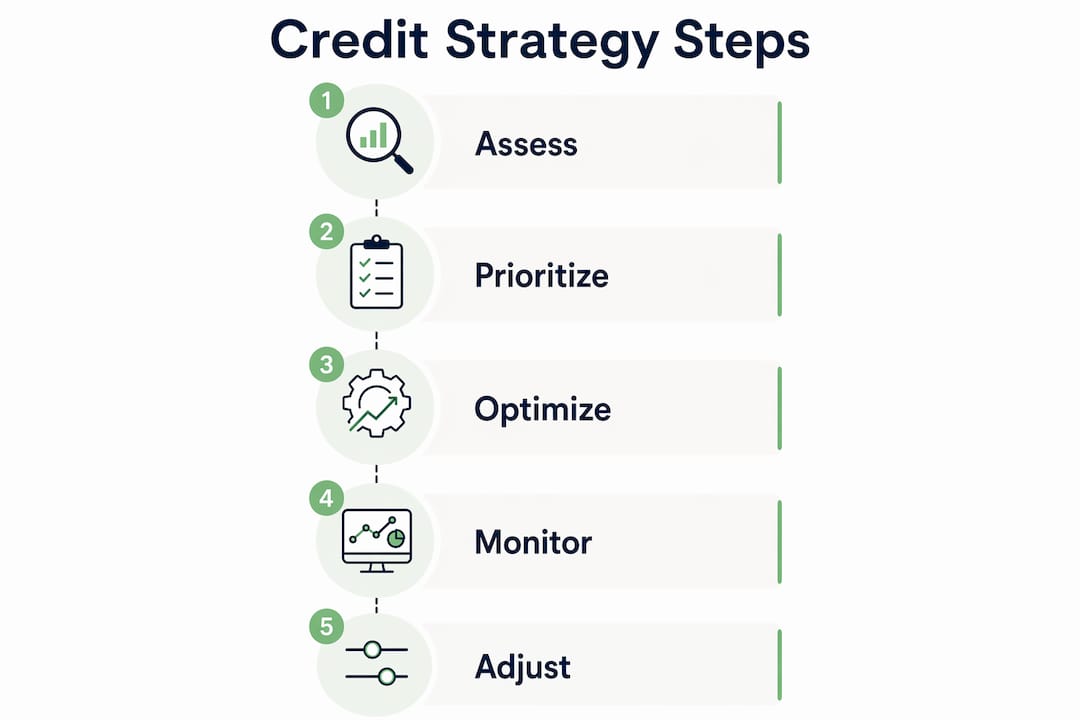
Getting from "I know I should manage credit better" to actually doing it requires a specific sequence. Here is what works:
- Start with a cash flow audit. List every income source and every fixed expense. What remains is your discretionary cash flow, the fuel for debt payoff and savings.
- Build a starter emergency fund first. Aim for one month of essential expenses before attacking debt aggressively. Without this cushion, one unexpected bill sends you straight back to the credit card. Fidelity recommends 3–6 months of emergency savings as the full target
- Inventory every debt. Note the balance, interest rate, and minimum payment for each account. This is your baseline.
- Choose a payoff method. The debt avalanche (highest interest rate first) saves the most money. The debt snowball (smallest balance first) builds momentum faster. Either beats making minimums.
- Keep utilization under 30%. Across all cards and on each individual card. If you are close to that threshold, consider paying balances weekly rather than waiting for the due date.
- Pay the full statement balance monthly. Carrying even a small balance costs you interest and provides no credit score benefit over paying in full.
- Select an AI credit tool. Finja, for example, analyzes your card portfolio and recommends payment timing and sequencing to reduce interest and protect your credit health.
- Review your credit report quarterly. Errors appear more often than most people expect. Disputing inaccuracies is one of the fastest credit score improvement moves available.
Pro Tip: Set a calendar reminder every 90 days to pull your free credit report at AnnualCreditReport.com. One disputed error can shift your score by 20–40 points.
Finja gives you an AI credit card coach in your corner
Finja is built specifically for people managing multiple credit cards who want to stop guessing and start optimizing. Its AI analyzes your full card portfolio, identifies the highest-cost balances, and recommends a payment sequence that reduces interest while protecting your credit health indicators.
| Feature | What it does | Outcome for you |
|---|---|---|
| Payment optimization | Sequences payments across cards to minimize interest | Lower total interest paid each month |
| Utilization monitoring | Tracks real-time utilization across all cards | Keeps your credit score moving upward |
| Spending pattern analysis | Identifies trends and flags risk areas early | Prevents costly surprises before they happen |
| Credit health dashboard | Consolidates all card data in one view | Full visibility without logging into multiple portals |
| Personalized guidance | Authored insights from Finja's team, including Grace K. | Practical, data-backed advice tailored to your situation |
Finja's content, including guidance authored by Grace K., connects the mechanics of credit management to the broader goal of financial independence. That means you are not just getting payment reminders; you are getting context for why each decision matters in your overall financial plan. Understanding the credit health indicators that Finja tracks helps you see the full picture, not just your score.
Long-term planning and goal setting with your credit strategy
A credit strategy without a timeline is just a wish list. The most effective approach ties specific credit milestones to broader financial goals, with dates attached.
Start by defining your target utilization rate and the date by which you want to reach it. Then work backward: how much extra do you need to pay each month to hit that number? Do the same for debt elimination. If you have credit card debt and can direct sufficient monthly payments toward it, you can establish a payoff timeline depending on your payment capacity, assuming you stop adding to the balance.
Once high-interest debt is gone, the discipline does not stop. The most successful strategies treat credit cards strictly as monthly-clear transaction tools from that point forward. Reverting to carrying balances is the single most common way people undo years of progress. Simplifying your personal finances, including automating savings and payment schedules, makes it far easier to stay on track long term.
Set annual credit reviews on your calendar. Reassess your card lineup, your utilization targets, and your emergency fund size as your income and expenses shift. Financial freedom is not a destination you reach once; it is a condition you maintain through consistent, deliberate decisions.
What successful credit strategies look like in practice
Consider two common scenarios that illustrate how these principles play out.
A consumer carrying balances on three credit cards at rates between 19% and 24% shifts to the debt avalanche method, directing every extra dollar to the highest-rate card while making minimums on the others. Within 18 months, all three balances are cleared. Monthly cash flow increases by the amount previously consumed by minimum payments, which then redirects into an index fund. The financial stress from juggling multiple due dates disappears almost immediately once an AI tool consolidates the payment schedule.
A second scenario: a consumer with no revolving debt but a thin credit file uses a single rewards card for monthly expenses, pays the full balance every week to keep utilization near zero, and lets the account age. Within a year, their score crosses 740, qualifying them for the best mortgage rates available. The card never costs them a dollar in interest.
Both paths share the same foundation: cash flow clarity, deliberate payment behavior, and credit used as a tool rather than a lifeline.
Finja puts AI-powered credit optimization within reach
Most people managing multiple credit cards are leaving money on the table every month, paying more interest than necessary and missing the payment timing that would protect their credit score. Finja closes that gap by doing the analysis automatically.
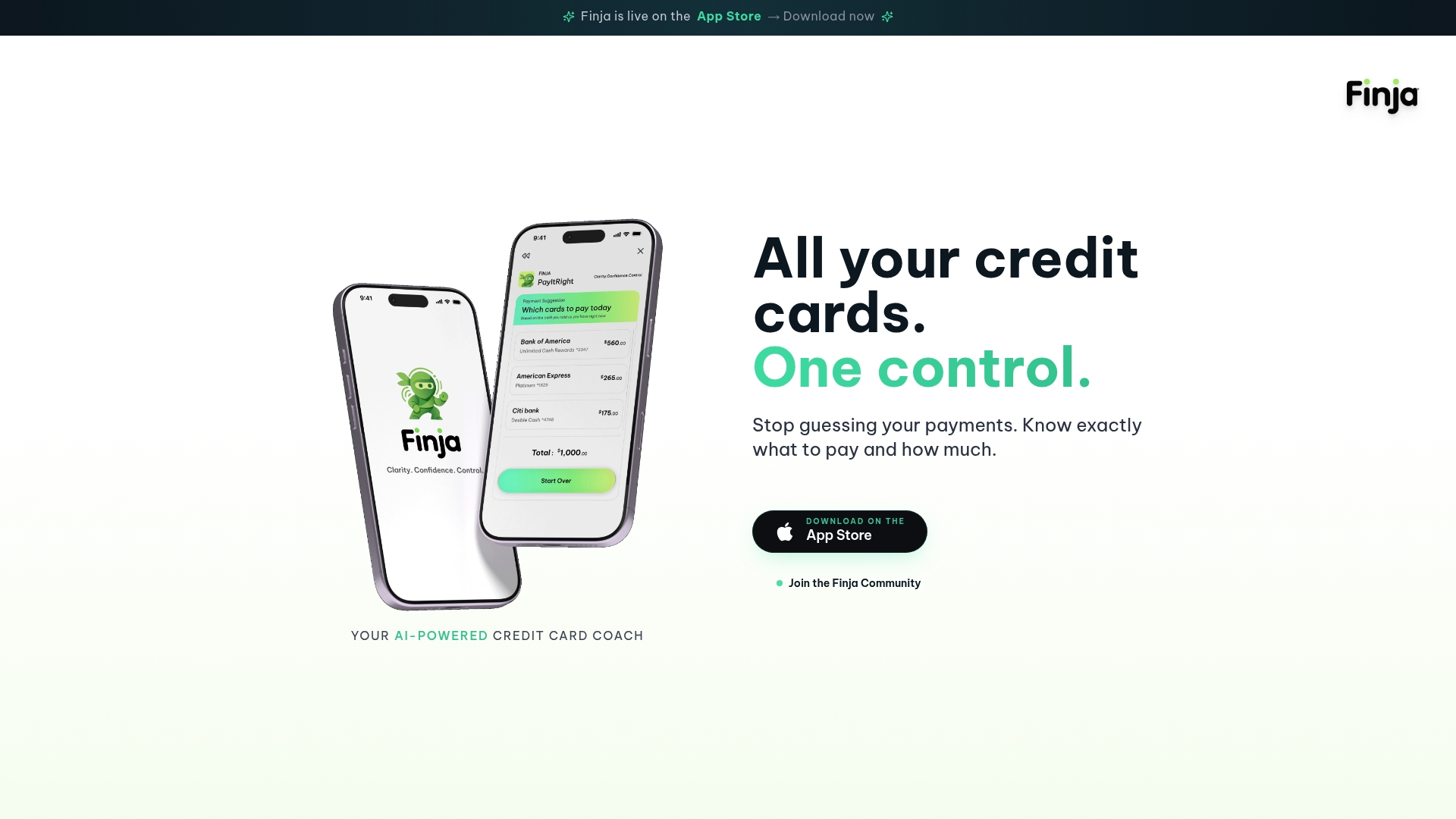
Where generic budgeting apps show you what you spent, Finja tells you what to do next. Its AI maps your card balances, rates, and billing cycles, then recommends the exact payment sequence that reduces your interest costs and keeps your utilization in the right range. No manual spreadsheets, no guessing which card to pay first.
Finja is built for U.S. consumers who are serious about using credit strategically, not just managing it reactively. Whether you are working through a debt payoff plan or optimizing a clean credit profile for a major purchase, the platform gives you the data and guidance to make confident decisions. Visit myfinja.com to connect your cards and see your personalized credit optimization plan.
Key Takeaways
A financial freedom credit strategy works when you combine cash flow clarity, disciplined debt elimination, and AI-powered payment optimization into a single, consistent system.
| Point | Details |
|---|---|
| Define freedom correctly | Financial freedom is a state of confident control over cash flow, not a specific dollar amount. |
| Target the right score range | A credit score of 740–760 captures most lender benefits; chasing higher scores while carrying debt costs more than it gains. |
| Eliminate high-interest debt first | Credit card debt with high interest erodes financial independence faster than almost any other factor. |
| Use AI to close execution gaps | AI tools optimize payment timing across multiple cards, reducing interest and protecting credit health automatically. |
| Finja as your credit coach | Finja analyzes your full card portfolio and recommends payment sequences that lower costs and improve credit health over time. |