
The most reliable subscription price increase alert is one you build yourself: a single view of every recurring charge across all your cards, checked against what each one cost last month. Companies send notices, but they arrive by email, app message or a line on a statement, and with several cards in your wallet they are easy to miss. Finja is an AI-powered credit card coach that shows all your cards in one place, so a charge that quietly went from one amount to another is visible next to everything else you owe.
This guide is for people who carry more than one credit card and want to stop paying interest on charges they never meant to approve. It covers where price-increase notices come from, how to verify one, what to do when it arrives, and how to build a routine that catches hikes even when no notice reaches you.
TL;DR
- Price-increase alerts come from three places: the merchant's own notice, your card issuer's statement or messages, and your own review of recurring charges.
- A merchant notice is only the start. Verify the new amount and the effective date on your account page, then compare it to your next statement.
- Under the CFPB's guidance, sellers must clearly disclose the amount charged and that charges recur, so a vague notice is worth questioning.
- With several cards, the gap is rarely one missed email. It is the lack of one place where every recurring charge is listed with its history.
- Decide within the notice window: keep, downgrade, cancel, or move the charge to a different card.
Table of Contents
- Why price hikes slip past people with multiple cards
- The three places a price-increase alert can come from
- How to verify a price-increase notice
- What to do when the alert arrives
- Putting a number on the hike
- Building your own alert system
- Where Finja fits
- Our perspective
- FAQ
- Sources
Why price hikes slip past people with multiple cards
A price increase on a subscription rarely feels like an event. Streaming services, software plans and memberships typically announce changes by email, sometimes weeks ahead, and then simply bill the new amount. Streaming companies have been doing this repeatedly. Press coverage in April 2026, for instance, described Netflix emailing subscribers about its latest round of increases.
If you hold one card, the next statement shows the change. If you hold four or five, the same $3 increase is buried in a different statement, due on a different date, and you may not look at that card closely until the bill is due. Meanwhile any balance you carry on that card accrues interest, so the subscription costs more than its sticker price.
Three things make multi-card users especially exposed:
- Scattered billing cycles. Each card closes on its own day, so a new charge can appear at any point in the month.
- Forgotten card assignments. Many people attach a subscription to whichever card was in hand at sign-up and never revisit it.
- Interest on top of the hike. A recurring charge sitting on a card you do not pay in full each month costs the price plus finance charges.
The fix is not another inbox rule. It is a way to see every recurring charge side by side.
The three places a price-increase alert can come from
1. The merchant
The seller is the first source. Notices usually go to the email address on the account, show as an in-app banner, or appear on the billing page. Check that the email on each account is one you actually read, and look in promotions and spam folders around the time you expect a change.
A merchant notice is also the least consistent source. Wording ranges from clear ("your plan will be $X on this date") to vague ("we are updating our pricing"). That is where the federal guidance matters.
The Consumer Financial Protection Bureau's Circular 2023-01 on negative-option marketing says sellers must clearly and conspicuously disclose material terms. Those include the amount or range of amounts charged, the fact that charges recur unless you affirmatively cancel, and, for trial plans, that charges will begin or increase after the trial unless you act. A "negative option" is simply an offer where your silence counts as agreement, which describes most subscriptions. A notice that leaves out the new amount or the date it starts does not give you what you need to decide.
2. Your card issuer
Your issuer is not watching the merchant for you, but it is a second record. Card agreements typically say the issuer may notify you of changes on your statement or by separate written notice, which can be electronic where the law permits. Citi's Cardmember Agreement, for example, states this and also puts a duty on you: if you have authorized a merchant to charge your account for recurring transactions, you must notify the merchant when you want to stop them, when your account is closed, or when your account number or expiration date changes.
That last point is practical. The card, not the merchant, is where the charge lands, but changes to the subscription itself still have to be handled with the merchant. Issuer transaction alerts can tell you a charge posted. They generally do not tell you that it is higher than last time, so you still need to compare.
3. Your own review
The third source is the only one you control. A monthly pass through every card's recurring charges, comparing each amount against the previous month, will catch increases that no notice announced and notices that never arrived. It is also the only method that works the same way for every merchant.
How to verify a price-increase notice
Treat every notice as a claim to check, not a fact to accept. Scam emails imitating streaming and software companies are common, and a real notice still needs confirming. Work through these steps.
- Do not click the email's link first. Open the merchant's app or type its address yourself and sign in.
- Find the billing or plan page. It should show the current plan, the amount, the billing frequency and the next charge date. If it shows the old price with a future change, note the effective date.
- Match the numbers. The notice, the account page and your latest statement should agree on the plan name and amount. A mismatch is a reason to contact the merchant before the next charge.
- Check which card is on file. The card shown on the account is the one that will be billed. If it is a card you meant to retire, fix it now.
- Record the new amount and date. Write them where you will see them, so the next statement has something to be compared with.
If the notice states no amount, no start date, or hides the cancellation route, that is the kind of gap the CFPB's circular warns about. The same circular says that unreasonable barriers to cancelling, such as long holds or false information about how to cancel, or failing to honor a compliant cancellation request, can be an unfair, deceptive or abusive practice. Keep screenshots of what you were told.
What to do when the alert arrives
You usually have a short window between the notice and the first higher charge. Use it to make one of four decisions.
| Decision | When it fits | What to do |
|---|---|---|
| Keep as is | The service is used weekly and the new price is still good value | Update your tracked amount and move on |
| Downgrade | You use part of the plan | Switch tiers on the account page before the effective date |
| Cancel | You have not used it in a month or two | Cancel through the account page and save the confirmation |
| Move the charge | The service stays but the card is wrong | Change the card on file; see our guide to moving subscriptions between credit cards |
Two habits make this easier. First, decide on the day you see the notice rather than leaving it in your inbox. Second, if a charge posts that you did not agree to or that exceeds what you were told, our walkthrough on how to dispute recurring charges covers the steps with your issuer.
Putting a number on the hike
A small increase looks harmless until you add it up. Take a $15.49 plan that rises to $17.99. That is $2.50 a month, or $30 a year, for one service. If you hold six subscriptions and four raise prices by a similar amount in the same year, you have added roughly $120 to your annual spend without making a single new decision.
Now add interest. Suppose those charges sit on a card where you carry a balance at an APR of 25%. The extra $120 is not just $120 if it stays unpaid for months. Counting the full cost of a plan over several years is the same logic behind a multi-year plan fee calculation, and it is the right frame for any recurring fee: price per month times months, plus whatever the card charges you to carry it.
This is why we care about the card the subscription is on, not only the subscription. Our piece on tracking subscription charges to cut interest goes deeper on the interest side.

Building your own alert system
You do not need special tools to start. You need a list and a schedule.

Step 1: List every recurring charge
Pull the last two or three statements from every card. Highlight anything that repeats monthly, quarterly or yearly. Include the small ones: cloud storage, app add-ons, news sites, game passes. Annual charges are the easiest to forget because they appear once.
Step 2: Record amount, card and date
For each item write the service, the amount, the card, the billing day and the date you last confirmed the price. That last column is what turns a list into an alert system, because any charge you have not reconfirmed recently deserves a look.
Step 3: Set card-level alerts
Turn on transaction and fraud alerts in each issuer's app so you see charges as they post. Our overview of credit card alert types for multi-card users explains which ones matter, and credit limit alerts help when a stack of subscriptions pushes a card near its ceiling.
Step 4: Compare monthly
Pick a fixed day, ideally just after your first card's statement closes, and compare every recurring amount against your list. Any difference is an unannounced hike or an error. Aligning this check with your billing cycles keeps it manageable; the approach in budgeting by billing cycle fits well.
Step 5: Act on the difference
For each change, run the keep, downgrade, cancel or move decision above, and update the list.
The weak point of this routine is upkeep. With five cards it means opening five apps and re-typing the same details every month. That is the part a dedicated tool takes off your hands.
Where Finja fits
Finja is built for people with multiple credit cards. It displays all your cards in one place, offers AI-powered guidance on payment timing and amounts, and focuses on reducing interest costs and improving credit health rather than chasing rewards. For subscription hikes, the value is in that consolidated view: when every card, balance and due date sits on one screen, a recurring charge that moved from one amount to another stops hiding behind a different statement.
The app also includes budgeting tools, credit health tracking and spending limit controls, so the decision you make about a pricier subscription connects to the bigger picture: which card pays it, when that card is paid, and how much interest follows. If you want a coach that keeps your cards organized so price changes are easier to spot, see Finja, your AI-powered credit card coach.
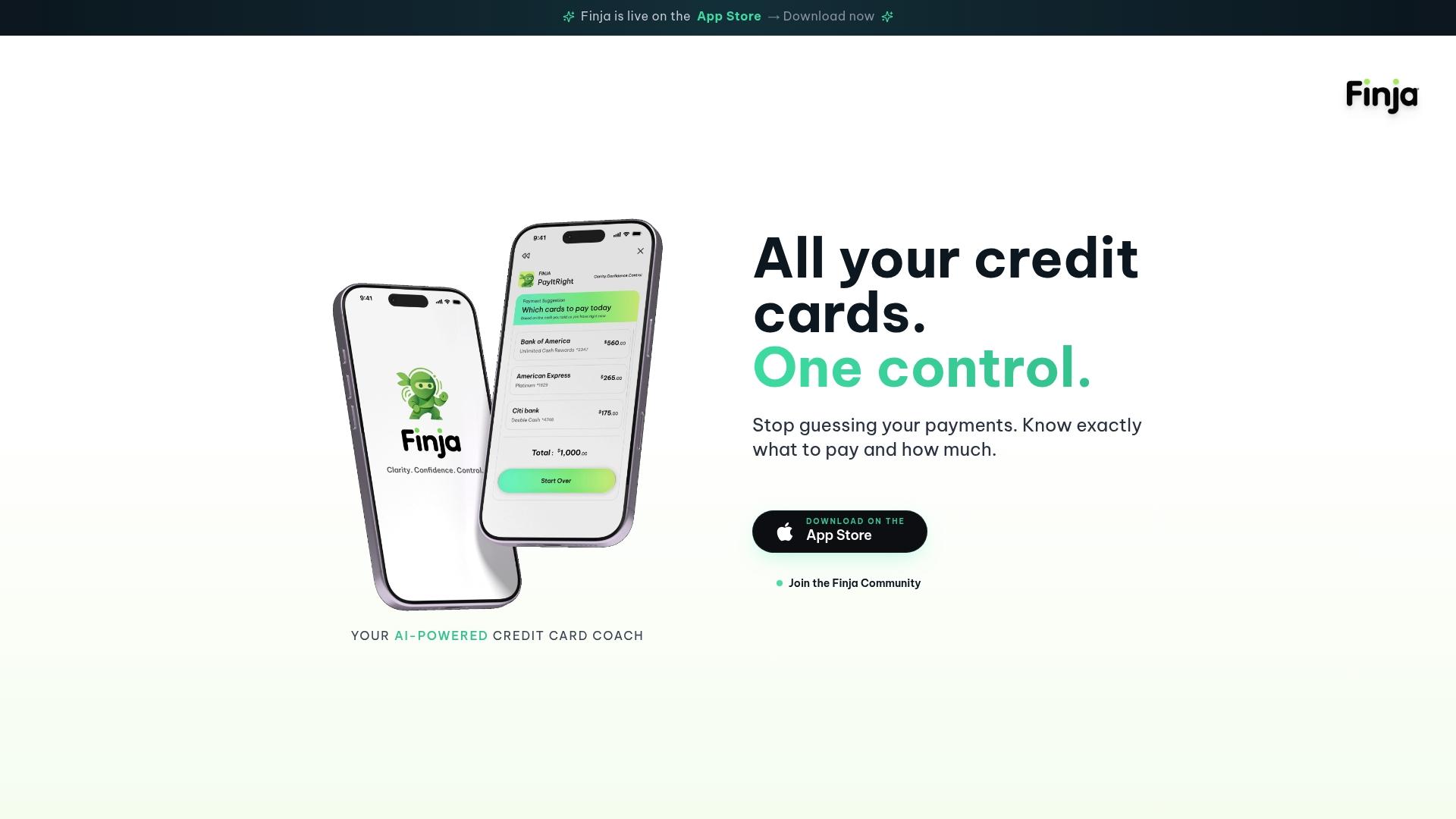
For broader habits that complement this, our multiple credit card management tips and ways to reduce credit card bills are good next reads.
Our perspective
Most people think of a subscription price hike as a merchant problem. In our view it is a card-management problem. The hike itself is a few dollars. What turns it into real money is that it lands on a card you are carrying a balance on, in a billing cycle you are not watching, among a pile of other charges.
That is why we built Finja around the whole picture of your cards rather than around any single bill. When you can see every card together, you can ask the useful question: not just "did this price go up?" but "which card should this charge sit on, and when should that card be paid?" Interest is the number that matters, so our guidance on payment timing and amounts is designed around reducing it.
We also believe in simplicity. A tracking routine you abandon in March does nothing in November. The best alert system is the one that is easy enough to keep using, with no learning curve, and that is what we are designed to give people who juggle several cards.
Grace K.
FAQ
Do companies have to tell me before raising a subscription price?
There is no single rule that fixes a notice period for every subscription, and terms vary by company and state. The CFPB's Circular 2023-01 does say sellers must clearly disclose the amount charged and that charges recur, and a seller that does not obtain your informed consent before charging may be violating federal consumer finance law. Read the terms you agreed to and the notice itself for the new amount and date.
Will my credit card company warn me when a subscription gets more expensive?
Not as a rule. Issuers may notify you of changes to your card agreement on your statement or by separate notice, but they do not typically monitor merchant pricing. Transaction alerts show that a charge posted, so you still need to compare the amount with the previous month.
What should I do if I never got a notice but the charge went up?
Sign in to the merchant's account page and check the plan, the amount and any price-change message. If the new amount was not clearly disclosed, contact the merchant and ask for the terms and effective date in writing. If the answer is unsatisfactory, you can dispute the charge with your issuer; our guide to disputing recurring charges lists the steps.
How often should I review recurring charges?
Once a month is enough for most people, timed to a fixed day so it becomes routine. Add a quick check whenever a notice arrives or a card is replaced, since a new account number or expiration date can interrupt recurring payments and you must update the merchant.
Sources
- CFPB, Consumer Financial Protection Circular 2023-01: Unlawful Negative Option Marketing Practices
- Citi Cardmember Agreement
- Multi-year plan fee calculator