
To dispute a wrong balance on your credit report, file a written dispute with each credit bureau that shows the error and with the card issuer that reported it. Explain exactly what is wrong, say what the balance should be, and attach copies of your statements. The bureau generally has 30 days to investigate. Before you file, make sure the balance is actually wrong. A balance that looks off is often just the statement balance from your last billing cycle.
This guide shows you how to tell the difference, what to put in your dispute, what happens afterward, and what to do if the wrong number stays on your report.
TL;DR
- Many issuers report your statement balance at the end of the billing cycle, so a report balance that differs from your current balance is not automatically an error.
- If the balance or credit limit really is wrong, dispute it in writing with both the credit bureau and the card issuer.
- Include the report section with the error marked, plus copies (never originals) of statements or other proof.
- The bureau generally has 30 days to investigate, extendable to 45 in certain cases, and must tell you the result within five business days of finishing.
- If the dispute does not fix it, you can add a statement to your file and file a complaint with the CFPB.
Table of Contents
- First, check whether the balance is really wrong
- Gather your evidence before you file
- How to file the dispute, step by step
- What happens after you file
- If the wrong balance is still there
- A note on credit limits and utilization
- Perspective
- Keep your cards organized so disputes are easy
- Habits that prevent balance errors
- FAQ
- Sources
First, check whether the balance is really wrong
The most common reason people dispute a balance is that the number on the report does not match the number in their card app. That mismatch is frequently normal.
Experian explains that most lenders report your statement balance at the end of the billing cycle, not necessarily your current balance. Issuers commonly report once a month. So if you paid down $1,500 yesterday, your report may still show the higher balance from the day your statement closed.
A balance is a candidate for a dispute when the gap cannot be explained by timing. Compare your credit report against your own records:
- Find your statement closing date. The reported balance should line up with the balance on a statement from around the date the account was last updated on your report.
- Look at payments. A payment you made before the statement closed should be reflected. If it is missing, check how long the issuer takes to record payments. Our guide to how long credit card payments take to post explains the usual delays.
- Check dates. Purchases can land on your account after the day you made them. The difference between posting date and transaction date can explain a small mismatch.
- Check the credit limit. The CFPB lists an incorrect current balance and an incorrect credit limit among the data-management errors to look for when you review a report. A wrong limit matters because it distorts how much of your available credit appears to be in use.
- Check whose account it is. A balance on a card you never opened, or a duplicate of an account you do own, is a different kind of error and a stronger reason to dispute.
If you carry several cards, this check is tedious, because every card closes on a different day. Keeping each card's closing date and statement balance in one place makes the comparison quick. More on that in the promo section below.
Examples of balance errors worth disputing
- A card you paid off in full that still shows a balance months later.
- A balance far higher than any statement you have ever received.
- A credit limit listed lower than your actual limit.
- The same account listed twice, with the balance counted both times.
- A balance carried by an account that is not yours, which may signal identity theft.
Examples that are usually timing, not errors
- Your report shows last month's statement balance, and you paid since.
- A recent purchase appears in your app but not yet on the report.
- A payment is still pending with the issuer.
If you are unsure which bucket you are in, the Finja guide to statement balance versus current balance shows how the two numbers diverge during a cycle.
Gather your evidence before you file
A dispute that names the problem and proves it moves faster than a vague complaint. The CFPB advises including the relevant section of your report, circled or highlighted, and copies, not originals, of documents that support your position.
Useful documents for a balance dispute include:
- The credit report page showing the wrong balance or limit
- Card statements covering the period in question
- Proof of payment, such as a bank record showing the withdrawal date and amount
- A payoff or zero-balance letter from the issuer, if you have one
- A fraud or identity-theft affidavit, if the account is not yours
The federal HelpWithMyBank.gov dispute guide lists similar supporting items: the relevant report section, a fraud or identity-theft affidavit, a court order, or account statements.
Keep a copy of everything you send. Also write down the date you sent it and how.

How to file the dispute, step by step
Step 1: Pull your reports
Get your reports from each of the three nationwide bureaus and note which ones show the wrong balance. The CFPB tells you to contact each bureau whose report contains the error. One bureau may have the correct figure while another does not, because issuers do not always report identically to all three.
Step 2: Write the dispute
According to the CFPB, a mailed dispute should include your complete name, address and telephone number, a report confirmation number if you have one, each disputed item with its account number, and a clear explanation of what is wrong along with the correction you want. Keep it short and factual.
A workable structure:
- Who you are: full name, address, phone number, and the report confirmation number if available.
- What is wrong: the creditor name, the account number, and the reported balance.
- Why it is wrong: for example, "My statement closing on the date shown a balance of a lower amount, and I paid the account in full afterward. Copies are enclosed."
- What you want: "Please correct the balance to the amount shown on the enclosed statement."
- What is enclosed: a list of the attachments.
Send it by a method that gives you proof of delivery. Avoid long emotional narratives. The investigator reads the specifics, so make them easy to find.
Step 3: Dispute with the card issuer too
The CFPB says to dispute with both the credit reporting company and the company that provided the information, which for a card balance is usually your issuer. The issuer is the source of the number. If it fixes its records and reports the correction, the bureau data follows. Disputing with both closes the loop from two directions.
If your problem is a charge on the card itself rather than the reported figure, that is a billing dispute and a separate process. Our guides on duplicate credit card charges and recurring charges cover those, including the time windows that protect your rights.
Step 4: Track the clock
Mark the day the bureau receives your dispute. Then wait for the response before you pile on additional requests. Repeated duplicate disputes about the same item do not speed things up and make your records harder to follow.
What happens after you file
The CFPB says a bureau generally has 30 days, extendable to 45 in specified circumstances, to investigate. When it finishes, it must notify you of the results within five business days and give you an updated report if your file changed.
Here is a plain timeline:
| Stage | What to expect |
|---|---|
| You send the dispute | Keep proof of delivery and copies of everything |
| Bureau investigates | Generally 30 days, up to 45 in certain circumstances |
| Bureau reports back | Within five business days of finishing, with an updated report if your file changed |
| You review the new report | Confirm the balance and limit are now correct at that bureau |
The law also sets the rule for what the bureau does with a bad entry. A Federal Reserve report to Congress on the dispute process notes that if the item is found inaccurate, incomplete or unverifiable, the bureau must promptly delete or modify it. Deleted information can be reinserted only after the furnisher certifies it is complete and accurate, and you must get written notice within five business days.
Will disputing hurt your score?
During an investigation, the CFPB says a disputed debt is generally not used in credit scoring until the investigation is complete. The same page notes that some lenders may decline to extend credit during that period. So if you are about to apply for a mortgage or auto loan, time your dispute with that in mind and talk to the lender about it first.
If the wrong balance is still there
Sometimes the investigation ends and the number has not changed. You have options.
- Re-read the results. Check whether the bureau changed anything. It may have corrected one account detail but not another, or fixed one bureau's report and not the others.
- Add a statement. If the investigation does not resolve the dispute, you can submit a statement describing it. The CFPB notes that the debt will then be used for credit scoring, so use this when you have exhausted fixes and want your side on the record.
- Go back to the issuer. Send the issuer your proof directly and ask it to report a correction to all three bureaus.
- File a CFPB complaint. USAGov says that if your written dispute with the bureau does not fix the error, you can file a complaint with the CFPB.
If the underlying issue is a late payment mark rather than a balance, see our walkthrough on how to remove a late payment, which covers escalation to the CFPB.
Once the record is right, the next job is rebuilding. A guide on how to fix errors, then rebuild credit lays out that order of work.
A note on credit limits and utilization
A wrong balance is not the only number that can hurt you. Your utilization depends on both the balance and the limit. If a limit is misreported, or if an issuer lowers your limit, your utilization jumps even though your spending did not change. If that happened, our 72-hour plan after a credit limit cut walks through what to do. And if the limit on your report is simply wrong, include that in your dispute along with a statement or issuer letter showing the true limit.
Perspective
Most balance disputes we hear about start with a number that looks wrong but is not. People compare a report to a live app, see a gap, and file. The better first move is to know each card's closing date and statement balance, so you can say with confidence whether it is a timing difference or a real error.
That is why we built Finja around a single view of all your cards. When you have three, five or eight cards, every one closes on a different day, and no one remembers all of them. Our approach is designed to put balances, due dates and payment timing in one place, and to guide how much to pay and when, with the aim of reducing interest and supporting credit health.
We think of it as a dedicated credit card coach rather than a general budgeting tool. A clear picture of your own accounts makes any dispute stronger, because you can attach the right statement and point to the exact figure that is off.
Grace K.
Keep your cards organized so disputes are easy
If you manage several cards, Finja gives you an AI-powered credit card coach that shows all your cards in one place and guides your payment timing and amounts. The goal is to reduce interest costs and keep your credit health visible, so a wrong balance stands out instead of hiding among a stack of statements.
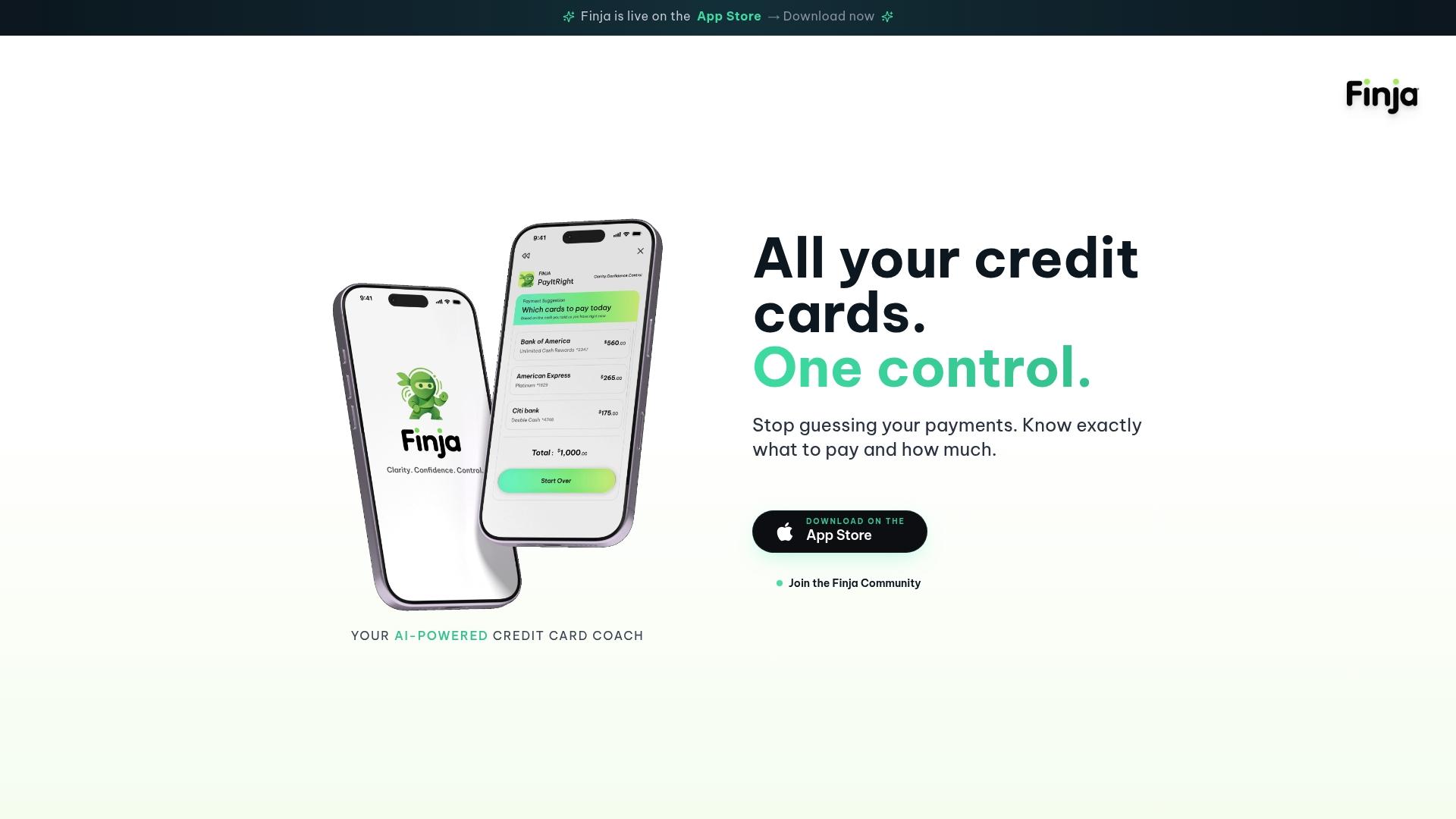
It is built for people who carry more than one card and want simplicity without a learning curve. Spending limit controls and budgeting tools sit alongside the consolidated view. If you want to set your own guardrails, our guide to setting credit card spending limits shows how in five steps.
Habits that prevent balance errors
You cannot prevent every reporting mistake, but a few habits make errors easier to catch and prove.
- Save every statement. PDF copies are enough. They are your best evidence if a balance is later misreported.
- Know your closing dates. The reported balance generally follows the cycle, so the closing date tells you which number to expect. See when to pay your credit card for fees, interest or score goals.
- Review your reports regularly. Look at balances and limits, not just the score.
- Screenshot payment confirmations. Include the date and amount.
- Understand your rate. Interest compounds against the balance you carry, so see APR versus APY on credit cards to understand the cost of any balance that lingers.
FAQ
Should I dispute with the credit bureau or the card issuer?
Both. The CFPB says to dispute with the credit reporting company and with the company that supplied the information, which is usually your card issuer. Contact each bureau whose report contains the error.
How long does a balance dispute take?
Generally 30 days from when the bureau receives it, and up to 45 days in certain circumstances. The bureau must notify you of the results within five business days of finishing and send an updated report if your file changed.
Does disputing a balance lower my credit score?
The CFPB says a disputed debt is generally not used in credit scoring until the investigation is complete. Some lenders may decline to extend credit during that time, so talk to any lender you are about to apply with.
Why does my credit report show a different balance than my card app?
Issuers commonly report monthly, often using the statement balance from the end of the billing cycle. Your app shows the current balance, so the two can differ without any error.
What if the bureau does not fix the balance?
You can submit a statement describing the dispute, go back to the issuer with your proof, and file a complaint with the CFPB. USAGov points to the CFPB complaint when a written bureau dispute does not fix the error.
Sources
- Experian: How to update balance information on your credit report
- CFPB: What are common credit report errors to look for
- CFPB: How do I dispute an error on my credit report
- HelpWithMyBank.gov: How do I dispute information on my credit report
- CFPB: How long does it take to repair an error on a credit report
- CFPB: If I dispute a debt, how does that show up on my credit report
- Federal Reserve: Report to Congress on the FCRA dispute process
- USAGov: Dispute errors on your credit report
- Fix errors, then rebuild credit