
Yes, but only under specific conditions: the late payment has to be inaccurate, unverifiable, or older than seven years. If it's accurate and recent, no letter or dispute will erase it. Start now by pulling your three credit reports, gathering bank statements or payment confirmations as proof, and filing a dispute with the creditor and the bureau. Most disputes take about 30 days to resolve.
TL;DR:
- Disputing only works for errors that are inaccurate, unverifiable, or older than seven years, while recent, correct late payments cannot be removed through dispute.
- Confirm the accuracy of late payment details by matching bank statements and credit reports, especially the delinquency date, days past due, and account information.
- Dispute errors through both the creditor and credit bureaus within about 30 days, documenting all communication and evidence carefully.
- Goodwill letters can sometimes remove late payments if they are one-time mistakes on otherwise well-managed accounts, but they are not guaranteed to succeed.
- Building a consistent repayment routine, such as automating payments and adjusting due dates, helps prevent future late payments more effectively than trying to remove past marks.
Table of Contents
- How to Spot and Verify a Late Payment on Your Credit Reports
- Step-by-Step Dispute Process: Creditors and Credit Bureaus
- Goodwill Letters and Pay-for-Delete: What Actually Works
- What if Disputes Don't Fix It? Escalating to the CFPB and Beyond
- What to Expect: Timeline, Score Impact, and Myths to Ignore
- Preventing the Next Late Mark: Practical Tactics That Hold Up
- An Honest Look at the Odds
- Stop Fighting Late Payments Before They Happen
- Sources
How to Spot and Verify a Late Payment on Your Credit Reports
Before you can remove late payment entries, you need to know exactly what each bureau is reporting and whether it's even accurate. Equifax, Experian, and TransUnion don't always show the same information, since not every creditor reports to all three.
Start by ordering your reports at AnnualCreditReport.com, then line them up side by side. You're looking for specific fields that determine whether an entry is disputable.
- Original delinquency date, since this sets the seven-year reporting clock
- Days past due (30, 60, 90, or 120 days), which affects how severely it hits your score
- Account number and creditor name, checked for typos or mismatches
- Payment history grid, compared month by month against your own records
Pull your bank statements, autopay confirmations, or payment portal screenshots and match them line by line against what's reported. If dates don't align, or if you never opened the account at all, you may be looking at furnisher error or fraud. In fraud cases, request an identity-theft report through Identitytheft and freeze the affected accounts before disputing.
Step-by-Step Dispute Process: Creditors and Credit Bureaus
Once you've confirmed an error, the goal is to get the same correction recorded everywhere the mistake lives. Attack it from two directions at once: the creditor that furnished the bad data, and the bureau that's publishing it.
- Write to the creditor (furnisher) first. State the specific error, attach your proof, and request correction at the source.
- Send that letter by certified mail with a return receipt. This creates a paper trail and a start date for your timeline.
- File a separate dispute with each bureau reporting the error. Include your account number, the exact date in question, and copies of your evidence.
- Use each bureau's online portal only if it lets you upload documentation. If it doesn't, mail your dispute instead.
- Track every date, letter, and reference number. Bureaus and furnishers generally must investigate and respond within about 30 days.
- If the bureau rules in your favor, the furnisher is required to update every bureau it reports to, not just the one you disputed with.
Pro Tip: Build a simple two-column table before you write anything: one column for what the report says, one for what your bank statement proves. It's the fastest way for a human reviewer to see the mismatch, and it forces you to organize your evidence before you send a single letter.
If a bureau verifies the item as accurate the first time but you turn up new documentation later, you can refile. A materially new dispute restarts the 30-day clock.
Goodwill Letters and Pay-for-Delete: What Actually Works
A goodwill letter asks a creditor to remove an accurate late payment as a courtesy, not because it's wrong. This only makes sense for a one-time miss on an account you've otherwise handled well, ideally one that's current now.
A strong goodwill letter is short: state the account, the date of the late payment, why it happened, and your on-time record since. Send it by certified mail, follow up in two to three weeks if you hear nothing, and stay polite. There's no legal obligation for a creditor to grant this. Some large banks explicitly decline goodwill requests because they say they're required to report complete, accurate histories.
Pay-for-delete works differently and mostly applies to collections accounts, not standard late payments. It's the practice of offering payment in exchange for deletion rather than a "paid" status.
- Bureaus aren't bound by any private agreement between you and a collector.
- No entity has the right to erase accurate negative data just because money changed hands.
- Companies charging upfront fees to "repair" your credit are frequently offering services you can do yourself for free.
If a creditor refuses your goodwill request, document the refusal with a date and contact name, then move on to a formal dispute if you still believe the entry is inaccurate.
What if Disputes Don't Fix It? Escalating to the CFPB and Beyond
When a bureau or creditor ignores your dispute or rules against you unfairly, you have somewhere else to go. The Consumer Financial Protection Bureau accepts complaints directly from consumers and pushes companies for a response.
- File a CFPB complaint when a bureau or furnisher fails to investigate properly or ignores clear evidence. Companies typically respond within roughly 15 to 60 days.
- If the late payment stems from identity theft, go through IdentityTheft.gov to file an FTC report, then attach that report to your dispute as documentation.
- If a deletion still doesn't happen, add a short consumer statement to your credit file explaining the circumstances. It won't remove the mark, but it gives future lenders context.
None of these paths are instant, but they cost nothing and create a documented record that matters if you ever need to escalate further.
What to Expect: Timeline, Score Impact, and Myths to Ignore
Most accurate late payments stay on your credit report for up to seven years from the original delinquency date. If you spot one older than that, dispute it immediately. It should have already been deleted.

How much will removal help your score? There's no fixed number. The impact depends on your overall profile, how recent the late payment was, and how many other accounts you have in good standing.
Ignore any service promising instant fixes or a "guaranteed" deletion for a fee. Pay-for-delete doesn't work universally, and no company can force a bureau to remove accurate information. While you wait out a dispute or a seven-year clock, put your energy into autopay, lower utilization, and a clean on-time streak. That's what actually rebuilds a damaged credit history.
Preventing the Next Late Mark: Practical Tactics That Hold Up
Fixing one late payment matters less than making sure you never have to fight this battle again. Most missed payments aren't about money. They're about juggling too many due dates across too many cards.
- Call your issuers and ask to shift due dates to the same week each month, then set automatic minimum payments as a floor.
- Make smaller, more frequent payments throughout the billing cycle instead of one lump sum you might forget.
- With multiple cards, prioritize by due date and interest rate, and automate transfers so the highest-risk payment never depends on memory.
- Look for a tool that gives you one consolidated view of every card's due date and balance, plus reminders that adjust as your billing cycles shift.
Pro Tip: Set your autopay to the minimum, not the full balance. That way a cash-flow hiccup never triggers a missed payment report, and you can still pay down the rest manually whenever it suits you.
An Honest Look at the Odds
Document everything, send letters by certified mail, and keep copies of every response. Disputes work when you have real evidence; goodwill letters work occasionally, mostly for a single slip on an otherwise clean account. Nobody can promise you a deletion, and anyone who does is selling something. The better long-term move is never having to write this letter twice.
— Grace K.
Stop Fighting Late Payments Before They Happen
Disputes and goodwill letters fix the past. A credit card management tool can help by keeping every card's due date, balance, and minimum payment in one place so you stop relying on memory to avoid the next mark on your report.
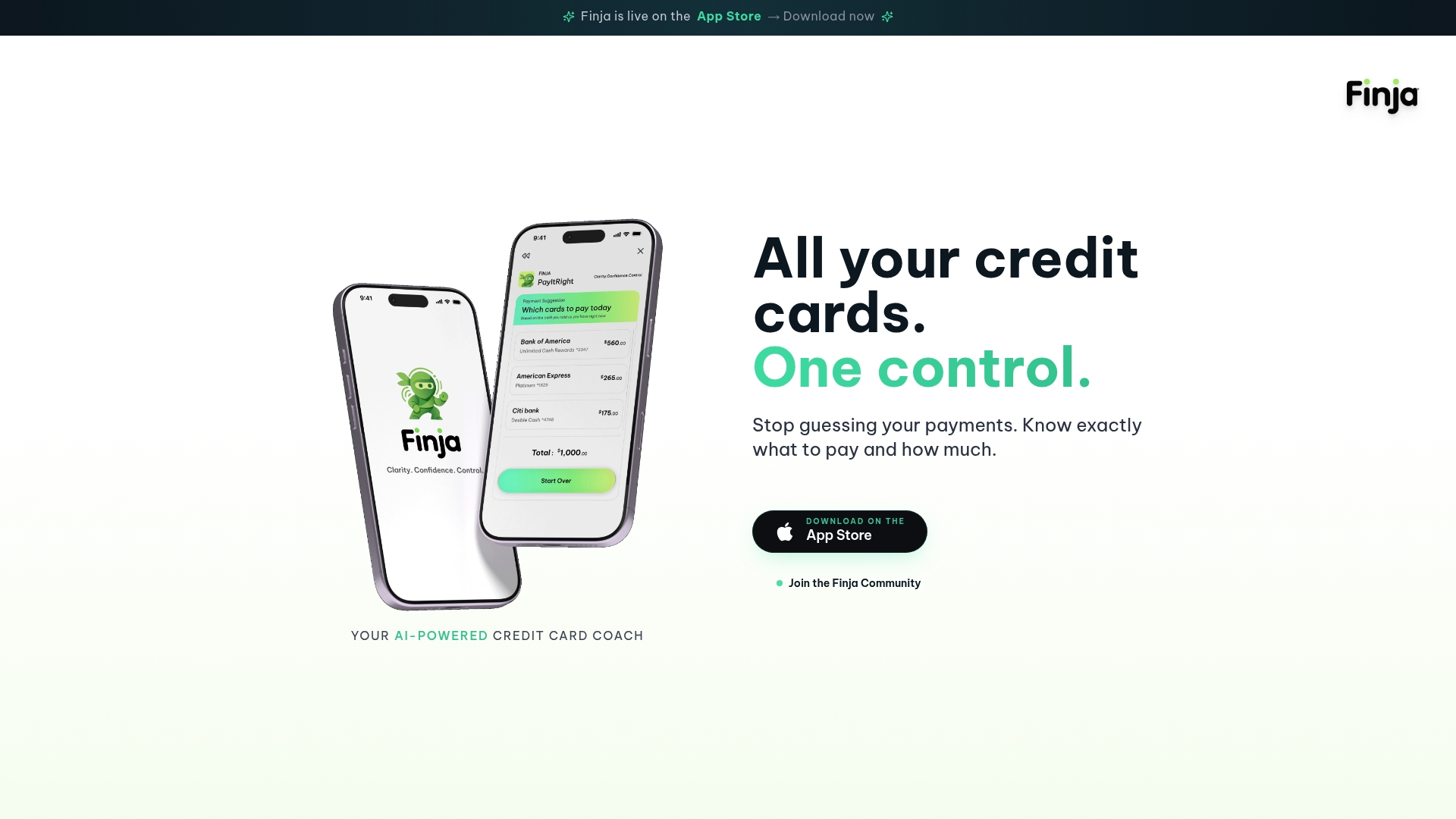
Such tools don't erase an accurate late payment that's already on your file. What they do is flag upcoming due dates across all your cards, suggest which payment to prioritize when cash is tight, and help you set smart autopay so a forgotten due date never becomes a seven-year problem. If you're juggling more than one card and tired of guessing which payment is next, check out Finja and set up your account view before your next billing cycle hits.
This article is general information, not a substitute for advice from a qualified financial advisor. Consult a qualified financial professional about your own circumstances before acting on anything here.