
Yes, most card issuers will reverse a first-time or short-delay late fee if you ask promptly and act fast. Pay at least the minimum immediately, then call or message your issuer before the 30-day mark, before the missed payment can be reported. Use a brief, polite script, and confirm any reversal in writing or on your next statement.
TL;DR:
- Calling immediately within 24 to 48 hours after a missed payment maximizes the chances of waiving the late fee before it is reported to credit bureaus.
- A late fee waiver cancels the specific charge but does not remove the late payment from your credit report unless you can prove an error and request it be corrected.
- Paying at least the minimum and contacting the issuer before the 30-day past due mark is critical, as payments reported after 30 days are harder to remove and can damage your credit score.
- Most first-time late fees range from $30 to $32, with repeat violations potentially reaching $41, but legislation and issuer practices are moving toward capping fees around $8.
- Using issuer apps for fee requests or setting up automatic payments can help prevent late fees altogether, reducing the need for goodwill-based waivers.
Table of Contents
- What a Late Fee Waiver Actually Means
- The Hour-by-Hour Timeline After a Missed Payment
- Step-by-Step Script to Request Your Waiver
- What Makes Issuers Say Yes
- Mistakes That Sink a Waiver Request
- Prevention Beats Persuasion: Checking Self-Service Options First
- Why Calling Feels Harder Than It Is
- How Finja Helps You Avoid This Call Altogether
- FAQ
- Sources
What a Late Fee Waiver Actually Means
A fee reversal simply refunds or cancels the charge your issuer added for paying late. That's different from getting a late payment removed from your credit report, which is harder and usually needs stronger justification, like a documented bank or postal error. These two outcomes often get confused, but issuers treat them as separate requests with separate approval standards.
Timing decides which one is even possible. A payment is only reported to the credit bureaus once it's at least 30 days past due, so a fee waived and a payment posted before that threshold typically never shows up as a late mark at all.
Late fees commonly range from $30 to $32 for a first offense, rising to about $41 for repeat violations within six months. Lawmakers have proposed capping these fees at $8, a sign of how much scrutiny the current fee structure is under, and why some issuers are now quicker to waive them as a goodwill gesture.

The Hour-by-Hour Timeline After a Missed Payment
Speed matters more than almost anything else in this process. Here's the sequence that gives you the best shot at both a fee reversal and a clean credit report.
- Right away: Log into your account and check whether the payment actually posted late or simply looks delayed due to processing lag.
- Same day: Note your issuer's cutoff time. Payments are typically due by 5 p.m. in the time zone printed on your statement, and a due date falling on a weekend or holiday usually pushes to the next business day.
- Within 24 to 48 hours: Make at least the minimum payment if you haven't already, and save the confirmation screenshot or email with its timestamp.
- Within 30 days: Contact your issuer and ask for a one-time waiver. This is the hard cutoff: once a payment crosses 30 days past due, it can be reported, and getting it removed afterward is a much steeper climb.
Waiting even a week longer than necessary shrinks your odds. The earlier you call, the more your request looks like a slip-up rather than a pattern.
Step-by-Step Script to Request Your Waiver
Before you pick up the phone or open a chat window, gather a few things so you're not fumbling mid-call.
- Your account number and the date the payment was due.
- Proof the payment has now posted, such as a confirmation number or bank transaction ID.
- A one-sentence reason for the delay (bank error, travel, medical issue, postal delay).
- A quick mental note of your on-time payment history, since tenure is your strongest leverage.
Phone script: "Hi, this is [name], account ending in [last four digits]. My payment due on [date] posted late because of [brief reason], and I've already paid it in full. I've been a customer in good standing, and I'd like to request a one-time courtesy waiver of the late fee." Then ask directly: "Will this also keep the late payment off my credit report, and when will I see the reversal?"
Chat or secure message template: State the same facts in writing, attach your payment confirmation or transaction ID, and close with, "Please confirm the fee reversal and credit reporting status in writing." A written trail protects you if the issue resurfaces.
If the first agent says no, ask politely to speak with a supervisor or escalate the request. Write down the agent's name and any confirmation number before you hang up; if you need to call back, that record speeds up the second attempt.
Pro Tip: Keep your opening under 20 seconds: account, date, what you fixed, what you want. Short, factual requests get approved faster than long explanations.
What Makes Issuers Say Yes
Issuers aren't granting waivers at random. A few factors consistently tip the decision in your favor.
- A clean payment history and long account tenure signal you're a low-risk, reliable customer worth keeping happy.
- A specific, one-time cause, like a bank processing error, a postal delay, or a medical emergency, carries more weight than a vague excuse.
- Proof you already fixed it, meaning the payment posted before you called, shows you're not asking for a free pass on an unpaid balance.
- A prevention plan, such as setting up autopay or shifting your due date, tells the agent this won't happen again next month.
- First-time requests are approved far more often than repeat ones. Issuers track how often you've asked before, and that history shapes their answer.
Mistakes That Sink a Waiver Request
A few avoidable errors turn an easy "yes" into a flat "no."
- Waiting past 30 days before contacting the issuer, which risks the payment being reported and makes any later removal request far tougher.
- Not paying the minimum first. Asking for a waiver on a balance that's still unpaid rarely works.
- Arguing or being vague about why the payment was late instead of stating the fact and the fix.
- Treating a courtesy waiver like a recurring grace period. Relying on repeated goodwill calls instead of fixing the underlying payment habit will eventually run out of goodwill.
Prevention Beats Persuasion: Checking Self-Service Options First
Many issuers now let you request a first-time fee reversal directly inside their mobile app, under the payments or statement section, before you ever need to call. It's worth checking that flow first since it's often faster than waiting on hold.
A credit-card-focused app can help prevent the problem from recurring by displaying every card's due date in one consolidated view and suggesting payment timing based on your actual statement cycles, so a missed date becomes far less likely. A few habits are worth building regardless of which tools you use.
Pro Tip: Check your statement's exact posting cutoff, not just the due date, and watch for trailing interest that can accrue even after a late fee is waived. Shifting your due date to land right after payday removes a surprising amount of friction.

Why Calling Feels Harder Than It Is
Most people dread this call far more than the call itself deserves. In practice, a short, factual request to reverse a first-time late fee gets approved more often than not, and the whole exchange usually takes a few minutes.
Keep a simple record: the agent's name, the date, and any confirmation number. If one agent says no, that's not final. A second call, with the same facts and a calmer tone, sometimes reaches someone with more discretion to approve it. Pair that persistence with a fix, like autopay or a moved due date, so you're not making this same call again next quarter.
— Grace K.
How Finja Helps You Avoid This Call Altogether
We built Finja as an AI-powered credit card coach because the best late fee is the one you never have to ask about. Rather than chasing rewards or points, our focus is reducing interest costs and keeping your payment timing on track across every card you carry.
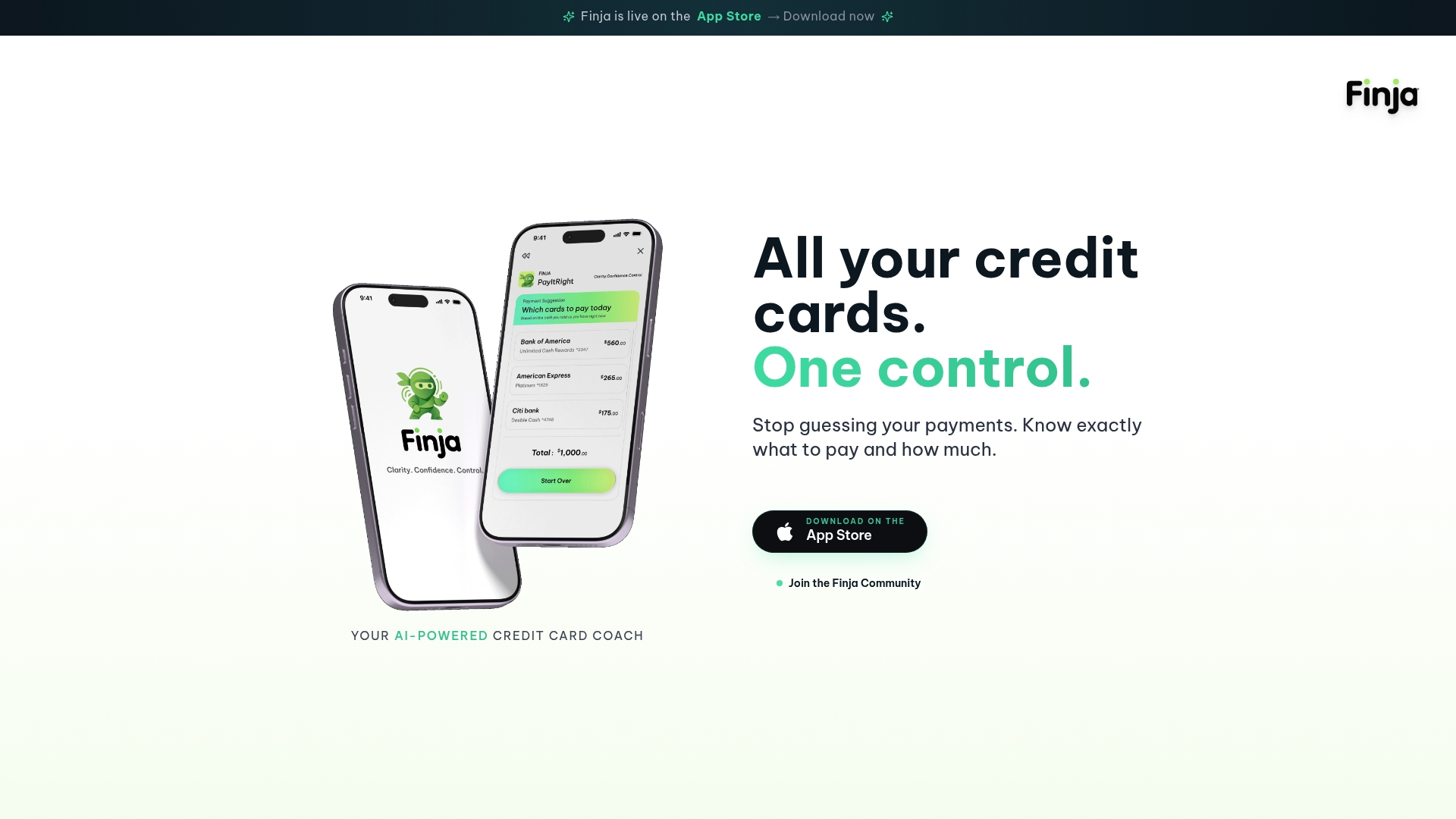
A few ways this changes your month-to-month routine:
- All your cards show up in one consolidated view, so no due date slips through the cracks between statements.
- Payment timing suggestions flag which card to pay first and when, based on your actual due dates and balances.
- Ongoing credit health tracking shows you how a single late payment could ripple into your score before it happens.
If you're tired of relying on goodwill calls to undo the same mistake, it's worth seeing how Finja's AI-powered credit card coach keeps your payments ahead of the deadline instead.
This article is general information, not a substitute for advice from a qualified financial advisor. Consult a qualified financial professional about your own circumstances before acting on anything here.
FAQ
How do I waive off credit card late charges?
Pay at least the minimum amount owed immediately, then call or message your issuer and ask for a one-time courtesy waiver, explaining briefly what caused the delay. Acting within days, and definitely before the 30-day reporting threshold, gives you the best chance of a full reversal.
What counts as a late payment fee forgiveness versus a fee waiver?
A fee waiver just refunds or cancels the specific late charge on your statement. Forgiveness in the sense of removing the late payment mark from your credit report is rarer and generally requires documented proof of an error, since bureaus only log a late payment once it passes 30 days past due.
Can you still have a good credit score with a late payment?
A single late payment does hurt your score, but the damage is usually smaller and shorter-lived if your overall payment history is strong and the account is paid current quickly. Preventing the late payment from being reported in the first place, by paying and calling before the 30-day mark, protects your score far more effectively than repairing it afterward.
What are typical late fees on a credit card?
Late fees have typically ranged from $30 to $32 for a first offense, climbing toward $41 for repeat violations within six months. Proposed legislation has floated capping these fees at $8, reflecting growing scrutiny over how issuers set them.
What should I do if my waiver request gets denied?
Ask politely to escalate to a supervisor, or simply call back later since different agents use different discretion. If the issuer made an error, such as misapplying your payment, you can file a formal dispute under FTC billing error protections, which require a response within 30 days and resolution within 90.
Sources
- When can you be charged a late fee? | Experian
- Using credit cards and disputing charges | FTC
- Fetterman colleagues introduce legislation to cap credit card late fees at $8