
A returned payment fee is a penalty your card issuer, lender, or utility charges when a scheduled payment gets declined, typically between $20 and $40 per incident, according to Experian. Left unresolved, it can trigger a late fee or strip your grace period, so check your account balance and contact your issuer the moment you spot the charge.
TL;DR:
- A single failed auto pay can trigger your bank’s NSF or overdraft fee plus a separate charge from the lender, merchant, or card issuer.
- Check the notice first: insufficient funds points to your bank, while returned or failed payment language points to the company you meant to pay.
- Repay the amount before the account reaches 30 days past due, then request a one time courtesy waiver and document the call.
- Check balances three to five days before automatic payments, and cancel recurring charges through the merchant because locking a card will not stop ACH withdrawals.
- A returned payment can cost more than its fee if it removes your grace period and triggers interest on the existing balance.
Table of Contents
- What a returned payment fee is and how it works
- How much returned payment fees usually cost
- Returned payment vs. NSF vs. overdraft: how to tell them apart
- How a returned payment can affect your credit and interest
- How to avoid returned payment fees (practical checklist)
- What to do if you were charged a returned payment fee (remediation steps)
- Tested scripts and tracking tactics for multiple cards
- A quick word on habits that actually prevent these fees
- Keep your payments on schedule with Finja
- FAQ
- Sources
What a returned payment fee is and how it works
A returned payment fee shows up when the account you used to pay a bill cannot cover the transaction, and the receiving institution sends the payment back unpaid. Card issuers, lenders, utility companies, and merchants all charge this fee independently, so the party that returned your payment isn't necessarily your bank.

The terminology matters here. A "declined" payment never leaves your account; it gets rejected before processing. A "returned" payment, by contrast, was accepted initially and bounced back afterward, usually a day or two later, once the receiving bank discovers a problem.
Several payment types commonly trigger this:
- Scheduled credit card payments pulled from a checking account
- ACH transfers for loans, rent, or subscriptions
- Paper checks mailed for utility or mortgage bills
- Recurring card charges tied to an expired or canceled card
How much returned payment fees usually cost
Most returned payment fees fall between $20 and $40 per incident, according to Experian, and Bankrate reports a similar range of $25 to $40. That's rarely the full cost, though.
- Your bank may add a separate NSF fee on top of the issuer's returned payment fee
- A merchant whose check bounced may tack on its own $20 to $40 charge, pushing a single bounced transaction past $50, per NerdWallet
- Repeat incidents with the same issuer sometimes carry higher fees than a first occurrence
Regulators have scrutinized penalty fees broadly. The CFPB's 2024 final rule on credit card penalty fees addresses how issuers justify penalty amounts under Regulation Z's safe-harbor framework, which shapes how issuers set and defend these charges.
Returned payment vs. NSF vs. overdraft: how to tell them apart
These three fees get confused constantly, but they come from different places and sometimes stack together.
- Returned payment fee: charged by the card issuer, lender, or merchant you were trying to pay, because your payment bounced
- NSF (non-sufficient funds) fee: charged by your own bank for attempting a transaction your account couldn't cover
- Overdraft fee: charged by your bank when it allows the transaction to go through anyway, pushing your balance negative
A single missed auto-pay can generate all three: your bank hits you with an NSF or overdraft fee for the shortfall, and the company you were paying charges its own returned payment fee for the failed transaction, as Bankrate notes. Reading the notice language carefully tells you which institution to call first. A notice from your bank mentioning "insufficient funds" points to an NSF or overdraft charge; a notice from your card issuer or utility mentioning a "returned" or "failed" payment points to their separate fee.
How a returned payment can affect your credit and interest
A returned payment on its own usually doesn't get reported to the credit bureaus, according to CBS News. The risk comes from what happens next.
- If the missed payment pushes your account 30 or more days past due, issuers typically do report that delinquency, and it can meaningfully hurt your score
- Losing your grace period after a returned payment can cost more than the fee itself, since it may trigger retroactive interest on your current balance and remove the interest-free window on new purchases
- You generally have until the 30-day mark to fix the problem and avoid a credit report entry, so the days right after a returned payment matter most
Our guide to protecting your credit card grace period walks through the timing details if you want to avoid losing that interest-free window altogether.
How to avoid returned payment fees (practical checklist)
Most returned payment fees are preventable with a few habits.
- Check your account balance three to five days before any scheduled payment, not the day of
- Set calendar reminders tied to each due date, especially for accounts with irregular income
- Link a backup funding source or enable overdraft protection on your checking account
- Cancel recurring charges directly through the merchant or payment portal, since locking your card doesn't stop an ACH auto-pay attempt, per Experian
- Stagger due dates across your bills to match your paycheck schedule, and prioritize minimum payments when cash is tight
- Use a tracking tool to monitor multiple cards and upcoming charges in one place
Pro Tip: Review your recurring subscriptions once a month; a forgotten charge on an old card is one of the most common causes of a returned payment.
Our piece on tracking subscription charges covers how to catch these before they bounce.
What to do if you were charged a returned payment fee (remediation steps)
If you've already been hit with a returned payment fee, move quickly and in order.
- Confirm exactly which payment failed and check the timeline on your issuer's notice
- Repay the missed amount as soon as you can, since doing so before the 30-day mark often prevents a late payment from being reported, according to Bankrate
- Call your issuer or merchant right away and ask for a one-time courtesy waiver, since issuers commonly grant these to customers with a solid payment history
- Write down the date, time, and name of whoever you spoke with, in case you need proof later
- If the issuer refuses or you believe the charge is an error, Regulation Z's billing error resolution procedures give you a formal path to dispute it, and the CFPB accepts complaints if that process stalls
Pro Tip: Ask for the waiver before you hang up on the first call; follow-up requests tend to get less flexibility than the initial conversation.
For a deeper walkthrough on disputing a reported late payment, see our guide to removing a late payment.
Tested scripts and tracking tactics for multiple cards
A short, honest script works best when requesting a waiver: state how long you've paid on time, acknowledge the missed payment, confirm you've already fixed it, and ask for a one-time courtesy waiver. Issuers weigh payment history heavily, and a polite, documented request has a real chance of success.
- Keep a running log of due dates and minimum payments across every card you hold
- Review which cards have autopay enabled and confirm the funding source for each is current
- Note which issuer notices mention "returned," "NSF," or "insufficient funds," since the wording tells you who to call first
Our guide to timing credit card payments applies a similar Regulation Z lens to help you decide when to pay each balance.
A quick word on habits that actually prevent these fees
The pattern I see most often isn't carelessness, it's juggling too many due dates across too many accounts without one clear view of what's coming due and when. A five-minute balance check before autopay runs, paired with a fast phone call the moment something bounces, resolves most of these situations before they become a credit problem. If you manage more than two or three cards, a simple tracking routine matters more than any single prevention tip.
— Grace K.
Keep your payments on schedule with Finja
Juggling due dates across several cards is exactly how a returned payment slips through, and an app that gives you one consolidated view of every card can help so nothing falls between the gaps. This kind of app can provide payment timing recommendations that flag when a scheduled charge might outpace your balance, not just reminders after the fact.
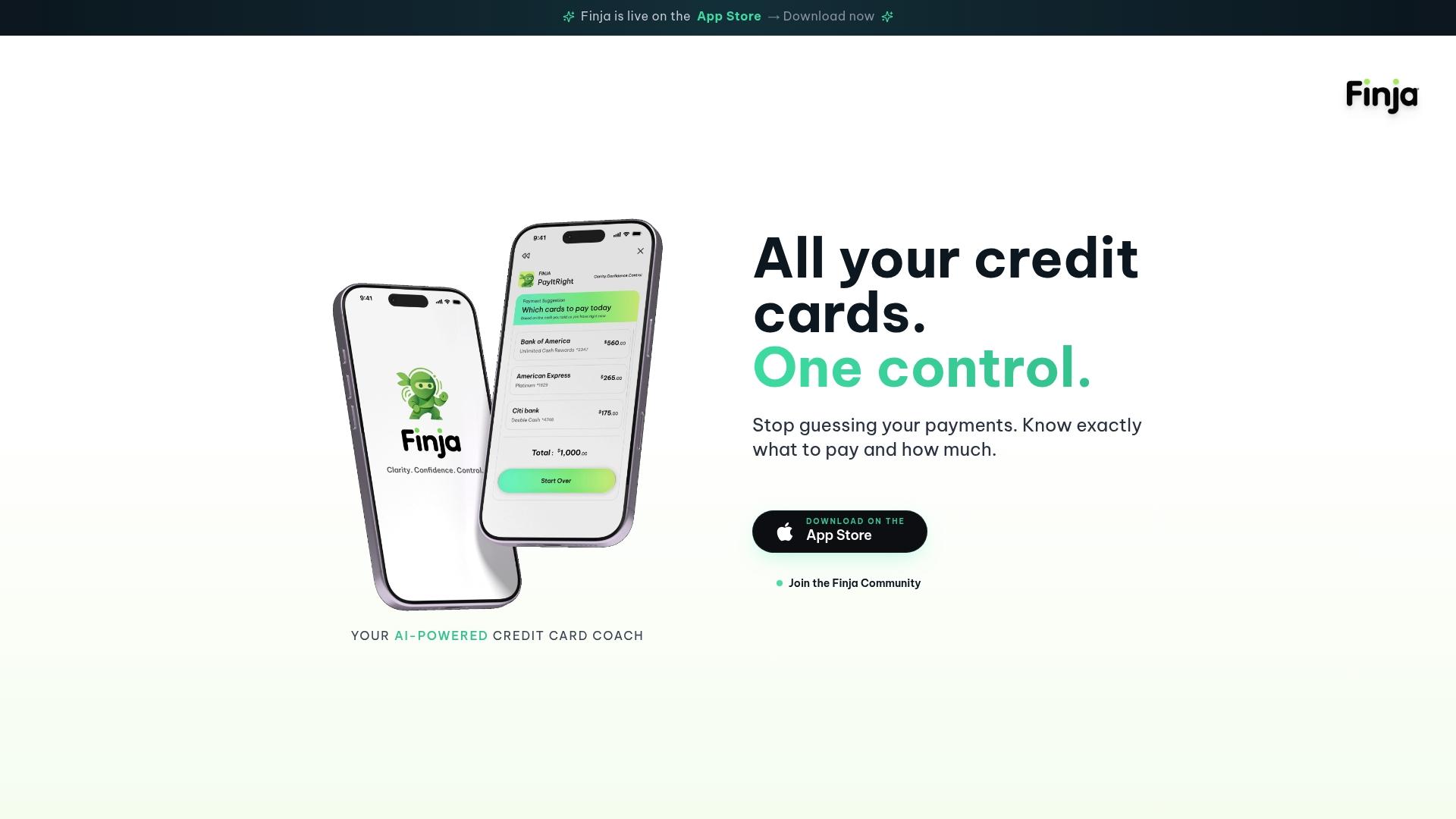
- See every card's balance and due date in one place instead of switching between apps
- Get guidance on how much to pay and when, aimed at protecting your grace period and avoiding interest
- Receive alerts before a scheduled payment risks bouncing
If you're managing multiple cards and want fewer surprises, see how Finja works.
FAQ
Do returned payment fees affect my credit score?
A returned payment fee itself typically isn't reported to the credit bureaus, but if the missed payment isn't fixed within about 30 days, the resulting late payment can be reported and hurt your score, according to CBS News. Repaying quickly is the best way to avoid that outcome.
Are returned payment fees legal?
Yes, returned payment fees are a standard penalty fee that card issuers and lenders can charge, and Regulation Z's safe-harbor framework guides how issuers justify these amounts, per the CFPB's penalty fee rule. Issuers must still follow billing disclosure and error-resolution rules when assessing them.
Is it legal to charge a 5% credit card fee?
This question usually refers to merchant surcharges rather than returned payment fees, and surcharge rules vary by state and card network rather than being governed by a single federal percentage cap. For returned payment fees specifically, issuers typically charge a flat amount in the $20 to $40 range rather than a percentage, according to Experian.
What happens if a payment is returned?
The company you were paying typically charges a returned payment fee, and your bank may separately charge an NSF or overdraft fee if the attempt overdrew your account, according to Bankrate. If you repay the missed amount quickly, you can often avoid a late payment report and limit the damage to these fees alone.
Sources
For official guidance and deeper detail on penalty fees, billing disputes, and the true cost of bounced payments, these are worth bookmarking.
- What Is a Returned Payment Fee? - Experian
- What happens if your credit card payment bounces? - CBS News
- CFPB credit card penalty fees final rule (2024)
- What Happens If My Card Payment Is Returned? | Bankrate