
Overpaying your credit card creates a negative balance, essentially a credit sitting on your account, and there is no penalty for it. You have two options: leave the credit there to cover future purchases, or request a refund. Federal rules back you up either way, guaranteeing a refund within seven business days of a written request, or an automatic refund attempt after six months if you never ask.
TL;DR:
- Overpaying your credit card results in a negative balance that does not earn interest and can be refunded within seven days if requested in writing.
- Federal law requires issuers to make a good-faith effort to refund unused credit balances after six months of inactivity, even if you do not ask.
- A negative credit balance does not improve your credit score or utilization rate because scoring models treat it as zero utilization, not extra credit.
- Large or unusual overpayments may trigger fraud alerts or temporary account holds, especially if patterns resemble money laundering or testing behaviors.
- Proper scheduling of autopay and manual payments, along with careful balance checks, can prevent unintentional overpayment and credit balances.
Table of Contents
- What a Negative Credit Balance Looks Like on Your Statement
- How Do You Get a Refund for an Overpaid Credit Card?
- Does Overpaying Help Your Credit Score or Utilization?
- When Does an Overpayment Trigger a Fraud Flag?
- How to Avoid Overpaying Your Credit Card by Accident
- Finja's Practical Checklist for Handling an Overpayment
- Do All Credit Card Issuers Handle Overpayments the Same Way?
- Can You Apply an Overpayment to a Different Card or Debt?
- A Real Overpayment Story Worth Learning From
- Let Finja Handle the Scheduling So You Don't Have To
- Sources
What a Negative Credit Balance Looks Like on Your Statement
Say your statement balance is $500 but you accidentally pay $650. Your account now shows a balance of negative $150, meaning the issuer owes you money instead of the other way around. That $150 will typically show up labeled as a credit balance, and your next purchases get applied against it automatically until it's used up.
It helps to know the difference between three numbers that often get confused:
- Statement balance: what you owed as of your last billing cycle's closing date.
- Current balance: your real-time balance including any purchases or payments since then, which can dip negative after an overpayment.
- Available credit: your credit limit plus any negative balance, since the issuer treats that credit as extra room to spend.
A negative balance doesn't earn interest, and it doesn't get logged anywhere as a positive credit event. It's just money parked on the account, waiting to be spent or returned, according to NerdWallet's breakdown of overpayment mechanics.
How Do You Get a Refund for an Overpaid Credit Card?
Getting your money back is usually a quick process, and you have three main paths depending on your issuer:
- Log into your online account and look for a refund request option under payments or account services, often the fastest route.
- Call customer service and ask them to process a credit balance refund directly to your bank account or by check.
- Send a written request by mail or secure message if the first two options stall or you want a paper trail.
The seven-day rule you should know: once you submit a written refund request, federal regulation requires your issuer to return the credit balance within seven business days. That's not a courtesy timeline. It's a legal obligation under Regulation Z.
If you never ask, you're still covered. Issuers must make a good-faith effort to refund unused credit balances after six months have passed with no activity. Refunds typically arrive as a check or direct deposit, and issuer help pages like American Express's guide walk through the exact request workflow. Follow up if you don't see movement within that window.
Does Overpaying Help Your Credit Score or Utilization?
No, and this is where a lot of well-meaning cardholders get it backwards. A negative balance doesn't raise your credit score, doesn't increase your credit limit, and doesn't count as some kind of bonus positive mark on your credit file.
Here's why the math doesn't work in your favor the way people assume:
- Credit utilization is calculated with a floor of $0. You can't go negative in the eyes of the scoring model, so a $150 credit balance reports as 0% utilization, not "negative utilization."
- Experian's credit reporting analysis confirms that negative balances don't get treated as extra positive credit history by the bureaus.
- Payment history and utilization ratio, not overpayment amount, remain the two biggest levers for your score.
If you're aiming to build credit, the real driver is consistency: paying on time, every cycle, and keeping your balance well below your limit. Overpaying by a lot doesn't accelerate that process. If you want to understand which factors actually move your score, credit card financial health indicators are worth a closer look.
When Does an Overpayment Trigger a Fraud Flag?
Small overpayments rarely raise eyebrows, but a large or oddly structured one can. Issuers watch for patterns that resemble money laundering or card testing, like a payment far exceeding your typical balance or repeated overpayments from different funding sources. That can trigger a temporary hold while the bank verifies the source of funds.

Bankrate's reporting on accidental overpayments notes that issuers may ask for documentation, like a bank statement showing the payment origin, before releasing the credit. If your account gets frozen, call the fraud department directly rather than general customer service. Escalate in writing if the hold drags past a few days.
Pro Tip: Keep a screenshot or confirmation number every time you make a large payment. If your issuer flags it, you'll resolve the hold faster with proof already in hand.
How to Avoid Overpaying Your Credit Card by Accident
Most overpayments come down to timing, not carelessness. You pay manually, then autopay fires off a few days later using the balance from before your payment posted. Multiply that across three or four cards and it's easy to lose track.
A few scheduling habits fix most of this:
- Set autopay to the full statement balance, not a fixed dollar amount, so it adjusts automatically as your spending changes.
- Avoid manual payments within 3 days of your autopay date to prevent both payments hitting at once.
- Check your live current balance online before sending any manual payment, especially after a refund or return has posted.
Beyond scheduling, a little verification goes a long way:
- Turn on payment and refund alerts so you catch duplicate transactions the same day they happen.
- Reconcile any pending refunds or statement credits before making your next payment.
- If you juggle several cards, staggering due dates by a few days each reduces the odds of a scheduling collision. CBS News has reported on how autopay and manual payment timing collide to create exactly this kind of accidental double payment.
Finja's Practical Checklist for Handling an Overpayment
Managing multiple cards means managing multiple due dates, multiple autopay settings, and multiple chances for a payment to overlap with one you already scheduled manually. A simple framework helps: set autopay only on cards where you're comfortable letting the system run untouched, and reserve manual payments for cards where you want to control exact timing, ideally with a few days of buffer between them.
There's also a math question worth asking before you send extra money: does an extra payment actually save you interest, or would that cash do more sitting in a savings account? If your balance is already low or you're mid-cycle with days left before the due date, an oversized payment often just creates a credit balance instead of meaningfully cutting interest.
If you've already overpaid, run this quick check:
- Verify the current balance and confirm the credit amount.
- Request a refund if you'd rather have the cash than a future purchase credit.
- Adjust your schedule and alerts so autopay and manual payments stop competing for the same due date.
Pro Tip: If a card's balance drops to zero mid-cycle from a return or refund, pause any pending manual payment. That's the most common way accidental credit balances happen.
Do All Credit Card Issuers Handle Overpayments the Same Way?
Not exactly. The federal timeline (seven business days for a requested refund, six months for an automatic one) applies across issuers, since it comes from Regulation Z, not individual bank policy. But how easy it is to actually get that refund varies quite a bit.
Some issuers let you request a refund with a couple of clicks in the mobile app. Others require a phone call or a mailed request before anything moves, which can turn a two-minute task into a multi-day back-and-forth. Chase's own consumer guidance outlines its process, and it's worth checking your specific issuer's help pages rather than assuming they all work identically.
There's also a difference in how card platforms handle the payment itself before it even becomes an overpayment. Some online portals cap what you can pay at your current balance, blocking accidental overpayments before they happen. Others accept any amount you type in, no questions asked, which is where a lot of these credit balances originate in the first place.
Store cards and secured cards tend to be stricter about refund processing timelines since they often route through smaller processing partners, so expect potentially longer waits than with a major national issuer. Business cards can behave differently too. Some business card refund policies route through a separate commercial services team rather than the standard consumer help line, which can add a day or two to the process.
The takeaway: don't assume your card works like your last one. Check the specific issuer's refund policy before you overpay on purpose, especially if you're doing it strategically ahead of a big purchase.

Can You Apply an Overpayment to a Different Card or Debt?
Sometimes, yes, but it depends entirely on whether your issuer supports it and whether the accounts share the same login or banking relationship.
If you have multiple credit cards with the same bank, some issuers let you request that a credit balance on one card be transferred to cover a balance on another, though this usually requires a phone call rather than a self-service option in the app. It's rarely automatic.
What's far more common is simply requesting the standard refund, then manually applying that money wherever you want, including toward a different card's balance, a loan payment, or savings. This gives you full control, though it takes an extra step compared to a direct account-to-account transfer.
If you're managing several cards and thinking about how to route extra payments most efficiently, it's usually smarter to focus on which card carries the highest interest rate rather than which one happens to have accidentally received too much money. Credit mix optimization strategies can help you think through how different account types and balances interact with your overall credit profile, and reducing overall credit card costs matters more for your finances than shuffling a small credit balance between accounts.
Bottom line: ask your issuer directly what's supported before assuming a transfer is possible. If it's not, request the refund and redirect the cash yourself.
A Real Overpayment Story Worth Learning From
A reader once described paying a card twice in the same week: once manually, then again through autopay three days later, because the balance hadn't updated in their banking app yet. The result was a $312 credit balance and a moment of genuine confusion about whether something was wrong with the account.
Nothing was wrong. It was just timing. The fix wasn't complicated: request the refund, then space out manual payments and autopay so they never compete for the same days again. Automation helps, but only when it's paired with a quick balance check before you send extra money. That combination of scheduling discipline and verification is worth building into your own routine.
— Grace K.
Let Finja Handle the Scheduling So You Don't Have To
Some apps offer an alternative to manually tracking due dates across a wallet full of cards. These tools provide a consolidated view of every account's real-time balance, so you're not guessing whether autopay already fired before you send a manual payment. AI-driven payment optimization features may flag when an extra payment actually cuts interest versus when it just creates a credit balance sitting idle.
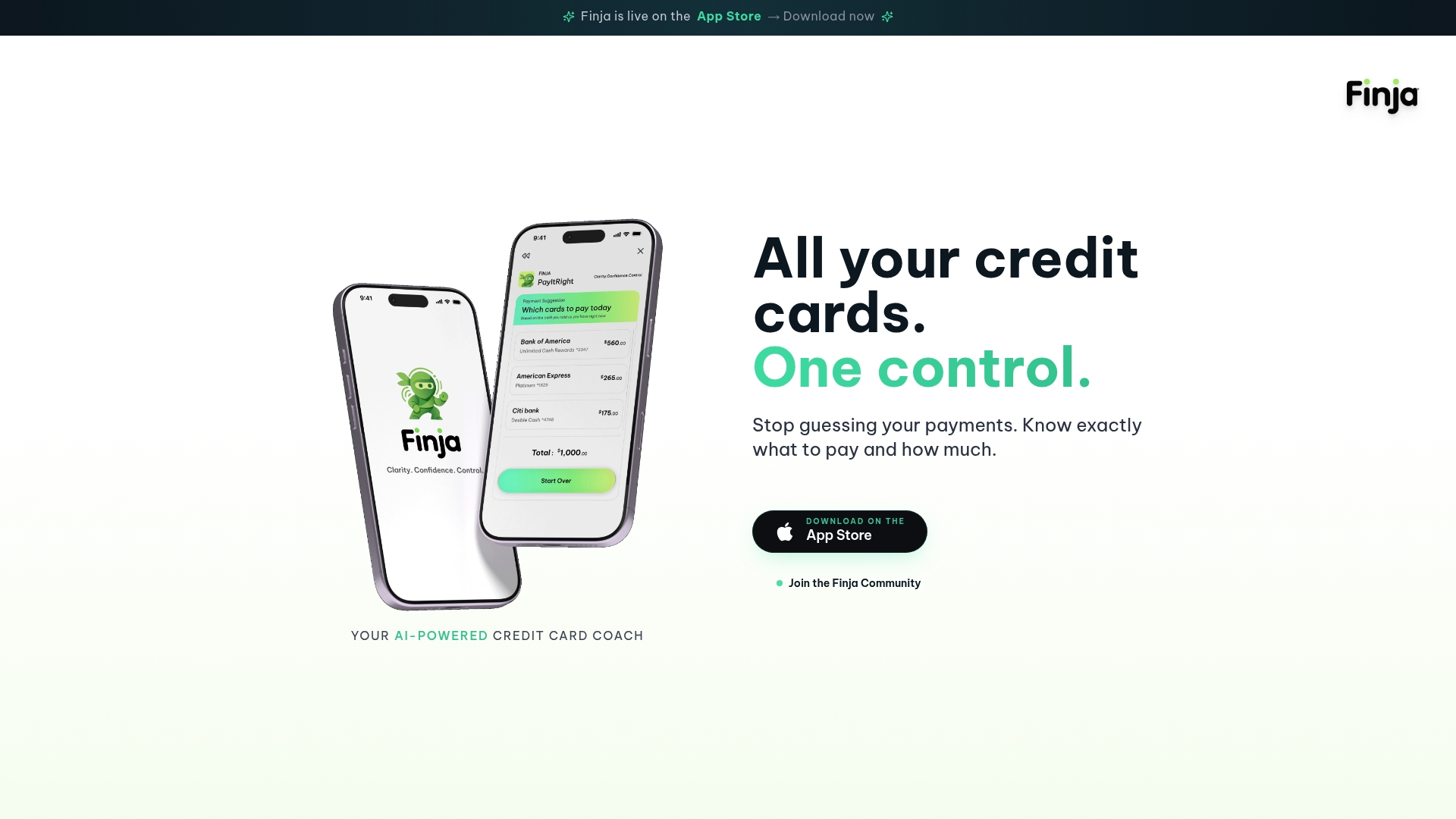
If you're juggling two cards with simple due dates, you probably don't need much beyond a calendar reminder. But once you're managing three, four, or more cards with different statement cycles, autopay settings, and promotional interest periods, the odds of a scheduling collision go up fast. That's the exact situation that alert systems and payment-optimization recommendations in some credit card management tools are built for.
Check your current utilization and payment schedule at Finja and see whether consolidating your view across cards would catch overlaps before they turn into another accidental credit balance.
This article is general information, not a substitute for advice from a qualified financial advisor. Consult a qualified financial professional about your own circumstances before acting on anything here.
Sources
- 12 CFR § 1026.11 — Billing error resolution, refunds for credit balances (Regulation Z)
- eCFR — 12 CFR 1026.11 (Regulation Z) — Credit balance refund timelines
- What Happens If You Overpay Your Credit Card? — NerdWallet
- What To Do If You Accidentally Overpay Your Credit Card Bill — Bankrate
- What Happens if You Overpay Your Credit Card? — Experian