
The most common hidden credit card charges are annual fees, interest/finance charges, late fees, returned payment fees, balance transfer fees, cash advance fees, foreign transaction markups, over-limit fees, card replacement fees, merchant surcharges, ATM withdrawal fees, and processing fees. Pull up your most recent statement right now and scan for any line item you don't immediately recognize.
Here are the five highest-impact charges to flag first, with exactly how they tend to appear:
- Annual fee:
ANNUAL FEE 03/01/2026 $95— charged once a year, often on the statement anniversary - Cash advance fee:
CASH ADVANCE FEE 02/14/2026 $10.00— plus interest starts accruing the same day, no grace period - Foreign transaction markup:
FOREIGN TXN BOOKING.COM AMSTERDAM 3% $8.40— can hit online purchases processed abroad, not just travel - Late payment fee:
LATE FEE 01/28/2026 $35.00— one missed due date can trigger it - Balance transfer fee:
BALANCE TRANSFER FEE 02/01/2026 $75.00— typically 3%–5% of the transferred amount, charged upfront
Key Takeaways
Hidden credit card charges are disclosed in the Schumer box but rarely eliminated by it, making active statement monitoring and a few automatic controls the most reliable consumer protection available.
| Point | Details |
|---|---|
| Check your statement now | Scan for the 12 fee types listed above; flag any line item you don't immediately recognize. |
| Autopay and alerts are the highest-ROI moves | Setting autopay for the full balance and a limit alert at 80% eliminates most late and over-limit fees. |
| Dispute within 60 days | The Fair Credit Billing Act gives you 60 days from the statement date to dispute a billing error in writing. |
| Foreign fees hit online purchases too | A 1%–3% foreign transaction fee can apply to any purchase processed abroad, not just travel spending. |
| Finja consolidates multi-card monitoring | Finja's fee-spotting alerts and consolidated statement view help you catch recurring or hidden charges before they compound. |
Table of Contents
- Examples of Hidden Credit Card Charges: What Each Fee Looks Like on Your Statement
- How to identify an unknown charge on your statement
- What to do when you find an incorrect or fraudulent charge
- Why hidden fees still exist and what the law actually protects
- A prioritized checklist to cut hidden fees going forward
- Finja helps you catch fees before they compound
- Sources
Examples of Hidden Credit Card Charges: What Each Fee Looks Like on Your Statement
Every fee below has a definition, a realistic statement line, a typical cost range, and one concrete action to cut or eliminate it. Common credit card fees span nine major categories, and most cardholders encounter at least three of them without realizing it.
1. Annual fee
Charged once a year for the privilege of holding the card. Premium rewards cards carry the highest fees; some no-fee cards still sneak in a "membership" charge after the first year.
Statement line: ANNUAL FEE 03/01/2026 $95.00
Typical range: from zero up to several hundred dollars, depending on the card
Avoid it: Compare the fee against the rewards you actually redeem. If the math doesn't work, call and ask for a retention offer or downgrade to a no-fee version of the same card.
2. Interest and finance charges
Your APR applies to any balance you carry past the grace period. Miss the full-pay deadline once and interest accrues on the entire average daily balance, not just the unpaid portion. Understanding why variable rates change helps you anticipate when your finance charge will jump.
Statement line: INTEREST CHARGE PURCHASES 02/28/2026 $42.17
Typical range: variable APRs commonly in the typical consumer range
Avoid it: Pay the full statement balance before the due date every month. Set a calendar reminder or autopay for the statement balance, not just the minimum.
3. Late payment fee
One day late is all it takes. Beyond the fee itself, a late payment can trigger a penalty APR and ding your credit score. Late fees cost American consumers billions annually, with individual charges running $25–$41 depending on your payment history with that issuer.
Statement line: LATE FEE 01/28/2026 $35.00
Typical range: within the common range for late fees depending on issuer history
Avoid it: Set autopay for at least the minimum payment. If you miss one for the first time, call the issuer immediately — issuers often waive a first-offense late fee for customers with a clean history.
4. Returned payment fee
Your bank rejects the payment (insufficient funds, closed account, wrong routing number) and the card issuer charges you on top of whatever your bank charges. You can end up paying twice for one mistake.
Statement line: RETURNED PAYMENT FEE 02/05/2026 $29.00
Typical range: within the typical range for returned payment fees
Avoid it: Keep a buffer in your checking account before autopay pulls. Verify your linked account details once a year.
5. Balance transfer fee
Moving high-interest debt to a 0% intro APR card sounds like a free move. It isn't. Balance transfer fees typically run 3%–5% of the transferred amount, often with a $5–$10 minimum, charged the moment the transfer posts.
Statement line: BALANCE TRANSFER FEE 02/01/2026 $75.00 (on a $2,500 transfer at 3%)
Typical range: 3%–5% or $5–$10 minimum
Avoid it: Run the break-even math before transferring. Divide the fee by your current monthly interest cost to see how many months it takes to come out ahead. How payment allocation works affects how fast you pay down a transferred balance.
6. Cash advance fee
Pulling cash from an ATM with your credit card is one of the most expensive moves you can make. The fee hits immediately, and unlike purchases, there is no grace period — interest starts accruing the same day at a cash advance APR that often runs higher than your purchase rate.
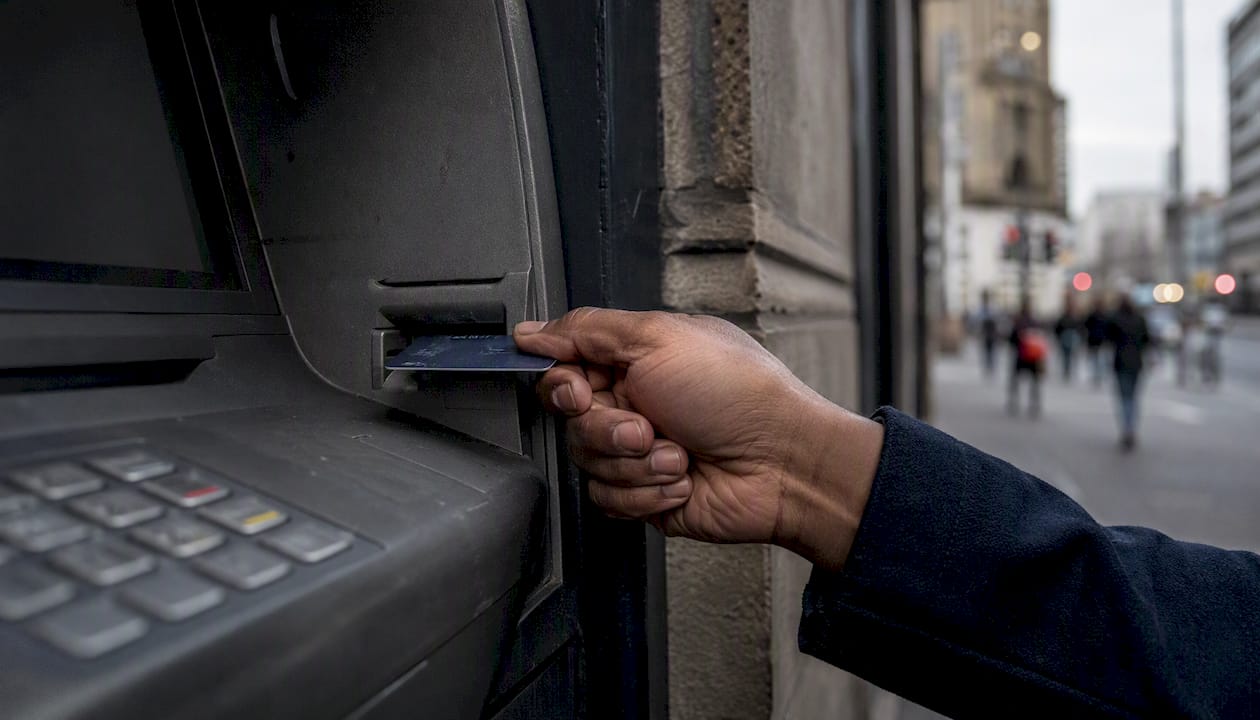
Statement line: CASH ADVANCE FEE 02/14/2026 $10.00 + CASH ADVANCE INTEREST 02/14/2026 $4.83
Typical range: 3%–5% of the advance or $10 minimum, whichever is greater
Avoid it: Treat cash advances as a last resort. If you need emergency cash, a personal loan or a credit union payday alternative loan is almost always cheaper.
7. Foreign transaction and currency conversion fee
This one surprises people who never leave the country. Foreign transaction fees apply per transaction and can hit online purchases processed abroad or by foreign subsidiaries, typically 1%–3% of the transaction amount.
Statement line: FOREIGN TXN BOOKING.COM AMSTERDAM 3% $8.40
Typical range: 1%–3%
Avoid it: Designate one no-foreign-transaction-fee card for all travel and international online purchases. Many travel rewards cards waive this fee entirely.
8. Over-limit fee
Under the Credit CARD Act of 2009, issuers cannot charge over-limit fees unless you explicitly opt in. If you opted in at account opening and forgot, a single large purchase that pushes you past your credit limit triggers the fee.
Statement line: OVER LIMIT FEE 02/20/2026 $25.00
Typical range: up to a moderate amount depending on account and opt-in
Avoid it: Log into your account and check whether you opted in. Opt out if you did. Set a spending alert at 80% of your credit limit so you never get close.
9. Card replacement fee
Standard replacements for lost or stolen cards are usually free. Expedited or rush delivery is not.
Statement line: CARD REPLACEMENT RUSH FEE 01/15/2026 $15.00
Typical range: often no charge for standard delivery; a moderate fee for expedited service
Avoid it: Unless you genuinely need the card in 24 hours, choose standard delivery. Most issuers will waive the rush fee once if you ask politely.
10. Merchant surcharges and convenience fees
When you pay a utility bill, government fee, or rent online by credit card, the merchant may add a surcharge or convenience fee. Merchant processing fees range from about 1.15% to 3.30% per transaction depending on the card network, and some merchants pass that cost directly to you where state law allows.
Statement line: CONVENIENCE FEE CITY WATER DEPT 2.5% $3.75
Typical range: 1%–4% or a flat $2–$5
Avoid it: Use a debit card or ACH bank transfer for bill payments that charge a credit card surcharge. The savings add up fast on recurring monthly bills.
11. ATM withdrawal fee
Using your credit card at an ATM triggers both a cash advance fee from your issuer and a separate ATM operator fee. Secondary processing charges on the merchant/operator side can compound what you pay.
Statement line: ATM WITHDRAWAL FEE 02/10/2026 $3.00 + CASH ADVANCE FEE 02/10/2026 $10.00
Typical range: $2–$5 ATM operator fee plus the cash advance fee
Avoid it: Use your debit card for ATM withdrawals. If you must use credit, choose an in-network ATM to at least eliminate the operator fee.
12. Processing and paper statement fees
Some issuers charge a monthly fee for receiving a paper statement by mail, or a one-time processing fee on certain card products. These rarely appear in marketing materials.
Statement line: PAPER STATEMENT FEE 02/28/2026 $2.00
Typical range: $1–$5/month
Avoid it: Switch to paperless statements in your account settings. It takes two minutes and eliminates the fee permanently.
Here is a quick-reference summary of all twelve fees:
| Fee | Example Statement Line | Typical Cost Range | Top Avoidance Tactic |
|---|---|---|---|
| Annual fee | ANNUAL FEE 03/01/2026 $95.00 | $0 up to several hundred | Compare rewards vs. fee; request retention offer |
| Interest/finance charge | INTEREST CHARGE PURCHASES $42.17 | 20%–30% APR | Pay full balance before due date |
| Late payment fee | LATE FEE 01/28/2026 $35.00 | $25–$41 | Set autopay for at least the minimum |
| Returned payment fee | RETURNED PAYMENT FEE $29.00 | $25–$41 | Maintain checking buffer; verify linked account |
| Balance transfer fee | BALANCE TRANSFER FEE $75.00 | 3%–5% or $5–$10 min | Run break-even math before transferring |
| Cash advance fee | CASH ADVANCE FEE $10.00 | 3%–5% or $10 min | Treat as last resort; use personal loan instead |
| Foreign transaction fee | FOREIGN TXN 3% $8.40 | 1%–3% | Use a no-FX-fee card for travel/international |
| Over-limit fee | OVER LIMIT FEE $25.00 | $25–$35 | Opt out; set alert at 80% of limit |
| Card replacement fee | CARD REPLACEMENT RUSH FEE $15.00 | $0–$30 | Choose standard delivery; ask for waiver |
| Merchant surcharge | CONVENIENCE FEE 2.5% $3.75 | 1%–4% or $2–$5 flat | Pay by ACH/debit for surcharge-heavy billers |
| ATM withdrawal fee | ATM WITHDRAWAL FEE $3.00 | $2–$5 + cash advance fee | Use debit card for ATM withdrawals |
| Paper statement fee | PAPER STATEMENT FEE $2.00 | $1–$5/month | Switch to paperless statements |
Pro Tip: Call your issuer once a year and ask two questions: "Am I currently opted in to over-limit fees?" and "Can you waive my annual fee or offer a retention bonus?" Issuers prioritize retention, and a single five-minute call can save $35–$95. Always check the Schumer box in your card agreement first so you know exactly what fees are on the table before you call — Bankrate's fee guide walks through what to look for.
How to identify an unknown charge on your statement
An unfamiliar line item doesn't always mean fraud. Merchants often bill under a parent company name, a payment processor's name, or an abbreviated descriptor that looks nothing like the store you visited. Work through these steps before filing a dispute.
- Check pending vs. posted. A pending charge can look different from the final posted amount. Wait 2–3 business days before treating a pending item as a confirmed problem.
- Copy the exact merchant descriptor. The descriptor is the text string next to the amount. Copy it character for character, including any numbers or city codes (e.g.,
SQ *COFFEE SHOP 415-555-0100). - Search the descriptor online. Paste it into Google with the word "charge" or "credit card." Most descriptors resolve to a business name within the first two results.
- Note the transaction date and amount. Cross-reference with your calendar, email receipts, and bank account for that date. A $12.99 charge on the 15th of the month is often a subscription renewal.
- Check your recurring subscriptions. Services like streaming platforms, cloud storage, and gym memberships frequently bill under a corporate parent name. Review your active subscriptions against the charge date.
- Look up the merchant category code (MCC). Your issuer's app or statement may show the MCC. Code 5812 is restaurants, 5411 is grocery stores, 7011 is hotels. An MCC that doesn't match your memory is a red flag.
- Call the merchant before the issuer. If you identify the merchant but don't recognize the charge, call them directly. Duplicate charges, accidental double-swipes, and billing errors are often resolved in one call without a formal dispute.
Checklist for your statement review:
- Merchant descriptor copied and searched
- Transaction date matched to calendar or receipts
- Recurring subscriptions cross-checked
- MCC verified against expected category
- Pending vs. posted status confirmed
Pro Tip: Have three pieces of information ready before any call: the exact transaction date, the amount, and the last four digits of the card. Merchants and issuers can pull up a transaction in seconds with those three details. For tracking interest charges monthly, keeping a running log in a notes app takes less than two minutes per statement cycle.
What to do when you find an incorrect or fraudulent charge
Speed matters here. The Fair Credit Billing Act gives you 60 days from the statement date to dispute a billing error, so don't sit on a suspicious charge.
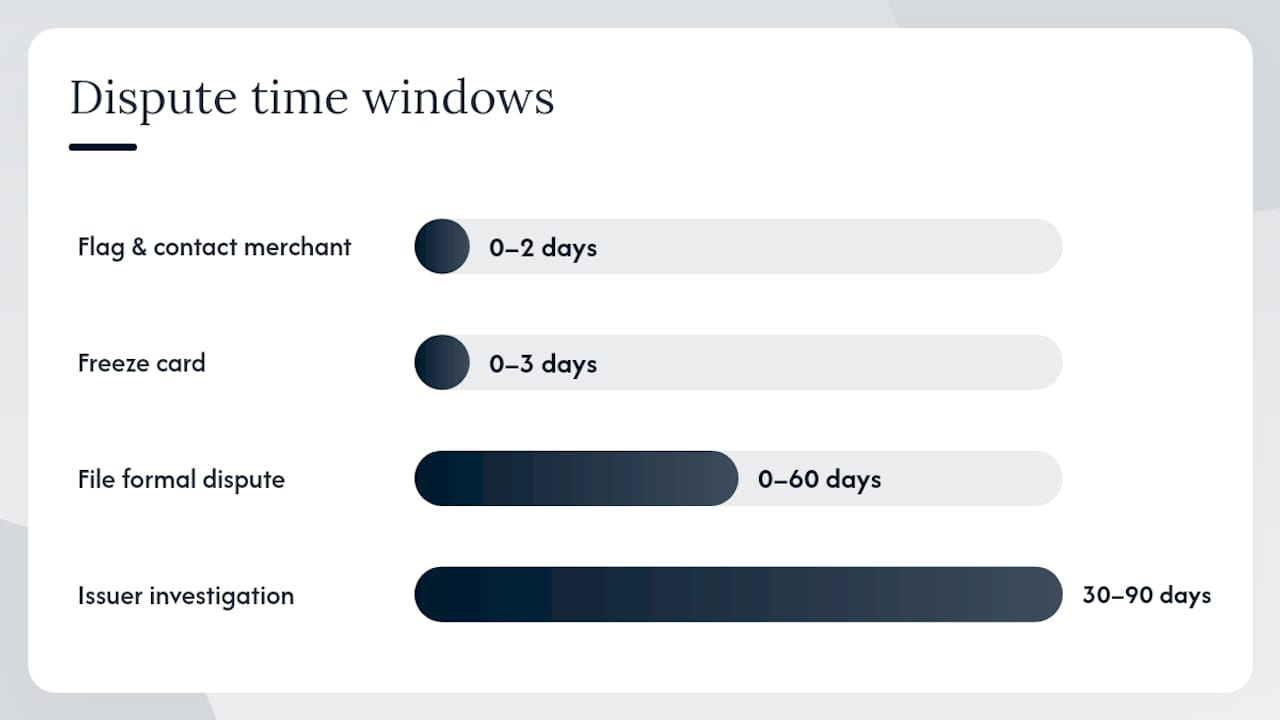
| Timeframe | Action | What to Expect |
|---|---|---|
| Day 0–2 | Flag the charge; contact the merchant directly | Many errors resolve here without a formal dispute |
| Day 0–3 | If fraud is suspected, freeze the card and change your online credentials | Issuer sends a new card; freeze stops further unauthorized charges |
| Day 0–60 | File a formal dispute with your card issuer | Issuer opens an investigation; provisional credit often issued within 5–10 days |
| Day 30–90 | Issuer completes investigation | Charge reversed if dispute upheld; merchant has right to respond |
| If unresolved | Escalate to CFPB or file a police report (identity theft) | CFPB complaint creates a formal record; police report supports identity theft claims |
Step-by-step dispute process:
- Contact the merchant first. Explain the charge and ask for a refund or correction. Get the representative's name and a reference number. This step often resolves billing errors faster than a chargeback.
- Call your card issuer. Use the number on the back of your card. Say you want to dispute a charge and have your transaction details ready.
- Submit a written dispute. Follow up the call with a written dispute via the issuer's secure message center or certified mail. Written disputes create a paper trail.
- Attach documentation. Include screenshots of the charge, email receipts, proof of cancellation (for subscription disputes), and any correspondence with the merchant.
- Track the dispute timeline. Note the date you filed and the 60-day window. Your issuer must acknowledge the dispute within 30 days and resolve it within two billing cycles.
- Escalate if needed. If the issuer closes the dispute against you and you believe the decision is wrong, file a complaint with the Consumer Financial Protection Bureau (CFPB) at consumerfinance.gov. For identity theft, file a police report and place a fraud alert with the three major credit bureaus.
Evidence checklist:
- Screenshot of the charge on your statement
- Original receipt or order confirmation
- Proof of cancellation or return (tracking number, cancellation email)
- Written record of merchant contact (date, name, outcome)
- Dispute confirmation number from your issuer
Why hidden fees still exist and what the law actually protects
Disclosure rules require clear fee tables, but they don't eliminate fees. That distinction is the core of how hidden credit card charges persist in a regulated market.
The Credit CARD Act of 2009 mandated the Schumer box: a standardized disclosure table that every issuer must include in card agreements and marketing materials. It lists APR, fees, grace period, and penalty rates in plain language. What it doesn't do is cap those fees or prevent issuers from adding new ones. Transparency was the goal; elimination was not.
The Credit CARD Act increased transparency through the Schumer box but placed the responsibility on cardholders to read and act on those disclosures. Practical consumer protection still requires active monitoring and use of dispute rights — the law is a floor, not a ceiling.
A few specific protections worth knowing:
Over-limit fees require opt-in. Under the Act, issuers cannot charge an over-limit fee unless you explicitly agreed to allow transactions that exceed your credit limit. If you never opted in, the issuer must decline the transaction instead of approving it and charging a fee.
Statement accuracy is a legal right. The Fair Credit Billing Act requires issuers to correct billing errors when you dispute them in writing within 60 days. The CFPB enforces this and accepts complaints at consumerfinance.gov.
Penalty APR has limits. Issuers can raise your rate for being 60 days late, but they must review that rate every six months and restore the original rate if you make on-time payments for six consecutive months.
The practical takeaway: the Schumer box tells you what fees exist. Reading it before you apply, and again when a fee appears on your statement, is the single most effective consumer protection move available to you. CNBC Select's fee guide notes that many cardholders only discover foreign transaction fees after they appear on a statement, not before applying.
A prioritized checklist to cut hidden fees going forward
The tactics below are ranked by impact per hour of effort. Do the first three this week; the rest can follow over the next month.
- Set autopay for the full statement balance. This eliminates late fees and interest charges in one step. If full-balance autopay isn't possible, set it for the minimum to protect your credit score while you work toward full payment.
- Designate one no-foreign-transaction-fee card for travel and international purchases. Use it exclusively for any purchase where the merchant or processor is outside the U.S. Keep your other cards at home when traveling.
- Opt out of over-limit coverage. Log into each card account and confirm you are not opted in. This takes five minutes per card and prevents a fee category entirely.
- Switch all statements to paperless. Eliminates paper statement fees and gives you faster access to charges for review.
- Run the balance-transfer break-even calculation before every transfer. Divide the transfer fee by your current monthly interest cost. If the break-even point is longer than the 0% intro period, the transfer isn't worth it.
- Review annual fees against actual rewards redeemed. Once a year, total up what you actually got from a card versus what the annual fee cost. If the card isn't paying for itself, call and ask for a retention offer or downgrade.
- Set spending alerts at 80% of each card's credit limit. Most issuers offer free SMS or push alerts. This prevents over-limit situations and gives you a heads-up before a large purchase pushes you into penalty territory.
- Audit recurring subscriptions quarterly. Pull your last three months of statements and highlight every charge under $20. Subscriptions you forgot about are the most common source of recurring unexpected credit card fees.
- Never use a credit card at an ATM unless it's a genuine emergency. The combined cash advance fee plus ATM operator fee plus immediate interest accrual makes this one of the most expensive ways to access cash.
- Check the Schumer box before applying for any new card. The fee table is always in the card agreement. Thirty seconds of reading before you apply prevents years of unexpected charges.
Pro Tip: Negotiating waivers works more often than most people expect. Issuers want to keep customers, and a polite first-offense request for a late fee or annual fee waiver succeeds frequently. If you manage multiple cards, consolidating your card views in one app makes it far easier to spot a fee the moment it posts rather than weeks later during a manual review.
The real cost of ignoring small fees
Small fees compound quietly. A 3% foreign transaction fee on a $3,000 international trip costs $90 in charges you'd never see if you used the right card. A $35 late fee charged twice a year adds $70 to your annual card cost, and if that late payment triggers a penalty APR, the downstream interest cost can dwarf the fee itself.
The math gets worse when you factor in credit score impact. A single 30-day late payment can drop a good credit score by 60–110 points, which affects the rates you qualify for on mortgages, auto loans, and future credit cards. The fee is $35. The cost of the rate increase on a $300,000 mortgage is orders of magnitude larger.
Two automatic controls eliminate most of this risk: autopay set to the full statement balance, and a spending alert at 80% of your credit limit. Neither takes more than ten minutes to set up. Run a quarterly statement audit on top of those two controls and you've covered the vast majority of hidden fee exposure without changing how you spend.
Finja helps you catch fees before they compound
Spotting a hidden charge after it's already posted is reactive. The better move is catching it the moment it appears, across every card you carry.
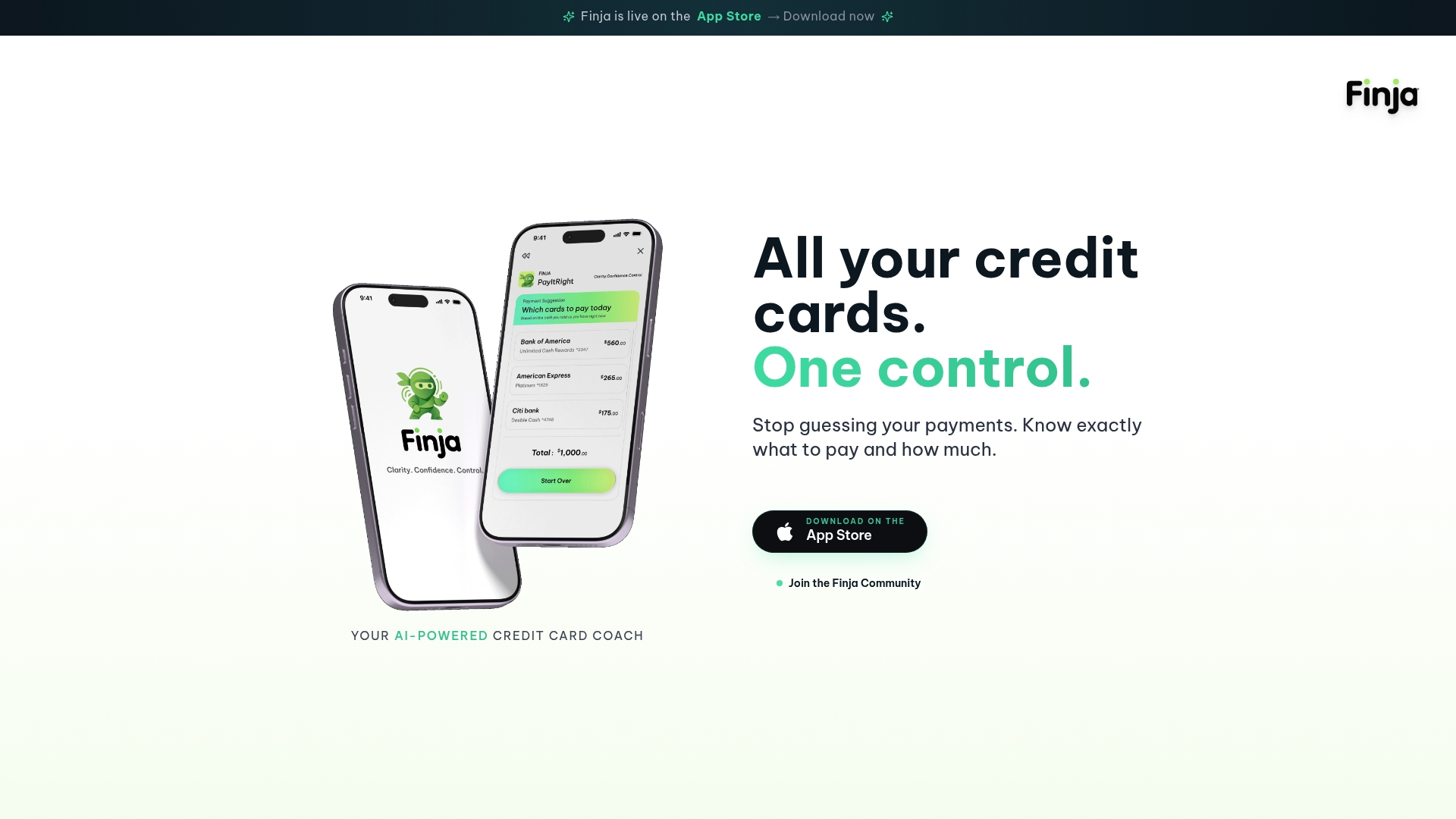
Finja is an AI-powered credit card management app built for consumers who carry multiple cards and want a single consolidated view of every account. It surfaces fee anomalies and recurring charges automatically, so a $2 paper statement fee or a 3% foreign transaction markup doesn't slip through unnoticed for three billing cycles. Finja also provides payment optimization recommendations that help you reduce interest costs across cards, track your credit health, and set spending controls, all in one place. If you're managing two or more cards and relying on manual statement reviews to catch unexpected fees, try Finja and see what you've been missing.
Sources
- Ftc
- How to avoid common credit card fees | CNBC Select
- Common credit card fees and how to avoid them | Chase
- Avoid common credit card fees | Bankrate
- Hidden Credit Card Fees: Fees That Are Slowly Robbing You Blind | MintWit
- Hidden credit card fees to avoid | CardCritics
- Average credit card processing fees | WalletHub
- Credit card processing fees: What merchants pay | Shopify
This article is general information, not a substitute for advice from a qualified financial advisor. Consult a qualified financial professional about your own circumstances before acting on anything here.